The Big Picture
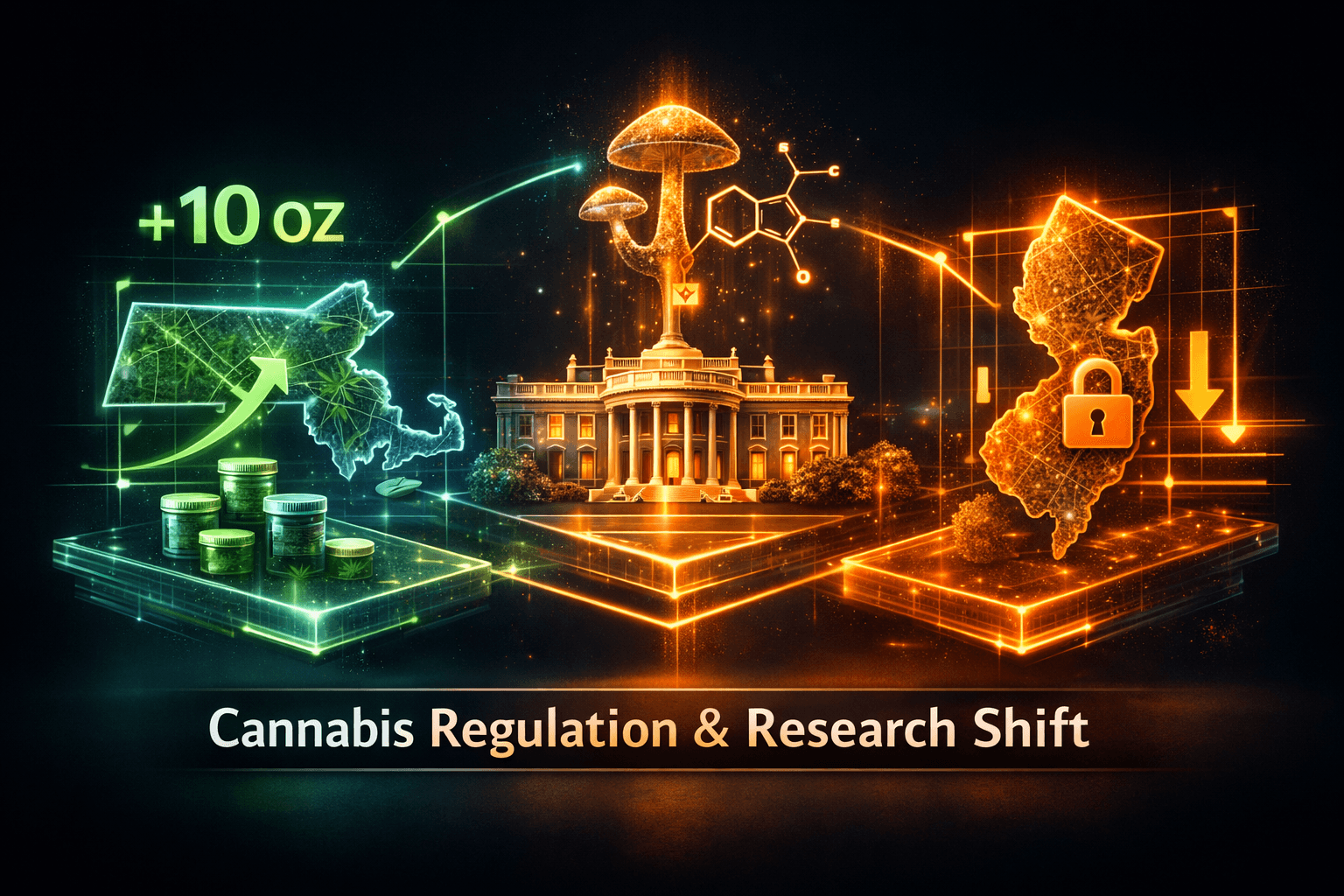
A wave of policy and industry stories over the weekend leaves the cannabis sector in a mixed, but active, position as markets open Monday. Massachusetts' decision to double adult possession limits and the White House executive order fast-tracking psychedelics research are headline-grabbing, but state-level restrictions and sector-wide scaling challenges temper the optimism.
Why does this matter to you as an investor or observer? Regulatory shifts change market access and demand, federal research funding can redirect capital and attention, and operational shortcomings will determine which companies can actually benefit from new opportunities.
Market Highlights
The sector will be watching policy fallout and company-level execution closely during regular trading today.
- $MSOS, the cannabis ETF many traders watch for sector direction, is likely to see increased flows as regulatory headlines circulate.
- $TCNNF and $GTBIF are among names to track for exposure to multi-state operators and Canadian producers as state rules shift.
- $CURLF and $TLRY remain in focus for retail and branded product performance, especially as state-level possession and distribution rules change.
Key Developments
Massachusetts Doubles Possession Limit
Gov. Maura Healey signed a bill that doubles the legal possession limit for adults and revises regulatory rules for the adult-use market. Lawmakers approved the measure unanimously, which suggests broad political support and a clearer pathway for market expansion in Massachusetts.
For you, that can mean a larger addressable market in the state and potentially higher retail demand, but timing and implementation details will determine which companies benefit first.
Federal Push for Psychedelics Research
The White House issued an executive order aimed at expanding and expediting research into psychedelics, including a $50 million allocation for ibogaine research, according to reporting. Reactions were bipartisan and enthusiastic in many quarters, which may accelerate clinical work and investment into psychedelic therapeutics.
How will this influence the cannabis sector? Some capital and policy attention could shift toward psychedelic therapeutics, creating adjacent opportunities for firms with crossover interests. Analysts note this is about research and regulation, not immediate commercial rollout.
State-Level Restrictions and Industry Scaling Issues
New Jersey implemented new rules restricting intoxicating hemp products to licensed dispensaries, effectively tightening market access for many hemp-derived products. At the same time, reporting on why most cannabis brands fail to scale highlighted that operational systems and automation remain core barriers to growth.
These developments suggest a bifurcated picture. You may see accelerated demand in regulated channels, while smaller brands could struggle if they face tighter compliance and lack the systems needed to scale profitably.
What to Watch
Expect regulatory details and implementation timelines to drive near-term volatility. Companies and ETFs tied to state markets will react to how quickly rules are rolled out and enforced.
- Massachusetts implementation, licensing changes, and retail rollout dates, which will reveal winners and losers at the state level.
- Federal rule-making tied to the psychedelics executive order, and which research groups or companies receive funding or regulatory support.
- Enforcement and rule interpretation in New Jersey for hemp-derived intoxicants, a risk that could affect brands selling CBD and similar products.
- Operational execution by brands, including adoption of automation and supply chain upgrades that address scaling problems highlighted in recent reporting.
- Keep an eye on $MSOS, $TCNNF, $GTBIF, $CURLF, and $TLRY for sector-level signals and company-specific updates that can offer clues about demand and margins.
Which stories will matter most to you this week? Watch the regulatory filings and guidance notes from state agencies. Will federal research dollars spark new M&A or partnerships? That is a question to follow closely.
Bottom Line
- Regulatory wins in Massachusetts expand legal market access, but benefits will depend on implementation and retail capacity.
- The federal psychedelics initiative redirects research funding and attention, creating adjacent opportunities for certain biotech and therapeutics players.
- State-level tightening in New Jersey and broader enforcement trends are a reminder that regulatory risk remains high for hemp-derived products.
- Operational readiness is increasingly a differentiator, data suggests brands that invest in automation will be better positioned to scale.
- Monitor $MSOS, $TCNNF, $GTBIF, $CURLF, and $TLRY for early market signals, and look for licensing dates and funding announcements this week.
FAQ Section
Q: How will Massachusetts' new law affect cannabis revenues in the state? A: Doubling possession limits increases the theoretical addressable market for legal purchases, but actual revenue impact will depend on retail availability, pricing, and how regulators implement distribution changes.
Q: Will the psychedelics executive order help cannabis stocks? A: The order focuses on research funding and regulatory pathways for psychedelics, so any impact on cannabis equities is indirect. Analysts note it could shift capital into alternative therapeutics and create new policy precedents.
Q: What does New Jersey's hemp restriction mean for hemp companies? A: Restricting intoxicating hemp products to licensed dispensaries limits market access for over the counter hemp sellers and raises compliance costs, which may compress margins for producers who rely on broad retail distribution.