The Big Picture
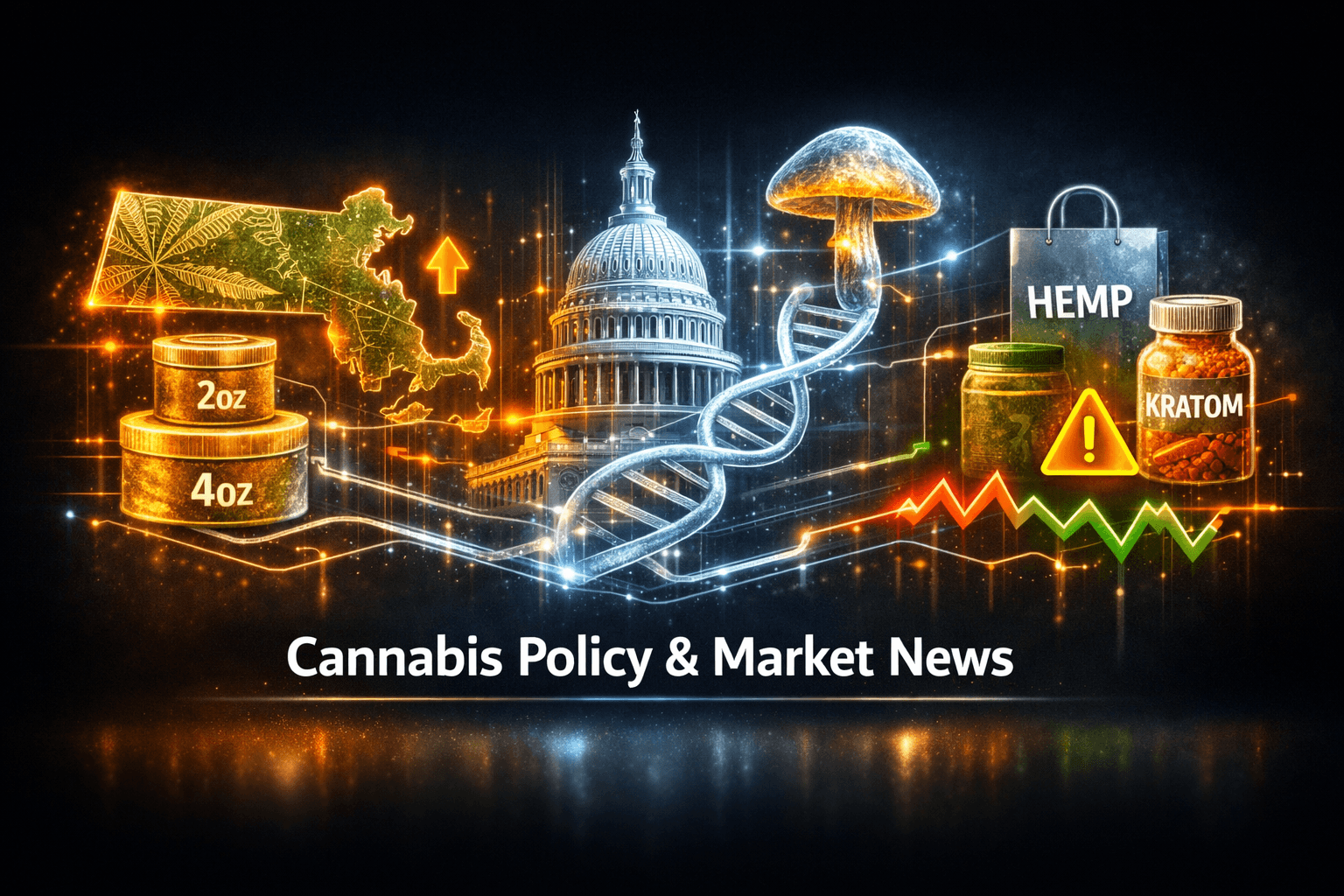
Massachusetts' decision to double the adult possession limit and a presidential executive order fast-tracking psychedelic research led the headlines this weekend, underscoring a patchwork of policy moves shaping the cannabis and adjacent markets. These developments matter because they change consumer access, regulatory risk and the research landscape, all of which influence capital flows into operators, suppliers and ancillary companies.
At the same time, state-level tightening of hemp-derived intoxicants in New Jersey and broader crackdowns on kratom highlight continuing regulatory uncertainty. You're left with a sector where reform and restriction are happening at once, so selectivity and attention to policy details will be important going forward.
Market Highlights
Markets were closed on Sunday, Apr 19, and the last U.S. trading day was Friday, Apr 17. Below are key market cues heading into the long weekend and names you should be watching.
- $MSOS, the broad cannabis ETF, remained a primary barometer for flows into the sector, tracking policy-driven headlines and product access debates.
- $TLRY, a major licensed operator, and $TCNNF, a large Canadian LP trading OTC, drew investor attention after mixed weekly performance and ongoing cost control narratives.
- $CURLF and $GTBIF were cited as sector favorites among retail and institutional watchers for exposure to diversified cannabis businesses, though price action was mixed heading into Apr 19.
- Across the board, ETFs and select stocks saw headline sensitivity rather than fundamental revisions, with low single-digit swings tied to regulatory announcements.
Key Developments
Massachusetts Doubles Possession Limit, Revises Rules
Gov. Maura Healey signed legislation that doubles the legal possession limit for adults and adjusts the state's regulatory framework for adult-use cannabis. The bill passed unanimously in the legislature, signaling bipartisan support for easing possession restrictions while updating industry rules.
For operators and retailers, the change could expand the legal consumer base and reduce enforcement risk for small possession cases, but the regulatory revisions will matter most when regulators publish implementing guidance. If you're tracking state-by-state expansion, Massachusetts may become a more permissive market over the medium term.
Federal Psychedelics Executive Order Accelerates Research
President Trump issued an executive order aimed at expanding and expediting research into psychedelics, including a reported $50 million allocation for ibogaine research. The move drew bipartisan reactions and energized advocacy groups and clinical researchers who say federal prioritization could unlock clinical pathways and commercialization opportunities.
Analysts note this is a funding and research story first, regulatory changes come later. For investors, expect increased interest in psychedelics research names and adjacent biotech companies, and watch whether research progress leads to clearer regulatory frameworks in the next 12 to 24 months.
New Jersey and Kratom Enforcement Signal Tighter Controls
New Jersey's new rule restricts intoxicating THC products derived from hemp to licensed marijuana dispensaries, removing an easier retail channel for hemp-based sellers. That tightens access for hemp-derived products and raises short-term distribution and compliance questions for manufacturers and retailers.
Separately, growing kratom crackdowns and scrutiny over 7-OH raise the possibility that drug policy reform is becoming more nuanced, with regulators distinguishing between reform-friendly cannabis moves and stricter action on other natural products. That split approach creates winners and losers within the broader alternative-psychoactive market.
What to Watch
Policy remains the primary near-term catalyst, and you're going to want to monitor how state regulators translate new laws into rules.
- Massachusetts rulemaking, effective dates and guidance, including any licensing or packaging changes that affect retail supply.
- Implementation details from the White House on psychedelic research funding, timelines for clinical trials, and whether additional agencies are tapped for coordination.
- Enforcement patterns in New Jersey and other states considering hemp restrictions, plus any federal clarifications on hemp-derived intoxicants.
- Regulatory trends around kratom and other botanicals that could influence consumer substitution patterns.
- Watch these tickers for headline sensitivity: $MSOS, $TCNNF, $GTBIF, $CURLF, $TLRY, because they tend to reflect policy-driven flows and retail interest.
What's the next big question for you? Will federal research momentum convert into commercial pathways, and will state-level tightening on hemp fragment markets? Those answers will shape capital allocation and risk appetite in the sector.
Bottom Line
- Neutral policy mix: Massachusetts' expansion and federal psychedelic funding are offset by New Jersey hemp restrictions and kratom enforcement, producing mixed signals for the sector.
- Short-term volatility likely tied to regulatory headlines, not immediate fundamental changes for most public operators.
- Focus on rulemaking and implementation dates, because the practical impact on licensing, retail access and distribution will determine winners and losers.
- Use selectivity when evaluating names, and monitor ETFs like $MSOS for flow dynamics that can affect stock-level moves.
- Data suggests investors should track both policy and clinical milestones, you may want to adjust your watchlist as guidance and trial results arrive.
FAQ Section
Q: How will Massachusetts' law change affect retailers? A: The doubled possession limit reduces minor enforcement risk and could expand consumer demand, but retailers will watch implementing regulations for packaging, labeling and sales rules.
Q: Does the federal psychedelics order mean fast commercialization? A: Not immediately, the order prioritizes research funding and clinical trials, so commercialization would follow successful trials and regulatory review, which can take years.
Q: Will New Jersey's hemp restrictions impact national hemp businesses? A: Yes, limiting intoxicating hemp products to dispensaries reduces retail access in New Jersey and could prompt similar state-level actions, affecting manufacturers and distribution strategies.
Note: This report is informational only. Analysts note these developments change policy risk and research priorities, not direct investment recommendations.