The Big Picture
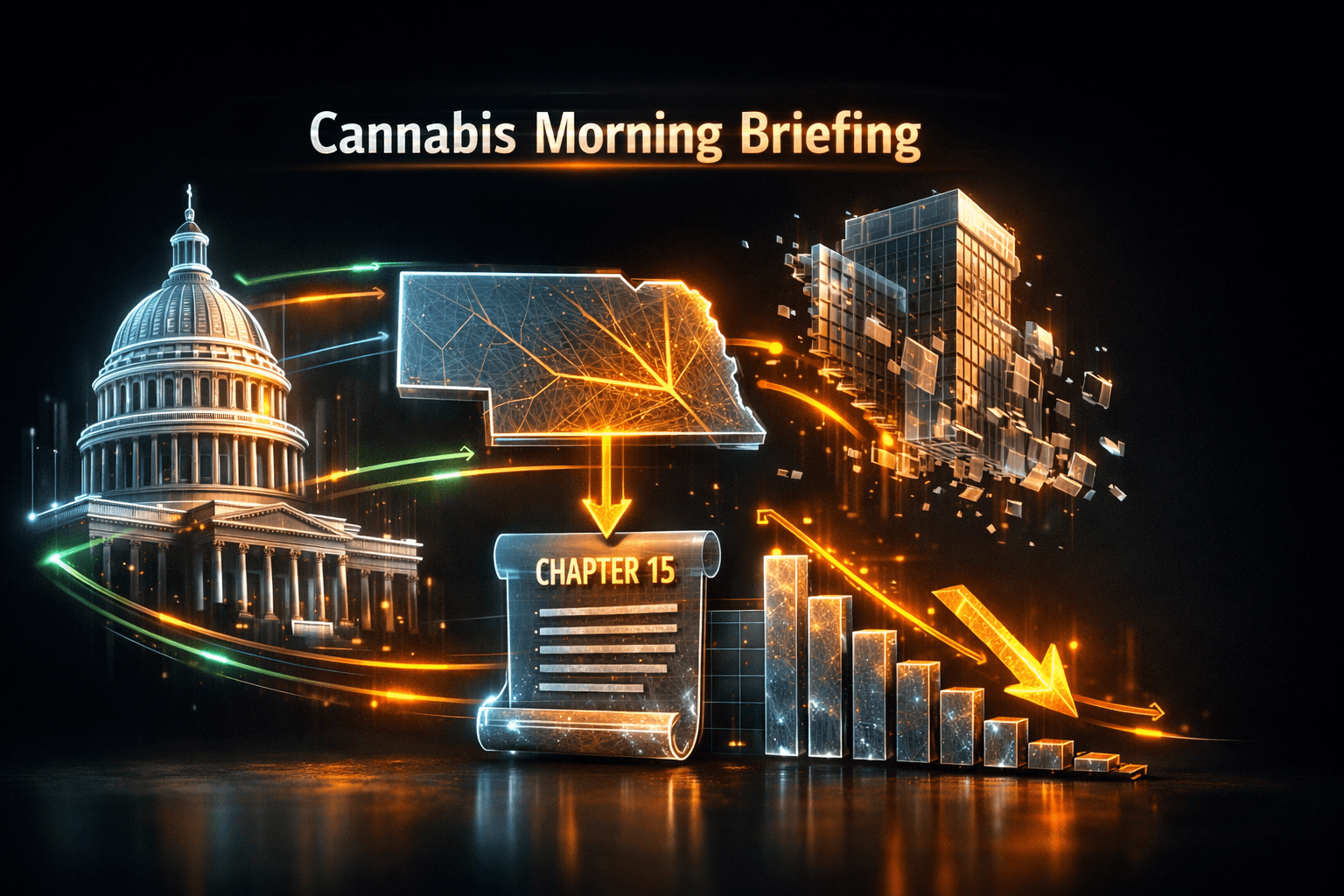
A mix of regulatory progress and corporate distress is framing the cannabis sector this morning. New policy moves in Washington, D.C. and Nebraska are expanding commercial options and revenue tools, even as at least one multi-state operator has moved to sell assets and seek bankruptcy protection.
For you, that means opportunities around market structure and product innovation are rising, while balance sheet and consolidation risks remain front and center. How you weigh those forces will matter for your positioning today and the weeks ahead.
Market Highlights
Key developments you can parse quickly before markets open and as trading unfolds today.
- Washington, D.C. proposal: Mayor Muriel Bowser introduced a bill enabling licensed medical cannabis manufacturers to partner with local breweries to produce cannabis-infused beverages, a new commercialization pathway for local operators.
- Nebraska legislative action: The state legislature approved a bill delegating fee-setting and revenue tools to the Medical Cannabis Commission, the first lawmaking action tied to the voter-approved program.
- Corporate stress: The Cannabist Company announced it is selling ownership interests in subsidiaries and pursuing Chapter 15 bankruptcy protection, including a previously completed $130 million sale of its Virginia stake to Parma.
- Product spotlight: High Times published a review of Rare Cannabinoid Company edibles, highlighting mood and sleep formulations as consumer-facing innovation continues in the category.
- Names to watch today: ETF and large-name tickers include $MSOS, $TCNNF, $GTBIF, $CURLF, and $TLRY. Monitor newsflow and filings for any direct impacts on these larger exposures.
Key Developments
DC Bill Opens Brewing Partnerships
The Bowser administration's bill would allow local breweries to partner with licensed medical cannabis manufacturers to make cannabis-infused beverages. Proponents frame it as a way to keep beverage manufacturing jobs and product development local while expanding legal product formats.
For you, this could mean new product lines and local growth opportunities for license holders if the bill advances through committees and regulators write implementation rules. Questions remain around labeling, dosing limits, and distribution channels, so implementation details will be decisive.
Nebraska Gives Commission More Financial Authority
Nebraska lawmakers passed legislation enabling the Medical Cannabis Commission to set fees and raise revenue for program administration. Advocacy groups called it a necessary step to operationalize the voter-approved medical program.
This is the first state-level legislative action tied to Nebraska's medical initiative, and it suggests regulators will move faster on implementation. Investors tracking state rollouts should watch timelines for licensing guidance and initial market openings, which will drive local wholesale and retail demand.
Multi-State Operator Files Chapter 15, Sells Subsidiaries
The Cannabist Company disclosed it is selling ownership stakes in subsidiaries and seeking Chapter 15 bankruptcy protection. The firm has already sold its interest in Virginia’s Green Leaf Medical to Parma for $130 million, a deal that closed in February.
Bankruptcy and asset sales are a reminder that consolidation and capital constraints are still shaping the sector. If you follow multi-state operators, pay attention to creditor filings and whether sales are structured to preserve operations or wind down assets.
What to Watch
Focus your attention on near-term catalysts and risks that could move the sector. What matters to your portfolio today?
- Regulatory timelines: Track committee hearings and implementation guidance in D.C. for the brewery-cannabis partnership bill, and rulemaking in Nebraska as the commission sets fees.
- Bankruptcy filings and timeline: Follow The Cannabist Company’s court filings for creditor claims, sale approvals, and any operational milestones tied to subsidiary dispositions.
- Product and category momentum: Watch retail feedback and distribution for cannabinoid-infused beverages and rare-cannabinoid edibles, as consumer adoption will drive SKU economics.
- Macro and funding environment: Liquidity and capital access continue to constrain some operators, so monitor refinancing activity, M&A announcements, and any sector-specific credit updates.
- Names to monitor closely: Keep an eye on $MSOS, $TCNNF, $GTBIF, $CURLF, and $TLRY for any news-driven volatility or sector beta shifts. Check filings and press releases for direct exposure to the new state rules and corporate restructurings.
Bottom Line
- State-level regulatory moves in D.C. and Nebraska show the sector is still evolving through policy and new product pathways.
- Corporate distress such as Chapter 15 filings highlight ongoing balance sheet pressure and the potential for further consolidation.
- Product innovation, especially infused beverages and rare cannabinoid edibles, remains a growth front to watch for consumer uptake and margin impacts.
- Monitor implementation details and court filings closely, because the regulatory specifics and restructuring outcomes will determine winners and losers.
- Analysts note mixed signals today, so a selective approach is advisable as momentum and risk both increase in different parts of the market.
FAQ Section
Q: How could the D.C. brewery-cannabis partnership affect operators? A: It could open new product formats and local revenue streams for licensed medical manufacturers, though labeling, dosing, and distribution rules will determine commercial viability.
Q: What does Nebraska’s new bill mean for rollout timelines? A: Granting fee-setting authority to the Medical Cannabis Commission helps fund program buildout and is a step toward licensing, but exact timelines depend on rulemaking and administrative capacity.
Q: Should I be worried about the Cannabist Company bankruptcy? A: The filing signals balance sheet stress and sector consolidation risk, but you should follow court documents and asset sale terms to assess contagion risk for other companies.