The Big Picture
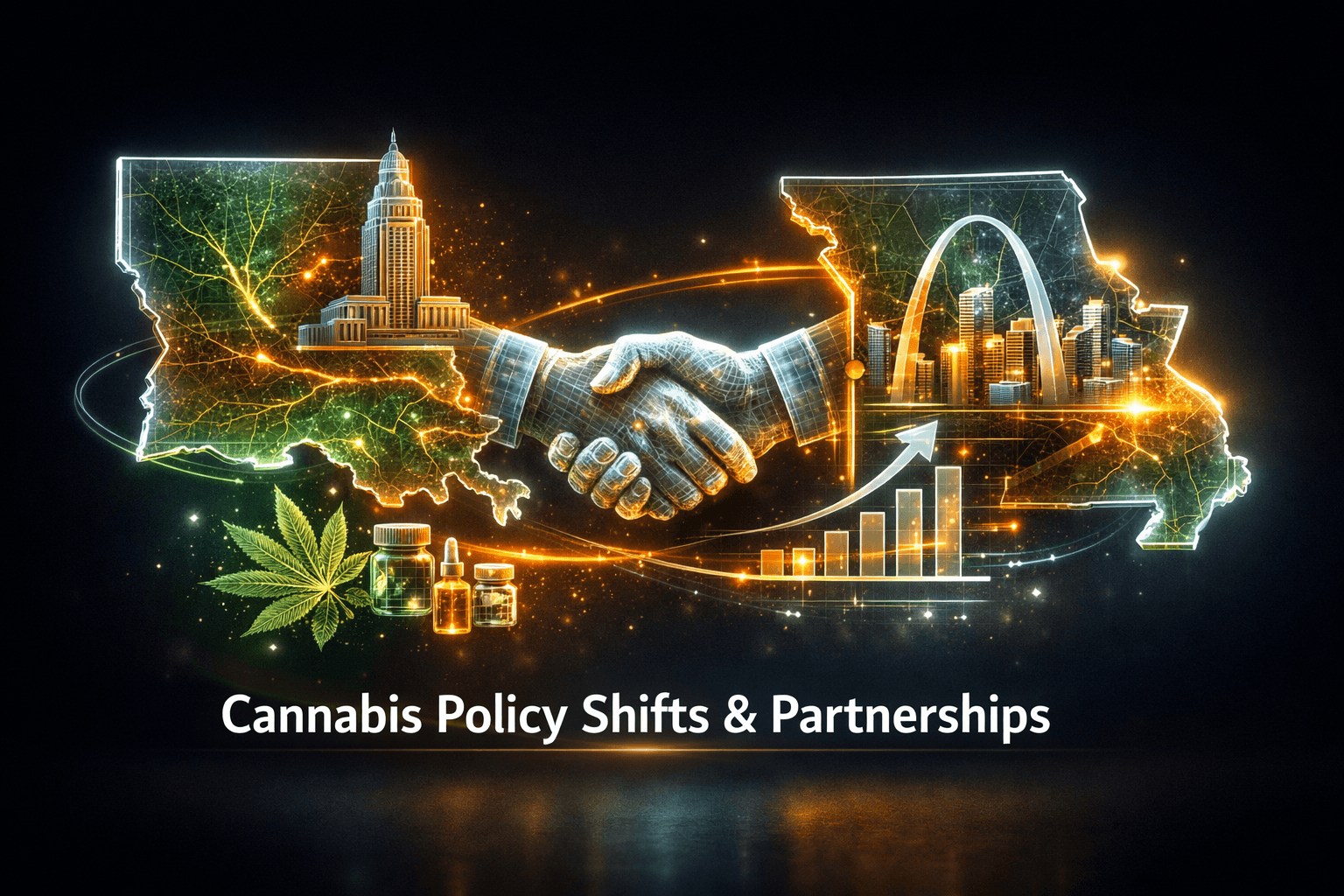
Today investors face a mixed regulatory picture that underscores how fragmented U.S. cannabis policy remains. Louisiana lawmakers advanced a bill to allow medical marijuana use in hospitals for terminally ill patients, which is a targeted expansion of patient access.
At the same time Missouri's legislature approved a ban on intoxicating hemp THC products, removing those items from shelves later this year. Meanwhile the cultural side of the industry showed momentum with High Times partnerships that aim to boost brand engagement and event-driven revenue potential.
Market Highlights
Trading was mixed this morning as investors parsed policy shifts and consumer-focused headlines. Sector ETFs and major licensed growers showed muted movement in early trading, reflecting the uncertainty created by patchwork state rules.
- $MSOS, the broad cannabis ETF, traded relatively muted in early sessions with swings generally under 2 percent as market participants digested state-level news.
- $TLRY, a major multistate operator and consumer brand, showed flat to modest intraday moves as headlines focused on policy rather than company-specific catalysts.
- $CURLF, $GTBIF, and $TCNNF tracked similarly, with the market reacting more to regulatory risk and cultural momentum than to earnings or guidance today.
Key Developments
Louisiana advances hospital medical use for terminal patients
A Louisiana Senate Health and Welfare Committee approved SB 270 to allow medical marijuana for patients with terminal or irreversible conditions to use cannabis in hospitals. The bill was advanced in a voice vote and includes committee amendments.
For you as an investor this is a targeted regulatory expansion that improves inpatient access for a narrow patient group, potentially easing operational friction for licensed medical providers and hospitals in the state.
Missouri moves to ban intoxicating hemp THC products
Missouri lawmakers passed legislation that would remove intoxicating hemp-derived THC products from shelves beginning November 12. The bill also includes provisions on consumer privacy and protections for cannabis workers who seek to unionize.
This creates a near-term headwind for companies and retailers selling hemp THC drinks and edibles in Missouri, and it highlights the regulatory risk you need to factor into valuations for companies exposed to hemp product sales.
High Times partnerships point to consumer engagement play
High Times announced collaborations with Proper Doinks and expanded event activations such as Cannabis Cup-style series and competitive formats. Another High Times piece highlighted preservation of Thai landrace genetics as a cultural asset for the industry.
These stories matter because they signal ongoing demand for experiential products, live events, and premium genetics, which can drive retail interest in branded products. Ask yourself, will event and brand-driven revenue offset state-level regulatory losses?
What to Watch
Here are the near-term items that could move cannabis names and ETFs, and what you should track if you hold exposure to the sector. Pay attention to state policy calendars and consumer activity, since those will determine revenue durability in many markets.
- State legislative calendars, especially in the Midwest and South, where more bills could follow Missouri's approach. Those policy sessions will affect retail and hemp-focused firms.
- Company-level exposure, including how much revenue comes from hemp THC products versus licensed cannabis sales. You should check filings and investor presentations for geographic revenue breakdowns.
- Sector ETFs and large names to watch, including $MSOS for broad flow, $TCNNF for exposure to Canadian multistate trends, $GTBIF and $CURLF for consumer-focused players, and $TLRY as a barometer for branded product performance.
- Event calendars and partnership rollouts from media and cultural brands like High Times, which can lift demand for premium and limited-release products at specific retailers.
- Retail metrics and shipment data, because month-to-month consumption trends will tell you if consumer demand is holding up despite regulatory noise.
Bottom Line
- The sector is sending mixed signals, with a patient-access expansion in Louisiana balanced by Missouri's ban on intoxicating hemp THC products.
- Regulatory dispersion means you need to watch state-by-state policy and company exposure to hemp versus licensed cannabis sales.
- Brand and event partnerships, such as High Times collaborations, are a potential upside for consumer engagement and premium pricing strategies.
- ETF flows and quarterly filings will reveal whether demand is structural or driven by episodic events, analysts note.
- Data suggests a selective approach is warranted, since one step forward, one step back sums up today's policy landscape for the sector.
FAQ Section
Q: How will Louisiana's bill affect cannabis companies? A: Expanded inpatient access could ease operational barriers for medical providers and licensed sellers in Louisiana, but the impact will be limited to terminal and irreversible cases.
Q: What does Missouri's ban mean for hemp product sellers? A: The ban removes intoxicating hemp THC items from retail, creating near-term revenue loss for producers and retailers that have relied on those products in Missouri.
Q: Should you reweight holdings in cannabis ETFs today? A: This is not personalized advice, but data suggests you should review geographic and product exposure in your holdings, since state-level policy can create concentrated risk.
Investment disclaimer: This article provides information and analysis for educational purposes only. It does not constitute personalized investment advice, and it does not recommend buying, selling, or holding any specific security.