The Big Picture
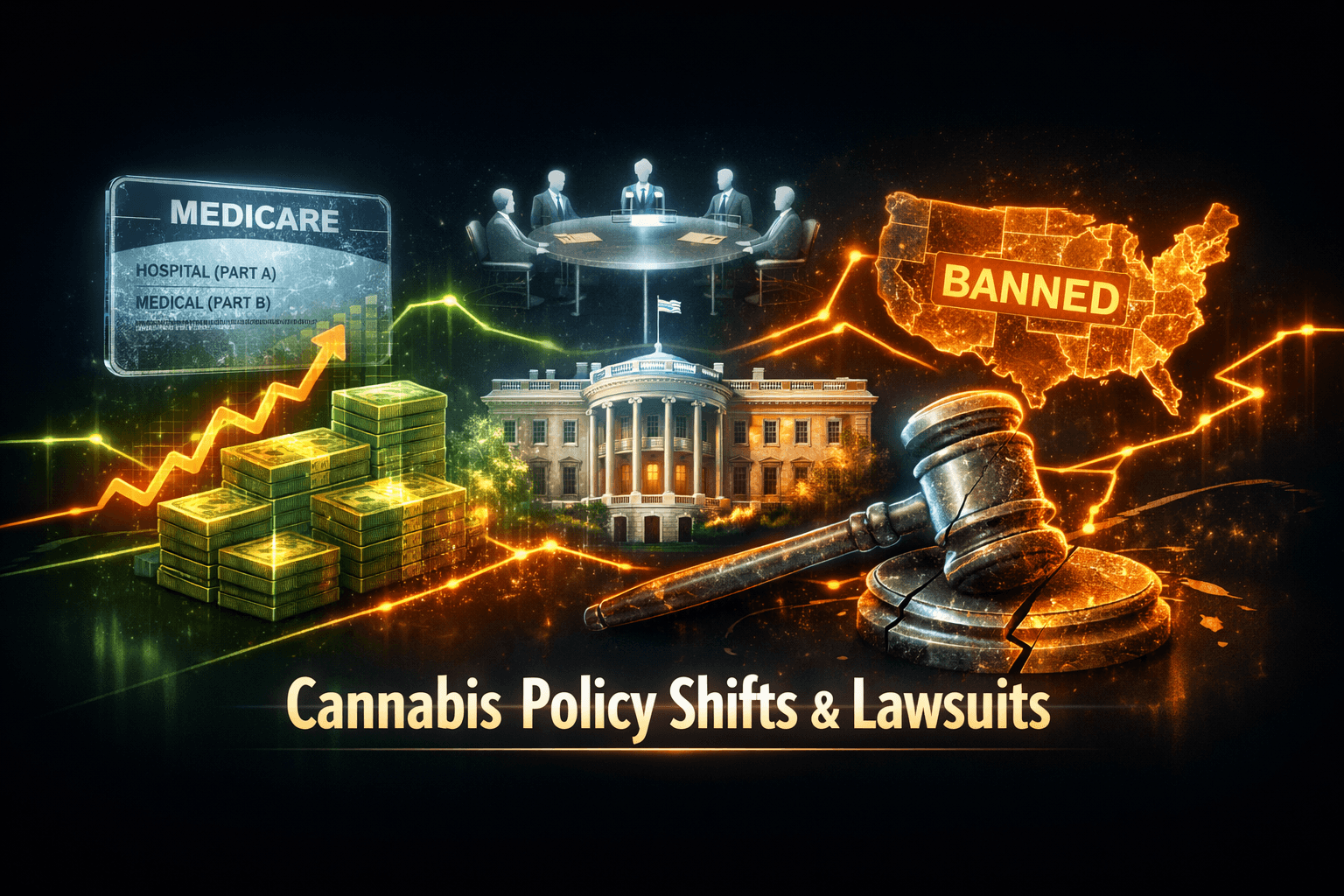
The biggest development today was federal action to reimburse hemp-derived CBD and low-THC products under a new Medicare-related program while the White House convened regulators and industry for an enforcement policy meeting. That combination signals clearer federal engagement with hemp product rules, a material shift for a market that’s often driven by state patchworks and regulatory ambiguity.
At the same time legal fights and state-level restrictions tempered enthusiasm, so you should expect both headline upside and volatility. What happened today could change where companies invest and how quickly mainstream channels adopt hemp products, but the path forward will be contested.
Market Highlights
Quick facts and items investors tracked during the trading day.
- Federal CMS program effective April 1 allows participating care models to furnish up to $500 per year in eligible hemp-derived CBD and low-THC products for approved patients.
- Anti-cannabis groups including SAM filed suit the same day to block the reimbursement program, creating immediate legal uncertainty for rollout.
- Texas ban on intoxicating hemp flower and vapes took effect March 31, restricting sales and THCA content under new DSHS rules.
- Michigan industry groups filed a second lawsuit challenging the 24% wholesale cannabis tax enacted last year, with an earlier case set for trial in September.
- Internationally, Uruguay reported shrinking its illicit cannabis market to 6.7 percent, a data point that speaks to mature market dynamics and regulatory outcomes.
- Stocks to watch in the sector include $MSOS, $TCNNF, $GTBIF, $CURLF, and $TLRY as traders price policy and demand shifts into valuations.
Key Developments
Federal reimbursement launch and White House enforcement talks
Federal health officials rolled out a CMS initiative that lets certain care models furnish up to $500 a year in hemp-derived CBD and low-THC products for eligible patients. The White House hosted its first OIRA-led meeting with industry and research stakeholders to discuss a proposed enforcement policy for CBD products, showing executive branch attention to product standards and oversight.
Implication for investors: federal attention increases legitimacy and could open new demand channels, but implementation details and rulemaking will matter a lot for distribution and margin models.
Immediate legal pushback and state headwinds
The reimbursement program triggered a same-day lawsuit from anti-weed groups, and state-level moves kept pressure on the market. Texas enacted a ban on intoxicating hemp flower and vapes, and Michigan operators are renewing legal battles against a 24 percent wholesale tax.
Implication for investors: policy wins can be short-lived until litigation clears. You should expect episodic volatility where favorable headlines are often met with legal or regulatory countermeasures.
Regulatory trends beyond the U.S.
Uruguay reported a drop in its illicit cannabis share to 6.7 percent, evidence that regulated markets can undercut black markets over time. Meanwhile Maryland lawmakers extended a psychedelics task force through 2027 to update recommendations on therapeutic access and regulation.
Implication for investors: mature market outcomes and parallel reform efforts in other regulated spaces suggest longer-term normalization is possible, but it will be uneven across jurisdictions.
What to Watch
Key catalysts and risk factors to monitor heading into tomorrow and beyond.
- CMS litigation timeline, expected injunction motions, and any emergency stays that could pause reimbursement program rollout.
- Follow-up OIRA meetings and draft enforcement guidance for CBD products, which will affect labeling, distribution channels, and compliance costs.
- Michigan trial schedule in September around the 24 percent wholesale tax, plus any interim rulings that could change state market economics.
- State regulatory activity in Texas and other large markets, where rules on intoxicating hemp products will influence shelf access and retail footprints.
- Watch sector leader tickers for price action and sentiment, including $MSOS, $TCNNF, $GTBIF, $CURLF, and $TLRY, as you size positions and assess risk exposure.
- International metrics and case studies from Uruguay and other regulated markets for demand trends and pricing pressure signals.
Bottom Line
- Federal reimbursement and a White House enforcement meeting are positive signs for industry legitimacy, but legal challenges create immediate uncertainty.
- State-level bans and tax disputes, notably in Texas and Michigan, remain meaningful headwinds that will affect supply, pricing, and margins.
- Expect headline-driven volatility, so you should watch litigation schedules, regulatory drafts, and state rulemaking closely.
- Longer term, data from mature markets like Uruguay and expanding policy work in states such as Maryland point to continued normalization, but the path will be uneven.
FAQ Section
Q: Will the federal Medicare-related reimbursement make CBD and low-THC products mainstream for patients? A: The program signals federal recognition and could increase access through certain care models, but implementation and pending litigation will determine how broadly it spreads.
Q: How will the Texas ban and Michigan tax lawsuits affect company revenues? A: State-level bans can cut local sales and change distribution strategies, while high wholesale taxes raise costs for operators and may compress retail margins, analysts note.
Q: What short-term events should you track to gauge sector direction? A: Track court rulings on the CMS program, OIRA enforcement guidance releases, the Michigan trial timetable, and state rule changes in large markets for immediate directional clues.