The Big Picture
Today’s cannabis headlines leaned toward normalization and policy support, and that matters because legal markets depend on predictable rules and public acceptance. A mix of state-level actions and a federal enlistment policy shift points to broader social and regulatory acceptance that can help shrink the illicit market and stabilize revenues for legal operators.
That said, political pushback remains. A coalition of nine anti-marijuana groups filed suit to block a federal plan to expand Medicare coverage for hemp-derived CBD and THC products, creating a significant legal test that could shape investor expectations in the days ahead.
Market Highlights
Key facts and developments you should know from today’s news flow.
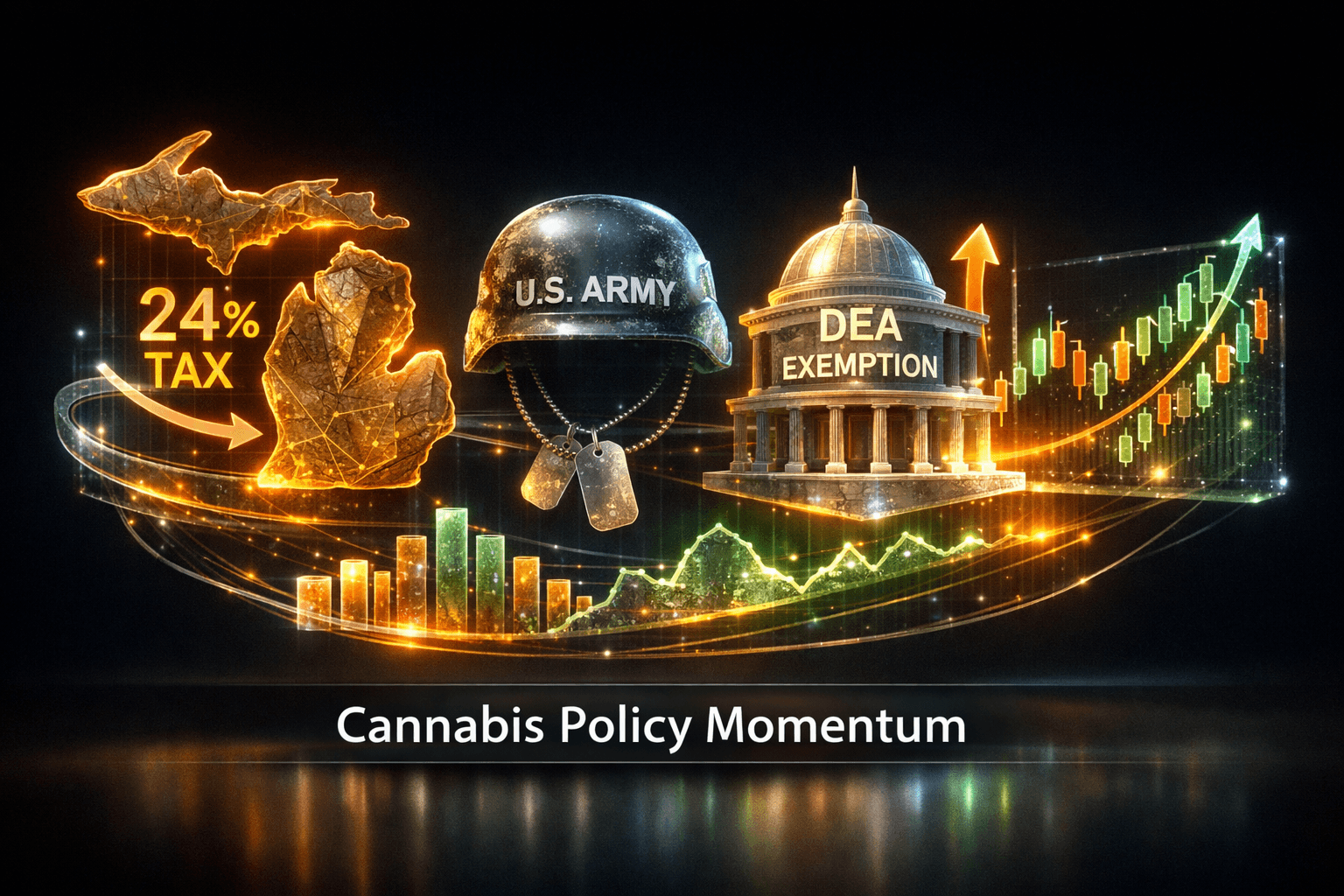
- Michigan politics: Genesee County Sheriff and gubernatorial candidate Chris Swanson pledged to repeal the 24 percent cannabis tax, saying high rates push consumers back to the illicit market.
- Federal enlistment policy: The U.S. Army will stop automatically disqualifying applicants for a single cannabis possession or paraphernalia conviction, effective April 20, 2026.
- State protections: Hawaii senators passed resolutions urging state leaders to request a DEA exemption that would shield the state’s medical cannabis program from federal interference.
- Federal coverage legal fight: Smart Approaches to Marijuana and nine allied groups filed a lawsuit seeking to block the Trump administration plan to expand Medicare coverage for certain hemp-derived CBD and THC products.
- Global research and advocacy: The Hemp4Future conference in Iceland highlighted evidence-based policy and next steps for reform, underlining growing international momentum for hemp and cannabis research.
- Culture and market perception: A High Times profile of Bam Margera added another pop-culture moment to the coverage of cannabis normalization.
- Stocks to watch in the sector: $MSOS, $TCNNF, $GTBIF, $CURLF, $TLRY are names investors track for ETF and company-level exposure to these policy shifts.
Key Developments
Michigan tax repeal pledge could shift state economics
Chris Swanson’s pledge to repeal a 24 percent cannabis tax puts the issue squarely into the gubernatorial race and puts pressure on incumbents to defend revenue assumptions. For operators and local retailers, a rollback would improve retail competitiveness by narrowing the price gap with illicit sellers, analysts note.
If you follow state-level reforms, this is a reminder that elections can cause rapid regulatory changes that materially affect margins and demand.
Army enlistment change signals normalization
The Army’s April 20, 2026 policy change removing automatic disqualification for a single cannabis possession offense is meaningful symbolically and practically. It broadens the labor pool and reduces one stigma barrier, which could indirectly benefit employers and ancillary service providers in the sector.
Normalization in federal institutions often precedes broader policy shifts, so you should consider how this may affect public sentiment and hiring dynamics in adjacent industries.
Federal coverage faces legal test
Anti-marijuana groups, led by Smart Approaches to Marijuana and nine partners, sued to block a plan to let certain Medicare programs cover hemp-derived CBD and THC products. The suit raises regulatory uncertainty around federal endorsements of hemp therapeutics and could delay implementation if courts grant injunctive relief.
Legal outcomes here are a wild card for companies focused on medical CBD or therapeutic products, and they may influence whether private payers follow federal policy in coverage decisions.
What to Watch
Look ahead to catalysts that could move stocks and sentiment and think about specific risks you need to monitor.
- Upcoming dates: The Army’s rule takes effect April 20, 2026. Watch for implementation details and guidance from recruiting commands that could affect public perception.
- State electoral calendar: Michigan’s gubernatorial campaign could bring the 24 percent tax back into focus. Track polls and candidate platforms because legislative follow-through is possible if the political winds change.
- Legal docket: The lawsuit against the Medicare hemp coverage plan could produce a decision or preliminary injunction in the coming weeks. Court filings will be a direct indicator of timing and risk.
- Hawaii’s federal push: If state leaders formally request a DEA exemption, the timeline and federal response will be important for medical program continuity and licensing certainty.
- Sector tickers to watch: $MSOS for ETF exposure, $TCNNF and $GTBIF as major company proxies, $CURLF for Canadian market exposure, and $TLRY for cultivation and consumer demand signals.
- Policy risk: You should monitor Republican and Democratic federal initiatives, as well as active litigation, because policy moves are the primary near-term driver of valuation volatility in this sector.
Bottom Line
- Policy momentum dominated today, with moves toward tax relief, enlistment normalization, and state-level protections indicating broader acceptance and potential demand tailwinds.
- A high-profile lawsuit challenging federal Medicare coverage introduces short-term legal risk that could delay federal support for hemp-derived therapeutics.
- State elections and court outcomes are likely to matter more than daily price noise, so focus on regulatory catalysts and legal timelines when assessing risk.
- Track the named tickers for market signals and watch implementation dates closely, especially April 20 for the Army rule.
- All analysis here is informational. Analysts note the developments and data suggest shifting probabilities, but this is not personalized investment advice.
FAQ Section
Q: How could a repeal of Michigan’s 24 percent cannabis tax affect the market? A: A repeal would likely narrow the price gap with illicit sellers, potentially boosting legal sales and margins for licensed retailers and producers in the state.
Q: Will the Army policy change lead to immediate hiring increases in cannabis-friendly states? A: The rule removes one recruitment barrier, but actual hiring effects will depend on broader labor demand and implementation by recruitment offices.
Q: What happens if the Medicare hemp coverage plan is blocked in court? A: Blocking the plan would delay federal support for hemp-derived CBD and THC products and could create short-term uncertainty for companies targeting medical coverage markets.