The Big Picture
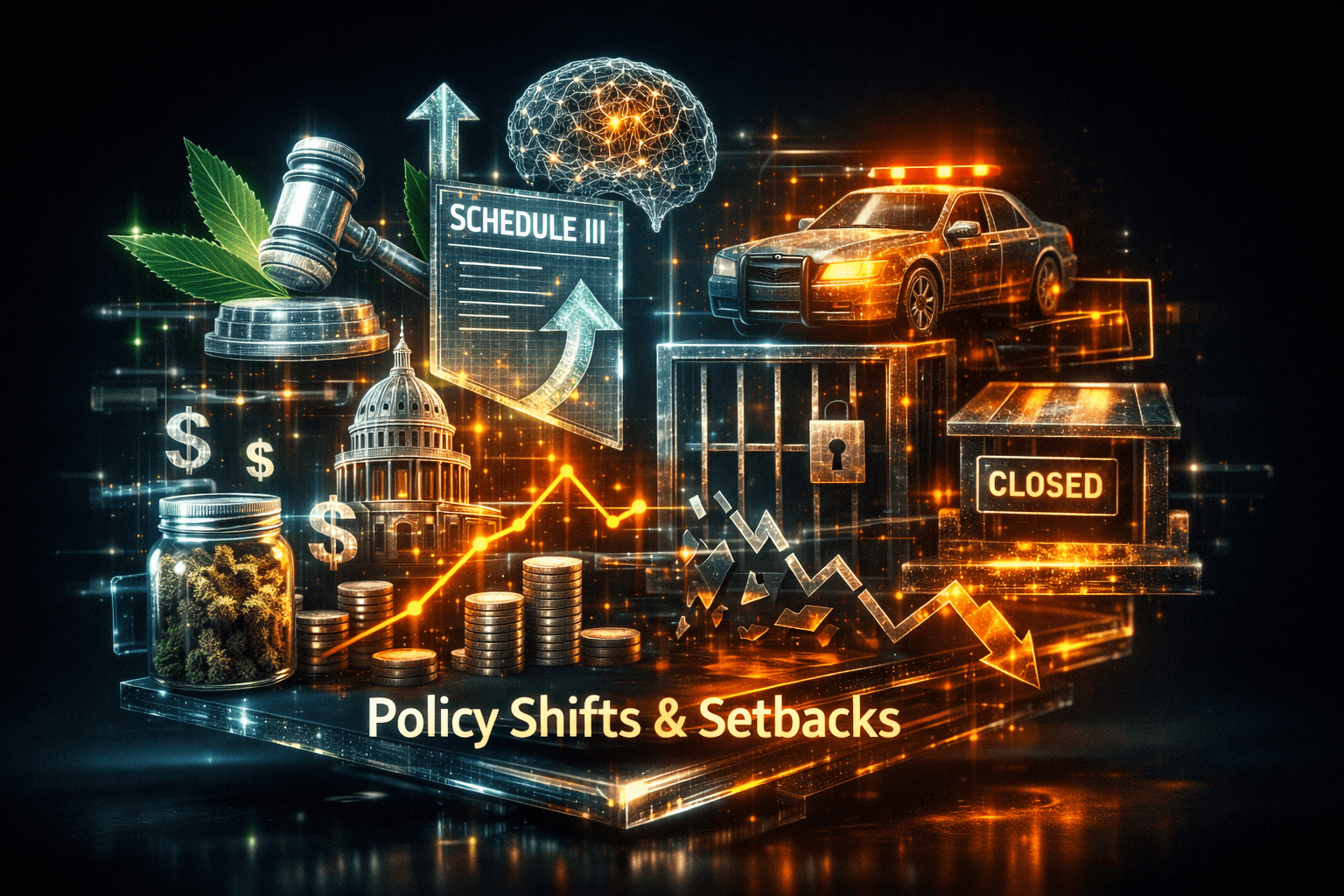
The cannabis sector delivered a patchwork of developments over the past 24 hours, with policy momentum colliding with enforcement and operational retrenchment. Lawmakers and veterans advocates pushed for reform and psychedelic research, while multistate operators and state regulators signaled tougher on-the-ground realities.
Why this matters to you: the mix underscores that legal and cultural tailwinds are still in play, but near-term execution, regulatory enforcement and access to reasonably priced capital remain major constraints for many operators as of Friday, March 27.
Market Highlights
Quick facts you can file away before markets reopen on Monday.
- Corporate finance: $JUSHI announced a US$160 million non-dilutive refinancing at about 12.5% interest to replace prior first- and second-lien facilities, and it will report Q4 2025 results on March 31.
- Operational setbacks: PharmaCann disclosed closures of cultivation sites in Denver, Colorado and Allegheny County, Pennsylvania, notifying state officials as required.
- Regulatory enforcement: Missouri's attorney general sent 33 cease-and-desist letters to unlicensed retailers alleged to be selling cannabis or cannabis-like products.
- Policy signals: A bipartisan Senate bill would create a VA office to advance psychedelics research for veterans, while a congressman pressed DOJ for an update on marijuana rescheduling three months after the president's executive order.
- Culture and coverage: High Times released new docuseries exploring Texas cannabis politics and a World Cup-themed series, while investigative reporting flagged compliance gaps for converted intoxicating hemp in Colorado.
- Stocks to watch heading into the long weekend: sector ETFs and names traders often track include $MSOS, $TCNNF, $GTBIF, $CURLF and $TLRY, among others.
Key Developments
Policy Push and Rescheduling Pressure
Federal policy remains a central storyline. A bipartisan group of senators filed legislation to create a VA office focused on psychedelics research and treatment for veterans, which could broaden the therapeutic dialogue around psilocybin, ibogaine and similar compounds. At the same time, a Democratic congressman pressed the DOJ for a progress update on marijuana rescheduling, highlighting the uncertainty three months after the president's directive.
For you, that means regulatory clarity could come in pieces. Research and scheduling moves can reshape long-term addressable markets, but timing is uncertain and the market will react to concrete agency signals.
Enforcement and Operational Pullbacks
On the state level, enforcement actions accelerated. Missouri's AG sent 33 cease-and-desist letters to alleged unlicensed sellers, and PharmaCann is shutting cultivation operations in Colorado and Pennsylvania. Those actions show regulators are still actively policing the market, which can compress supply for some licensed sellers but also raise compliance costs.
What does this mean for operators? You should expect more scrutiny in legacy markets, and companies without scale or capital may struggle to adapt quickly.
Capital Markets: Tight But Available
Jushi's US$160 million refinancing at roughly 12.5% demonstrates that debt capital is available, but it's expensive. The deal is non-dilutive and bolsters liquidity ahead of its Q4 filing, yet the coupon highlights constrained capital markets for cannabis companies compared with higher-rated sectors.
That suggests you should watch balance-sheet quality closely. Companies able to access cash without heavy dilution or unsustainably high rates will be better positioned if policy progress remains gradual.
What to Watch
Forward-looking items that could move sentiment or operational realities next week.
- Agency signals on rescheduling, and any DOJ or DEA timelines. A definitive schedule or procedural update would be a major catalyst, so ask yourself how your exposure would change if rescheduling timelines accelerate.
- Jushi’s Q4 2025 results, due March 31, and any updated guidance on cash burn or refinancing plans. The financing details you just read reduce near-term dilution risk, but investors will want to know the sustainability of operations.
- Regulatory enforcement trends in legacy states, especially Colorado and Missouri. More closures or enforcement sweeps could reshape supply chains and margins for local operators.
- Psychedelics policy and research funding, particularly any movement on the VA bill. Increased federal attention to therapeutic uses could create cross-sector opportunities, but implementation timelines will be lengthy.
- Sector names to track: $MSOS, $TCNNF, $GTBIF, $CURLF, $TLRY. These tickers often lead sentiment for retail and ETF flows, so monitor headlines and volume around them as markets reopen.
- Media and public perception, including High Times’ new series and investigative reporting into hemp enforcement gaps. Public scrutiny can translate into regulatory action, or into reputational risk you need to factor into your view.
Bottom Line
- Policy and cultural momentum remain positive signs for long-term demand, but timing and implementation are uncertain, so patience is likely required.
- Enforcement and closures in key states underline operational and compliance risk, and they may reshape local supply chains in the near term.
- Corporate financing is accessible but costly, as shown by Jushi's 12.5% refinancing; balance-sheet strength will matter more than ever.
- Watch federal agency updates on rescheduling and the VA psychedelics bill for potential multi-quarter impacts on market structure and addressable markets.
- Keep a selective approach to news-driven volatility, and make sure your exposure aligns with the regulatory and capital risks identified here, not just headline momentum.
FAQ Section
Q: When will DOJ or DEA complete marijuana rescheduling? A: There is no confirmed timeline; lawmakers and advocates are pushing for updates, but agency processes and interagency reviews can take months.
Q: How significant is Jushi’s 12.5% refinancing? A: It provides non-dilutive liquidity of about US$160 million, which helps near-term stability, yet the interest rate reflects tight capital conditions for many cannabis firms.
Q: Should enforcement actions change how I think about the sector? A: State-level enforcement and closures raise operational and compliance risk, so you should pay attention to licensing status, local rules and a company’s ability to adapt.