
 Neutral Sentiment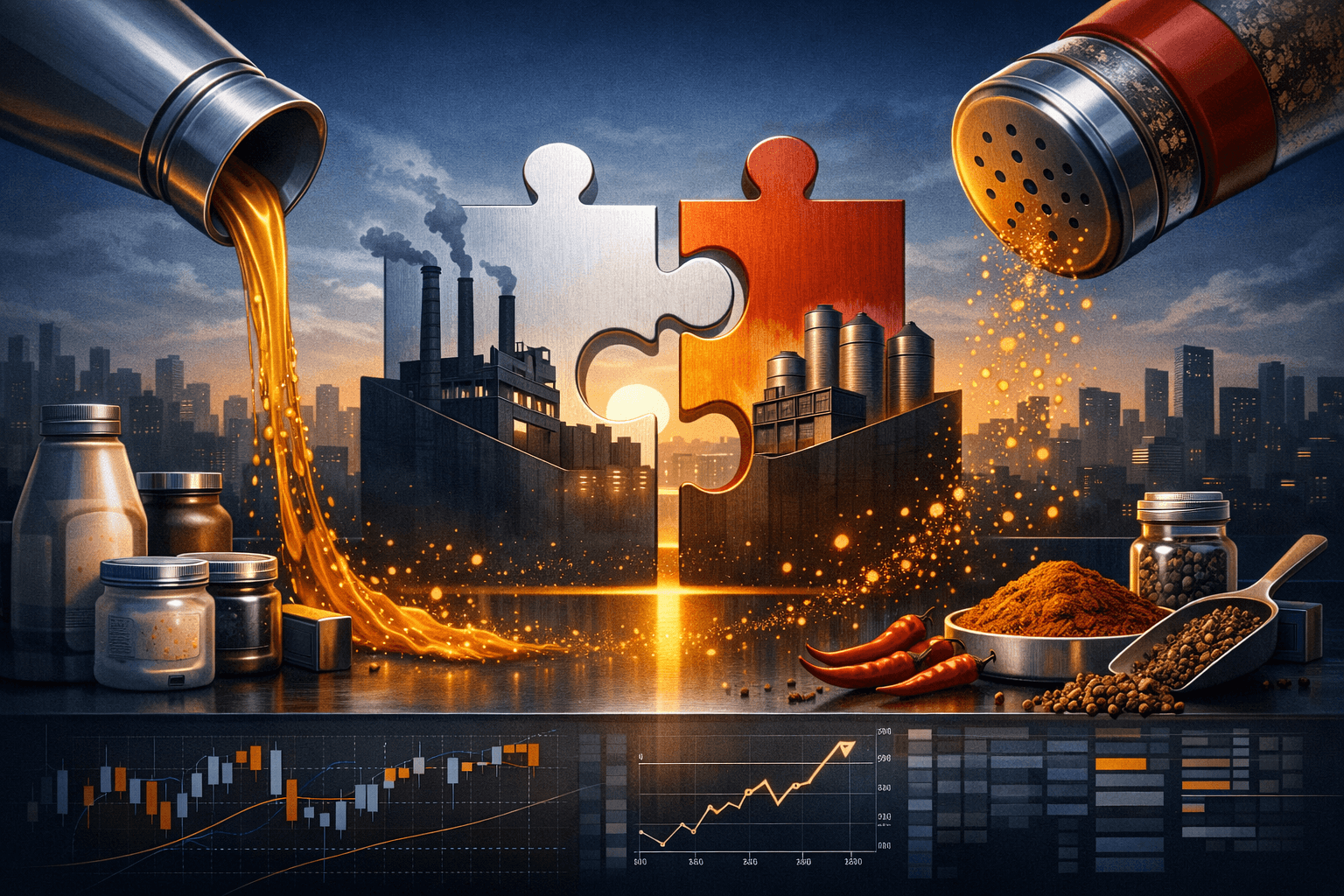
Share this article
Spread the word on social media
Deal Overview: size, structure, and the public announcement
As reported in recent coverage, Unilever has agreed to combine its Foods business with McCormick & Company in a transaction valued at nearly $45 billion. Unilever shareholders will hold about 65% of the combined company, creating what company executives call a global flavour powerhouse with roughly $20 billion of revenues.
That coverage also noted broader context from Unilever's CEO about the company's shift to a home, beauty and personal care focus, leaving Foods to scale up with McCormick. What’s public so far is headline economics, not the full playbook, so investors should expect more detail in coming weeks.
Strategic rationale: focus, scale, and category fit
This merger is a classic portfolio-sharpening play. Unilever gets to pivot toward higher-margin beauty and home care categories while spinning a Food franchise into a dedicated, global flavour specialist.
For McCormick, the tie-up brings complementary retail and food-service channels, a wider brand set from mayonnaise to bouillons, and stronger international reach. Scale matters in spices and ingredients, where distribution, procurement and R&D drive margin improvements.
Financial and valuation implications investors should watch
On the surface the transaction can deliver straightforward cost and procurement synergies, aided by consolidated purchasing of raw materials such as salt, sugar, vegetable oils and key spices. Expect management to target both cost and revenue synergies around cross-selling and private-label manufacturing lifts.
Key numbers to monitor when full disclosures arrive: pro forma EBITDA margins for the combined Foods unit, expected one-off integration costs, and the method of exchange for McCormick shareholders. The report gave the combined revenue figure, but not how earnings will be split or financed.
Balance sheet, financing and potential dilution
How this deal is financed will be a major driver of near-term stock reactions. A large cash component or debt-funded deal could pressure credit metrics and limit share buybacks for both companies.
Unilever shareholders holding 65% implies significant stock consideration, or a combination of cash and stock that dilutes existing ownership. Investors should watch consent materials for projected leverage, covenants, and any planned equity raises.
Integration risks and cultural fit
Combining a mass consumer foods business with a spices specialist is operationally sensible, but cultural integration is never trivial. McCormick is historically focused on ingredient science and B2B channels, while Unilever’s Foods arm has a big consumer-brand orientation.
Execution risk comes from integrating salesforces, harmonizing supply chains, and retaining innovation talent. Any misstep could erode the synergies investors are modeling into valuations.
Regulatory and competitive hurdles
A global combination in staples is going to draw regulatory interest. Antitrust authorities in the US, EU and key emerging markets will scrutinize overlaps in categories like condiments, seasonings, and food-service supply contracts.
Watch for divestiture demands or remedies that could limit the value of certain brands or geographic segments. Competitors like Kraft Heinz (KHC), General Mills (GIS) and Campbell Soup (CPB) will be quick to lobby if market concentration becomes a concern.
Market and consumer backdrop matters
The report flagged that consumers are trading down and cutting spending in some markets, and Unilever has imposed a temporary hiring freeze amid pressures linked to geopolitical tensions. Those macro realities change the calculus.
A focused flavour company will be more exposed to food-at-home demand cycles. Pricing power in spices helps, but input-cost inflation and retailer private-label competition remain real headwinds.
Immediate signals investors should watch
- Exchange ratio and financing details, which define dilution and leverage.
- Management lineup for the combined Foods company, to judge integration credibility.
- Pro forma margin and free cash flow targets, and timing for realizing synergies.
- Regulatory filings and likely divestiture candidates in major markets.
- Reaction by large shareholders, especially activist investors who may press for value extraction via spinoffs or breakups.
“The new Unilever will be a HPC pureplay with revenues of €39 billion,” Unilever’s CEO wrote in a public statement, while describing the Foods-McCormick tie-up as creating a global flavour leader. That public messaging is meant to reassure markets, but detail will determine investor conviction.
Actionable investor takeaways
- Don't assume synergies are guaranteed. Model conservative synergy numbers until management provides a clear roadmap and milestones.
- If you own Unilever (UL or ULVR), expect volatility. The company’s re-rating will depend on credibility around both the spin and the remaining HPC growth story.
- If you own McCormick (MKC), watch the premium implied by the transaction and the post-deal ownership mix. The company’s valuation could be reset once combined metrics are disclosed.
- Consider peers. Companies like KHC, GIS, and CPB could become acquisition targets or opportunistic buyers of divested brands, creating second-order value shifts.
- Follow retail margin trends and commodity prices. Spices and condiments are less cyclical than some foods, but raw-material swings and private-label pressure hit margins fast.
What This Means for Investors
The public reporting gives investors the headlines but not the playbook. At face value the deal makes strategic sense, carving Unilever into a focused beauty and home care leader, while creating scale in flavours and seasonings.
That said, execution, financing and regulatory approval are the real gatekeepers. For longer-term investors, the opportunity is in identifying who wins from scale, who gets squeezed by integration costs, and which assets may be spun or sold.
In short, this is a transformative transaction that deserves a wait-and-read approach. Get the deal terms, stress-test the numbers, and watch the first 90 days for management credibility before making decisive portfolio moves.