
 Bearish Sentiment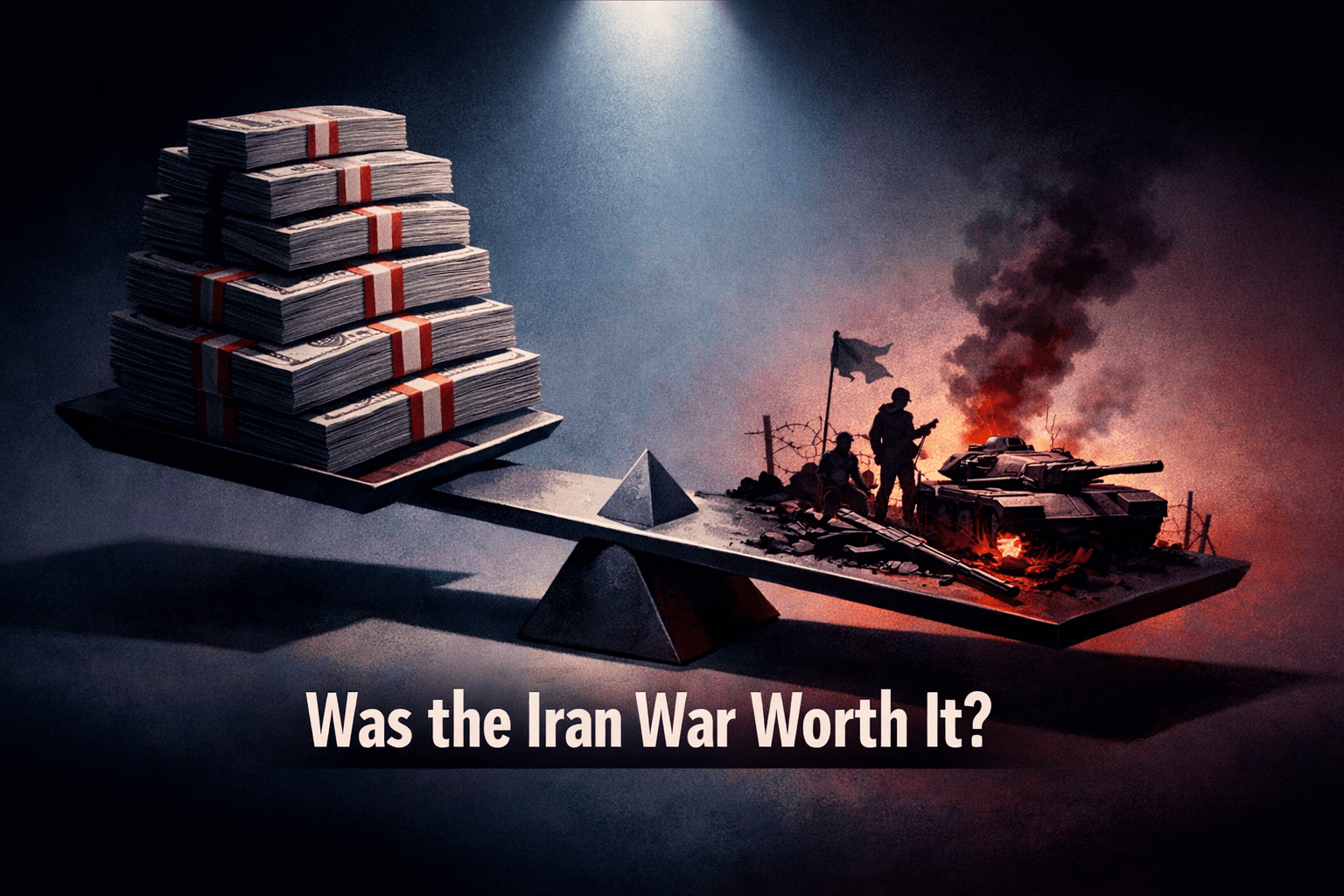
Share this article
Spread the word on social media
What The Numbers Say
In the first 12 days of the conflict the reported capital destruction is roughly $16.5 billion, a figure that aggregates market losses, damaged infrastructure and immediate replacement costs.
Energy prices have reacted sharply, with gas up about 33% in short order, and at least 13 military bases reported destroyed, according to public tallies compiled during the opening phase of the fighting.
Equity markets have not been spared. The Nasdaq moved into a correction, a decline of more than 10% from recent highs, as investors reprice growth risk and liquidity concerns flare.
Immediate Market Impact
Energy names have generally outperformed as traders price supply risk. Large integrated oil companies such as $XOM and $CVX typically benefit from higher benchmark prices, though volatility raises operational and hedging costs.
Defense contractors and suppliers have seen an uptick in attention. Stocks tied to government spending, including $LMT and other prime contractors, usually gain when geopolitical risk spikes, but new orders and budget shifts take time to flow into revenue.
Conversely, growth and tech-heavy indices were hit hardest, prompting the Nasdaq correction. Heavyweights like $NVDA can amplify index moves, even when underlying fundamentals remain strong.
Sector-Level Reckoning
- Energy: A near-term boost to oil and gas prices can improve cash flow for exporters, but higher consumer fuel costs feed through to inflation and consumption.
- Defense: Elevated risk increases the probability of budget reallocations toward procurement, but execution timelines mean fiscal impact may be medium term.
- Insurance and shipping: Destroyed bases and damaged infrastructure push up claims and premiums, while shipping routes see higher insurance costs and potential rerouting.
- Technology and discretionaries: These sectors are vulnerable to higher discount rates and weaker consumer demand if inflation or growth fears deepen.
War's price is measured in lives first, then in capital. The market tab is only beginning to be written.
Macro And Policy Considerations
Higher energy prices and disrupted supply chains raise the odds of stickier inflation. That complicates central bank calculus, because policymakers must weigh growth stability against rising consumer price pressures.
Fiscal policy could shift too. Governments facing heightened security threats may prioritize defense spending, which can be stimulative, but funding that through higher deficits or tax shifts creates distributional and market consequences.
Forward-Looking Scenarios
There are three broad paths for markets to consider. The first is contained escalation, where geopolitical risk stays elevated but localized, allowing energy prices and market volatility to stabilize after an initial shock.
The second is sustained disruption, where prolonged hostilities or broader regional involvement lengthen supply interruptions and keep a premium on energy and defense assets.
The third is systemic escalation, where cross-border spillovers force material rerouting of trade and a prolonged hit to global growth, prompting risk-off behavior across most asset classes.
What Investors Should Watch
- Energy indicators: inventory reports, spreads between Brent and regional benchmarks, and transport bottlenecks.
- Defense procurement signals: emergency budget measures or rapid contract awards that could lift revenues for select suppliers.
- Market breadth and liquidity: whether selling is concentrated or becomes broad based, informing whether this is a tactical drawdown or a deeper correction.
- Macro data: inflation prints and central bank commentary will be critical, because monetary policy responses can amplify or mitigate market moves.
Risk-Aware Takeaways
Expect higher volatility. Hedging costs will rise, particularly for exposures tied to energy and long-duration growth assets.
Diversification and scenario planning matter more than ever. Energy and defense exposure may offer tactical protection, but they come with their own operational and political risks.
Finally, the human cost remains paramount. Market losses and destroyed infrastructure are visible metrics, but they sit behind the far greater humanitarian toll that investors and policymakers must not lose sight of.