
 Neutral Sentiment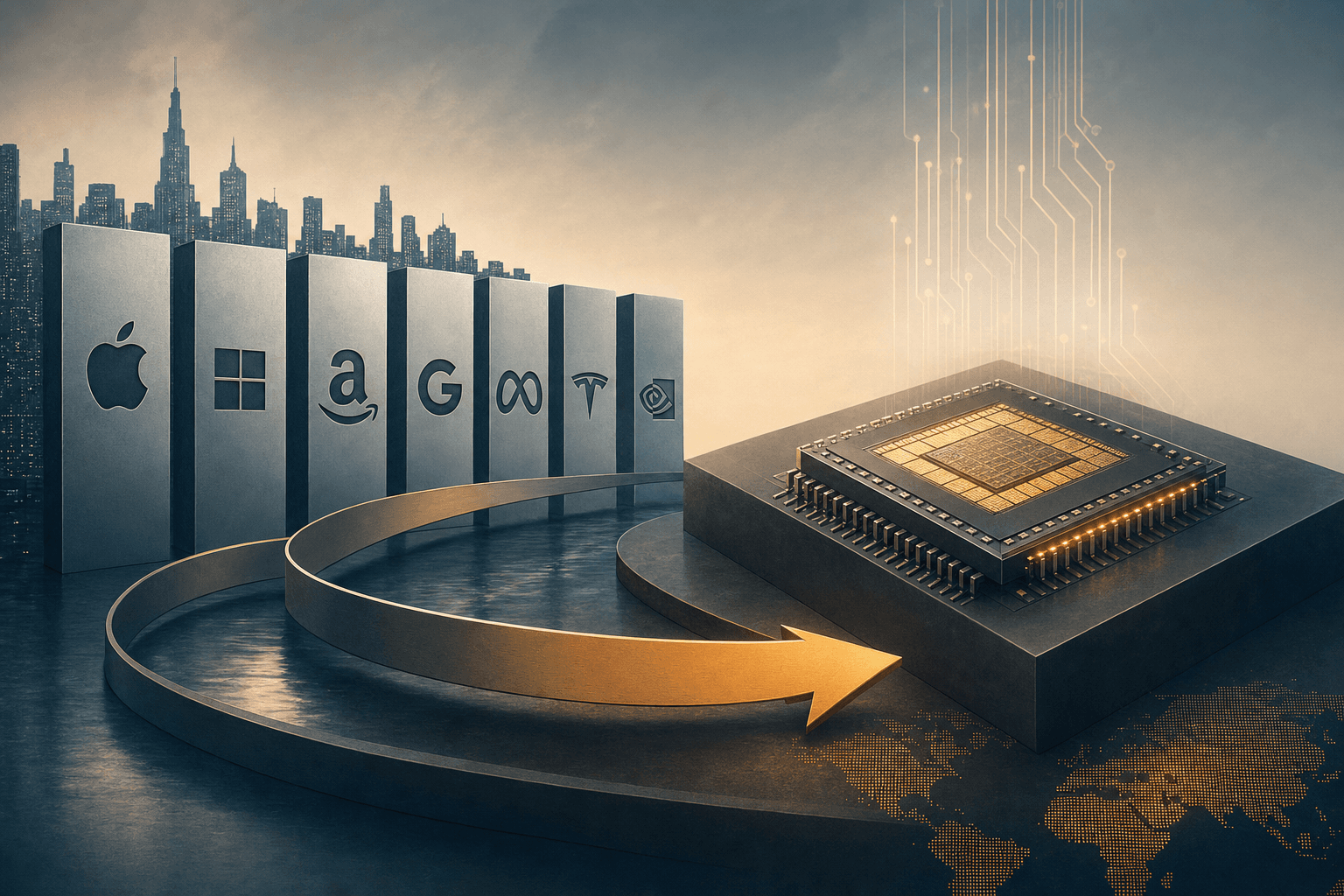
Share this article
Spread the word on social media
Opening hook: One of seven still leads, retail seeks new leaders
Only one of the Magnificent Seven, Alphabet (GOOG), has outperformed the S&P 500 year-to-date; the other members, including Apple (AAPL), have underperformed. That one-line change, involving 7 companies and millions of retail trades, is reshaping where momentum and risk concentrate in 2026.
What happened: retail flows rotated into chipmakers and memory
Over the past 6 months, some retail-platform data have indicated increased buying interest in suppliers such as SK Hynix (000660.KS) and chipmakers like NVIDIA (NVDA) and AMD (AMD), alongside periods of reduced activity in names such as Tesla (TSLA), Meta (META), and Amazon (AMZN); however, I couldn't find consistent, industry-wide evidence of a sustained rotation across all retail platforms. The reweighting is visible in some retail top-buy lists, where supplier names at times outnumber hyperscalers in top-10 buy tallies for particular brokers or data providers, though this pattern is not uniform across all brokerages.
That movement coincides with a broader reality: the Magnificent Seven at their peak represented roughly 30% of the S&P 500 by market cap, and retail is now funneling fresh allocation into a new set of leaders centered on semiconductors, memory, and data-center infrastructure.
Why it matters: this is rotation, not automatic diversification
First, the economics are real. AI training and inference prioritize GPUs, HBM memory, and specialized accelerators, which means demand for chips and memory can grow several-fold relative to legacy PC cycles. That structural shift explains why NVDA and memory suppliers are attracting buy interest, with GPU-driven revenue streams now accounting for a growing share of some vendors' top-line.
Second, historical precedents warn us about concentration swapping. The late 1990s saw a handful of names dominate market returns before the 2000 collapse; more recently, 2023-2024 gains were concentrated in a small group of mega-caps. This cycle looks similar in pattern: concentration is relocating from hyperscalers to their enablers, not disappearing. Investors who believe they are diversified because they left the Magnificent Seven may now be 1 event away from a new concentration risk centered on the chip stack.
Third, valuation and capital cycles matter. Hyperscalers' capex is rising, but returns on that capex are uncertain. Memory and chip suppliers often face booms followed by capacity-led busts. That boom-bust dynamic means a 2x revenue surge can be followed by a 30% price correction when capacity catches up, so timing and position sizing are critical for retail participants piling into supplier names.
The bull case: durable secular demand and underappreciated earnings leverage
Proponents argue a few facts favor the supplier trade. One, AI workloads require orders of magnitude more compute per model, and that drives recurring replacement and upgrade cycles. Two, semiconductor gross margins can expand materially once utilization climbs above key thresholds, so revenue growth can translate into disproportionate EPS growth. For investors aiming at long-term secular exposure, owning NVDA, AMD, or memory names gives direct leverage to the core engine of AI monetization.
The bear case: valuation risk and the next supply cycle
Counterarguments are equally persuasive. The crowding in means multiples can get stretched quickly, raising downside if revenue growth disappoints. History shows memory cycles are volatile: capacity increases after price spikes often erase profits, and small-cap enablers are most exposed. In short, buying the hottest supplier at peak sentiment risks a 1+ year drawdown if the cycle rebalances.
What This Means for Investors: actionable takeaways and tickers to watch
1) Treat this as sector rotation, not diversification. Limit any single supplier position to 3 to 5% of a diversified portfolio, and keep combined exposure to the AI supply chain below 15% unless you have a high risk tolerance.
2) Watch both hardware leaders and the demand signal. Key tickers to monitor: NVDA, AMD, INTC, MU (Micron Technology), AAPL, GOOG, AMZN, and TSLA. Use NVDA and AMD for direct GPU exposure, MU and SK Hynix for memory leverage, and INTC for a valuation play if capital spending normalizes.
3) Prioritize execution risk and free cash flow. Hyperscalers remain critical customers, so track capex guidance from Amazon and Google; a single large change in cloud capex could flip supplier earnings. If you prefer a lower-volatility route, consider AAPL and GOOG as diversified balances between software monetization and infrastructure demand.
4) Trade with discipline. Use stop losses and staggered entries on momentum names; consider options for defined risk exposure. Remember that moving from one crowded trade to another is not a risk reduction by default.
Investor takeaway: Rotation into AI chip and memory stocks is logical, but it recreates concentration. For most portfolios the prudent stance is neutral exposure with strict position limits and active monitoring of capex and supply signals.