
 Bearish Sentiment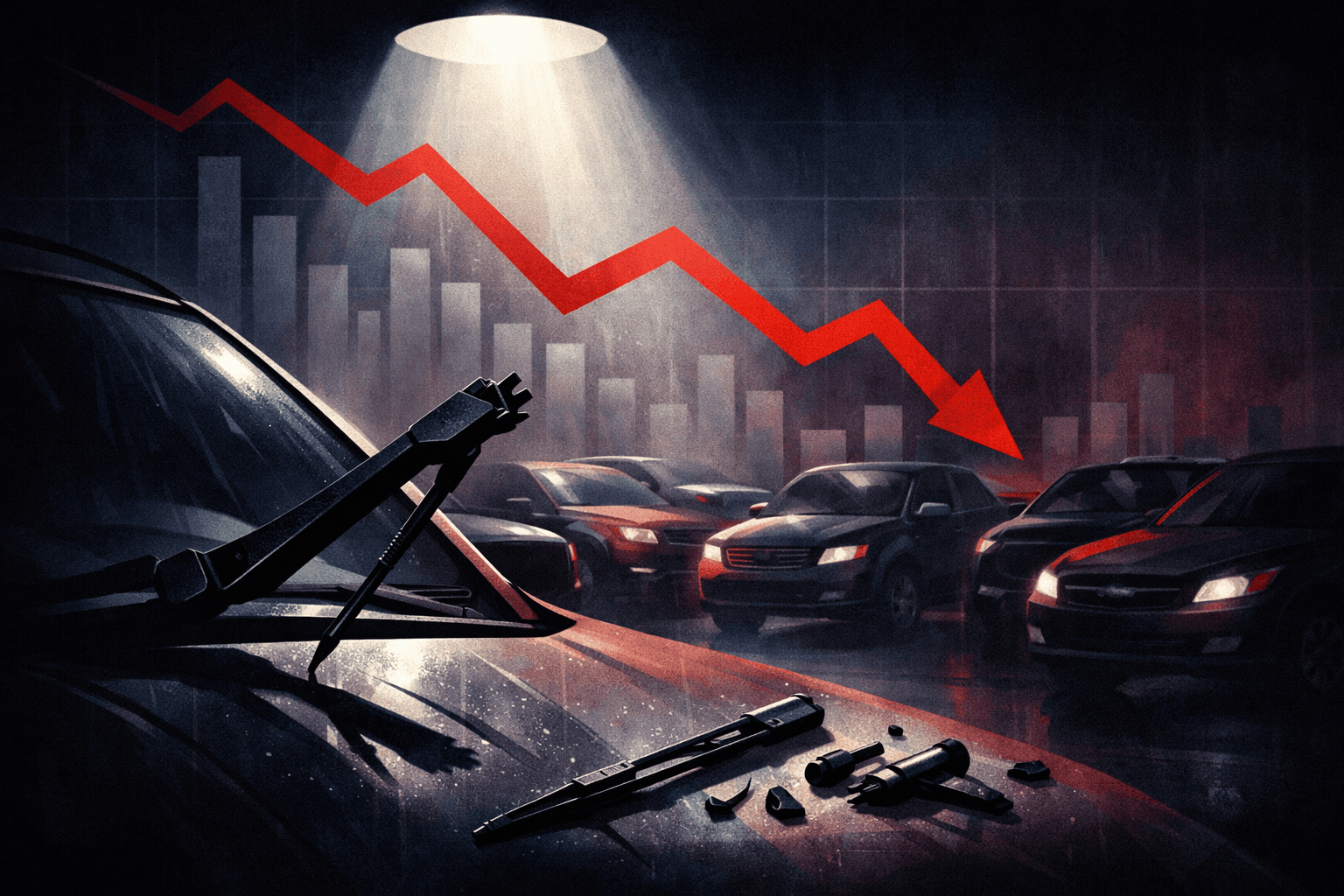
Share this article
Spread the word on social media
Opening hook: 422,613 Ford vehicles affected, immediate visibility risk
Ford announced a recall covering 422,613 vehicles after windshield wiper arms can break and reduce driver visibility, a defect the U.S. National Highway Traffic Safety Administration flagged on Tuesday. The recall spans select 2021-2023 Expeditions and Navigators, and 2022-2023 F-series Super Duty trucks, creating an outsized service burden for 15% of some dealer service bays in concentrated markets.
What happened: scope, models and recent recall history
NHTSA said 422,613 vehicles are included in the latest action. This reportedly follows Ford's larger recall last month that covered about 1.74 million U.S. vehicles for rearview camera issues. The current campaign specifically lists 2021-2023 Expedition and Navigator SUVs and 2022-2023 F-series Super Duty chassis where the wiper arm potentially detaches, increasing crash risk by impairing visibility.
Ford has already been the U.S. leader in recalls over the past year, and this adds materially to recall volume in 2024. Dealerships will receive VIN lists and parts allocations, but fixed-ops capacity and parts shipment timing will determine how fast Ford can repair the affected units.
Why it matters: direct costs, operational strain and reputational damage
At a conservative repair estimate of $100 to $300 per vehicle, this recall implies an incremental direct repair cost in the range of $42 million to $127 million for 422,613 units. That range excludes indirect costs such as logistics, rental car replacement, legal exposure and dealer labor absorption.
Operationally, a recall this size concentrates service demand. If a typical dealer sees 200 service bays and 10% of those are booked for recall work over a two-week period, appointment displacement can lead to lost revenue from non-recall repairs. Those opportunity costs compound when manufacturers run multiple recalls in the same quarter.
Historically, large safety recalls have had measurable financial effects. Major automaker campaigns in the last decade have produced multi-hundred-million-dollar hits and increased warranty reserves, while also accelerating regulatory scrutiny. For investors, the signal here is repeat incidence, not a single isolated event, and repeat incidence raises franchise risk around quality perception and resale values.
The bull case: manageable one-off cost and service revenue opportunity
The upside is Ford's scale. Ford sells millions of vehicles annually and has the dealer footprint to execute repairs across thousands of U.S. dealer locations. If Ford absorbs a $42M-$127M direct repair cost and levers dealer networks effectively, the near-term P&L hit should be absorbable without capital structure stress.
Recall work also drives fixed-ops revenue. Dealers often convert recall visits into paid maintenance and accessory sales, offsetting some recall costs. If Ford converts even 10% of these 422,613 visits into $150 incremental revenue per vehicle, that's roughly $6.3 million in ancillary dealer revenue, partially offsetting repair costs.
The bear case: rising warranty costs, brand erosion and supplier questions
Recurrent recalls increase warranty reserve volatility. If Ford's recall frequency continues and average per-vehicle remedy escalates toward $300, a multi-recall year can push incremental costs into the high hundreds of millions. That squeezes operating margins, especially on thinner-margin truck trims and fleet sales.
Repeat issues also open questions about supplier quality and engineering oversight. If the wiper-arm defect traces to a component supplier, investors need to monitor supplier exposure and potential parts shortages. A constrained parts pipeline could extend repair timelines beyond NHTSA remediation windows, aggravating reputational and legal risk.
Recalls are not just discrete expenses, they’re recurring stress tests of manufacturing, supplier control and dealer operations.
What this means for investors: monitor five specific signals
1) Warranty reserve updates: Watch Ford's next quarterly filing for any upward adjustment to warranty liabilities. A reserve increase of $200M or more would be a red flag.
2) Parts shipment and dealer capacity data: Track dealer service appointment lead times and OEM parts allocations; sustained appointment delays beyond 30 days increase risk of customer dissatisfaction and secondary costs.
3) NHTSA complaint trends: If complaints tied to wiper arms or related trims exceed 1,000 new entries in a 30-day window, this campaign may widen beyond the announced VIN set.
4) Supplier disclosures: Monitor any supplier recall or stop-sale notices. If a tier-1 supplier is implicated, watch shares of Autoliv (ALV) and other listed suppliers for correlated risk, and the potential for knock-on recalls.
5) Near-term cash flow and margin metrics: Evaluate free cash flow and adjusted EBIT margin over the next two quarters. A visible contraction greater than 100 basis points tied to recall actions would shift our view negative.
Tickers to watch
- Ford Motor Company (F) — direct exposure to repair costs, warranty reserve changes and brand risk.
- General Motors (GM) — peer for recall frequency comparisons and potential parts/supplier contagion.
- Tesla (TSLA) — valuation tethered to quality perception and regulatory scrutiny; useful comparator on software vs hardware defects.
- Stellantis (STLA) — European peer with large U.S. footprint; useful cross-check on recall activity.
- Autoliv (ALV) — safety systems supplier to monitor for supplier-side fault lines.
Actionable investor takeaway
Short-term, treat this recall as a modest but real hit: estimated direct repair cost $42M-$127M for 422,613 units and potential margin pressure if recalls persist. Over the next 60 days, focus on Ford's warranty reserve guidance and dealer service backlog. If reserves rise by more than $200M or dealer appointment delays exceed 30 days, downgrade exposure to F and related suppliers. If Ford contains repair costs within the low end of our range and converts recall visits into service revenue, this is a manageable operational issue, not a structural problem.
Monitor filings and NHTSA activity, and position size accordingly: reduce near-term cyclical exposure to F if negative signals materialize, or add on weakness if management demonstrates control and reserve discipline.
---