
 Bullish Sentiment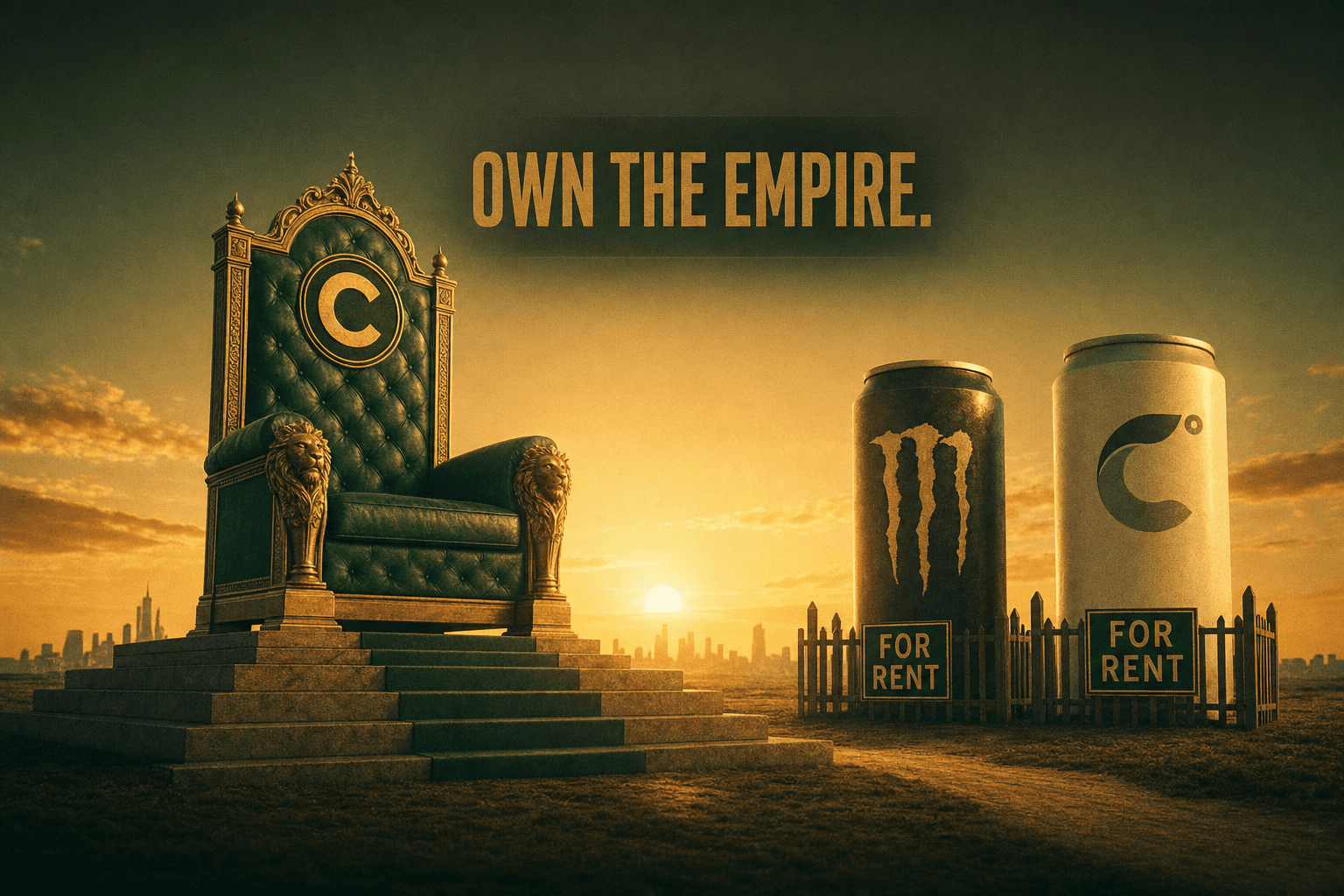
Share this article
Spread the word on social media
Cizzle Brands Just Turned Profitable. Now Let’s Talk About the Debt.
A breakout quarter raises the obvious bear question — and answers it.
On June 15, 2026, Cizzle Brands reported results for its fiscal third quarter — the three months ended April 30, 2026 — and the headline did something the company’s earlier filings had only promised. Cizzle posted its first positive adjusted EBITDA quarter, with revenue up 253% year over year.
That last number deserves a beat. A sports-nutrition company that not long ago was waved off by casual investors as “a Canadian sports drink” just more than tripled its top line against the same quarter a year earlier — and crossed into positive adjusted EBITDA for the first time. Management had guided that milestone for fiscal Q4. It arrived a quarter early.
For a company at this stage, that combination — accelerating revenue and the first quarter of positive operating profitability on an adjusted basis — is the inflection the entire thesis was built around. It also brings the bear case into sharp focus. So let’s deal with it directly.
The Question Every Skeptic Asks
Open any discussion of CZZLF and the pushback is the same: the balance sheet carries meaningful debt, and some of it carries a double-digit coupon. For a micro-cap that has only just reached positive adjusted EBITDA, that can look, on the surface, like leverage on a business that hasn’t yet earned the right to it.
It’s a fair question. It’s also the wrong way to read this particular balance sheet — because of where the debt came from and what it bought.
This Isn’t Survival Debt. It’s Acquisition Debt.
There’s an important distinction between two kinds of debt a small company can carry, and they could not be more different.
The first is survival debt — money borrowed to cover operating losses, make payroll, and keep the lights on while a business that doesn’t work yet burns cash. That debt is a warning sign, because it compounds against a problem instead of an asset.
The second is acquisition debt — money borrowed to buy a productive asset that generates its own cash flow. That debt is a tool. It’s the same instrument a private-equity buyer uses to acquire a profitable business: you finance the purchase, the asset services the financing, and equity holders capture the upside.
Cizzle’s debt is overwhelmingly the second kind. The bulk of it was raised to fund the December 2025 acquisition of the former Flow Water co-manufacturing business — now Cizzle Brands Manufacturing Inc., operating the CWENCH Hydration Factory in Aurora, Ontario. Cizzle didn’t borrow to survive. It borrowed to buy a factory.
And here is the part that ties straight back to the headline: that factory is exactly what drove this quarter’s revenue surge and the move into positive adjusted EBITDA. The asset the debt financed is the asset that just made the company profitable.
How the Financing Is Actually Structured
The terms matter, because they were built for precisely this kind of ramp.
The senior secured facility, provided by Orion Infrastructure Capital, carries a 12% coupon — the number that draws the eye. But it was structured so that interest in the early months is paid in kind: added to principal rather than drawn out of cash. That’s a deliberate design choice. It gives the acquired business room to integrate and scale before the financing demands cash out the door — which is exactly the runway a newly acquired manufacturing operation needs.
The balance of the acquisition financing includes a vendor take-back note — financing provided by the seller — repayable as a single payment at the end of its term rather than amortized along the way. Again, the structure front-loads operational flexibility and back-loads the cash obligation.
Put plainly: the financing was engineered so the asset has time to perform before the debt asks for cash. This quarter is the first hard evidence that the performance is showing up on schedule — in fact, ahead of it.
Why Positive EBITDA Changes the Conversation
Before this quarter, the debt and the profitability were both projections. A skeptic could reasonably say: nice structure, but the asset still has to prove it throws off the cash to service this.
That’s no longer a projection. With the first positive adjusted EBITDA quarter on the board — and arriving a quarter ahead of guidance — the company has produced the first real data point that the acquired manufacturing business does what the financing assumed it would. The contracted, take-or-pay nature of the factory’s customer commitments was always the underwriting case for the debt. This is the first quarter where that case shows up in actual results rather than in the pro formas.
Debt against a money-losing business gets scarier every quarter. Debt against a business that just turned the corner gets more manageable every quarter. Which of those trajectories Cizzle is on is, as of this report, no longer a matter of opinion.
The Pattern: How the Last Two Beverage Breakouts Started
Investors who have watched the functional-beverage category for a while have seen this setup before. The two best-performing names of the modern era — Monster and Celsius — both began as small, easily dismissed brands that crossed a profitability inflection and then compounded for years.
Monster $MNST is the textbook case. Rodney Sacks and Hilton Schlosberg bought a bankrupt Hansen’s out of receivership in 1992 for roughly $14.6 million. For years it was a sleepy natural-soda company. Then energy drinks hit, and the numbers went vertical: between 2002 and 2007, revenue grew more than 880% and net margin climbed from about 3% to over 16%. The stock became one of the great compounders in U.S. market history.
Celsius is the more recent version. In 2010 it was a forgotten brand doing roughly $5 million a year, sold mostly in Scandinavian gyms and a handful of U.S. health-food stores. The inflection came in 2022, when PepsiCo took an equity stake and became its distribution backbone; by the end of 2025, Celsius had crossed $2 billion in trailing revenue. Worth saying honestly: the road was not a straight line & Celsius $CELH suffered a brutal channel-inventory correction in 2024 that roughly halved the stock before it recovered. Early-stage beverage stories are volatile, and Cizzle’s will be too.
The shared pattern in both: a differentiated product, a credibility-building distribution breakthrough, and an operating-profit inflection that turned a “cute small brand” into a platform the market had to re-rate. Cizzle is now standing at that same kind of inflection — its first positive adjusted EBITDA quarter, on revenue up 253%. That does not guarantee it follows the same path; most small beverage brands never do. But it is the same starting line.
The One Thing Cizzle Does That Monster and Celsius Don’t.
Here is the structural twist, and it loops straight back to the debt.
Monster and Celsius are both deliberately asset-light. Neither owns its factories. Monster outsources essentially all production to third-party bottlers and co-packers and rides Coca-Cola’s distribution; Celsius does the same and rides PepsiCo’s. It is a capital-efficient model — and it means the co-packer’s margin, the co-packer’s capacity, and the co-packer’s priorities all sit outside the company’s control.
Cizzle took the opposite path. The debt that skeptics fixate on is precisely what let it buy the co-packer instead of renting one. It owns the CWENCH Hydration Factory outright. That is the trade: Monster and Celsius kept their balance sheets clean and handed away manufacturing margin and control; Cizzle took on acquisition debt to capture both.
Whether that trade pays off depends on execution — owning a factory is only an advantage if you fill it. But this quarter’s swing to positive adjusted EBITDA, with the contracted take-or-pay volume behind it, is the first evidence that the owned-manufacturing bet is converting into the kind of profit inflection that, in this category, has historically been the beginning of the story rather than the end.
The Takeaway
The bear case on Cizzle has always leaned on one word: leverage. This quarter reframes it. The leverage was used to acquire a productive, contracted manufacturing asset; the financing was structured to give that asset time to ramp; and the asset has now produced the company’s first positive adjusted EBITDA quarter — early.
None of that erases the obligation. The notes still come due, refinancing and execution risk are real, and a single quarter is a data point, not a trend. But the question has changed. It is no longer “can a money-losing micro-cap carry this debt?” It is “now that the asset is generating cash, how quickly does the balance sheet de-risk from here?”
That is a materially better question to be asking. And it’s the one the next few quarters will answer.