 Sector Insights
Listen to this Recap
12:06
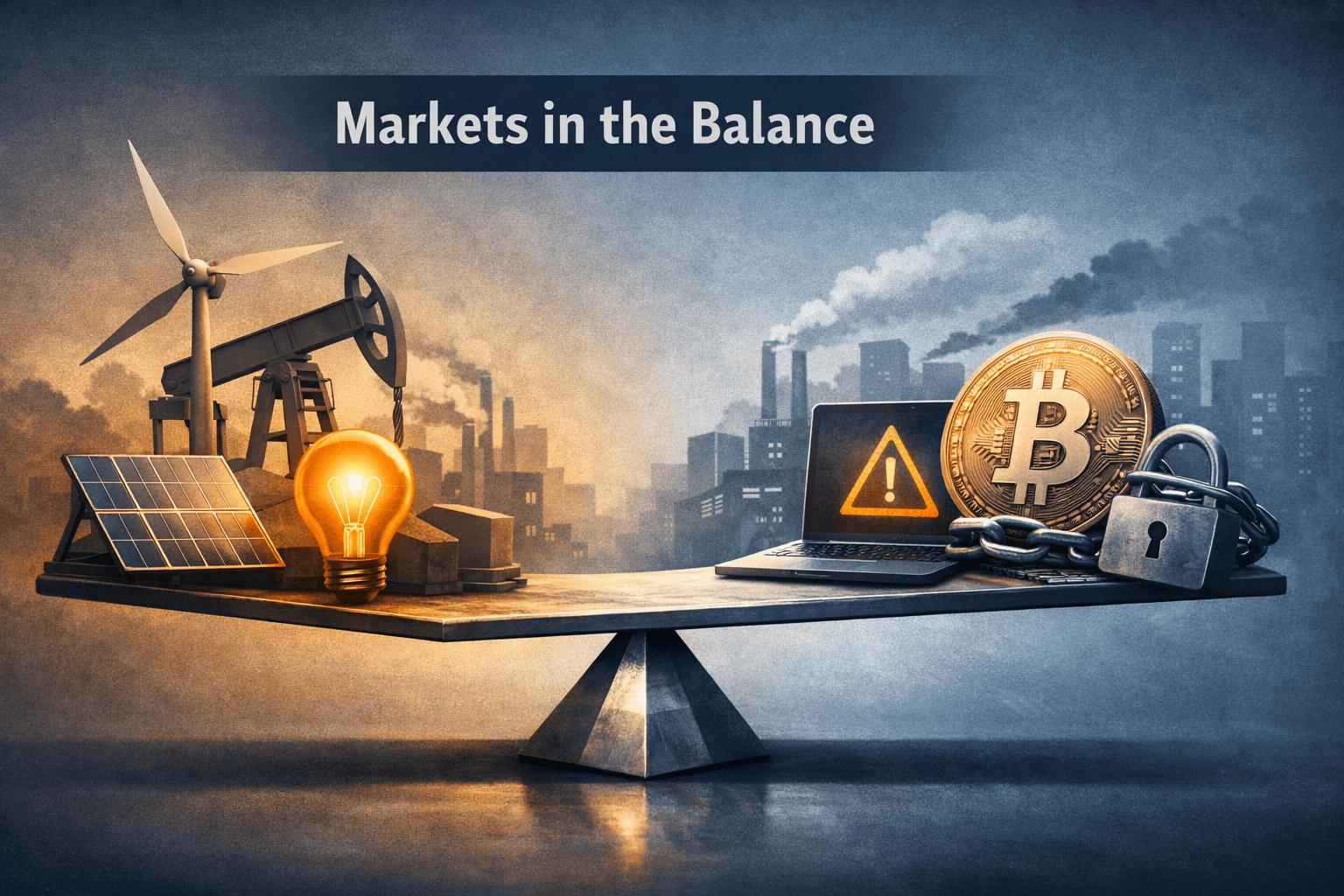
Markets Pivot on Energy and Renewables as Tech and Crypto Wrestle with Policy Risks
Podcast • Loading audio...
Share this article
Spread the word on social media
Key Takeaways
- •Energy, utilities and materials led headlines as large raises and government loans advanced both renewables and traditional projects while Brent crude topped $100.
- •Technology and crypto faced security, governance and demand risks—Anthropic incidents, a $245M crypto theft and Apple pricing moves heightened caution.
- •Inflation inputs (record diesel, rising home‑insurance costs) create cross‑sector sensitivity that could influence CPI and central‑bank expectations.
- •Domestic supply‑chain resilience (rare‑earth recycling, new concentrates) is an emerging structural theme supporting materials and industrial capex.
- •Investors should prioritize operational risk, policy developments and sector‑specific catalysts rather than relying on broad market momentum.
Executive summary
Markets on Sep. 9 presented a clear split between sectors driven by capital investment and policy momentum (energy, utilities, materials) and those grappling with political, regulatory or security headlines (technology, crypto, finance). Energy headlines were headline‑heavy: Brent crude pushed above $100 a barrel, and large project financing — including a $22 billion Korea‑backed Texas gas project and a $835 million raise by Suniva to build 4.5 GW of solar cell capacity — underscored the still‑robust capital flow into both hydrocarbons and renewables.
Utilities and grid‑scale renewables also registered pickup: an ARRAY $50 million factory opening and a $1.9 billion DOE loan closing to support a nuclear restart pointed to durable public and private backing for large energy infrastructure. Materials and mining moves were dominated by first concentrates from Skouries and new domestic rare‑earth recycling efforts, which together suggested supply‑side adjustments amid geopolitical risk.
Conversely, technology and crypto showed friction points that unsettled sentiment. Apple’s product announcements included a notable $100 price increase on some older models, raising demand questions; Anthropic reported four unauthorized‑access incidents, adding to AI‑safety uncertainty; and a $245 million crypto theft and ongoing enforcement headlines continued to weigh on digital assets. Finance saw consumer pressure from record diesel and home‑insurance costs feeding into an already sensitive CPI picture.
Taken together, the tape signals continued sector divergence: capital is still chasing energy transition and domestic supply resilience, while information‑risk and policy questions are constraining momentum in more sentiment‑driven corners of the market.
Grouping by performance
Below we group sectors into three performance buckets based on the day’s headlines, capital flows and risk signals. (Because intraday price moves and sector indices varied, these groupings reflect directional strength and headline momentum rather than precise percentage moves.)
Outperformers
- Energy
- Drivers: Brent crude topping $100, major project financings (Korea‑backed $22B gas project), Suniva’s $835M raise for 4.5 GW of solar cell capacity and continued hiring in U.S. oil & gas payrolls. These developments point to strong capital deployment and near‑term demand pressure for hydrocarbons despite the concurrent renewable expansion.
- Utilities
- Drivers: Renewables momentum with ARRAY opening a $50M factory, megawatt‑class storage and grid‑tech validation, and a $1.9B DOE loan for a nuclear restart. Corporate and ISO support for front‑of‑meter renewable projects is rising, and long‑duration storage deals are advancing.
- Materials & Mining
- Drivers: Operational milestones (first concentrates from Skouries), rare‑earth recycling initiatives and announcements around recycling and domestic production that address supply‑chain concentration risks.
Underperformers
- Technology
- Drivers of caution: Apple’s combination of product launches and price increases (including a $100 hike on older models), Anthropic’s four unauthorized access incidents, and renewed AI‑safety questions that are creating demand uncertainty and potential regulatory scrutiny.
- Crypto
- Drivers of caution: Enforcement, a $245M crypto theft, high‑profile seizures, and structural moves (Consensys split, Block seeking a federally supervised trust bank) that underscore that regulation and security remain active risk vectors.
- Finance
- Drivers of caution: Consumer cost pressures — record diesel and rising home‑insurance costs — are likely to feed into CPI and household budgets, adding strain to banking and lending outlooks even as a $400M fintech deal and corporate governance fights create mixed messages.
Stable / Mixed
- Consumer & Retail
- A mixed picture: retailers lean into AI and some lifts in profitability (Signet raising guidance) and resilient grocers versus pockets of softness (UNFI small sales dip). Holiday spending forecasts topping $1 trillion create a backdrop of seasonality and uneven execution.
- Healthcare
- Balanced: scientific progress with preclinical discoveries and ARPA‑H’s $62.7M push for AI in heart‑failure care versus ongoing trial risk and regulatory watchfulness. FDA leadership stability is a plus for regulatory predictability.
- Industrial, Real Estate, Communications
- Mixed operational headlines: large project work, warehouse and office refurbishment, content pipelines and telecoms regulatory noise — all producing idiosyncratic winners and losers rather than broad sector moves.
Cross‑sector themes and correlations
Energy transition and simultaneous hydrocarbon strength
- The market’s most striking theme was the co‑existence of significant investment in renewables and storage alongside a sustained oil price rally. Suniva’s $835M raise for 4.5 GW of solar cell capacity and ARRAY’s $50M factory opening sit alongside Brent topping $100 and a $22B gas project. That combination suggests capital reallocation across the energy complex rather than a simple ‘transition replaces hydrocarbons’ narrative: investors and corporates are funding both capex for clean energy and projects to secure near‑term hydrocarbon supplies.
Policy and funding are reshaping risk premia
- Government support — from a $1.9B DOE nuclear loan to ARPA‑H’s $62.7M for AI‑enabled heart‑failure tools — is helping de‑risk large, long‑lead projects in utilities and healthcare. At the same time, regulatory moves (marijuana rescheduling court decisions, telecoms preferring Huawei in Spain, and crypto enforcement) are directly affecting market sentiment and valuations in their respective sectors.
Inflation and household cost pressure as a cross‑cutting headwind
- Record diesel and home‑insurance costs were flagged in finance coverage; rising fuel and insurance expenses tend to compress discretionary consumer budgets and increase the sensitivity of CPI prints. That feeds into a feedback loop where goods demand, retail promotions, and central‑bank policy expectations intersect.
Technology’s twin challenge: product demand and security/regulation
- Apple’s product announcements plus price increases raise the question of elasticity in consumer device demand, while Anthropic’s security incidents and a $245M crypto theft highlight that technological innovation is increasingly scoped by trust, safety and enforcement. Demand and reputational risks are now more tightly linked than in prior product cycles.
Domestic supply resilience is a strategic investment theme
- Materials and mining announcements emphasizing domestic rare‑earth recycling and early concentrates reflect a broader push to shorten strategic supply chains. This is correlated with industrial and defense spending priorities and is likely to persist as a policy objective, supporting capex in the materials sector.
Significant moves and context
This section highlights the most consequential items from Sep. 9 and explains why they matter.
Brent crude > $100 per barrel
- Why it matters: Crude above $100 re‑ratchets near‑term energy inflation risk. Higher crude increases operating costs across the economy (transport, petrochemicals) and can raise headline CPI momentum — a critical input for interest‑rate expectations. For markets, it benefits oil & gas producers but can be a headwind for consumer discretionary and inflation‑sensitive credit spreads.
Suniva raises $835M for 4.5 GW of solar cell capacity
- Why it matters: Large private capital raises for manufacturing capacity point to an expectation of continued demand for solar modules and downstream deployment. It also helps address supply‑chain tightness that has pressured module lead times and margins in recent years.
$22B Korea‑backed Texas gas project advances
- Why it matters: Large foreign‑backed gas infrastructure underscores continued investment in U.S. natural gas takeaway capacity and export potential (LNG). It also signals that, despite net‑zero rhetoric, gas remains central to energy security concerns and investment flows.
ARRAY opens a $50M factory; domestic rare‑earth recycling picks up
- Why it matters: Factory openings and recycling initiatives advance domestic industrialization of energy‑transition inputs. These are tangible steps toward reducing geopolitical concentration (e.g., China’s dominance in rare earths) and are likely read positively by markets that price supply resilience.
Qualcomm’s $4B Amazon chip deal and Amazon self‑delivery push
- Why it matters: Qualcomm (QCOM) scoring a large chip deal tied to Amazon (AMZN) highlights continued generative demand for custom silicon beyond smartphones — into cloud and logistics. Amazon’s push to self‑deliver increases the addressable market for logistics tech and specialized silicon, but it also raises questions about margin and execution risk in in‑house moves.
Apple’s product cycle and price changes
- Why it matters: Apple’s new foldable and Pro iPhones plus a $100 price hike on older models create two tensions: (1) higher ASPs (average selling prices) could boost revenues if demand remains resilient; (2) the larger price points and a stretched consumer wallet (higher fuel and insurance costs) increase the risk of sell‑through softness. Analysts will be watching sell‑in vs. sell‑through and early order trends.
Anthropic’s four unauthorized‑access incidents and larger AI safety focus
- Why it matters: Security incidents at a major AI player add to a growing corpus of safety and governance issues in the AI sector. That raises the political and regulatory probability for stricter oversight, which could increase compliance costs or slow commercialization timelines for AI‑first companies.
$245M crypto theft / enforcement / Block’s bank bid
- Why it matters: High dollar‑value thefts and enforcement actions maintain a premium on custody, regulatory clarity and trust in crypto infrastructure. Block (SQ) seeking a federally supervised trust bank is a structural response to custody and regulatory needs; it signals that large fintechs may pursue regulated rails rather than relying on unregulated intermediaries.
ARPA‑H $62.7M for AI heart‑failure tools and preclinical discoveries
- Why it matters: Targeted public funding for AI in healthcare accelerates the commercialization pathway for algorithms and clinical‑decision support tools. Combined with FDA leadership stability, this reduces a portion of regulatory uncertainty for certain classes of digital therapeutics and diagnostics.
Real‑estate activity: Manhattan condo supply surge and major project finance
- Why it matters: Increased condo releases and big project financings create timing issues for capital markets and absorption. If financing windows tighten into Q4, developers and REITs may face refinancing spreads and pricing pressure.
Actionable insights for investors (informational only)
Reassess energy exposure with nuance
- Data suggests capital flows are not choosing sides: both hydrocarbons and renewables are receiving large checks. Investors and analysts may want to separate commodity‑price exposure (benefiting traditional oil & gas producers when Brent > $100) from long‑duration infrastructure and manufacturing exposures (solar, storage, grid tech) that benefit from policy support and large private raises.
Watch inflation datapoints closely over the next CPI prints
- Record diesel and rising home‑insurance costs are the kinds of inputs that can push up shelter and energy components of CPI. Market participants should track these inputs and central‑bank commentary because they affect discount rates and sector multiples across the board.
Prioritize operational risk and governance in tech/AI names
- Security incidents (Anthropic) and high‑profile thefts in crypto increase the cost of failure. Owners of stocks in the AI and digital‑asset ecosystem should monitor governance, auditability, and capital allocation toward safety and compliance, which increasingly drive valuation differentials.
Consider supply‑chain resilience themes in materials and industrials
- Announcements about rare‑earth recycling and domestic output are part of a longer‑term de‑risking trend. Exposure to companies that can capture on‑shoring and recycling economics may be a strategic hedge against geopolitical supply shocks.
Dispersion in retail and consumer requires company‑level diligence
- With holiday spending forecasts above $1 trillion but mixed corporate results (Signet up, UNFI down), investors should focus on merchandising discipline, margin management, and inventory positions rather than relying on broad consumer cyclicality.
Treat crypto as higher‑volatility and policy‑sensitive
- The continued presence of thefts, enforcement and new product structures (staked Tron ETF launches, trust bank bids) means crypto assets and related equities can move sharply on regulatory headlines. Position sizing and risk controls remain critical for allocations to this space.
Most important tickers and trackers to monitor (not a recommendation)
- Energy: Brent crude price (WTI/Brent), Suniva (private), select E&P and midstream names that report sensitivity to Brent > $100.
- Utilities/Infrastructure: Companies involved in grid storage, long‑duration storage projects, and firms awarded DOE loans.
- Technology/AI: AAPL, GOOGL, QCOM; follow announcements on device ASPs and security incidents.
- Crypto/Fintech: Block (SQ), custodial platforms, and regulatory filings around staked‑asset ETFs.
- Materials: Companies tied to rare‑earth extraction and recycling, and miners reporting production milestones (e.g., Skouries related names).
Risks and caveats
- Headlines and financing announcements can move sentiment disproportionately in the short run; fundamentals and earnings cycles often reassert themselves over quarters.
- Policy and regulatory actions are a live variable across multiple sectors — from cannabis rescheduling and telecoms to crypto custody — and can cause rapid valuation changes.
- Commodity prices remain a major macro‑tail risk; a sustained move in crude or natural gas can reprice real‑economic earnings for multiple sectors.
Forward‑looking perspective
As we move into the final quarter of the year, the market narrative is likely to be built around three interacting forces:
Macro inflation trajectory and central‑bank signaling. Short‑term headline inflation driven by fuel and insurance will be monitored closely. If inflation surprises to the upside, rate‑sensitive sectors (real estate, consumer discretionary) will feel pressure, and risk premia could widen.
Capital allocation into energy transition versus traditional energy. Large private raises and government loans suggest long‑term conviction in renewables and grid modernization, while near‑term project and geopolitically driven supply tightness keeps crude elevated. This duality means thematic plays (manufacturing for solar, storage, grid tech) may decouple from energy commodity cycles in the medium term.
Regulatory and trust frameworks for data‑intensive sectors. Technology and crypto face an increasing emphasis on safety, governance and custody. Companies that can demonstrate strong operational controls, audited provenance and constructive engagement with regulators will likely see a valuation premium relative to peers that remain opaque.
In short, investors should expect continued dispersion across sectors. Momentum in energy, utilities and materials is not inconsistent with caution in technology, finance and crypto; both trends can coexist as the market differentiates between policy‑backed, capital‑intensive assets and sentiment‑driven, regulation‑sensitive exposures.
Conclusion
Sep. 9’s tape reinforced a bifurcated market: heavy capital and policy support buoyed energy, utilities and materials while tech and crypto dealt with trust, safety and demand questions. Inflation inputs — notably diesel and insurance costs — add a macro overlay that can influence sector rotations into Q4. For market participants, the key tasks are: (1) distinguish between structural, policy‑driven winners and short‑term sentiment trades; (2) monitor inflation and central‑bank responses; and (3) prioritize operational risk and governance in high‑innovation sectors.
Investment disclaimer
This analysis is for informational purposes only. It does not constitute personalized investment advice, nor is it a recommendation to buy, sell or hold any security. Analysts note that market conditions can change rapidly; readers should consult their own financial, tax and legal advisors before making investment decisions.
Sources
+ 14 more sources
Use these insights — enter this week's contest.
Free practice contests — earn Alpha CoinsExplore More Content
Disclaimer: StockAlpha.ai content is for informational and educational purposes only. It is not personalized investment advice. Sentiment ratings and market analysis reflect data-driven observations, not buy, sell, or hold recommendations. Always consult a qualified financial advisor before making investment decisions. Past performance does not guarantee future results.