 Sector Insights
Listen to this Recap
11:09
Holiday Headlines, Policy Headwinds and Renewable Momentum: A Cross‑Sector Labor Day Wrap
Podcast • Loading audio...
Share this article
Spread the word on social media
Key Takeaways
- •Renewables and storage project wins reinforced constructive momentum across utilities and parts of the energy sector.
- •Communications and media benefited from a record $4.76B summer box office and global anti‑piracy cooperation, but distribution reliability (telecom outages) is a risk.
- •Regulatory and legal uncertainty drove headline risk in cannabis and healthcare; late‑stage trial pauses remain binary for valuations.
- •Crypto saw a large bridge hack with roughly 84.4% of stolen funds returned, underscoring persistent custody and smart contract risks despite partial recovery.
- •Commodities and geopolitics (including oil supply concerns and China policy moves) remain cross‑cutting factors that could create volatility as markets reopen.
Executive summary
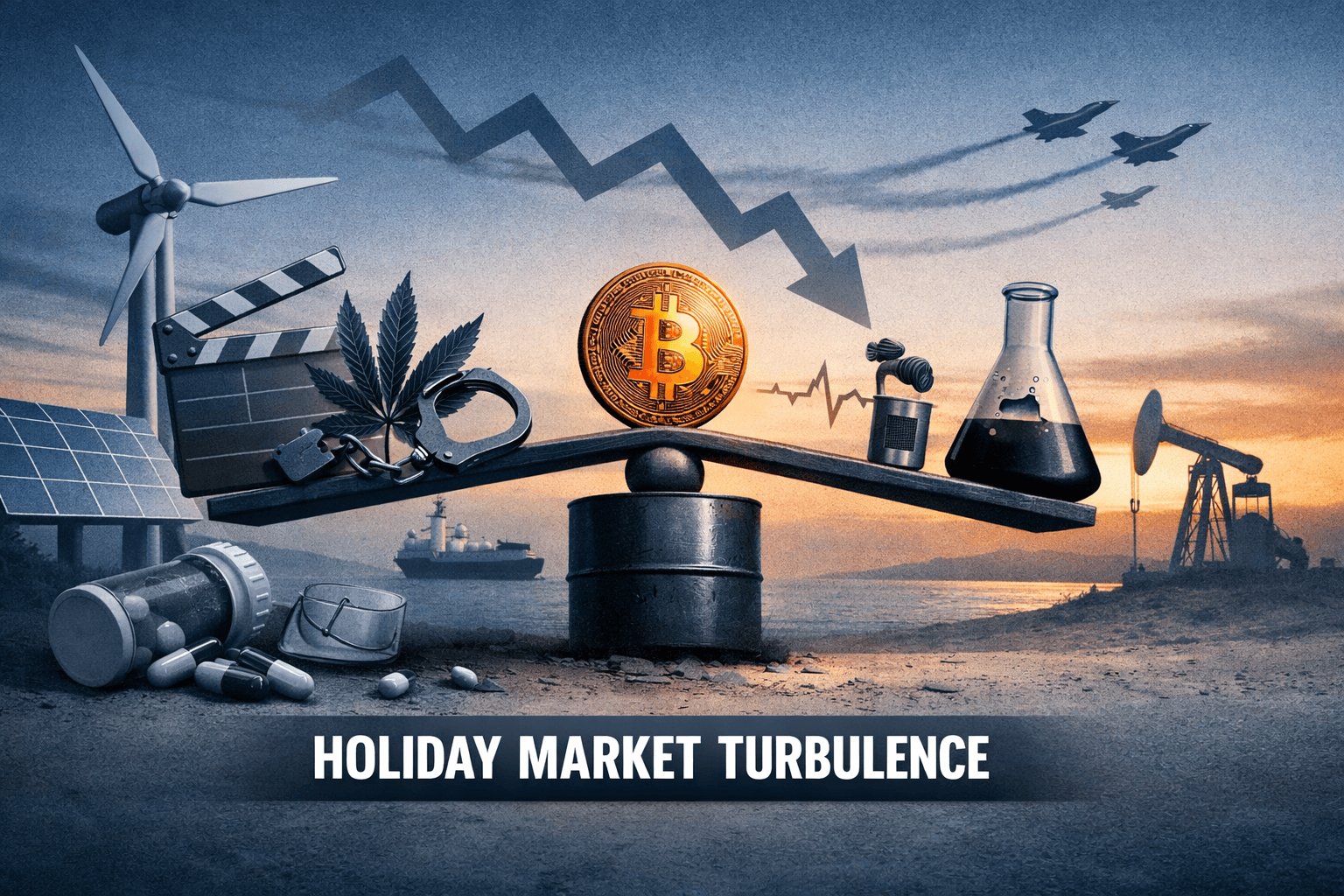
Trading desks were quiet on Labor Day, but a heavy headline flow across 24 sectors left the market with a distinct post‑holiday direction. Operational wins in renewables and utilities, a record summer box office and fresh AI and chip developments kept momentum narratives alive. At the same time, regulatory and legal uncertainty — most visibly in cannabis, parts of healthcare and telecoms — amplified headline risk. Crypto headlines were mixed: a large bridge hack saw most funds returned, yet whale flows signaled caution even as Bitcoin hovered near $80,000.
Key datapoints that shaped cross‑sector sentiment over the long weekend:
- Summer box office hit a record $4.76 billion globally, a positive signal for content owners and distributors.
- A recent bridge theft saw $320 million taken and roughly $270 million returned — about 84.4% of the stolen assets recovered.
- Goldman Sachs flagged a $120-per-barrel oil scenario, keeping attention on upstream risk and inventory dynamics.
- Apple’s Sept. 9 event, ongoing AI product updates and a semiconductor espionage arrest sustained technology headlines into the reopening.
With markets closed, there were no consolidated intraday sector returns to report; instead, the story was a qualitative one: renewable project wins and media demand underpin optimism in parts of utilities and communications, while policy and legal uncertainty pressure cannabis, parts of healthcare and crypto. Below we group sectors by relative momentum, outline cross‑sector themes, and identify the most consequential developments investors should watch as trading resumes.
Grouping by performance (outperformers, underperformers, stable)
Note: because U.S. markets were closed, this grouping reflects headline-driven momentum and fundamental developments rather than actual intraday returns.
Outperformers (positive operational momentum and constructive headlines)
- Utilities: Multiple reports highlighted operational wins in storage, new solar operations and state electric truck programs. Renewables and storage startups attracted attention and positive project updates.
- Communications & Media: A record $4.76B summer box office, anti‑piracy pacts by the Motion Picture Association and strong content pipeline items (casting and new series) created momentum for content owners, streaming platforms and distributors.
- Technology: AI research updates, product roadmaps and continuing chip developments (including Huawei’s new phone and Kirin chip in international headlines) kept sector sentiment constructive despite regulatory and legal questions.
Underperformers (policy, regulatory or trial setbacks increasing headline risk)
- Cannabis: A surge of state and federal legal signals plus banking and enforcement headaches increased policy risk and uncertainty about near‑term profitability and access to services.
- Healthcare: Mixed clinical outcomes — notably Novo Nordisk pausing two cardiovascular trials and other late‑stage setbacks — increased binary risk in pharma and biotech.
- Crypto: Security incidents—despite the partial recovery of funds—plus whale selling and proposed regulatory tightening in parts of Asia left a cautious tone.
Stable / Mixed (news provided offsetting forces or no strong directional signal)
- Energy: Renewables projects and electrification initiatives gave the sector constructive long‑term narrative, while oil supply and geopolitical risk (and warnings such as Goldman Sachs’ $120 scenario) kept short‑term volatility top of mind.
- Materials: Project momentum and monitoring tools were offset by China’s looming critical‑minerals decision, leaving a mixed outlook.
- Real Estate & Finance: Data and lending shifts, plus holiday macro commentary on commodities, produced incremental but not directional shocks.
Cross‑sector themes and correlations
- Renewable energy and electrification link utilities, energy and autos
Renewables and storage project wins appeared across utilities and energy headlines. Reports of EV cost advantages and expanded storage startups reinforce a cross‑sector narrative: as transportation electrifies, power generation and grid modernization become closer to the center of the consumer and industrial transition. That correlation suggests that positive news in one domain (e.g., favorable storage project outcomes) can lift equipment vendors listed in materials and technology names that supply grid controls and inverters.
- Content demand and distribution dynamics lift media, with telecom reliability as a potential constraint
A record summer box office and studio-level anti‑piracy pacts benefited communications and media companies' pricing and monetization outlooks. But the Telstra outage review highlighted how distribution networks and telecom reliability can act as a choke point — meaningful for streaming services that face growth limits or user dissatisfaction from imperfect delivery.
- Regulatory risk remains a unifying headwind
Cannabis policy uncertainty, healthcare trial oversight, and rising scrutiny of AI and semiconductors demonstrate that regulation — not just fundamentals — is a primary driver of near‑term volatility. Investors are increasingly pricing not only company execution but also regulatory outcomes into valuations, especially where binary events (trial halts, legal rulings, export controls) can cause sharp re‑ratings.
- Crypto and cybersecurity issues reverberate across finance and technology
Bridge hacks, hardware wallet thefts and large Bitcoin flows affect confidence in on‑ and off‑ramps, prompting additional compliance and custody scrutiny among financial institutions, exchanges and wallets. Partial recovery of stolen funds reduces immediate balance sheet risk but does not eliminate structural concerns about custody and smart contract vulnerabilities.
- Commodities and geopolitics continue to link energy, materials and finance
Goldman Sachs’ $120 oil warning, shipping and refinery risk headlines, and China’s critical minerals policy underscore how geopolitical moves and logistics can transmit across commodity prices, cost inputs for manufacturers and the cost of capital for resource projects.
The most significant moves — details and context
- Utilities/renewables: storage and solar operational wins (why it matters)
Multiple operational announcements in storage, solar and renewable natural gas projects strengthen the investment case for scale economies and grid flexibility. These wins are meaningful for two reasons: first, execution on storage projects demonstrates declining project risk and clearer path to earnings recognition for project developers; second, they accelerate demand for upstream suppliers (material processors and battery component makers). Analysts note that as states expand electric truck programs and fleet electrification, recurring load and charging demand will create predictable revenue streams for utilities, potentially reframing credit profiles for regulated and merchant businesses.
- Communications & Media: record box office and anti‑piracy cooperation (why it matters)
A $4.76 billion summer box office underscores a resilient consumer willingness to pay for premium experiences and helps studios and theatrical distributors rebuild pricing power after pandemic-era disruptions. The Motion Picture Association’s global anti‑piracy declarations are a structural win for content owners — reducing leakage and supporting long‑term monetization across windows (theatrical, streaming, international). For platform operators this could mean steadier content ROI and a clearer rationale for production investment.
- Crypto security incident: partial recovery of bridge theft (why it matters)
The Liquid bridge theft saw $320 million stolen and roughly $270 million returned, leaving about 15.6% unrecovered. While the recovery rate is positive and demonstrates improved coordination among custodians and investigators, the event still underlines that custody and smart contract risk are persistent. Data suggests market participants are watching institutional flows and custody solutions closely; analysts note that repeated incidents, even with high recovery rates, can increase costs for regulated custodians and slow institutional onboarding.
- Healthcare trial setbacks: Novo Nordisk and Ionis trial halts (why it matters)
Novo Nordisk’s pause of two cardiovascular trials and other late‑stage disappointments increase the sector’s binary risk profile. Late‑stage trials carry significant valuation weight; when they fail or are paused, implied future cash flows for drug developers compress quickly. Concurrently, positive research updates from institutions like Cedars‑Sinai on genetics and microbiome science illustrate the sector’s bifurcation: basic science and early‑stage research progress, while certain monetizable late‑stage bets can swing sharply on data. Analysts caution that pipeline diversification and risk management in biopharma portfolios are more important than ever.
- Energy: renewables momentum vs. an active oil supply narrative (why it matters)
Energy headlines were split. A wave of renewables and storage projects across jurisdictions from Texas to Fiji points to durable capex demand for grid and storage infrastructure. Conversely, Goldman Sachs’ articulation of a $120 oil scenario and reports of refinery strikes and shipping risk inject short‑term volatility into oil and gas markets. The twin narrative — long‑term structural change toward renewables amid short‑term supply shocks in hydrocarbons — suggests differentiated returns across subsegments: developers and equipment makers may benefit from multi‑year contracts, while upstream oil names remain exposed to geopolitical and logistic shocks.
- Technology: AI, chip developments and supply‑chain security (why it matters)
AI research and products dominated tech headlines along with a semiconductor espionage arrest and Huawei’s new product. The rapid pace of AI development supports a constructive narrative for software and cloud infrastructure, but supply‑chain integrity and national security concerns — as evidenced by the espionage arrest and export control chatter — add a layer of policy risk for hardware and chipmakers. The combination means software-led revenue growth can coexist with persistent capex and margin pressure in semiconductor manufacturing.
- Cannabis: policy and banking remain the critical constraints (why it matters)
State‑level legalization pushes and court rulings generated headlines, yet banking and enforcement issues keep operational and financing risk elevated. Without clear federal banking reforms and consistent interstate policy, cannabis operators face higher costs of capital and constrained growth. For private and public market investors, this equates to a longer timeline to normalization and higher discount rates applied to future earnings.
Actionable insights for investors (informational, non‑advisory)
Reassess regulatory sensitivity in portfolios: Data suggests that regulatory shocks are a primary driver of near‑term volatility across cannabis, healthcare and technology segments tied to national security. Analysts note that stress‑testing positions for sudden policy shifts can clarify potential downside.
Focus on execution and contracted revenue in renewables: Project wins and state programs for EVs point to companies with proven project execution and long‑dated contracts as having clearer cashflow visibility. Investors tracking utilities or project developers may want to monitor pipeline conversion rates and offtake counterparties.
Monitor custody and flow metrics in crypto exposures: The partial recovery of stolen bridge funds reduces immediate balance‑sheet risk but does not resolve structural custody concerns. Watch institutional inflows/outflows, wallet concentration metrics, and regulatory proposals in key jurisdictions (e.g., proposed VASP checks in the Philippines).
Watch content monetization and distribution resilience in media plays: Strong box office and anti‑piracy agreements are constructive, but distribution infrastructure (telecom outages) can blunt near‑term monetization. Keep an eye on subscriber trends and theatrical-to-stream windows for revenue recognition implications.
Prepare for commodity headline risk: With oil markets exposed to supply disruptions and price scenarios like $120/bbl being discussed, portfolios sensitive to energy input costs should review hedges and scenario analyses. Materials and industrial producers also need to account for potential feedstock cost swings.
Prioritize diversification in healthcare exposure: Late‑stage trial outcomes remain binary and can move valuations rapidly. Data suggests balancing single‑asset concentration with exposure to platform technologies, services, or broader healthcare staples can reduce idiosyncratic trial risk.
Sector snapshots — what to watch when markets reopen
- Utilities: Watch earnings commentary on storage margins, capacity additions and procurement costs; regulators’ statements on grid modernization funding remain key.
- Communications & Media: Track studio release calendars, licensing deals, and subscriber churn metrics; any Telstra or carrier reliability reports could affect streaming user metrics.
- Technology: Apple’s Sept. 9 event and subsequent product/earnings commentary will be focal; also monitor AI infrastructure capex trends and any regulatory updates tied to semiconductor trade.
- Crypto: Monitor BTC flows, exchange custody notices and any new regulatory guidance from major markets (U.S., EU, Philippines).
- Healthcare: Look closely at sponsor updates on paused trials, regulatory filing timelines and any independent data monitoring committee (IDMC) releases.
- Cannabis: Legal filings, banking access announcements and state ballot developments will drive headline cycles more than fundamentals in the near term.
- Energy/Materials: Keep an eye on geopolitics, shipping/logistics updates, and Chinese policy decisions on critical minerals.
Concluding, forward‑looking perspective
The Labor Day news docket offered a condensed preview of the themes likely to define markets through year‑end: the structural push to electrify and decarbonize that supports utilities, storage and select industrial suppliers; robust content demand easing the path for media monetization; and persistent policy and legal uncertainty that raises risk in cannabis, parts of healthcare and components of technology. Commodities and crypto add a layer of macro volatility that can feed through to equities via sentiment and cost inputs.
As trading resumes, investors should expect headline‑driven moves: trial updates, policy announcements and logistics or supply disruptions can produce sharp short‑term swings. Conversely, companies with multi‑year contracted revenue, demonstrable execution on large projects, and clear regulatory paths appear likelier to see steadier re‑rating as the market prices longer horizons.
Market participants will be watching a handful of catalysts closely in the coming days: Apple’s Sept. 9 product event, any regulatory filings or rulings in cannabis and materials policy, further updates on paused healthcare trials and the flow data in crypto markets. How these catalysts resolve will determine whether the current mix of narratives converges toward a more bullish re‑acceleration driven by tech and renewables, or whether regulatory and supply shocks carve out a more cautious posture.
Investment disclaimer
This article is for informational purposes only. It does not constitute an offer, solicitation or recommendation to buy, sell or hold any security. It is not personalized investment advice and does not account for individual circumstances. Analysts note market dynamics and data; readers should consult a licensed advisor before making investment decisions.
Sources and methodology
This recap synthesizes industry reporting, company announcements and market commentary published during the Labor Day weekend. With U.S. markets closed, this piece focuses on headline momentum and thematic connections rather than intraday performance data.
Sources
+ 12 more sources
Use these insights — enter this week's contest.
Free practice contests — earn Alpha CoinsExplore More Content
Disclaimer: StockAlpha.ai content is for informational and educational purposes only. It is not personalized investment advice. Sentiment ratings and market analysis reflect data-driven observations, not buy, sell, or hold recommendations. Always consult a qualified financial advisor before making investment decisions. Past performance does not guarantee future results.