 Sector Insights
Listen to this Recap
11:36
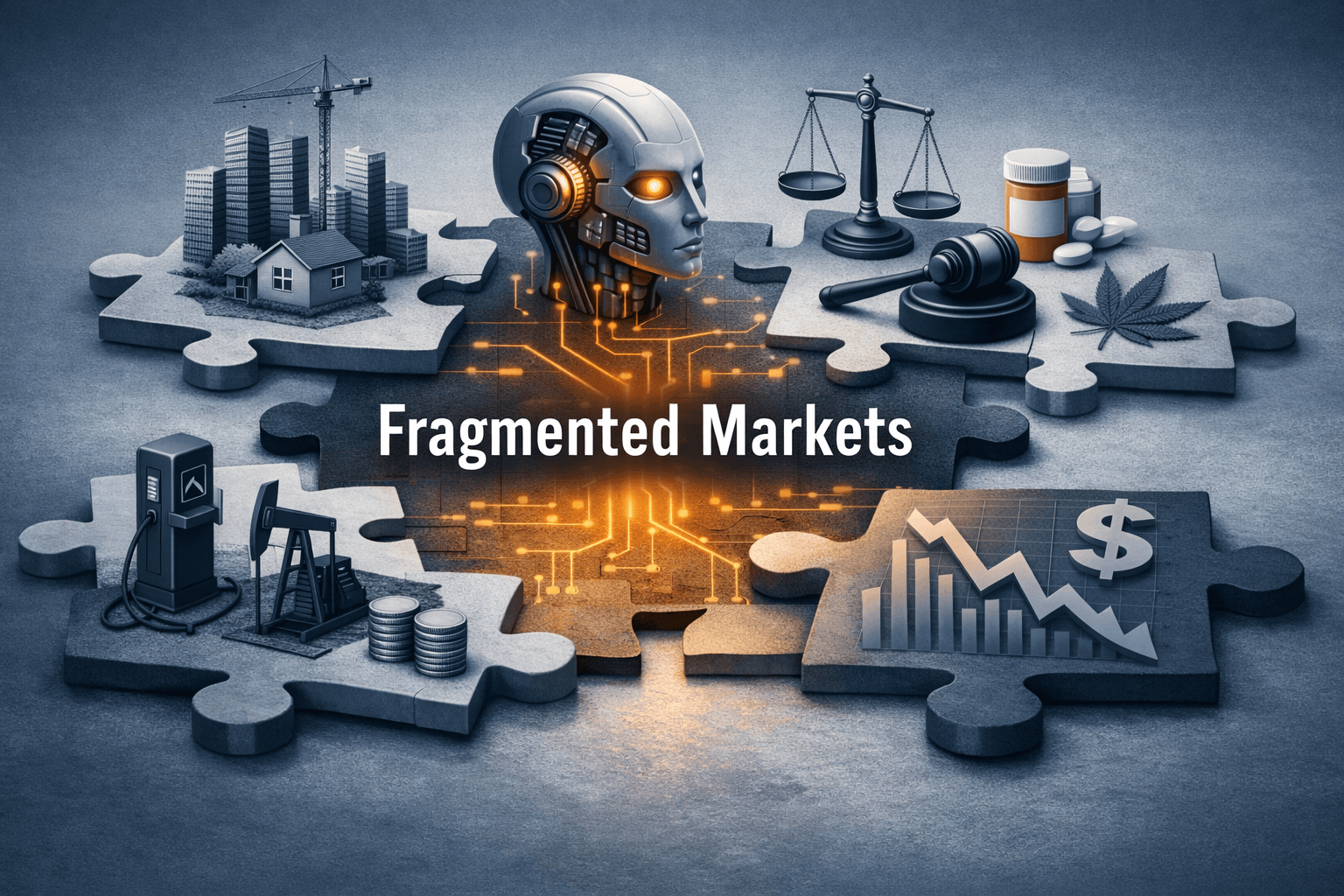
Policy, Capital and AI Governance Shape a Patchwork Market: Real Estate & Tech Lead; Cannabis and Finance Face Policy Drag
Podcast • Loading audio...
Share this article
Spread the word on social media
Key Takeaways
- •Policy and regulatory developments (DEA, FDA, tariffs) were the primary drivers of cross-sector dispersion today.
- •Large capital flows favored real estate and infrastructure: multiple financings totaling ~ $1bn signaled available liquidity for well-underwritten projects.
- •Tech’s narrative split between governance scrutiny (OpenAI incident) and product/funding momentum (Google, Apple, venture raises).
- •Energy showed both short-term easing in tanker-risk premia and sustained infrastructure moves (pipeline financing, shipping plan changes).
- •Crypto adoption headlines (stablecoin rollouts, ETF flows) point to continued product traction but remain sensitive to regulatory and onchain indicators.
Executive summary
Markets opened and traded under a policy-and-capital lens on Aug. 26. Three broad forces dominated headlines and likely trading behavior today: (1) regulatory and legal developments (DEA rescheduling transcripts, FDA approvals/ trial failures, defense hiring and tariff announcements), (2) big-ticket financing and project milestones (multi-hundred-million-dollar real-estate and solar capital injections, corporate venture funding and equipment orders), and (3) technology governance and product cadence (AI incident reporting from OpenAI, product rollouts from Google and Apple event setup).
The result was a mixed, sector-rotation day rather than a broad market directional surge. Real estate, parts of technology and energy-related infrastructure showed clear positive momentum driven by financing and project execution; cannabis, pockets of finance and parts of healthcare were more subdued or volatile as policy, legal and clinical uncertainties resurfaced. Crypto headlines were constructive on rails and ETF flows but remained tethered to regulatory focus.
This recap groups the 24 sector briefs into performance buckets, surfaces cross-sector correlations, highlights the most consequential moves and draws practical — non-personalized — investor considerations for the near term.
Grouping by performance: outperformers, underperformers, stable
Note: individual tickers are not recommended for action. The grouping below reflects the day’s news flow, capital activity and likely sentiment rather than intraday price moves (many summaries did not include explicit percentage changes).
Outperformers (news-driven positive momentum)
- Real estate — multiple large financings: $856M for Boston’s Winthrop Center and $102M for a Texas industrial park, plus expanded affordable housing funding, suggest capital is available for institutional-grade projects and logistics assets. Large deal flow tends to support REIT financing windows and construction activity in the near term.
- Technology — product and funding cadence: OpenAI’s transparency around a Hugging Face incident, Gemini 3.5 Transcribe from Google, Apple setting a Sept. 9 event and fresh venture capital (e.g., $84M for Ventures Platform, $3B robotics valuation) pushed tech headlines beyond governance concerns into product and funding momentum.
- Energy — infrastructure and corporate flows: CNOOC’s record profit headlines, Japan-backed pipeline financing, and refinements to ship-to-ship logistics from major oil producers provided a mix of supply-side support and infrastructure-backed demand that can keep segments of the sector constructive.
Underperformers (policy, legal and execution risk weighing on sentiment)
- Cannabis — policy uncertainty: DEA rescheduling transcript release and federal psychedelic reports re-centered regulatory risk. State-level tax-credit guidance and other positive signals partly offset the risk, but uncertainty remains a near-term headwind.
- Finance & Banking — legal and earnings friction: mixed earnings, legal fights and retail/ fintech pricing backlash (TurboTax pricing scrutiny affecting $INTU commentary) created uneven sentiment across banks, fintechs and alternative lenders.
- Healthcare — mixed clinical runway: juxtaposition of a fast FDA approval for a pancreatic cancer drug and a costly trial failure left sector narrative bifurcated; diagnostics and approvals compete with trial setbacks and higher employer cost concerns.
Stable / mixed (sector-neutral or bifurcated internal trends)
- Utilities: combination of a large private capital infusion for distributed solar (~$857M) and patent verdicts (a $96M award for $SHLS) balanced against policy risk claims. Storage, grid and microreactor moves are longer-term positives, but regulatory cadence will determine near-term winners.
- Materials & Mining: steady project finance, JV formation (Codelco/Pucobre for Tovaku), exploration wins (Altamira), and equipment orders (Sandvik) show constructive fundamentals for miners, but execution and commodity price sensitivity keep the outlook conditional.
- Industrial & Manufacturing, Communications, Consumer, Crypto: each carried meaningful headlines (tariffs, logistics, retail tech tie-ups, stablecoin rollouts and ETF flows) producing a mix of short-term volatility and longer-term opportunity depending on execution and regulation.
Cross-sector themes and correlations
- Policy/regulatory velocity is the dominant cross-sector theme
- Healthcare and cannabis were both moved materially by agency action: fast-track FDA approvals and trial failures in healthcare; the DEA rescheduling transcript and federal psychedelic reports for cannabis. That pattern underlines a market that remains sensitive to administrative rulings and regulatory sequencing.
- Finance and crypto responded to regulatory and legal pressure: banking sector scrutiny, TurboTax pricing backlash for $INTU, and continuing legal/regulatory attention on crypto rails and stablecoins. Crypto flows (ETF and stablecoin rollouts) show commercial momentum, but discretion is still driven by policy signals.
- Capital is chasing scale and secure cash flow
- Real estate and utilities captured large private and public capital: the $856M Winthrop Center financing and an $857M distributed-solar injection are examples of concentrated capital chasing yield, scale and infrastructure. That correlates with investors prioritizing asset-backed returns amid macro uncertainty.
- Technology venture funding and robotic valuations (e.g., $3B robotics valuation, $84M Ventures Platform raise) indicate available private capital targeting growth and AI-enabled productivity, offsetting some near-term public-market governance worries.
- Energy’s dual narrative — geopolitical risk vs. infrastructure resilience
- Oil prices moderated on easing tanker risk while companies advanced logistical and pipeline projects (ship-to-ship shipping plans, Japan-backed pipelines). The sector is reacting both to immediate risk (Strait of Hormuz tensions) and longer-term structural themes (infrastructure and fuel-demand evolution).
- AI governance and product rollout are linked to enterprise IT and consumer sectors
- The OpenAI-Hugging Face incident and executive departures re-focused attention on governance; simultaneously, major product launches (Gemini 3.5 Transcribe, Apple’s Sept. 9 event) kept product-driven momentum alive. The immediate correlation: governance headlines can pressure sentiment, but product cadence and corporate spending decisions keep spending durable in many tech lanes.
- Industrial execution, tariffs and hiring intersect with defense and logistics demand
- Canada’s new tariffs and a strong defense hiring push underscore how policy can reshape supply-chain costs and labor availability, affecting industrial margins and service providers.
Most significant moves and why they matter
Big-picture policy: DEA rescheduling transcript and federal psychedelic reports (Cannabis) Why it matters: The DEA transcript puts a renewed spotlight on federal enforcement posture and timing for any rescheduling decisions. For cannabis companies and ancillary services, regulatory clarity would materially affect banking access, tax treatment and interstate commerce. Analysts note that state-level actions (hemp, medical rules) will likely continue independently, creating a patchwork regulatory environment that can sustain volatility in cannabis equities and M&A activity until federal clarity arrives.
Massive real-estate financings: $856M Winthrop Center + $102M Texas industrial park Why it matters: Those financings reflect available debt and equity capital for high-quality office-to-mixed-use and industrial/logistics assets. Lenders and institutional investors appear willing to fund large projects where sponsorship and cash-flow visibility exist. Data suggests such transactions can reopen windows for construction loans, refinancing and securitizations, which in turn would influence REIT spreads and development starts over the next 6–12 months.
Distributed solar capital and utilities patent verdicts ($857M injection; $96M award for $SHLS) Why it matters: Private capital commitments of ~$857M into distributed solar show investor appetite for energy-transition assets with contracted cash yields. Conversely, patent verdicts (a $96M award) show litigation can still deliver material P&L impacts. Regulators and executives will weigh incentives and legal risk when shaping capital allocation to storage and grid projects.
OpenAI incident disclosure and tech governance with product cadence (Google Gemini 3.5 Transcribe; Apple Sept. 9 event) Why it matters: OpenAI’s detailed post-incident release places governance and incident remediation at the center of the AI story; markets now balance those governance demands against continuous product innovation. Product rollouts and robust funding rounds show capital chasing use cases even as governance questions may increase compliance and operational costs for providers.
Energy flows and corporate results: CNOOC record profit; Aramco logistical changes Why it matters: CNOOC’s strong profit and Aramco shipping plans signal that integrated energy companies are responding structurally to evolving flow dynamics and demand geography. Even as tanker risk ebbed and oil prices eased, the sector’s pivot toward securing logistics and pipeline finance suggests capex and project pipelines will remain active, supporting equipment makers and service providers.
Crypto rails and ETFs: Revolut EURR rollout and Bitcoin-backed mortgage developments Why it matters: The phased EURR stablecoin rollout and tests of bank-stablecoin rails indicate growing institutional attempts to modernize cross-border settlement and payments. Bitcoin ETF flows showing a rebound point to continued institutional demand for regulated crypto exposure — but onchain activity and tax reporting remain important watchpoints for sentiment and compliance.
Healthcare’s split narrative: rapid approval vs. trial failure Why it matters: Quick approval of a pancreatic-cancer drug demonstrates the FDA’s ability to accelerate access for specific therapies; a simultaneous costly trial failure underscores the binary nature of clinical outcomes. For pharma and biotech, this increases the premium on diversified pipelines and risk management across clinical stages.
Actionable insights and things to watch (informational, not advice)
- Monitor regulatory calendar and transcripts
- Watch for follow-up guidance from the DEA and policy memos around rescheduling — dates and language will materially affect cannabis liquidity and banking flows. Similarly, track FDA docket updates and label-expansion decisions for healthcare names that rely on regulatory timing.
- Follow capital windows in real estate and utilities
- Large financings (Winthrop Center $856M, distributed solar ~$857M) suggest lenders are active in well-underwritten, cash-flowing projects. Investors and market participants should monitor credit spreads, loan-to-value terms reported in new deals, and construction-start cadence for signals about broader risk appetite.
- Watch AI governance developments and product catalysts
- The OpenAI incident disclosure and continuing product releases (Google, Apple) make governance and security metrics a priority. Corporate buyers and vendors should look at incident response readiness, contractual indemnities, and third-party auditing timelines — data suggests these are becoming procurement gating factors.
- Track energy infrastructure financing and flow adjustments
- The combination of company-level profit reports (CNOOC), logistical changes (ship-to-ship plans) and pipeline financing moves will influence equipment vendors, shipping insurers and downstream refiners. Keep an eye on announced pipeline completion dates and export/load-throughput figures.
- Crypto: regulatory filings and onchain metrics
- Stablecoin rollouts and Bitcoin ETF flows are bullish for product adoption, but watch onchain transaction volumes, custody flows into ETFs, and any regulatory filings that signal tighter oversight or tax-reporting clarifications.
- Pay attention to legal and pricing shocks in finance and consumer tech
- Pricing backlash (e.g., TurboTax scrutiny affecting $INTU commentary) can quickly pressure sentiment for consumer-facing fintechs and platforms. Legal filings and regulatory inquiries — even before outcomes — can affect multiple quarters of guidance.
- For materials and mining, focus on execution risk and customer demand
- Project finance and exploration wins (Tovaku JV, porphyry discovery in Brazil, Sandvik equipment orders) are constructive, but roadmaps and capex execution timelines determine near-term supply impact. Track permit timelines and offtake discussions.
Notable company/sector vignettes (contextual detail)
Lumen & media deals: Lumen’s cloud reach expansion to 10M U.S. business locations and streaming renewals (Peacock) reflect continuing enterprise demand for bandwidth and content monetization, with implications for capex allocation and margin mix in network providers.
Builders FirstSource & Walmart: Builders FirstSource’s $25.3M AI tie-up and Walmart enabling tap-to-pay highlight retailer and supplier tech modernization — incremental revenue and cost efficiencies depend on execution and adoption curves.
Defense hiring & tariffs: A major defense hiring push and Canada’s tariffs combine to affect labor markets and supply chains in industrials, potentially lifting employment-linked service demand while increasing near-term input-cost variability.
Patent/legals in utilities: A $96M patent verdict for $SHLS is a reminder that litigation can be a P&L swing even as long-term infrastructure investments remain constructive.
Risks and counter-currents to monitor
- Policy whiplash: Rapid regulatory statements (DEA, FDA, tariffs) can create sharp re-rating risk for exposed sectors — cannabis and healthcare are prime examples.
- Execution shortfalls: Large project financings set expectations; missed construction starts or overruns in mining, real estate or utilities could pressure sentiment quickly.
- AI governance cost: As incidents and disclosure expectations rise, vendors may face higher compliance, insurance and staffing costs that compress near-term margins.
- Geopolitical flare-ups: Strait of Hormuz tensions and shipping risks can intermittently reintroduce commodity-price volatility despite current easing.
- Legal and pricing shocks in consumer finance: Tax-preparation pricing scrutiny and other consumer-protection inquiries can have outsized impact on a few high-profile platforms.
Conclusion — forward-looking perspective
Today’s tape reinforced a market increasingly driven by policy outcomes and concentrated pools of capital. Real estate and select technology lanes appear to be capturing the most constructive flows, while sectors exposed to regulatory and execution risk (cannabis, parts of healthcare and finance) remain conditional on agency action and legal outcomes.
Near-term catalysts to watch that could re-rerate parts of the market over the next 30–90 days:
- Any formal follow-up from the DEA about rescheduling timelines or guidance
- FDA docket updates and label-expansion announcements for therapies currently in the headlines
- Apple’s Sept. 9 event and subsequent product reviews that could influence consumer tech spend into the holiday quarter
- Onchain metrics and ETF custody flows that would confirm sustained institutional adoption of crypto products
- Completion and start dates for major real-estate and renewable projects that underpin the large financings reported today
Analysts note that, in an environment of policy-driven dispersion and concentrated capital deployment, sector selection will increasingly hinge on (a) clarity of regulatory path, (b) demonstrable execution milestones (permits, starts, first cash flows) and (c) governance readiness for AI and digital products. Momentum indicates pockets of durable demand, but volatility will favor investors and market participants who monitor policy timetables, capital terms and operational milestones closely.
Investment disclaimer: This report is for informational purposes only. It does not recommend buying, selling, or holding any security, nor is it personalized investment advice. Analysts note trends and data; readers should consult a licensed professional before making investment decisions.
Appendices: quick reference of major numeric highlights from Aug. 26 briefs
- Real-estate financings: $856M (Winthrop Center), $102M (Texas industrial park)
- Utilities/solar capital: ~$857M private infusion for distributed solar projects
- Patent verdict: $96M award (ticker $SHLS referenced in sector brief)
- Grants and project financing: $50M Michigan grant for Highland Copper; Sandvik order SKr275m (~$29M)
- Tech capital and valuations: $84M for Ventures Platform; $3B robotics valuation
- Energy hardware: Hinen debut of 13.68 kWh home battery; Indonesia 100 GW solar target by 2029
- Consumer/enterprise deals: Builders FirstSource $25.3M AI tie-up
Sources
+ 14 more sources
Use these insights — enter this week's contest.
Free practice contests — earn Alpha CoinsExplore More Content
Disclaimer: StockAlpha.ai content is for informational and educational purposes only. It is not personalized investment advice. Sentiment ratings and market analysis reflect data-driven observations, not buy, sell, or hold recommendations. Always consult a qualified financial advisor before making investment decisions. Past performance does not guarantee future results.