 Sector Insights
Listen to this Recap
Energy, Tech and Utilities Drive Today's Momentum as Policy and Safety Risks Weigh on Healthcare and Real Estate
Podcast • Loading audio...
Share this article
Spread the word on social media
Key Takeaways
- •Clean-energy projects and federal funding are driving near-term momentum in Energy and Utilities; materials and grid-software providers are beneficiaries.
- •AI demand is supporting both semiconductor hardware (NAND/server orders) and enterprise software, creating a two-front boost for Technology.
- •Healthcare and cannabis are facing heightened policy and safety risks that can trigger headline-driven volatility independent of fundamentals.
- •Crypto is stabilizing around institutional flows and audits, but legal and security risks keep volatility elevated.
- •Real estate is bifurcated: trophy urban assets remain strong while broader housing metrics show renewed softness.
Executive summary
Markets on Aug. 13 were defined more by thematic rotation than by a single market catalyst. Clean-energy deployment and grid upgrades—anchored by large solar-plus-storage completions and fresh federal funding—provided a clear tailwind for Energy and Utilities. Technology continued to benefit from AI demand and a NAND-server cycle, with deal chatter lifting select software names. Crypto markets picked up confidence after an audit sign-off and quiet ETF inflows; tokenization stories also stayed front of mind.
At the same time, a cluster of policy and safety headlines—ranging from CMS workplace-rule criticism and sharply higher liver-injury reports in healthcare to renewed cannabis regulatory crackdowns—blunted sector-wide enthusiasm. Real estate showed bifurcated signals: record rents in Manhattan and a $43.3M SoHo sale highlighted strength at the top end, while national housing metrics and creeping price cuts pointed to broader softness.
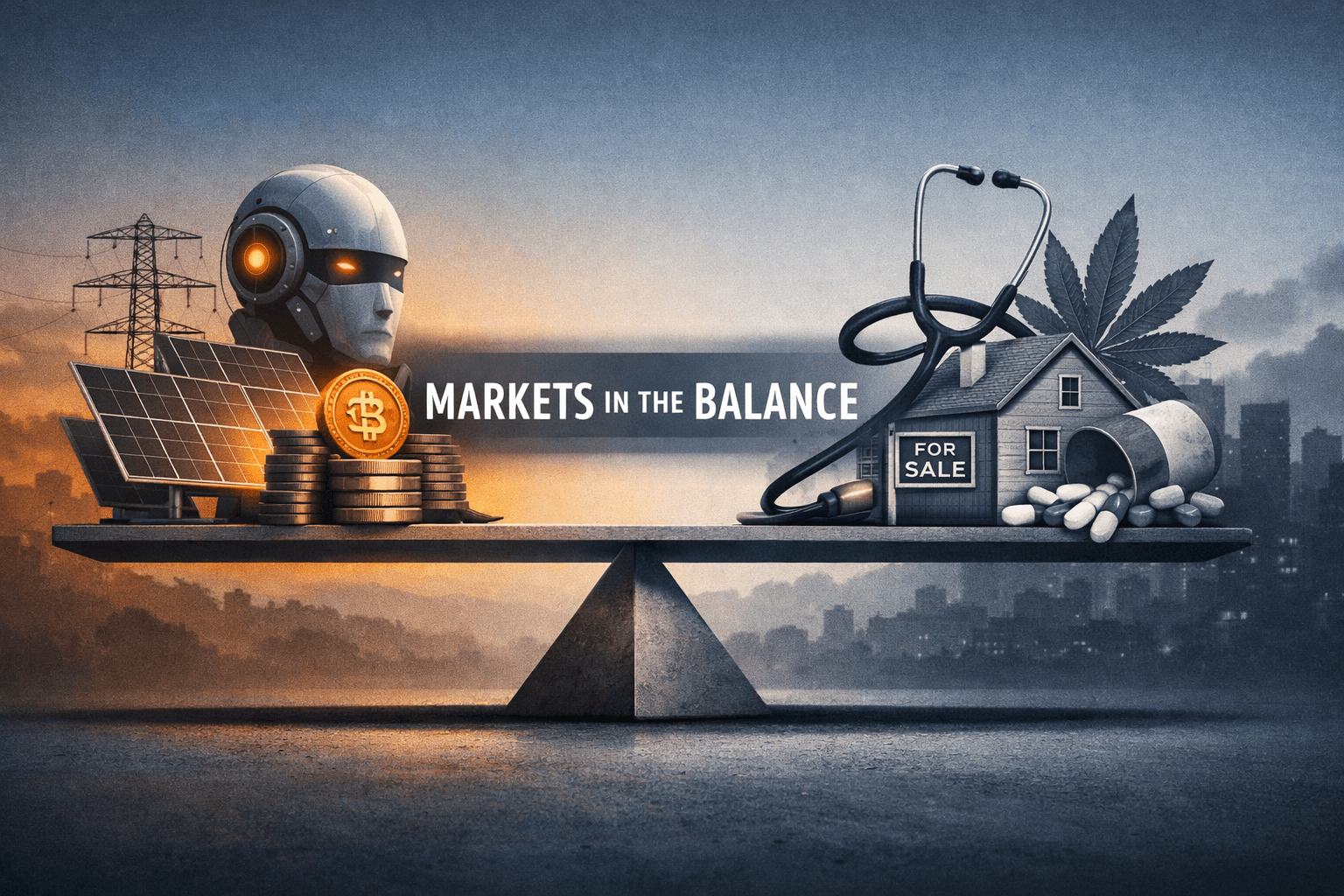
Taken together, the day suggested a market balancing structural growth themes (clean energy, AI adoption, digitization of financial assets) against regulatory, policy and demand risks concentrated in healthcare, some pockets of real estate and cannabis.
Sector winners, losers and the middle ground
Below we group sectors into three performance cohorts using the day’s news flow and momentum indicators.
Outperformers (momentum and positive catalysts)
- Technology: AI tailwinds, a server-led NAND rebound and deal activity (Workday buyout chatter) kept the sector at the forefront of investor attention. Analysts note the combination of enterprise AI spend and cyclical semiconductor strength is supporting multiple sub-sectors.
- Energy: Solar generation topping wind for the first time in a key market, Scatec completing a 1.1 GW solar-plus-storage complex in Egypt, and Washington’s pledge of up to $2.15 billion toward advanced nuclear development created tangible capacity and policy support for the energy complex.
- Utilities: Renewables, grid-software claims of unlocking roughly 20% additional capacity and new large-scale storage projects delivered constructive headlines for utilities names advancing the clean-energy transition.
Underperformers (headline risks and policy pressure)
- Healthcare: A mix of encouraging clinical data was offset by rising safety signals (near 400% rise in liver-injury calls in one report) and renewed policy scrutiny (CMS work-rule criticism). Those forces create near-term earnings and regulatory uncertainty for payers, providers and drugmakers.
- Real Estate: While prime urban assets showed strength—a $43.3 million SoHo mixed-use sale and record Manhattan rents—the broader housing picture is softening. National data suggest price cuts are creeping back to 2025 levels, which pressures residential-focused REITs and mortgage-related financials.
- Cannabis: Mixed signals—medical research showing pain relief and opioid reduction in endometriosis patients contrasted with fresh regulatory crackdowns in Texas and Australia and persistent Midwest price gaps—left the sector uneven and cautious.
Stable / mixed (balancing risks and opportunities)
- Consumer & Retail: Companies pushed on AI, same-day delivery and expansion (Target names chief AI officer, Fabletics international expansion), delivering tactical momentum but leaving long-term margin stories mixed.
- Finance & Banking: Cross-border commitments (Bank of America’s $1.9 billion India pledge), rising auto loans and adjustments to new regulations produced a patchwork of signals for banks, insurers and fintechs.
- Industrial & Materials: Reshoring and defense-related procurement (Pentagon battery deals) supported industrials, even as freight softness and legal risks (PFAS suits) weighed on specific names.
- Crypto: Confidence improved after KPMG signed off on a tether audit and reports of institutional ETF accumulation, but legal and security incidents preserve short-term volatility risks.
- Communications & Media: Live content, streaming milestones and AI-network deals spurred selective strength, though the sector remains sensitive to advertising cycles and subscriber economics.
Cross-sector themes and correlations
Several cross-cutting narratives connected the day’s sector headlines. Investors should view these as higher-probability macro and structural forces rather than one-day fads.
- Clean-energy buildout is broadening across capital and technology chains
- Evidence: Scatec’s 1.1 GW solar-plus-storage complex, DOE signaling a $2.15B commitment to advanced nuclear, and multiple utility announcements of storage and repowering deals.
- Correlation: Energy, Utilities and Materials are converging—project developers, grid-software providers, battery makers and raw materials suppliers are linked through capital flows and permitting.
- Implication: Supply-chain steps (PV hardware, battery cell capacity, grid software) are now as important to near-term returns as energy commodity prices.
- AI is driving both cyclical and secular demand in Technology and Consumer
- Evidence: Workday buyout chatter, Target naming a chief AI officer, OpenAI enterprise performance upgrades and a fresh AI safety pitch from Demis Hassabis.
- Correlation: AI adoption increases spending on data-center hardware (NAND and servers), enterprise software, and retail tech (digital twins, personalization), benefiting Technology and parts of Consumer and Communications.
- Implication: Semiconductor cyclical uplift (NAND/server orders) and long-term software revenue expansion are reinforcing each other; investors are watching capex cycles and enterprise software deal pipelines.
- Tokenization and institutional crypto flows are normalizing digital-asset channels
- Evidence: KPMG audit sign-off for Tether’s 2025 financials, UBS adding to a major spot-Bitcoin ETF, and rising institutional interest in tokenized stocks.
- Correlation: Crypto’s re-integration with traditional finance affects Finance (custody and ETF services), Technology (blockchain infrastructure) and Consumer (payments). Regulatory clarity—or the lack of it—remains the primary swing factor.
- Implication: Short-term volatility remains elevated, but auditing and institutional adoption lower certain operational-risk premiums.
- Policy and safety headlines are high on the risk list for healthcare and regulated consumer sectors
- Evidence: CMS work-rule criticism, a near 400% increase in liver-injury calls referenced in surveillance data, and state-level cannabis regulatory moves (Michigan, Louisiana, Ohio vs. crackdowns in Texas, Australia).
- Correlation: Payers, providers and drugmakers may face payer-policy shifts and utilization changes; cannabis companies remain exposed to episodic legal and regulatory enforcement.
- Implication: Earnings volatility in healthcare and cannabis will be driven as much by policy headlines as by clinical or commercial execution.
Most significant moves, explained
Below are the day’s largest sector-level stories and why they matter beyond the headlines.
- Solar-plus-storage projects and federal support lift energy complex
What happened: Scatec finished a 1.1 GW solar-plus-storage project in Egypt; Washington pledged up to $2.15 billion to advanced nuclear initiatives; hardware and PV announcements signaled tighter diesel and logistics in some regional markets.
Why it matters: Capacity additions are no longer hypothetical. Developers are commercializing large-scale projects that change generation mixes and grid planning assumptions. Federal funding reduces financing risk for longer-dated projects (especially nuclear), while near-term supply and logistics tightness can push module and balance-of-system pricing higher, benefiting materials and equipment suppliers.
Market linkage: The Energy and Utilities sectors stand to gain from faster clean-energy integration, while Materials and Industrial names that supply components see order-book benefits.
- Utilities push on grid software and storage claims; storm damage and EDAM uncertainty cap enthusiasm
What happened: Utilities headlines emphasized renewables integration and software vendors claimed up to 20% more usable capacity via optimization tools; simultaneous stories of storm damage and a DOE transmission pullback tempered some gains.
Why it matters: Grid modernization is a multi-year investment theme. Software that squeezes more capacity from existing assets can be a high-margin play and accelerate deployment. But physical risks (storms) and regulatory uncertainty around new wholesale market designs (EDAM-like discussions) mean returns depend on both tech adoption and policy alignment.
- Technology: AI demand + NAND rally creates a two-front boost
What happened: A server-led NAND surge and an AI-safety debate kept attention on both hardware and software. Workday’s name surfaced in buyout talk, and enterprise AI performance gains were reported from major vendors.
Why it matters: AI is driving higher storage and memory density needs (NAND, DRAM) as well as software modernization; hardware cycles are amplifying near-term revenue growth while software margins benefit from subscription models. Deal activity—M&A and buyout chatter—can re-rate certain software names as strategic assets.
- Crypto: Audits and ETFs stabilize sentiment but legal risks remain
What happened: KPMG signed off on Tether’s 2025 financials and reports surfaced that UBS quietly added to a major spot-Bitcoin ETF. Tokenized stock products also gathered headlines.
Why it matters: Independent audits and institutional ETF flows reduce some counterparty and operational concerns, encouraging allocators to re-evaluate crypto exposure. However, legal and security incidents still create sudden volatility and episodic outflows.
- Healthcare: Positive science versus safety and policy headlines
What happened: Encouraging cancer and clinical trial data landed alongside policy scrutiny and an alarming near-400% increase in certain liver-injury calls in one surveillance dataset.
Why it matters: Scientific progress can underpin long-term valuation for biopharma, but the near-term risk environment is dominated by safety surveillance and payer policy changes. This divergence increases headline-driven share price moves and makes forecasting short-term revenue more difficult for drugmakers and device companies.
- Real estate’s split personality: prime urban demand vs. broad housing softness
What happened: Record Manhattan rents and a $43.3 million SoHo sale contrasted with national housing data showing renewed price cuts toward 2025 levels.
Why it matters: High-end urban demand suggests continued investor appetite for trophy assets, while mass-market housing weakness pressures homebuilders, mortgage REITs and regional banks exposed to residential lending. Capital markets are likely to favor CRE with strong tenant covenants and logistics over levered residential-facing assets.
Actionable insights for investors (informational, non-personalized)
Monitor capital allocation into clean energy infrastructure: Project-completion announcements (e.g., large solar-plus-storage wins) and federal funding allocations (DOE’s $2.15B advanced nuclear pledge) are leading indicators for equipment suppliers, grid-software firms and utility-scale contractors. Data suggests order-books and backlogs matter more than spot commodity prices right now.
Watch AI-driven demand across hardware and software cycles: NAND utilization and server orders are early-cycle signals for semiconductor suppliers, while enterprise AI rollouts indicate potential revenue growth for software-as-a-service names. Check capex guides and large-enterprise contract announcements for confirmation.
Treat healthcare headlines as potential re-rating catalysts: Safety signals and payer-policy changes—CMS-related headlines and surveillance spikes—can trigger outsized moves. Track regulatory calendars and CMS draft guidance for changes that could impact reimbursement.
Look beyond headline crypto inflows: Audits and ETF accumulation reduce specific operational questions, but regulatory and legal risks remain the primary volatility drivers. Institutional flows are a positive sign for liquidity, yet price action remains tied to macro liquidity and legal outcomes.
Distinguish real-estate pockets by demand resilience: Core urban and logistic assets continue to attract capital; by contrast, single-family and mass-market housing indicators (price cuts creeping back) warrant closer attention to local inventories and mortgage-rate sensitivity.
Use cross-sector signals to time exposure rather than single-stock headlines: For instance, robust utility storage deployments increase probability of demand for battery materials (Materials), while enterprise AI rollouts that require more data-center capacity benefit both semiconductors (Tech) and power/real-estate (Data-center REITs).
Notable tickers and figures from the day (context, not a recommendation)
- Bank of America ($BAC): announced a $1.9 billion commitment to India—an example of regional expansion and cross-border capital deployment in Financials.
- Target ($TGT): named a chief AI officer as retailers lean into AI-driven personalization and logistics.
- Workday ($WDAY): surfaced in buyout chatter that pushed sentiment for enterprise software.
- Ford ($F) and Tesla ($TSLA): Ford’s reshoring and Tesla factory plan headlines underscored industrial-capex cycles and auto-supply-chain reshuffles.
- Scatec: completed a 1.1 GW solar-plus-storage complex in Egypt, a concrete capacity addition in Energy.
- DOE advanced nuclear pledge: up to $2.15 billion of federal support, a potential multi-year boost to longer-duration carbon-free capacity.
- US Foods: reported 4.5% Q2 sales growth—an example of modest demand resilience in foodservice.
- SoHo sale: $43.3 million transaction highlighted strength at the top end of the Manhattan market.
- Healthcare surveillance: a near 400% rise in certain liver-injury calls raised safety and regulatory attention.
- Grid-software claims: vendors asserted roughly 20% more usable capacity via optimization—an important operational efficiency metric for Utilities.
- Crypto: KPMG signed off on Tether’s 2025 financials; reports of UBS adding to a spot-Bitcoin ETF indicated institutional flows.
Risks and what to watch next
Policy/regulatory developments: CMS guidance, state-level cannabis decisions, and ongoing crypto regulatory actions remain high-probability risk drivers.
Macroeconomic and capex cycles: Semiconductor and data-center capex will determine how long technology strength persists; slower capex could undercut the NAND/revenue story.
Supply-chain and logistics: Diesel tightness, PV hardware availability and freight-rate dynamics can compress margins for project developers and suppliers.
Legal and safety headlines: PFAS litigation, drug-safety surveillance spikes, and episodic enforcement in cannabis markets can cause sudden repricing.
Conclusion — a forward-looking lens
The near-term market environment is best characterized as selective expansion: investors and corporate treasuries are allocating capital into structural themes—clean energy buildouts, grid modernization, AI-driven enterprise upgrades and tokenization—while simultaneously coping with regulatory and safety noise in areas like healthcare and cannabis. The Energy, Utilities and Technology sectors led the story on Aug. 13 because they capture both immediate capacity additions (real projects) and secular demand (AI, electrification).
However, market breadth is uneven. Healthcare and parts of Real Estate remain subject to policy reversals and demand weakness that can offset gains elsewhere. Crypto’s institutional rehabilitation is real but fragile, and retail and consumer names are benefitting from tactical AI and logistics investments rather than a uniform re-acceleration in demand.
For the coming weeks, watch capital-allocation signals (large project financings, enterprise AI contracts, semiconductor capex guidance) and the regulatory calendar (CMS guidance, state cannabis actions, crypto legal developments). Those inputs will determine whether today’s momentum broadens into a sustained rotation or remains a series of sector-by-sector rallies against a backdrop of headline-driven risk.
Investment disclaimer: This analysis is for informational purposes only. It does not constitute investment advice or a recommendation to buy, sell or hold any security. Readers should consult their own financial professional before making investment decisions. Language such as "analysts note," "data suggests," and "momentum indicates" is used to describe market observations and should not be interpreted as personalized advice.
Sources
+ 13 more sources
Use these insights — enter this week's contest.
Free practice contests — earn Alpha CoinsExplore More Content
Disclaimer: StockAlpha.ai content is for informational and educational purposes only. It is not personalized investment advice. Sentiment ratings and market analysis reflect data-driven observations, not buy, sell, or hold recommendations. Always consult a qualified financial advisor before making investment decisions. Past performance does not guarantee future results.