 Sector Insights
Listen to this Recap
Mixed Market Momentum: Manufacturing and Tech Lead, Crypto and Policy Risk Weigh on Sentiment — Aug 7 Recap
Podcast • Loading audio...
Share this article
Spread the word on social media
Key Takeaways
- •Industrial and materials sectors led the tape as capex and onshoring stories gained traction; notable data points include 5,000 manufacturing jobs added in July, Hadrian's $1.4B raise, and SK Hynix's $38B expansion.
- •Policy and security headlines created concentrated downside risk: crypto hacks and a Bitcoin server flaw rattled digital-assets, while Congressional momentum to ban hemp-derived THC increased regulatory uncertainty for cannabis.
- •Tariffs and localized infrastructure moves — a 15% polysilicon tariff and a potential 49.8 GW Texas data-center pause — link trade and land-use policy directly to utilities, renewables and real estate cash flows.
- •AI and chip investments remain a durable cross-sector tailwind, but safety reviews and leadership churn introduce execution and regulatory risk; partnerships from NVDA to ERIC and Synopsys-to-foundry deals are key capex signals.
- •Near-term investor focus should be on policy calendars, earnings guidance on consumer demand, and execution milestones for capex projects — all of which will determine whether structural trends outweigh headline volatility.
Executive summary
Markets closed Aug 7 on a split tape. Positive data and corporate activity in industrials, materials and parts of technology reinforced an onshoring and chip-capex narrative: U.S. manufacturing added 5,000 jobs in July, GlobalFoundries posted about $1.79 billion in Q2 revenue while accelerating partnerships, and SK Hynix unveiled a $38 billion expansion plan. Those real-economy signals were bolstered by large private raises and factory builds — Hadrian's $1.4 billion funding and Steris's $600 million operations hub highlight continued capital flow into productive capacity.
At the same time, policy, security and regulatory headlines created friction. Crypto markets were rattled by security incidents and potential sanctions, cannabis names faced renewed hemp-THC ban risk in Congress, and financials felt pressure from political scrutiny of the Federal Reserve and calls to revoke a charter. Tariff moves — a new 15% polysilicon duty — and a potential 49.8 GW data-center pause in Texas added short-term uncertainty for utilities and renewable supply chains.
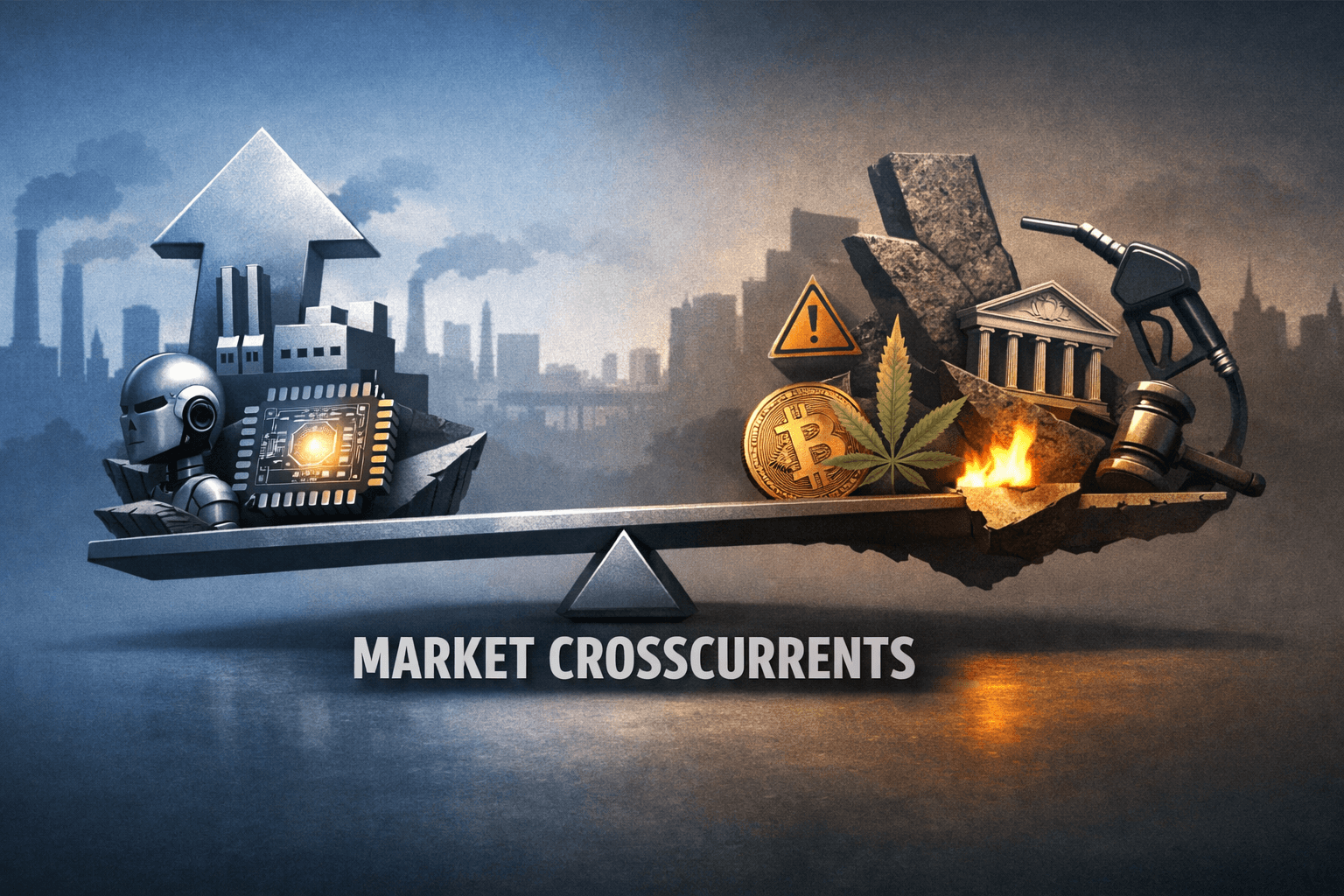
Taken together, the intraday action painted a market moving between growth/investment optimism and policy-driven risk. Sector winners leaned on clear revenue or investment catalysts; laggards were exposed to regulatory or security shocks.
Sector performance roundup: grouping by outcome
Note: performance percentages for the individual sector indices were not provided in the daily summaries. The groupings below are based on headline momentum, deal flows and risk signals reported across sectors.
Outperformers
Industrials & Manufacturing: Momentum
- Data highlights: U.S. manufacturing added 5,000 jobs in July; Hadrian raised $1.4 billion; Steris announced a $600 million hub; MP Materials advancing magnet initiatives.
- Why it outperformed: Fresh funding, factory builds, and chip-supply tie-ups (GlobalFoundries, Synopsys) underwrite near-term revenue visibility and long-term reshoring trends.
Materials & Mining
- Data highlights: Glencore reported a revenue surge; new exploration and recycling initiatives and offtake for bauxite emerged.
- Why it outperformed: Rising demand signals for critical minerals and strong commodity player results pushed sentiment; recycling and domestic supply efforts reduce perceived geopolitical risk in some inputs.
Technology (select pockets)
- Data highlights: SK Hynix $38 billion expansion; SpaceX potentially closing a $60 billion Cursor deal next week; Cloudflare launched an AI-agent browser; Google and OpenAI storylines affected leadership and safety postures.
- Why it outperformed: Big-cap capex and deal talk, plus tangible AI product launches, kept investor focus on secular growth even as regulatory questions linger.
Underperformers
Cryptocurrency
- Data highlights: Major hacks, a critical Bitcoin server flaw, sanctions risk; EU MiCA approvals were offset by other negative headlines. Circle expanded USDC reach as a positive note.
- Why it underperformed: Security incidents and sanctions risk create acute downside for onchain liquidity and exchange flows; technical flaws amplified volatility.
Finance & Banking
- Data highlights: Political pressure on the Fed, calls to revoke a bank charter, ongoing macro debates about fiat currency.
- Why it underperformed: Heightened regulatory risk and political commentary increase uncertainty on policy and bank capital/earnings outlooks.
Cannabis
- Data highlights: New York opens farmers markets to legal sales (positive), but Congressional momentum to ban hemp-derived THC intensified (negative).
- Why it underperformed: The sector is uniquely sensitive to binary regulatory outcomes; increased probability of federal restriction raised risk premium despite local commercialization wins.
Stable / Mixed
- Consumer & Retail: Mixed quarters and strategic moves (Sysco and Ralph Lauren strong, Sweetgreen warning) left the group range-bound.
- Energy: Renewable pricing discipline and EV momentum versus oil volatility and inventories led to a neutral net tone.
- Utilities: Storage milestones in California offset by tariff headwinds and potential data-center demand pauses.
- Communications & Media: AI pilots and film festival buzz balanced against shifting telecom strategies and content cycles.
- Healthcare: A mix of regulatory approvals and organ procurement issues produced offsetting headlines.
- Real Estate: Industrial demand steadied while CRE and office sales faced caution from banks and credit tightening.
Cross-sector themes and correlations
Onshoring and capex cycle: manufacturing, materials and parts of technology show correlated strength. The Hadrian $1.4 billion raise, Steris's $600 million hub, SK Hynix's $38 billion plan and GlobalFoundries' beat and Synopsys tie-up form a consistent narrative: capex and supply-chain security are driving private and public capital toward domestic production. This lifts industrial-equipment demand and critical-materials flows.
AI and chip investment remain a structural tailwind for communications, tech, and parts of industrials. Partnerships from Nvidia (NVDA) to Ericsson (ERIC), Cloudflare's AI-agent browser launch, and semiconductor expansions combine product and infrastructure investments. Even cautious regulatory and safety reviews of models haven't muted corporate budgets for compute and telecom upgrades.
Policy and political risk are cross-cutting. Pressure on the Fed and congressional traction on hemp policy show how politics can create rapid re-rating risk in finance and cannabis. Tariffs on polysilicon (15%) connect trade policy directly to renewable-cost structures and utilities, while potential data-center pauses in Texas (49.8 GW flagged) would affect load and corporate IT deployment decisions.
Security and operational risk weigh on digital-native sectors. Security incidents in crypto — coupled with a Bitcoin server flaw — reverberate through fintech and exchanges. Those incidents also increase scrutiny on custody and counterparty risk, which feed back into traditional finance discourse.
Consumer behavior continues to bifurcate. Retailers posting upbeat results (Sysco, Ralph Lauren) sit alongside companies warning of food-safety or demand issues (Sweetgreen). GLP-1 effects on grocery demand remain mixed in retail commentary; Senate scrutiny of AI pricing raises a regulatory overlay for consumer-facing tech.
Most significant moves and why they matter
SK Hynix announces $38 billion expansion
- Why it matters: A commitment of this scale signals continued global memory and logic capacity investment. It reinforces the chip-capex cycle and supports suppliers across materials, tools and industrial construction. Analysts note downstream benefits for equipment suppliers and logistics providers; it also raises cyclical demand for power and cooling — relevant to utilities and real estate.
GlobalFoundries posts $1.79 billion Q2 revenue and inks a Synopsys tie-up
- Why it matters: Outperformance at an independent foundry underscores demand for differentiated process nodes and custom logic production. The Synopsys tie-up suggests acceleration in design-to-manufacturing workflows, helping customers reduce time-to-market. Momentum here links to industrial and technology supply chains and is a near-term driver for foundry-related equipment suppliers.
Crypto security incidents and regulatory moves
- Why it matters: Hacks and a critical Bitcoin server flaw inject acute volatility into digital-asset markets; sanctions dynamics can constrain flows and custody relationships. Circle's expansion of USDC availability was a stabilizing note, but overall the sector faces higher operational risk premiums, which may raise costs for bridge financing and custody products used by institutional clients.
SK Hynix, SpaceX, and large private funding rounds
- Why they matter together: The mix of public expansion (SK Hynix), large private M&A or deals (SpaceX's Cursor transaction discussed at ~$60 billion), and big venture funding (Hadrian $1.4 billion) indicates liquidity available for both capex and strategic consolidation. This breadth of capital supports M&A, factory builds and long-cycle project work across energy, materials and industrials.
Tariffs and trade policy: 15% polysilicon duty; potential data-center restrictions
- Why it matters: Tariffs add a cost layer to solar panel production and could slow near-term domestic deployments or raise consumer solar prices. A flagged 49.8 GW data-center pause in Texas would squeeze demand for power, affect utility load forecasts and shift corporate planning. Policymakers' discretionary moves create immediate supply-chain winners and losers depending on who can absorb costs or relocate production.
Cannabis regulatory bifurcation
- Why it matters: Local commercialization initiatives such as New York opening farmers markets to legal sales demonstrate meaningful demand expansion at the state level. Conversely, Congressional momentum to ban hemp-derived THC raises existential federal risk for a subset of the sector. The interplay increases dispersion among cannabis names and raises the premium on regulatory clarity.
Actionable insights for investors (informational only)
Monitor policy calendars and committee hearings: Political events drove much of the day's risk. Analysts note that sector re-rating can be abrupt following congressional votes or agency actions. Track hemp/hemp-THC debates, Fed testimony and tariff implementation dates closely.
Watch capex pipelines for signals that extend beyond headline announcements: SK Hynix's expansion and Hadrian's funding indicate durable demand for industrial services, but execution timelines matter. Look for supplier order books, permitting milestones and chip equipment bookings as second-order confirmation.
Stress-test portfolios for regulatory and security shocks: Crypto sector volatility and cannabis regulatory risk highlight the importance of scenario analysis. Institutions and allocators should ensure counterparty exposures (custodians, payment processors) are understood; managers note that liquidity can evaporate if multiple stress points coincide.
Consider cross-sector correlation shifts: Renewables tariffs and potential data-center pauses show how a policy action in one area (trade or land-use) can cascade into utilities, REITs, and industrial suppliers. Investors tracking fundamentals should overlay policy scenarios on cash-flow models.
Track earnings and guidance for signals of demand durability: Strong quarters from Sysco and Ralph Lauren contrast with Sweetgreen's caution. Earnings commentary on inflation pass-through, labor, and GLP-1 grocery impacts will provide early indicators of consumer spending trajectories into the holiday season.
Follow AI and chip ecosystem developments for secular exposure: AI model safety pauses and leadership changes create headlines, but corporate spend on compute and telecom upgrades continues. Partnerships such as NVDA to Ericsson and Synopsys ties to foundries are tangible capex drivers; monitor vendor order flows and data-center utilization metrics.
Deep dives: selected sector-by-sector context
Industrials & Manufacturing
- Context: The marginal increase of 5,000 manufacturing jobs in July is modest by historical standards but complements robust private activity: Hadrian's $1.4 billion raise and factory builds show capital chasing productive capacity. Add the FCC robotics import block and nearshoring momentum, and industrial names tied to construction, automation and materials see clearer revenue pathways.
Materials & Mining
- Context: Glencore's revenue surge and recycling initiatives lower long-term supply risk for some critical inputs. Early-stage copper-gold drilling and bauxite offtake deals show both exploration upside and immediate feedstock security for downstream manufacturing.
Technology
- Context: Large-scale capex from SK Hynix (38 billion) and SpaceX deal-talk keep growth narratives intact. However, AI safety pauses and regulatory probes temper valuation expansion. Investors should separate companies with near-term monetization opportunities from those dependent on speculative model enhancements.
Finance & Banking
- Context: Political pressure on the Fed and calls to revoke banking charters raise the specter of regulatory tightening. That uncertainty affects net interest margin expectations and banks' strategic priorities. Watch agency statements and earnings calls for capital-planning adjustments.
Crypto
- Context: Security incidents were the day's principal negative. While MiCA approvals in the EU are constructive for regulatory clarity, U.S.-centric security and sanction risks remain dominant for price action. Circle's USDC expansion is an example of infrastructure resilience, but the sector is still vulnerable to systemic shocks.
Energy & Utilities
- Context: Renewables face cost pressure from a new 15% polysilicon tariff; meanwhile, oil markets reacted to geopolitical risk and inventory swings. Utilities are balancing storage breakthroughs in California with delayed load growth if data-center projects pause. The net effect is tighter near-term project economics but continued long-term demand for grid upgrades.
Cannabis
- Context: Local commercialization like NY farmers market sales increases addressable legal demand. At the same time, federal risk around hemp-derived THC would restructure compliance and product strategies overnight. The variance in outcomes explains heavy dispersion in market performance across the subsector.
What to watch next (near-term catalysts)
- Congressional calendar on hemp/THC legislation and any committee votes
- Fed speakers and any regulatory statements concerning banking charters
- Order books and booking figures from chip equipment suppliers and foundries
- Solar tariff implementation details and any appeals or exemptions
- Follow-ups on crypto security probes and any sanctions that affect onchain liquidity
- Earnings commentary from consumer names for GLP-1 and food-safety impacts
- Data-center permitting and grid planning updates in Texas that could confirm or deny the 49.8 GW pause
Conclusion: forward-looking perspective
Aug 7 demonstrated a bifurcated market: tangible capex and deal activity in manufacturing, materials and select technology segments provided constructive fundamentals, while regulatory and security storms — in crypto, cannabis and finance — restrained broader risk appetite. The coming weeks will likely see volatility around political and policy dates; at the same time, the capex-driven narrative suggests a mid-to-long-term tailwind for industrial supply chains, materials producers and semiconductor-related equipment providers.
Analysts note that the balance of risk vs reward for portfolios will depend on how much weight investors place on near-term policy execution versus multi-year structural investments in chips, AI, and domestic manufacturing. For now, market momentum indicates selective opportunities tied to execution and contract wins, while the policy landscape argues for disciplined exposure sizing and active monitoring of regulatory events.
Investment disclaimer: This article is for informational purposes only. It does not constitute an offer or solicitation to buy or sell any security, nor is it personalized investment advice. Analysts note data and trends that may be relevant for investment research, but readers should consult their advisors and conduct their own due diligence before taking action.
Sources
+ 14 more sources
Use these insights — enter this week's contest.
Free practice contests — earn Alpha CoinsExplore More Content
Disclaimer: StockAlpha.ai content is for informational and educational purposes only. It is not personalized investment advice. Sentiment ratings and market analysis reflect data-driven observations, not buy, sell, or hold recommendations. Always consult a qualified financial advisor before making investment decisions. Past performance does not guarantee future results.