 Sector Insights
Listen to this Recap
10:41
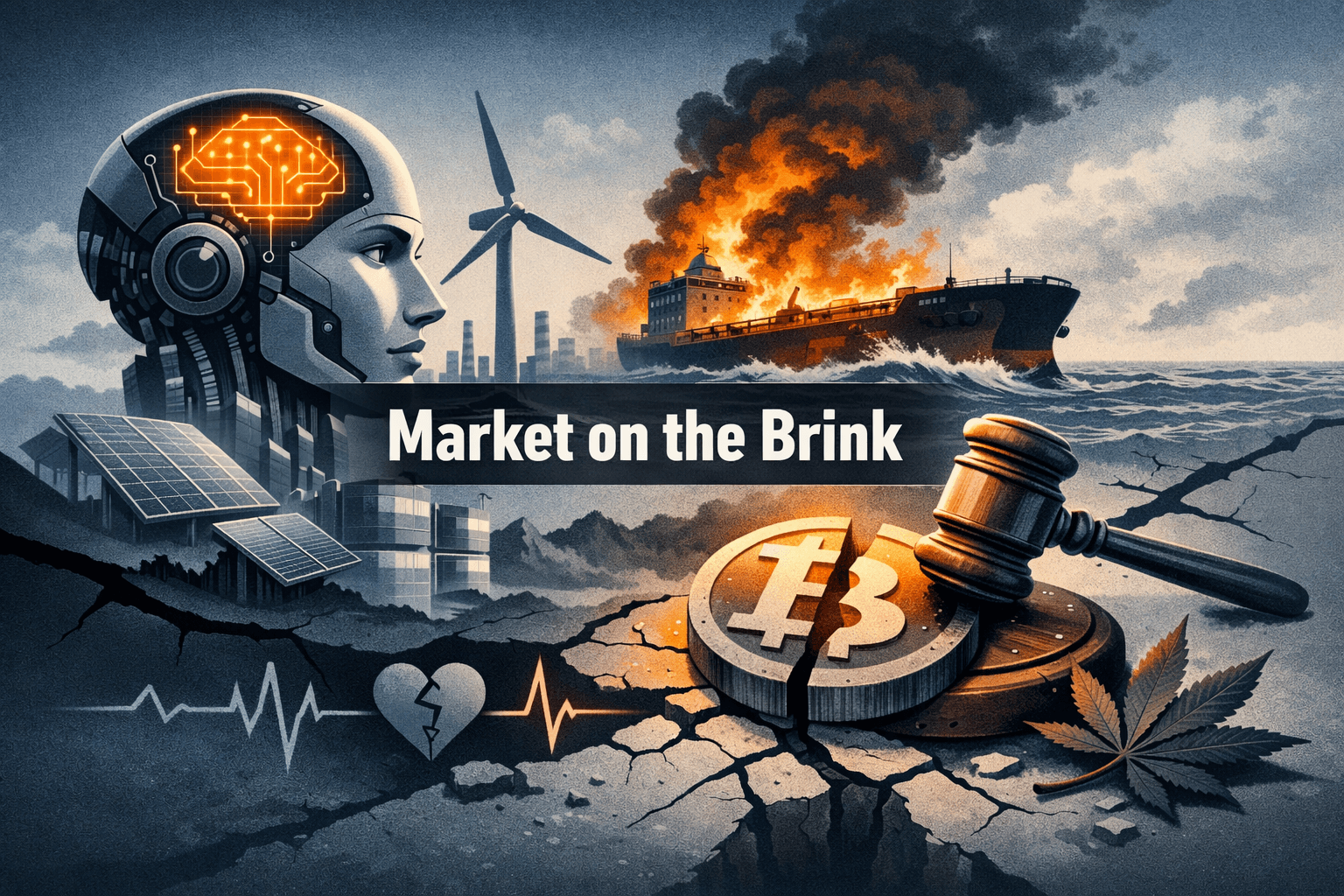
AI and Energy Transition Drive Market Momentum — But Geopolitics, Clinical Failures and Regulatory Risk Keep Volatility High
Podcast • Loading audio...
Share this article
Spread the word on social media
Key Takeaways
- •AI and data-center demand are primary cross-sector growth drivers, boosting technology, industrials and materials.
- •Energy markets are bifurcated: renewables and storage gained strategic funding while Gulf shipping disruptions pushed oil >5%, increasing near-term volatility.
- •Healthcare suffered a notable clinical setback (AstraZeneca/Ionis), highlighting binary risk in biotech and drug development.
- •Regulatory and geopolitical calendars (state cannabis ballots, crypto pilots/regulation, shipping lanes) will be key volatility catalysts in the near term.
Executive summary
Markets opened July 9 with a clear split: structural, technology- and transition-related themes powered tangible momentum, but episodic shocks and regulatory friction capped gains and raised volatility. AI product rollouts from major platforms and a surge in data-center and chip-related commitments underpinned strength in technology, industrials and materials. At the same time, an abrupt geopolitical disruption in the Gulf sent oil up more than 5% intraday, highlighting how commodity and energy markets can quickly reassert influence. Healthcare took a hit after a major heart-disease trial failure; crypto markets traded cautiously on regulatory and outflow headlines. Finance and regional banking headlines produced mixed signals as activism and consolidations continued to reshape expectations.
Key quantifiable moves and headlines today included: oil jumping over 5% after tanker traffic halted in the Gulf; Chewy reporting a $3.36 billion quarterly revenue print that reinforced consumer resilience in parts of retail; a $30 billion chip pledge and reshoring deals boosting industrials; major grid-scale storage and a Department of Energy loan supporting renewables; and a high-profile heart-disease trial failure from AstraZeneca and Ionis that damped healthcare sentiment. Meanwhile, SWIFT launched a 17-bank tokenized deposit pilot and Sony won conditional approval for a U.S. stablecoin trust — both underlining the piecemeal but persistent evolution in crypto and tokenization frameworks.
The market story on Jul 9 is therefore one of coexisting narratives: secular tailwinds for AI, reshoring and clean energy; episodic geopolitical and clinical shocks that drive volatility; and a regulatory environment that creates both friction and eventual opportunity across sectors.
Grouping by performance: outperformers, underperformers and stable sectors
Note: sector-level performance data was mixed in source reports; groupings below reflect directional momentum and headline impact rather than end-of-day price rankings.
Outperformers
- Technology: AI product rollouts (Meta, OpenAI developments, Anthropic billing shifts) and continued data-center / AI infrastructure demand — plus suppliers benefiting from semiconductor commitments — put technology among the top performers.
- Industrial & Manufacturing: A $30 billion chip pledge, U.S. reshoring announcements and major supply deals (including initiatives tied to Apple and Toyota) boosted industrials, logistics and semiconductor supply chains.
- Energy (select segments): Renewables and grid-scale storage saw headline wins (DOE loan, battery awards in Argentina, long-term LNG deals) even as oil’s spike created help for integrated energy names and midstream players.
Underperformers
- Healthcare: A major heart-disease trial failure (AstraZeneca + Ionis) and lingering system strains pushed investor caution into the sector; clinical setbacks and litigation headlines weighed heavily.
- Crypto & Digital Assets: Regulatory gaps, fund outflows and the mixed implications of tokenization pilots kept crypto-bloc sentiment subdued despite tech-forward pilots (SWIFT ledger, Sony trust) and security work on Ethereum.
- Finance: Mixed signals from activist pressure at regional banks, small-bank M&A and a headline $27 billion biotech writedown that affected financial institutions’ exposures left the financial sector uneven.
Relatively stable / mixed
- Utilities: A mix of large investments (a $1.75 billion JV stake, new solar builds, VPP approvals) and troubling labor reports (nearly 500,000 lost clean-energy jobs reported elsewhere) left utilities in a neutral-to-mixed posture.
- Materials & Mining: Contract awards, pilot programs and funded drill programs provided steady catalysts, but the sector remains sensitive to commodity swings and policy timelines.
- Consumer & Retail: Strong individual results (Chewy’s $3.36 billion quarter) and ongoing AI/partnership initiatives offset cost and demand pressures at some incumbents, producing mixed returns.
Cross-sector themes and correlations
- AI is a cross-cutting macro narrative
- What happened: Meta and OpenAI rolled out new AI products; Anthropic moved Fable 5 to usage billing; data-center and AI supercluster investments (notably a reported 111.2 Tbit/s AI supercluster) signaled rising capacity commitments.
- Why it matters across sectors: AI demand is a multi-sector growth engine — directly for technology and cloud providers, for industrials and materials through chip and equipment demand, and indirectly for communications companies via bandwidth and infrastructure upgrades (DOCSIS and cable network upgrades noted). Palantir’s (PLTR) continued pivot toward AI products is another example of analytics firms converging with the AI spending cycle.
- Correlation: Strong positive correlation between AI-capex-linked stocks (semiconductor suppliers, data-center REITs, network equipment) and technology-platform momentum.
- Energy transition vs. commodity shocks — a dual-speed energy market
- What happened: Renewables and grid resilience projects received major funding (DOE loans, grid-scale storage wins, Longi’s 21 GW line), while Gulf shipping disruptions pushed oil up >5%.
- Why it matters: Structural investment in clean energy creates multi-year demand for materials and engineering services even as fossil-fuel price spikes re-price near-term energy costs and inflation expectations. Companies that straddle both worlds (utilities with renewables portfolios and integrated oil majors) are seeing both tailwinds and intermittent windfalls.
- Correlation: Renewables investment correlates with materials and industrial strength; oil price spikes correlate with short-term pressure on consumer sectors and transport-sensitive industrials.
- Geopolitics and regulatory cadence are dominant risk factors
- What happened: Gulf tensions halted tanker traffic; cannabis ballot rollbacks and mixed federal rescheduling expectations; crypto pilots advance while regulatory uncertainty remains.
- Why it matters: Geopolitical incidents can quickly override secular narratives, especially in energy and commodities. Regulatory calendars (state ballots, SEC/FDIC/fintech rulings, trial outcomes) act as volatility multipliers across affected sectors.
- Reshoring and supply-chain realignment feed industrial and materials momentum
- What happened: Large chip pledge (~$30 billion), reshoring initiatives tied to major OEMs (Apple, Toyota), and BHP’s A$200 million smelter contract reflect reorientation of supply chains.
- Why it matters: These moves are improving visibility for industrial capex and materials demand, supporting mining exploration and battery recycling initiatives — reinforcing a mid-cycle industrial recovery skewed toward hardware and infrastructure.
- Consumer resilience amid selective cost pressures
- What happened: Chewy reported a $3.36 billion quarter; retailers lean into AI and partnerships; some incumbents face cost/demand headwinds.
- Why it matters: Consumer discretionary outcomes are bifurcated: digitally native or value-driven players show resilience, while legacy retailers face margin pressures. AI-enabled personalization and logistics optimization are emerging as key differentiators.
Most significant moves with context
- Oil spike (>5%) after Gulf tanker disruptions
- What happened: Tanker traffic in the Gulf was halted, sending oil prices up more than 5% intraday.
- Why it matters: Short-term supply dislocations drive immediate price volatility, benefiting exploration and integrated energy names while increasing operating costs for transportation-intensive sectors; the move also reintroduces inflation risk into the macro debate.
- Implication: Markets that had priced in energy stability must now re-evaluate cost structures and hedging positions; commodities and energy infrastructure names are likely to see short-term repricing.
- AI product launches and infrastructure commitments (111.2 Tbit/s AI supercluster, platform rollouts)
- What happened: Major AI rollouts from Meta and OpenAI plus reports of massive AI supercluster bandwidth and increased data-center demand.
- Why it matters: These developments validate sustained enterprise and consumer AI spending, driving capex for chips, servers, networking and power. That supports a broad set of value chains — semiconductor manufacturers, industrial suppliers, cloud providers and communications infrastructure.
- Implication: Expect continued revenue acceleration for firms tightly coupled to AI compute and networking capacity; capital intensity increases but with potential multi-year demand visibility.
- Healthcare setback: AstraZeneca / Ionis trial failure
- What happened: A major heart-disease trial from AstraZeneca and Ionis failed to meet its endpoints.
- Why it matters: Clinical failures of late-stage programs prompt immediate de-rating in affected stocks, raise questions about development pipelines and can pressure sector valuations more broadly as risk premia for biotech remain elevated.
- Implication: Short-term volatility in biotech and healthcare names tied to the program is likely; the event reinforces the importance of binary clinical outcomes in portfolio risk models.
- $30 billion chip pledge and reshoring momentum
- What happened: Public and private commitments to semiconductor capacity and reshoring reached roughly $30 billion in pledges; Apple and Toyota-related initiatives also gained headlines.
- Why it matters: The chip ecosystem benefits directly from long-term capacity commitments, which improve visibility for suppliers and materials — a positive for industrials, materials and logistics names.
- Implication: Companies in the semiconductor equipment and materials supply chain should see improved demand profiles; investors need to watch timing and project execution risk.
- Renewables and grid investment wins (DOE loan, Longi 21 GW line, National Grid $1.75bn JV stake)
- What happened: DOE loan approvals, major solar lines and strategic investments in grid-scale projects advanced the energy transition theme.
- Why it matters: Capital availability for long-duration storage and large-scale solar projects reduces financing friction and accelerates deployment timelines, supporting downstream manufacturers and construction firms.
- Implication: Utilities and renewables suppliers could see improved project pipelines; however, the sector remains sensitive to permitting, labor and supply bottlenecks.
- Crypto tokenization pilots (SWIFT 17-bank ledger; Sony stablecoin trust) vs. regulatory friction
- What happened: SWIFT launched a 17-bank tokenized deposit pilot and Sony won conditional approval for a U.S. stablecoin trust pilot, even as broader regulatory clarity remains incomplete.
- Why it matters: These pilots demonstrate institutional movement toward tokenized assets and interoperability, but without consistent regulation, adoption and scale remain uncertain.
- Implication: Financial institutions are experimenting with tokenization; watch regulatory milestones for broader market adoption signals.
Actionable insights for investors (informational only)
- Watch AI-capex supply chains for durable winners
- What to monitor: capacity announcements, server and GPU supply chains, data-center leasing activity, and bandwidth upgrades. Names in semiconductor equipment, power management, and network infrastructure will show early revenue sensitivity to AI rollouts.
- Why: AI demand is materializing into multi-year capex; early-stage indicators (rack orders, capital equipment bookings) often precede revenue recognition.
- Treat energy as a bifurcated allocation decision
- What to monitor: geopolitical developments (shipping lanes, sanctions), DOE and national energy policy moves, battery project approval timelines, and oil inventories.
- Why: Renewables investments and storage wins provide structural growth, but episodic commodity shocks (like today’s Gulf disruption) can quickly shift macro and sector sentiment.
- Prioritize clinical-readout risk management in healthcare exposure
- What to monitor: readout calendars, regulatory filings, and the potential for trial-related writedowns. Keep an eye on large-cap pharma partners that can offset program risk.
- Why: Binary clinical outcomes can materially revalue small- and mid-cap biotech names overnight.
- Follow reshoring and chip-capex announcements for industrial and materials signals
- What to monitor: project timelines, contractor awards, equipment bookings, and upstream materials contracts (e.g., smelter and battery recycling deals).
- Why: These projects lengthen order books and create multi-year demand visibility for suppliers and miners.
- Monitor regulatory and ballot calendars for policy-driven volatility
- What to monitor: state ballots (cannabis in Massachusetts and national rescheduling expectations), SEC and banking regulators’ decisions, and crypto rulemaking milestones.
- Why: Policy outcomes can create sector-specific volatility; they often serve as catalysts for re-pricing in highly regulated industries.
- Use hedging and liquidity discipline around commodity and election-driven windows
- What to monitor: options volatility, credit spreads for regional banks, and short-term liquidity metrics for companies with high operating leverage.
- Why: Geopolitical shocks and election cycles can compress liquidity and widen spreads; tactical hedging may be useful to manage downside risk.
Notable tickers and company-level context (informational)
- Chewy (CHWY): reported a $3.36 billion quarter, underscoring pockets of consumer resilience in online pet retailing and subscription-driven categories.
- Palantir (PLTR): continuing its pivot to AI and enterprise analytics; analysts note its movements illustrate demand for software that layers on AI compute.
- AstraZeneca (AZN) & Ionis (IONS): faced a significant trial failure in a heart-disease program; clinical setbacks have immediate valuation implications.
- BHP (BHP): contracts and smelter discussions (A$200m contract) show mining sector contract flow remains active amid materials demand.
- Apple (AAPL) & Toyota (TM): cited in reshoring and supply-chain commitments, underscoring OEM-driven industrial demand.
(These references are presented for context; this article does not provide investment advice.)
Risks and watch list
- Geopolitical escalation in the Gulf or other chokepoints that could prolong energy-price spikes.
- Clustered clinical-readout periods in biotech that could widen sector volatility.
- Regulatory milestones (SEC/FDIC rulings, state cannabis ballots, crypto policy) that could force sector rotations.
- Execution risk on large capex projects (semiconductor fabs, renewable buildouts) that can delay expected revenue and compress margins.
- Liquidity and funding risks for smaller companies in capital‑intensive sectors if macro tightening resumes.
Conclusion and forward-looking perspective
July 9 reinforced a central market tension: secular forces (AI adoption, energy transition, reshoring) are creating multi-year demand narratives that favor technology, industrials and materials — but episodic events (geopolitical shocks, clinical trial failures and regulatory developments) retain the power to produce sharp, short-term re-pricings. Over the coming weeks, the items most likely to steer cross-market direction include ongoing geopolitical developments in the Gulf, execution updates on semiconductor and data-center projects, regulatory decisions around crypto and finance, and clinical readouts that could ripple through healthcare and biotech.
Investors and market participants should expect continued dispersion: winners tied to AI infrastructure and transition projects may enjoy durable tailwinds, but the path will include intermittent volatility driven by politics, policy and binary clinical outcomes. Staying attentive to execution timelines, regulatory calendars and supply-chain signals will be essential in navigating the next phase of this multi-speed market.
Investment disclaimer: This analysis is informational only. It is not a recommendation to buy, sell or hold any security or to adopt any investment strategy. Analysts note market dynamics and historical relationships; readers should consult a qualified financial advisor for advice specific to their circumstances.
Sources
+ 15 more sources
Use these insights — enter this week's contest.
Free practice contests — earn Alpha CoinsExplore More Content
Disclaimer: StockAlpha.ai content is for informational and educational purposes only. It is not personalized investment advice. Sentiment ratings and market analysis reflect data-driven observations, not buy, sell, or hold recommendations. Always consult a qualified financial advisor before making investment decisions. Past performance does not guarantee future results.