 Sector Insights
Listen to this Recap
10:51
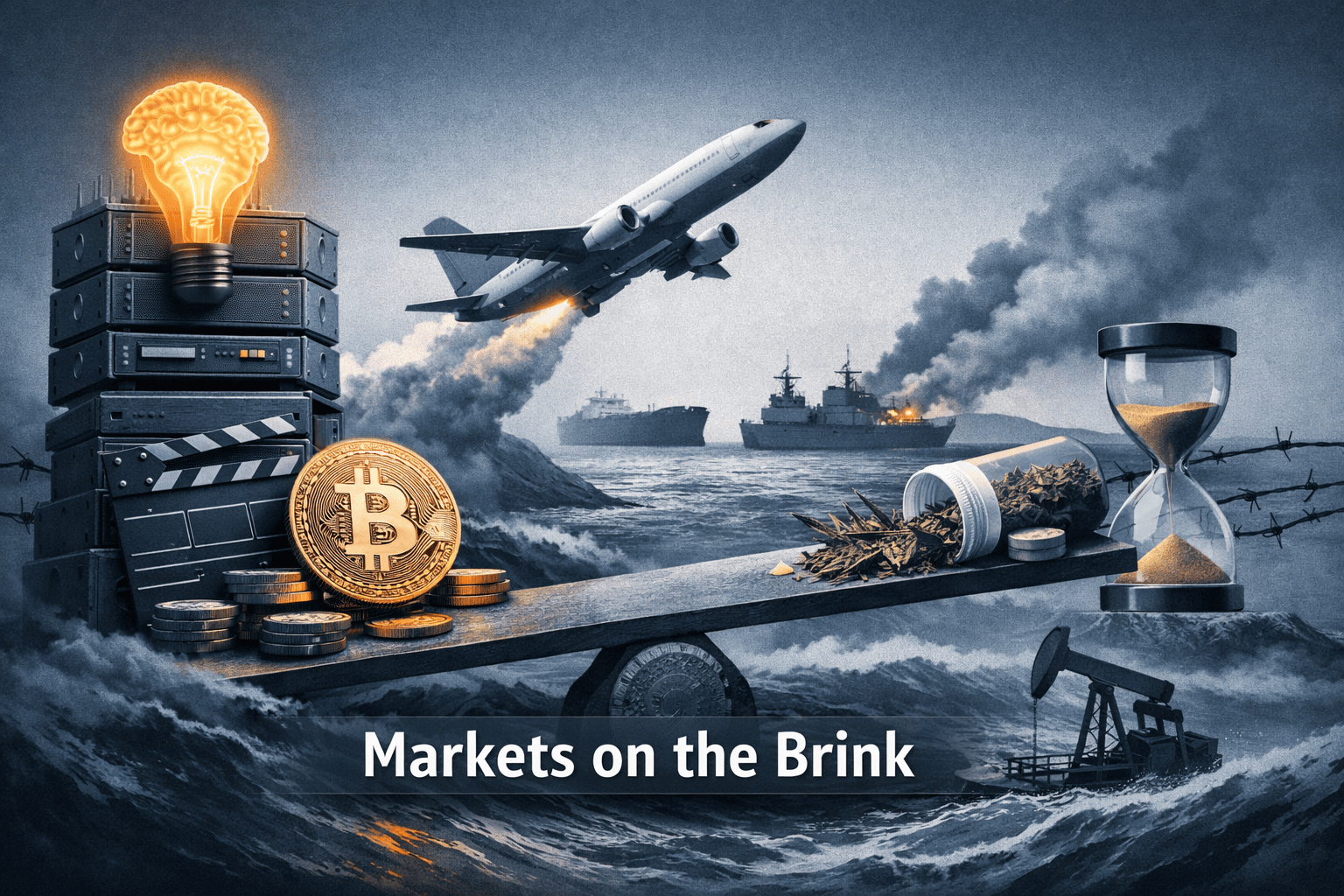
AI Momentum and Geo‑Risk Set the Tone: Markets Digest Netflix, Bitcoin, Boeing and a Wave of Policy Moves
Podcast • Loading audio...
Share this article
Spread the word on social media
Key Takeaways
- •AI and streaming wins (Netflix, big AI funding) drove tech and consumer momentum; AI monetization and ad revenue trends are now cross‑sectoral themes.
- •Bitcoin regained levels above $81,000 amid a more crypto‑friendly policy tone and institutional flows, but regulatory votes (Clarity Act) remain key near‑term catalysts.
- •Geopolitical risk around the Strait of Hormuz tightened near‑term energy outlooks even as renewables and storage project execution advanced.
- •Company‑level divergence was stark: Boeing’s $1B capacity pledge contrasted with Nippon Steel’s 95% profit plunge, underscoring uneven industrial dynamics.
- •Regulatory enforcement in healthcare (CMS enrollment pauses, deferred reimbursements) increases execution risk for providers and could pressure near‑term earnings.
Executive summary
Markets opened May 13 on a cross‑currents day: AI and media headlines underpinned tech and consumer sentiment, crypto rallied after a combination of regulatory tailwinds and institutional flows, and several large corporate and policy stories injected sector‑specific volatility. Key datapoints driving action included Bitcoin reclaiming north of $81,000, a hotter‑than‑expected CPI print of 3.8% (reported in morning briefs), Boeing’s $1 billion pledge to Kansas tied to 737 Max output plans, and a 95% plunge in reported profitability at Nippon Steel. At the same time, near‑term energy risk rose after a flurry of developments around the Strait of Hormuz, and healthcare was dominated by federal enforcement moves — from CMS pauses in hospice and home‑health enrollments to deferred Medicaid reimbursements — that raised regulatory uncertainty.
Taken together, May 13 was a reminder that market leadership can shift intraday: momentum in AI, streaming and crypto conferred outperformance in parts of technology and consumer, while policy, geopolitics and company‑level operational setbacks pressured industrials, energy and healthcare.
Sector groupings: outperformers, underperformers, stable
Below we group the 24 sector briefs into three buckets based on the balance of positive vs negative headlines and momentum indicators reported on May 13.
Outperformers (sectors showing positive momentum and constructive headlines)
- Technology — AI funding, Netflix ad momentum, and infrastructure wins dominated. Big AI headlines and renewed content demand around Netflix upfronts added a pro‑growth narrative to the tape. Legal noise around xAI and renewed crypto oversight were present but did not erase the broader positive tone.
- Crypto — Bitcoin rallied above $81,000 and benefited from a reportedly more crypto‑friendly Fed chair tone plus an upcoming Clarity Act vote that market participants flagged as a potential source of institutional clarity. Institutional flows (Chainlink moves, SocGen activity) and on‑chain fee trends supported momentum.
- Consumer & Retail — Retail sales extended gains (a seventh consecutive month of improvement reported in briefs), while AI commerce initiatives from Google, Stripe and Amazon and Amazon’s 30‑minute delivery push added growth signals for digital commerce.
- Real Estate — Development momentum showed up in leasing deals and financing activity, including data‑center land buys and student‑housing financings, suggesting pockets of demand and capital deployment across property types.
- Utilities — A string of project wins — large‑scale storage, balancing engines and community solar — added constructive operational news for networks and renewable integration.
Underperformers (sectors facing negative headwinds or operational shocks)
- Industrial & Manufacturing — Mixed signals from the sector: Boeing’s $1 billion pledge signals large cap investment but Nippon Steel’s 95% profit plunge and sluggish steel decarbonization commentary produced tangible downside news for industrial earnings expectations.
- Healthcare — Federal enforcement actions (CMS pauses on hospice and home‑health enrollments and deferred Medicaid reimbursements) combined with safety flags in gene therapies and infectious‑disease developments (hantavirus) created regulatory and operational uncertainty.
- Energy — Near‑term oil and gas risk rose on developments around the Strait of Hormuz, tightening the hydrocarbon outlook; renewables and storage advanced, but geopolitical risk elevated short‑term price volatility and supply concerns.
Stable / Mixed (offsetting positives and negatives)
- Materials — Production outlooks, drilling starts and recycling wins balanced company losses and large payouts; the narrative was directionally mixed and event‑driven.
- Finance & Banking — Analyst optimism (Morgan Stanley raised its S&P outlook) sat alongside firm‑level issues (a fintech Chapter 7 filing, new state consumer oversight) and idiosyncratic rallies (Ford ($F) among ticker‑level movers) yielding a mixed day.
- Communications & Media — Strong content momentum from Cannes and Netflix upfronts was tempered by telecom hardware and operator dynamics; net effect: active but not uniformly directional.
- Cannabis — Policy momentum (state expansions and favorable legal rulings) provided regulatory tailwinds; market response depends on capital flows and federal action timelines.
Cross‑sector themes and correlations
Several threads connected stories across the sectors:
- AI and content as a structural growth engine
- Technology and consumer headlines repeatedly cited AI commerce, agentic checkout, and big AI funding. Netflix’s upfronts and ad momentum amplified demand for content and advertising dollars, which in turn correlated with strength in communications and media. The adoption of AI in commerce and logistics also intersected with retail execution (Amazon’s 30‑minute delivery) and payments innovation (Stripe, BNPL options).
- Policy and regulation as a primary market mover
- Multiple sectors were moved by policy — healthcare (CMS actions), cannabis (state expansions and VA committee steps), crypto (Clarity Act vote and comments from Fed leadership), and energy (U.S. policy on renewables and international developments affecting the Strait of Hormuz). The headlines underscore how regulatory cadence can be as important as macro indicators in short‑term sector performance.
- Geopolitics tightening commodity and energy linkages
- Elevated risk in the Strait of Hormuz strained near‑term hydrocarbon outlooks and fed cross‑sector volatility: energy prices influenced materials (mining & base metals) and pushed insurance and shipping‑related narratives in industrials and logistics.
- Institutional flows and digital infrastructure
- Crypto saw both institutional and on‑chain signals (Chainlink, SocGen activity) that correlated with broader tech investor interest. Likewise, real estate activity around data‑center land buys and student housing financing connects to corporate demand for digital infrastructure and housing dynamics tied to labor markets.
- Earnings/operational shocks vs. investment commitments
- Contrasting stories emerged: Boeing’s $1B pledge to Kansas signals capital deployment and capacity expansion, whereas Nippon Steel’s collapsed profit figures highlight sectoral profit volatility. These divergent company stories create asymmetric sector risk profiles.
The most significant moves — context and market impact
Below are the day’s biggest sector and company moves with context on why they mattered.
- Bitcoin rebounds above $81,000
- What happened: Bitcoin climbed back over the $81,000 mark following a hotter CPI print (3.8%) and commentary suggesting a more crypto‑friendly tone from the Fed chair, along with anticipation of a Clarity Act vote.
- Why it matters: Rising BTC often signals risk appetite among crypto‑sensitive investors and can bleed into broader risk assets due to correlated flows from crypto‑hungry funds and derivatives positions. Institutional actions — Chainlink moves, SocGen’s involvement, and corporate treasury decisions — lent credibility to the rally beyond retail speculation. Market participants will watch the Clarity Act timeline and any Fed communications for durability.
- AI and Netflix‑led tech momentum
- What happened: Netflix dominated headlines with upfront presentations, content announcements and ad revenue strength; broader AI announcements from big tech and funding rounds kept the sector in a positive light.
- Why it matters: Streaming advertiser demand and AI monetization strategies are reshaping revenue models for media and platform companies. This dynamic benefits ad tech, cloud infrastructure, and firms providing AI compute and tools — while also elevating regulatory risk (competition, content moderation) and legal noise (xAI lawsuit headlines).
- Boeing’s $1 billion pledge vs. Nippon Steel’s profit collapse
- What happened: Boeing committed $1 billion to Kansas to support higher 737 Max output; in contrast, Nippon Steel reported a 95% profit plunge.
- Why it matters: Boeing’s investment signals conviction in demand for narrowbody aircraft and a push to increase manufacturing cadence, which should factor into supply‑chain planning and industrial capex expectations. Nippon Steel’s weakness highlights margin pressure from commodity cycles, energy costs and perhaps one‑off items, underscoring uneven industrial strength globally.
- CMS enforcement and healthcare regulatory moves
- What happened: CMS paused hospice and home‑health enrollments and deferred $1.3 billion in Medicaid reimbursements to California, while other enforcement actions were reported.
- Why it matters: These actions increase regulatory compliance risks and cash‑flow uncertainty for providers, particularly smaller home‑health and hospice operators. The news may force revisions in near‑term earnings estimates and risk assessments for healthcare services investors.
- Energy geopolitics — Strait of Hormuz risk
- What happened: Reports of heightened risk around the Strait of Hormuz pushed near‑term hydrocarbon price sensitivity higher, even as renewables and storage continued to advance in project execution stories.
- Why it matters: Short‑term crude and gas price moves can materially affect energy sector earnings, inflation expectations and shipping costs. For investors, the event highlights the need to separate longer‑term structural trends (renewables, storage deployments) from episodic geopolitical shocks.
- Cannabis policy gains
- What happened: State expansions (Georgia) and favorable committee movement for a VA amendment to expand veteran access were among the day’s headlines, alongside court rulings and public‑health studies that framed cannabis in a different policy light.
- Why it matters: Incremental policy liberalization at the state and federal committee level can materially change addressable markets for medical cannabis companies and influence capital allocation into the sector. Investors will watch subsequent legislative votes and federal court outcomes for permanence.
Actionable insights for investors (informational, non‑transactional)
These observations are intended to help market participants prioritize monitoring, risk management, and research — not to serve as personalized investment advice.
- Monitor policy calendars closely
- Why: Multiple sectors moved on policy headlines (healthcare, cannabis, crypto, energy). Keep a short list of upcoming votes and agency announcements (Clarity Act vote, CMS rulemaking, state cannabis bills) because they can create concentrated short‑term volatility.
- How to use it: Track committee schedules and agency press releases; consider stress testing portfolios for regulatory scenarios that could affect cash flows and valuations.
- Separate short‑term geopolitics from structural energy trends
- Why: Strait of Hormuz developments can spike oil volatility but do not alter the multiyear shift toward renewables and grid storage. That said, episodic price shocks can stress margins in adjacent sectors (materials, transport).
- How to use it: Watch inventory and shipping metrics, and follow announced hedging activity or capex shifts in energy firms for signals about management confidence.
- Watch corporate capital commitments versus earnings surprises
- Why: Boeing’s $1 billion capacity commitment and Nippon Steel’s pain illustrate asymmetry within industrials: capex increases can signal future revenue growth, while profit collapses underscore margin cyclicality.
- How to use it: Look beyond headlines to capex plans, backlog data and price realizations; reconcile company‑level investment announcements with macro demand indicators.
- Keep an eye on AI adoption metrics and ad‑revenue cadence
- Why: The interplay between AI monetization (agentic checkout, ad tools) and streaming/upfront schedules is reshaping revenue models across tech and media.
- How to use it: Track ad CPMs, signup or churn trends for OTT platforms, and cloud provider capacity announcements to gauge whether AI tailwinds are translating into durable revenue and margin expansion.
- For crypto watchers: regulatory clarity and on‑chain signals matter
- Why: Institutional flows and policy signals (e.g., Fed commentary, Clarity Act timelines) can have outsized effects on liquidity and leverage in crypto markets.
- How to use it: Monitor on‑chain fee trends, institutional custody inflows, and legislative calendars; consider volatility scenarios given the sector’s leverage profile.
- Account for healthcare regulatory execution risk
- Why: CMS enforcement and enrollment pauses can affect cash flow timing and payout certainty for providers reliant on Medicare/Medicaid reimbursements.
- How to use it: Review provider exposure to government payors, reimbursement clawback risks and compliance spend as potential margin pressures.
Notable corporate and ticker highlights (select mentions from the tape)
- Boeing (ticker: BA) — $1 billion pledge to Kansas tied to 737 Max output plans; signal of manufacturing ramp and regional policy incentives.
- Nippon Steel — 95% reported profit plunge; a reminder of cyclical and energy‑cost risks in global steel.
- Bitcoin (ticker reference: BTC) — reclaimed levels above $81,000 amid CPI noise and institutional flows.
- Netflix (ticker: NFLX) — upfronts, ad momentum and content announcements carried sector headlines.
- Amazon (ticker: AMZN) — operational execution with 30‑minute delivery rollouts intersecting with AI commerce initiatives.
- Ford (ticker: F) — cited as a ticker that rallied in a mixed finance tape; company‑level news can continue to drive idiosyncratic moves.
- Consensys — delayed IPO plans, an example of crypto capital‑markets timing risk.
- Chainlink, SocGen — institutional and on‑chain flows that supported crypto momentum.
(These mentions are for situational context. This article does not recommend any trading action.)
Risks and watchlist for the coming days
- Policy/regulatory: Clarity Act vote (crypto), CMS guidance and rulemaking (healthcare), state cannabis bills, and any new telecom or antitrust enforcement actions.
- Macro data: Inflation data, Fed communications and PMI prints — higher inflation or hawkish guidance could re‑price rate expectations and pressure growth multiple‑rich sectors.
- Geopolitics: Any escalation in the Strait of Hormuz or related shipping disruptions could lift short‑term oil, insurance and logistics costs.
- Corporate execution: Watch earnings and guidance from industrial bellwethers, large cap tech earnings cadence, and any surprising balance‑sheet items (deferred reimbursements or enforcement penalties).
- Market liquidity: Crypto markets and small‑cap equities remain susceptible to sharp moves on leverage and regulatory headlines.
Conclusion — forward view
May 13 reinforced a two‑speed market: structural growth narratives (AI, streaming, digital commerce, and parts of crypto) are attracting capital and driving headline outperformance, while policy shocks and company‑level operational risks continue to inject intermittent downside into industrials, healthcare, and energy. Investors and analysts will likely spend the next several sessions parsing a busy calendar of legislation, agency moves and macro prints for confirmation that the recent momentum is durable.
Near term, watch the Clarity Act timeline and any Fed commentary for crypto‑sensitive flows; monitor CPI and PCE prints for implications to interest‑rate expectations; and track enforcement actions and reimbursement timing in healthcare for potential earnings impacts. Longer term, AI commercialization and digital infrastructure demand remain primary structural themes that will cross multiple sectors, even as episodic geopolitical and policy events create tactical volatility.
Investment disclaimer: This content is for informational purposes only and does not constitute personalized investment advice. The article does not recommend buying, selling, or holding any specific security. Analysts note that data suggests momentum in certain sectors; readers should consult a licensed financial professional before making investment decisions.
Appendix: quick reference — top and bottom sectors (May 13)
- Top sectors (by constructive momentum): Technology; Crypto; Consumer & Retail
- Bottom sectors (by headwinds and risk): Industrial & Manufacturing; Healthcare; Energy
Sources
+ 14 more sources
Use these insights — enter this week's contest.
Free practice contests — earn Alpha CoinsExplore More Content
Disclaimer: StockAlpha.ai content is for informational and educational purposes only. It is not personalized investment advice. Sentiment ratings and market analysis reflect data-driven observations, not buy, sell, or hold recommendations. Always consult a qualified financial advisor before making investment decisions. Past performance does not guarantee future results.
Spotted something wrong? Report an error.