 Sector Insights
Listen to this Recap
8:53
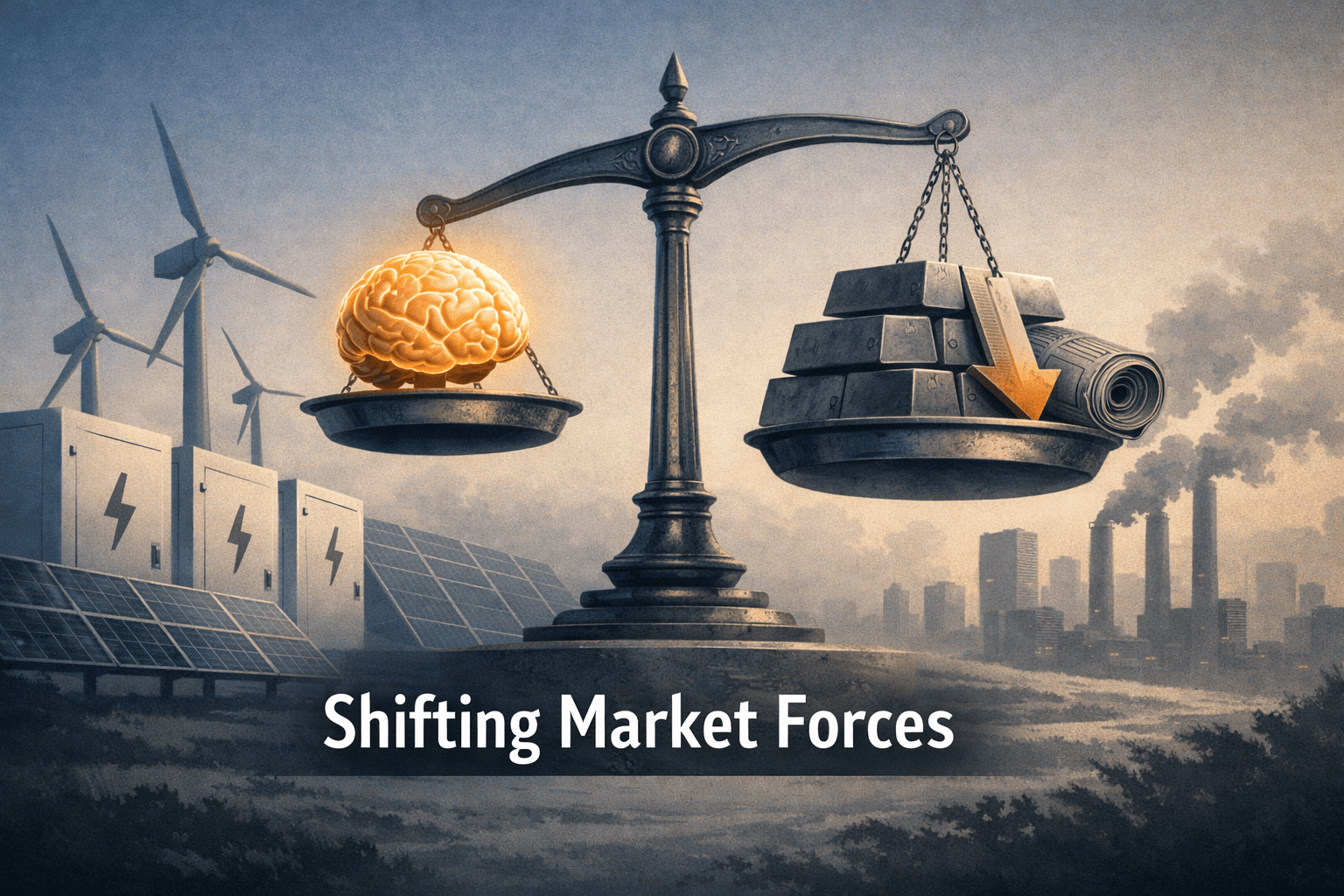
Storage, AI and Policy Drive Today's Market Narrative — Renewables, Utilities and Tech Lead While Materials and Media Face Headwinds
Podcast • Loading audio...
Share this article
Spread the word on social media
Key Takeaways
- •Electrification and storage headlines (e.g., Ford Energy’s 20 GWh BESS pledge; 370 Tesla Semis) propelled Energy and Utilities into leading positions on May 11.
- •AI is shifting from pilots to operational deployments across industrials, logistics and security — a structural theme supporting parts of Technology and Industrial sectors.
- •Regulatory moves (cannabis rescheduling, crypto licensing/tax rules, EU fiscal constraints) are creating dispersion and represent a material near-term risk factor.
- •Materials are splitting between battery-related inputs showing demand upgrades and bulk metals facing overcapacity; project timelines and permitting will determine who benefits first.
Executive summary
Markets on May 11 were dominated by three cross-cutting forces: a burst of capacity and capital deployment in energy storage and grid-related infrastructure, a fresh wave of AI adoption across industrial and commercial workflows, and renewed regulatory momentum that re-shaped sector outlooks from cannabis to communications. Headlines ranged from Ford Energy pledging a 20 GWh battery energy storage system (BESS) to reports of federal rescheduling activity in cannabis and a string of AI-related funding and product moves in tech and crypto.
Taken together, the day’s flow favored sectors tied to electrification and infrastructure — notably Energy and Utilities — and pockets of Technology where funding and product innovation are translating into commercial traction. Conversely, Materials and Communications carried cautionary headlines around demand and policy, and Finance showed a patchwork of signals as currency and credit narratives diverged.
This report groups sectors by relative performance themes, unpacks the causal drivers, highlights the most consequential moves and translates those developments into investor-relevant takeaways. As always, the analysis is informational: it explains market dynamics and what to watch next rather than offering transactional recommendations.
Grouping by performance: outperformers, underperformers, stable
Note: sector performance labels here reflect the day’s news flow and directional momentum rather than intraday price data. They synthesize headlines, capacity announcements and risk signals.
Outperformers (momentum and constructive headlines)
Energy: Renewables and storage headlines led the tape. Ford Energy’s pledge of a 20 GWh BESS unit and additional solar additions at Drax signal accelerating utility-scale storage deployment. Reports of upstream resilience — rig additions and an Enbridge earnings beat — added a near-term supply-side tailwind for oil & gas subsectors.
Utilities: Large orders, new storage entrants and distribution upgrades dominated coverage. Specific items such as fleets of Tesla Semis (reportedly 370 units) and utility-scale battery rollouts pushed the sector narrative toward scale and modernization, lending constructive capital-expenditure momentum.
Technology: Funding and product activity — from Helsing’s reported $1.2B raise to fresh LLM and RCS encryption moves at major consumer platforms — kept a bullish tone for parts of tech tied to AI, security and cloud infrastructure.
Crypto (select pockets): Institutional flows and tech upgrades supported a positive headline tone. Circle’s backing of a $3B blockchain initiative, Binance’s AI-driven fraud-blocking announcements and Solana’s Alpenglow testnet work contributed to a constructive market environment for digital-asset infrastructure.
Underperformers (news that produced caution)
Materials: Mixed policy headwinds and overcapacity worries featured prominently. Graphite upgrades and copper interest (Rio Tinto) were offset by steel overcapacity warnings and debates over rare-earth ownership, creating uncertainty around pricing and project returns.
Communications & Media: Infrastructure spend in cable and tower segments was tempered by content and distribution pressures — EchoStar’s sizable pay-TV losses and a reported €475bn EU fiscal gap weighed on the customer-growth narrative and near-term monetization concerns.
Finance: The sector opened on mixed signals: an Eastern Bankshares upgrade was balanced by comments from Goldman Sachs on a pricey dollar and banks managing higher FX and collections risk. That patchwork left the finance narrative cautious rather than decisively positive.
Stable / Mixed (balanced headlines, no clear directional consensus)
Healthcare: Converging beats and headwinds — health IT wins and international deals (e.g., GSK pact in China) versus utilization and regulatory pressure — left the sector in a neutral stance.
Consumer & Retail: Strategic wins (IPOs, wholesale deals) competed with operational shocks (plant closures, protein shortages) producing a mixed set of near-term signals.
Real Estate and Industrial: Both showed active deal flow and tech-driven productivity stories but were offset by funding and policy risks (CDFI funding cuts, builder tech optimism tempered by financing concerns). These sectors warrant monitoring but did not present a univocal directional story on May 11.
Cross-sector themes and correlations
Several themes cut across the sector map and help explain why certain groups outperformed while others lagged.
- Electrification + Storage is a unifying demand driver
What happened: Large BESS commitments (Ford Energy’s 20 GWh), utility-scale solar additions (Drax) and big vehicle fleet orders (370 Tesla Semis) highlight accelerating demand for grid-scale energy assets.
Why it matters: Energy and utilities are benefitting from a capex cycle tied to decarbonization and resilience. Storage deployments reduce intermittent-renewable curtailment risk, support higher EV charging loads, and create new revenue streams (capacity, ancillary services) for operators.
Cross-sector impact: Materials (cathode, graphite) should see demand upside longer term, but current materials headlines show mixed project timelines and supply-chain constraints that can create short-term volatility.
- AI adoption is broadening from software to physical operations
What happened: Industrial and logistics briefs emphasized agentic AI and transport-management-system (TMS) upgrades; tech earnings and funding items signaled continued LLM investment. Crypto firms tying AI to fraud detection (Binance) and Solana’s protocol testing show AI’s reach into security and infrastructure.
Why it matters: AI is incrementally reducing operating costs and improving asset utilization — from factories to warehouses and telco infrastructure. Sectors that can operationalize AI quickly (industrial, tech, logistics-heavy consumer companies) will likely extract more near-term margin upside.
Cross-sector impact: Finance and insurance could see improved collections and risk models, but also face new model-risk and regulatory oversight concerns.
- Regulatory developments are reshaping sector risk profiles
What happened: Cannabis headlines around federal rescheduling and new DEA registration forms, telecom/communications EU fiscal considerations, and crypto regulatory moves (CLARITY Act momentum, Dubai licensing) drove day-of sentiment.
Why it matters: Policy can reshape addressable markets (cannabis rescheduling), access to capital (crypto licensing), and cost structures (communications rules). Market participants are re-pricing exposures to regulatory risk, which leads to dispersion within sectors.
- Capex/time-to-commercialization trade-offs create dispersion in materials and industrials
What happened: Materials and mining announced resource upgrades and project interest (graphite, copper) while also flagging steel overcapacity and coal closures.
Why it matters: The timing gap between announced resource projects and realized supply tightness means materials prices and company cash flows can remain volatile. Investors and operators are sensitive to permitting, capital intensity and geopolitical supply concerns.
The most significant moves and why they matter
Below are the day’s standout items and the underlying reasons they deserve attention.
Ford Energy’s 20 GWh BESS pledge (Energy/Utilities)
- Context: A 20 GWh battery project is large by utility standards and signals automaker-led participation in grid-scale storage, not just vehicle manufacturing.
- Why it matters: This step represents integration across the EV and grid ecosystems — automakers moving into stationary storage can accelerate deployment timelines, create new supply contracts for battery manufacturers, and shift utility procurement dynamics.
Tesla Semis fleet order: 370 trucks cited (Utilities/Logistics)
- Context: Fleet electrification at scale reduces diesel demand for long-haul and adds predictable electricity demand, which has implications for grid planning and charging infrastructure.
- Why it matters: Large commercial orders validate the total-addressable-market thesis for EV trucks and indirectly support battery demand and charging network investment.
Helsing’s $1.2B raise and broader tech funding (Technology)
- Context: Large early-stage and growth-stage raises indicate investor appetite for security, AI infrastructure and high-growth software categories despite macro caution.
- Why it matters: Capital availability sustains R&D cycles for LLM-related tools and cybersecurity — areas with high margin expansion potential but also heightened competition.
Circle backing of a $3B blockchain initiative; crypto fund inflows (Crypto)
- Context: Institutional capital commitments and protocol-level funding support continued infrastructure build-out in digital assets.
- Why it matters: Institutionalization reduces volatility over time if it brings on-ramps like custody and regulated payment rails, but regulatory changes (taxation, CLARITY Act implications) remain important near-term risk factors.
EchoStar pay-TV losses and a €475bn EU fiscal gap mention (Communications/Media)
- Context: Content and subscription revenue stresses in pay-TV highlight distribution challenges; the EU fiscal gap reference signals broader economic policy constraints that can influence advertising and media budgets.
- Why it matters: Media and communications companies face a two-front challenge: monetizing content in a fragmented landscape and operating in a macro environment where public spending priorities may limit near-term ad recovery.
Materials: Graphite upgrades vs steel overcapacity
- Context: Commodity-by-commodity divergence was striking — some critical minerals show upgrade momentum while bulk metals face oversupply.
- Why it matters: Sector-level performance will be uneven; materials linked to batteries and electrification might outperform broad mining and steel portfolios that have near-term demand slack.
Cannabis: Federal rescheduling steps and DEA registration forms (Regulatory)
- Context: Any federal movement on rescheduling changes banking, taxation (280E), and research pathways for cannabis businesses.
- Why it matters: Even preliminary regulatory steps can drive volatility as investors re-evaluate addressable markets and compliance costs. The pace and scope of regulatory changes, plus state-level policy divergences, will determine how quickly that theoretical market expansion translates into revenues.
Sector-by-sector quicknotes (selected highlights)
Energy: Renewables + storage headlines dominated. Drax added solar to hydro sites; upstream oil shows resilience via rig additions; Enbridge reported an earnings beat. Watch near-term commodity sensitivity (oil prices) versus structural storage demand.
Utilities: Scaling stories — storage rollouts, distribution upgrades and fleet electrification — underpin a capex narrative that could support longer-duration revenue streams for regulated utilities and service providers.
Technology: Fundraising and product launches (LLMs, security measures, consumer hardware tweaks) keep innovation-driven upside visible. Security and legal friction remain watchpoints as regulators focus on AI and consumer data.
Crypto: Institutional inflows (sixth straight week in some funds), major protocol funding and licensing progress in Dubai lifted sentiment. Tax and regulatory risk remain the tether to broader market cycles.
Materials: Resource upgrades in graphite and copper interest contrast with steel overcapacity. Project timelines and permit risk mean price realization will likely lag demand rhetoric.
Real Estate: Leasing and construction momentum (e.g., AMH spring leasing; a 953,000-sq.-ft. Houston project; several NYC deals) coexist with policy and funding risk (CDFI cuts, reverse mortgage headwinds).
Communications & Media: Infrastructure investments exist alongside structural threats to legacy pay-TV and an uncertain advertising recovery.
Industrial & Manufacturing: AI is moving from pilot to operations in logistics and production, offering margin upside, but tariffs, shipping surcharges and job cuts show lingering cost and policy risks.
Consumer & Retail: A split between strategic growth moves (IPOs, omnichannel AI) and operational constraints (plant closures, shortages) suggests dispersion among names that can manage supply-chain variability.
Finance & Banking: Mixed results — upgrades in some regional lenders but FX and dollar strength narratives create headwinds for exporters and some trading desks.
Healthcare: Tech wins and international deals are balanced by utilization and outbreak risks; payer and health-tech models are getting closer scrutiny.
Actionable insights for investors (informational)
Monitor capex and contract cadence for storage and electrification projects. Data suggests the headline deployments (20 GWh BESS, fleet electrification) are moving from pilots to commercial-scale commitments. Investors should track procurement timelines, offtake contracts and battery supply chains to assess earnings visibility and margin trajectories for related companies.
Watch AI adoption curves in industrial ops and logistics. The pace at which firms turn pilot projects into sustained productivity improvements will separate winners from laggards. Look for measurable metrics such as reduced dwell times, lower freight costs per unit and improvements in on-time delivery as early indicators of durable impact.
Pay attention to regulatory calendar risk across cannabis, crypto and communications. Policy moves can reprice multiples rapidly. For cannabis, rule changes around scheduling and DEA registrations could affect banking access and taxation; in crypto, clarity on tax treatment and licensing will influence institutional adoption.
Expect dispersion within materials. Not all commodity-linked businesses will benefit equally from electrification. Battery- and EV-related inputs (graphite, certain cathode materials) have a different demand profile than bulk steel or thermal coal. Track project permitting timelines and vertical-integration announcements.
Assess balance-sheet resilience for sectors with heavy capex. Utilities and energy companies doubling down on storage and grid upgrades require long investment horizons. Firms with access to low-cost capital and regulatory frameworks that allow cost recovery may present lower execution risk than highly levered private developers.
Keep an eye on margin pressure points in consumer and communications. Supply-chain shocks and advertising spend fluctuations remain key drivers of near-term earnings surprises.
What to watch next (near-term catalysts)
- Regulatory announcements or drafted rules from federal authorities on cannabis rescheduling and DEA registration processes.
- Battery supply-chain updates, contract awards from utilities and automakers, and expected commissioning dates for large BESS projects.
- Earnings commentary around AI adoption efficiencies in industrials, logistics firms and software providers — specifically, metrics tied to cost savings and throughput improvements.
- Macro headlines that affect commodity prices (oil, steel) and the dollar’s trajectory, as currency moves are already prompting mixed signals within finance and trade-exposed sectors.
- Crypto regulatory or tax developments (CLARITY Act progress, local licensing outcomes) that could influence institutional inflows.
Conclusion — forward-looking perspective
May 11’s tape emphasized that electrification and digital productivity are not abstract trends but active drivers of capital allocation. Storage and grid modernization — illustrated by large-scale BESS commitments and fleet electrification — are migrating from announcements to procurement and construction phases, which should support a multi-year project pipeline for utilities, battery makers and grid contractors. Simultaneously, AI is maturing from algorithmic fascination into real operational levers across logistics, manufacturing and security, lifting productivity but also inviting regulatory scrutiny.
At the same time, policy remains the wild card: regulatory shifts in cannabis, evolving crypto rules and public-sector budget constraints in Europe could reshape sector exposures rapidly. That regulatory variance explains much of the day’s dispersion — some industries benefit from predictable, tariff- and permit-driven revenue streams (regulated utilities), while others remain sensitive to political outcomes and demand cycles (materials, media).
From an informational standpoint, investors should expect continued sectoral divergence: names tied to electrification and technology-enabled productivity are more likely to show durable momentum, whereas commodity-exposed and content-distribution businesses may experience episodic volatility as policy and demand cycles play out.
Investment disclaimer: This article is for informational purposes only. It does not constitute investment advice, an offer to buy or sell securities, or a recommendation to take any particular action. Analysts note trends and data points described here to help readers form their own views. Sentiment ratings reflect market analysis and are not tailored to individual circumstances.
Appendix: Top and bottom sectors (by today’s news momentum)
Top sectors: Energy | Utilities | Technology Bottom sectors: Communications & Media | Materials & Mining | Finance
Sources
+ 13 more sources
Use these insights — enter this week's contest.
Free practice contests — earn Alpha CoinsExplore More Content
Disclaimer: StockAlpha.ai content is for informational and educational purposes only. It is not personalized investment advice. Sentiment ratings and market analysis reflect data-driven observations, not buy, sell, or hold recommendations. Always consult a qualified financial advisor before making investment decisions. Past performance does not guarantee future results.