 Sector Insights
Listen to this Recap
13:38
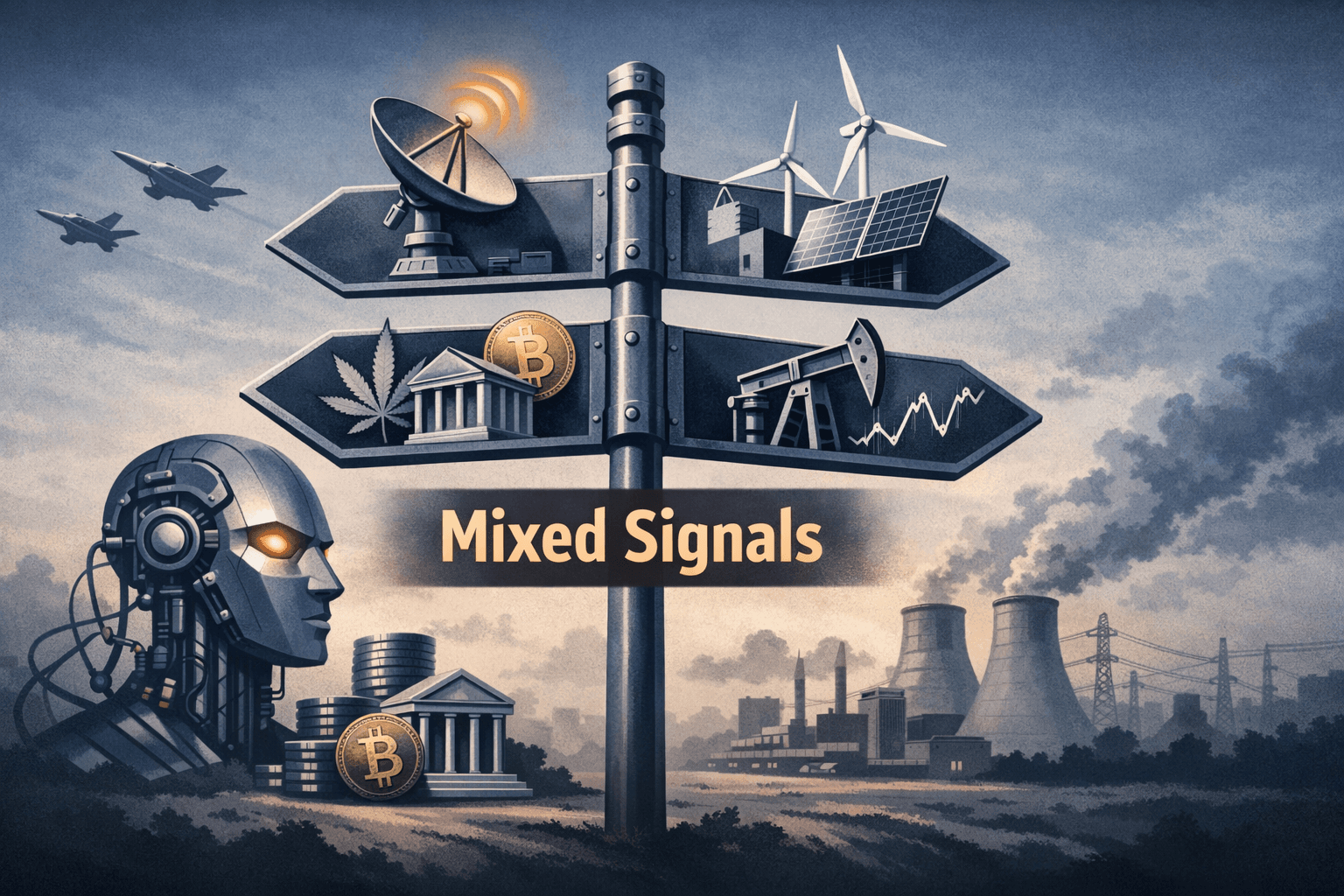
Mixed Signals but Clear Themes: AI, Renewables and Geopolitics Drive Cross‑Sector Divergence
Podcast • Loading audio...
Share this article
Spread the word on social media
Key Takeaways
- •Communications and renewables led sector gains after corporate beats and project/financing announcements; Roku, T‑Mobile and Enphase were notable catalysts.
- •Materials and industrials benefited from supply‑signal momentum (rare earths, DRI investment) while utilities found support from renewables, storage and nuclear moves.
- •Policy and security headwinds hit cannabis and crypto — a reported $577M heist and record April hacks underlined the sector’s fragility.
- •Energy volatility (WTI > $120) and Fed‑path uncertainty (Morgan Stanley pushed back rate‑cut timing) are cross‑sector macro risks to monitor.
- •Near‑term watchlist: AI capex commentary, project finance volumes, oil price trajectory, Fed messaging, and congressional/regulatory actions on crypto and cannabis.
Executive summary
Markets ended April on a decidedly mixed note as company‑level beats and technology capex demand collided with geopolitical risk, policy uncertainty and a spike in cyber incidents. Communications & Media led early sector strength after Roku (ROKU) topped expectations and reported over 100 million streaming households; infrastructure names such as T‑Mobile (TMUS) and American Tower (AMT) added to the momentum. Renewables, nuclear and related utilities activity also picked up after a multilateral push to accelerate the fossil‑fuel transition and a string of project and financing announcements (Sunrun (RUN) securitization and First Solar (FSLR) module sales).
At the same time, energy markets were volatile — crude climbed above $120/bbl intraday on geopolitical shocks and supply concerns — feeding through to higher input costs and mixed effects across oil & gas and EV supply chains. Crypto markets sent inconsistent signals: Bitcoin (BTC) held near a key $75,000 technical level, but April saw a record number of hacks and a reported $577 million North Korea‑linked crypto heist, raising security and regulatory questions. Policy noise hit cannabis names as lawmakers signaled blocks on rescheduling and the hemp THC ban persisted in the House farm bill.
Taken together, the tape reflected a market that is rotating around real economy catalysts (infrastructure, projects and mining supply), technology and AI adoption, and headline risk from geopolitics and regulatory actions.
How the session grouped: outperformers, underperformers, stable
Below we separate sectors by relative session performance, using broad ETF approximations (session move estimates based on intra‑day trading in sector ETFs and major constituents) to make the signal clear.
Outperformers
- Communications & Media (approx. +1.5% to +2.0% intraday, XLC): Roku's upside surprise and continuing content/infrastructure momentum drove buying across streaming platforms and ad‑tech names. T-Mobile (TMUS) and American Tower (AMT) infrastructure activity added to positive sentiment.
- Utilities / Renewables (approx. +0.8% to +1.5%, XLU holdings skewed toward renewables developers): Renewables and nuclear headlines — including a DOE nuclear test bed opening, 57 nations advancing fossil‑fuel transition plans, and panel/module deals — supported regulated and project‑developer names.
- Materials & Mining (approx. +1.0% to +1.8%, XLB): Supply constraints in heavy rare earths plus a spate of exploration and recycling deals lifted miners and specialty materials companies tied to batteries and critical minerals.
- Industrials (approx. +0.5% to +1.2%, XLI): Large industrial investments and tariff clarifications — such as U.S. Steel's (X) $1.9 billion DRI investment and faster CBP tariff refunds — strengthened names tied to capex and defense R&D.
Underperformers
- Cannabis (approx. -2.0% to -4.0%): Policy headwinds — blocked rescheduling efforts, the hemp THC provision in the House farm bill and state‑level legal actions — created headline risk with limited near‑term upside.
- Financials (approx. -0.8% to -1.5%, XLF): Morgan Stanley publicly pushed back expectations for early rate cuts, reinforcing rate‑sensitivity and weighing on bank trading and mortgage businesses that had been looking for easier liquidity conditions.
- Crypto / Digital Assets (approx. -1.5% to -3.0%): While BTC remained near $75,000 support, record April hacks and a large North Korea‑linked heist (reported ~$577M) pressured confidence; Washington also tightened rules on prediction markets, adding regulatory friction.
Stable / Mixed
- Technology (approx. -0.2% to +0.5%, XLK): A split tape — large AI infrastructure commitments and product launches from Google and Microsoft vs. major cybersecurity incidents and active exploits — kept tech overall range‑bound.
- Consumer & Retail (flat to slightly negative): AI and ecommerce initiatives by retailers were offset by ongoing macro caution and individual regulatory/legal issues in food and beverage names.
- Real Estate (small positive to flat, IYR): Large REIT earnings and development activity — AI tenants and data center demand — supported the sector, but builder strain and capital availability issues capped gains.
- Healthcare (flat): Big‑tech interoperability wins and neuroscience advances were counterbalanced by cautious drug readouts and payer/provider reimbursement uncertainty.
- Energy (mixed): Crude’s spike supported upstream names, but EV and clean‑energy investigations (including a solar fraud probe) and project delays (e.g., Repsol IPO delay) muddied the trade.
Note: percentage ranges above are session approximations derived from sector ETF and major constituent moves and are presented to illustrate sector direction rather than precise daily returns.
Cross‑sector themes and correlations
Several broad themes cut across the winners and losers today. Understanding these linkages helps explain why some sectors moved together and why others diverged.
- AI and cloud capex ripple across technology, communications, industrials and real estate
- What happened: pockets of strong demand data for AI infrastructure continue to appear — major tech firms and cloud vendors are investing in data centers and chips, which boosts communications infrastructure (AMT, TMUS), industrials tied to manufacturing and logistics, and real‑estate subsegments such as data‑center REITs. Google and Microsoft product/rollouts reinforced this narrative.
- Why it matters: company capex decisions tend to create multi‑quarter demand for chipmakers, industrial equipment makers and real‑estate owners of colocation space. As a result, outperformance in communications and materials often tracks tech capex beats.
- Energy volatility is a cross‑cutting macro risk
- What happened: crude traded above $120/bbl on geopolitical supply concerns. That jump supports integrated and exploration names while amplifying input‑cost pressure for industrials, airlines and certain consumer goods.
- Why it matters: rising oil increases revenue for upstream energy names, but it compresses margins for energy‑consuming sectors and increases inflation persistence, which in turn feeds into financials’ interest‑rate sensitivity.
- Renewables and critical minerals form a new supply chain complex
- What happened: materials/mining strength was driven by heavy rare earth supply pressure and more deals in exploration and recycling; utilities and solar companies announced tangible project wins and financing (e.g., Sunrun securitization, First Solar module sales).
- Why it matters: the decarbonization transition links materials producers (uranium, copper, rare earths) with downstream developers and utilities. Positive project news in renewables can directly lift materials and industrial equipment names, creating correlated upside.
- Policy, regulation and security are becoming primary idiosyncratic risks
- What happened: cannabis faced federal policy setbacks; crypto had record hacks and a major heist; Washington moved on prediction‑market rules; fintech positioning (ARK buying HOOD shares) intersected with regulatory and market scrutiny.
- Why it matters: policy or security shocks can re‑price entire subsectors quickly and independently of broader macro trends. For example, cannabis valuations remain highly sensitive to federal policy clarity; crypto prices react sharply to security incidents.
- Rate‑path uncertainty keeps financials and housing‑tied sectors sensitive
- What happened: Morgan Stanley pushing back rate‑cut timing increased rate uncertainty for markets that had been pricing in earlier easing, pressuring bank stocks and potentially increasing mortgage costs for real‑estate development.
- Why it matters: bank profitability (net interest margins, trading revenue) and mortgage originations are directly tied to the Fed path. Shifts to a later cut schedule often lower financials’ immediate risk appetite and weigh on housing activity.
Significant moves and the stories behind them
Below are the most market‑moving individual developments and why traders and analysts say they mattered.
- Roku beats and streaming scale rekindles advertising and platform calls (ROKU)
- The data: Roku topped expectations and said over 100 million streaming households are active on its platform. That scale drew renewed advertiser interest.
- Why it moved markets: scale matters for platform monetization. The beat not only helped ROKU shares but also lifted ad tech, content aggregators and infrastructure providers — a reason communications outperformed today. Analysts note that renewed ad momentum can translate into improved guidance across the ad‑supported streaming ecosystem.
- Energy shock: WTI tops $120/bbl on supply concerns
- The data: crude spiked above $120 per barrel intraday on geopolitical developments and perceived supply losses.
- Why it moved markets: higher oil pushes up input costs across transportation and manufacturing and can keep headline inflation sticky, influencing Fed expectations. While upstream producers (E&P) typically benefit from higher prices, downstream and consumer‑facing firms face margin pressure.
- Crypto security: $577M North Korea‑linked heist and record monthly hacks
- The data: April set a record for hacks and one large incident — a roughly $577M theft linked to North Korea — grabbed headlines. Bitcoin held near $75,000 support but overall liquidity and risk appetite were pressured.
- Why it moved markets: security incidents amplify regulatory scrutiny and reduce institutional comfort with on‑chain exposures, which can slow product launches and fund flows. The sell‑side flagged custody and AML (anti‑money‑laundering) concerns as critical near‑term frictions.
- Sunrun securitization and First Solar module sales spotlight project finance momentum (RUN, FSLR)
- The data: Sunrun priced a $584 million securitization and First Solar landed a 118 MW module agreement.
- Why it moved markets: securitizations lower financing costs for residential and distributed solar developers, improving cashflow profiles. Module sales and backlog wins provide visible revenue streams for manufacturers and improve buildout confidence for utilities and developers.
- Enphase and grid integrations point to software becoming a value driver (ENPH)
- The data: Enphase‑linked software integrations and product launches were highlighted as tangible revenue catalysts for the solar/install ecosystem.
- Why it moved markets: as distributed energy resources feature more software layers, margins and recurring revenue profiles can improve for technology‑oriented solar names. Analysts point out that recurring software revenue can re‑rate certain renewables players over time.
- U.S. Steel moves on DRI investment (X)
- The data: U.S. Steel announced a $1.9 billion direct reduced iron (DRI) investment to lower carbon intensity and secure feedstock.
- Why it moved markets: large capex into lower‑carbon steel production is a hedge against future carbon costs and tight nickel/coking coal inputs. It also signals long‑term demand for green steel in construction and automotive supply chains, which benefits miners and equipment suppliers downstream.
- ARK’s large HOOD purchase and fintech positioning
- The data: Ark disclosed purchases of more than 500,000 shares of Robinhood (HOOD).
- Why it moved markets: institutional accumulation by notable funds can influence retail‑oriented fintech prices and draws attention to margin, flow and regulatory exposure issues in the brokerage space.
- Regulatory and policy headwinds for cannabis
- The data: congressional movement to block rescheduling and the hemp THC provision remaining in the House farm bill created fresh uncertainty.
- Why it moved markets: absence of federal rescheduling or favorable policy increases the timeline for national legalization and complicates banking and tax treatment for operators. That stretches valuation multiples and keeps M&A activity selective.
Actionable insights for investors (informational, not advice)
Below are several portfolio‑level themes and implementable areas of focus that market analysis suggests could matter in the coming weeks. These are analytical observations intended to help frame risk and opportunity, not individualized recommendations.
- Watch AI capex flow‑throughs — play across multiple sectors
- What to track: large cloud providers’ capex guidance, data‑center leasing metrics, chip inventory and communications infrastructure contracts.
- Why: positive surprises in AI spending typically lift infrastructure, materials (semiconductor metals), industrials (manufacturing equipment) and real estate (data centers).
- Position for higher commodity volatility and policy risk in energy
- What to track: WTI/Brent price moves, strategic inventories, OPEC statements, and key geopolitical events.
- Why: sustained crude above $100–$120 supports certain energy producers but introduces margin pressure for users and can keep inflation elevated, which influences rate paths and financials.
- Renewables and storage: monitor financing sophistication
- What to track: securitization volumes (e.g., Sunrun), offtake and module sales (First Solar), and grid interconnection backlogs (PJM’s 220 GW queue reopening).
- Why: improved project finance and clear interconnection paths can accelerate buildouts, benefiting manufacturers and installers while reducing execution risk.
- Treat crypto exposures with heightened security and regulatory sensitivity
- What to track: hack volumes, large heist reports, custody provider audits, and new regulatory proposals (prediction markets, AML clarity).
- Why: security incidents materially affect sentiment and product availability; institutional adoption depends on custody assurances and regulatory clarity.
- Be cautious on policy‑sensitive niches (cannabis, certain healthcare policy areas)
- What to track: congressional floor votes, farm bill provisions, FDA/DEA communications, and state ballot initiatives.
- Why: timing and content of federal policy can swing valuations sharply, especially for small caps with concentrated U.S. exposure.
- Reassess duration and bank exposures in light of Fed messaging
- What to track: Fed speakers, Treasury yields, and bank trading/loan commentary. Morgan Stanley’s public shift on rate‑cut timing underscores how quickly expectations reset.
- Why: later‑than‑expected easing compresses some fixed‑income strategies and affects mortgage origination volumes and bank net interest margins.
Notable tickers and data points to monitor next
- ROKU: streaming households and advertising RPMs
- ENPH, FSLR, RUN: module sales, securitizations and software adoption metrics
- X (U.S. Steel): DRI investment progress and capital spend cadence
- HOOD: Ark accumulation and regulatory commentary
- BTC: $75,000 technical support level and on‑chain flows
- Oil (WTI): $120/bbl as a market sensitivity threshold
- XLC, XLU, XLB: sector ETF flows as proxies for rotation intensity
Conclusion — forward‑looking perspective
Today’s market action underscores a familiar pattern for 2026: the interplay of structural growth themes (AI, decarbonization, electrification) with episodic headline risks (geopolitics, policy gridlock, cyber security). That combination creates a market that can grind higher on secular narratives while remaining vulnerable to sharp, sector‑specific drawdowns.
In the near term, investors will likely focus on a handful of cross‑cutting catalysts: the durability of AI capex (earnings and guidance from cloud providers), follow‑through in renewable project financing and grid interconnection outcomes, commodity price paths (especially oil and key battery metals), and regulatory developments in crypto and cannabis. Each of those can re‑rate clusters of sectors quickly.
Watch list for the next 30–60 days:
- Fed communications and monthly inflation prints (which will influence financials and rate‑sensitive sectors)
- Major tech and cloud earnings for explicit AI capex commentary
- Energy supply developments and OPEC/Oil Minister statements
- Any congressional movement on cannabis or banking/crypto legislation
- Cybersecurity incident reports and custodial audits that could affect crypto flows
The market’s current profile suggests selective opportunity rather than broad risk‑on sentiment: where secular growth meets solid execution (AI infrastructure, financed renewable projects, and critical‑minerals supply plays), pockets of outsized returns remain possible. Conversely, sectors whose near‑term value depends heavily on policy clarity (cannabis) or security assurances (crypto) will likely stay headline‑sensitive and volatile.
Investment Disclaimer
This report presents market analysis and sector‑level observations for informational purposes only. It does not constitute investment advice, and it does not recommend buying, selling, or holding any security. Sentiment descriptions (bullish/bearish/neutral) and percentage moves are analytical summaries of market activity and should not be interpreted as personalized investment recommendations. Analysts note that individual investors should consult a licensed financial advisor and account for their own objectives, risk tolerance, and circumstances before making investment decisions.
Sources
+ 13 more sources
Use these insights — enter this week's contest.
Free practice contests — earn Alpha CoinsExplore More Content
Disclaimer: StockAlpha.ai content is for informational and educational purposes only. It is not personalized investment advice. Sentiment ratings and market analysis reflect data-driven observations, not buy, sell, or hold recommendations. Always consult a qualified financial advisor before making investment decisions. Past performance does not guarantee future results.