 Sector Insights
Listen to this Recap
11:02
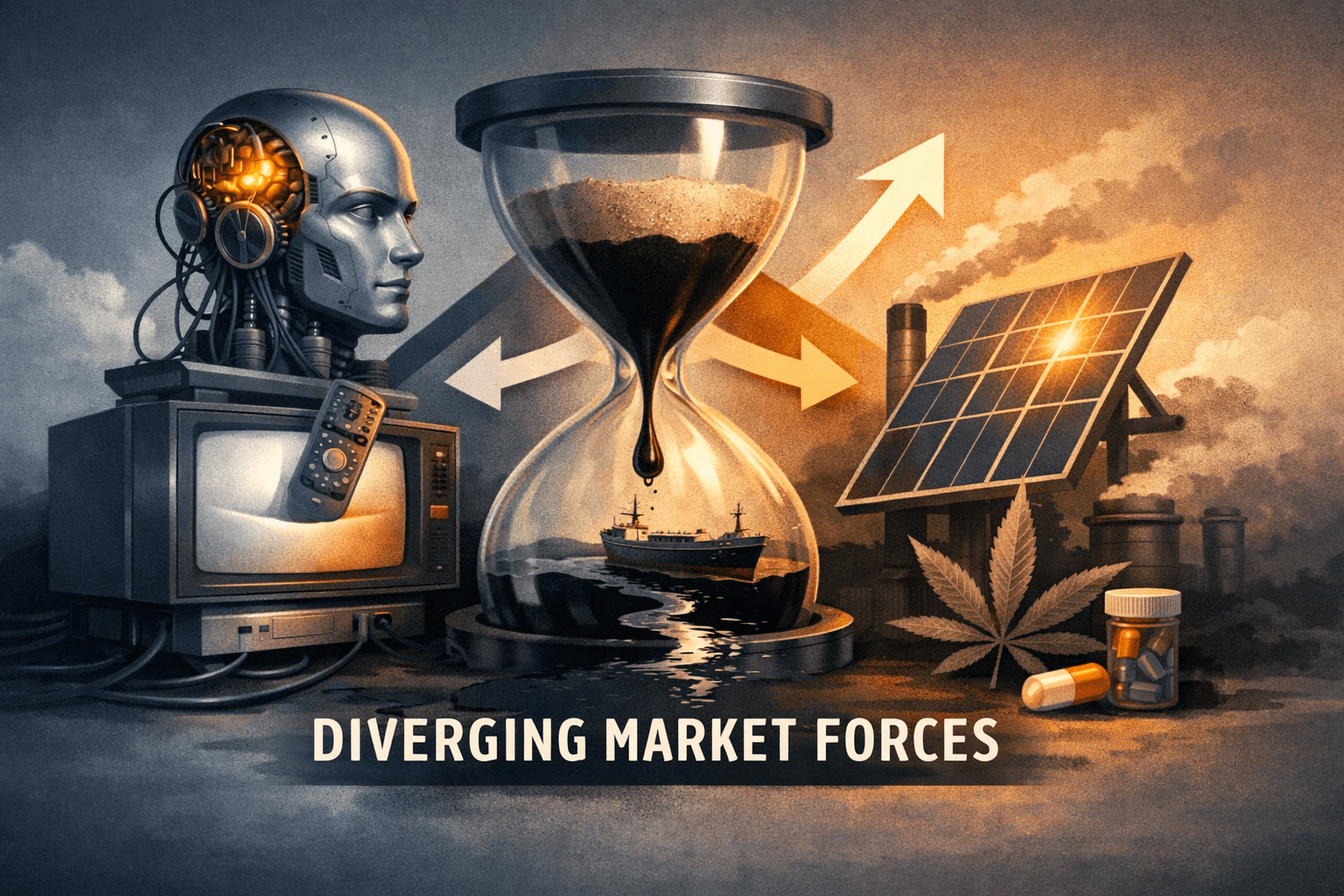
AI, Energy Tightness and Solar Supply Drive a Market of Divergent Movers — Netflix, Roku and Suniva Among Today's Standouts
Podcast • Loading audio...
Share this article
Spread the word on social media
Key Takeaways
- •Technology and communications led today’s headlines as AI funding, new models and streaming beats (Netflix, Roku’s 100M households) reinforced sector momentum.
- •Solar manufacturing approvals (Suniva’s 4.5 GW plan) and certified battery systems are concrete signs that the energy transition is starting to show through to utilities and supply chains.
- •Geopolitical disruption around the Strait of Hormuz lifted Brent above $99/bbl, supporting traditional energy while adding macro and inflationary risk.
- •Crypto and cannabis remain regulated‑by‑events: institutional adoption signals exist, but miner liquidations, CFTC scrutiny and mixed state rulings keep volatility high.
- •Real‑estate and industrial leasing show selective strength (Manhattan leasing, Prologis), highlighting asset‑specific outcomes rather than uniform sector recovery.
Executive summary
Global markets on Apr. 16 presented a story of concentrated leadership and broad cross‑currents rather than a unanimous direction. Technology and communications headlines were dominated by AI funding, new models and strong streaming data — Netflix topped Q1 expectations and Roku reported it now reaches 100 million households — which supported risk appetite for digital-adjacent sectors. At the same time, energy markets tightened on geopolitical risks near the Strait of Hormuz, pushing Brent above $99/bbl and underpinning the traditional energy complex even as solar and manufacturing wins lifted parts of the utilities and energy transition supply chains.
Policy and regulatory headlines produced uneven outcomes. Materials and mining gained momentum on near‑term production wins — including the first commercial yttrium output and rare‑earth project activity — while cannabis faced a mix of court rulings and legislative maneuvers that leave operators in a waiting game. Crypto moved on mixed signals as institutionalization continues (low‑fee bitcoin ETFs) even as miners liquidate and regulators scrutinize market oversight. Real‑estate leasing data and logistics demand (notably Prologis) point to pockets of strength amid still‑elevated financing costs.
Taken together, the tape suggests selective cyclical and secular opportunities: AI and streaming adoption continue to reallocate spending within tech and media; solar manufacturing and storage approvals are starting to show through to utilities; and energy geopolitics is keeping commodity risk premiums alive. Regulatory calendars and execution risk remain the dominant identifiers of near‑term volatility.
Sectors grouped by performance
Note: public price performance was not supplied in the raw sector briefs; the groupings below synthesize the day’s news flow and market signals to classify relative outperformance, underperformance and stability across sectors.
Outperformers
- Technology — AI funding rounds, new models and product updates (OpenAI launches, Upscale AI talks) gave the sector headline momentum. Alphabet’s stake in SpaceX and AI partnerships further supported sentiment. Analysts note that funding and product cycles are sustaining deal activity and M&A chatter.
- Communications & Media — Positive subscriber and usage data led the pack: Netflix topped Q1 expectations and reiterated guidance, while Roku said it now reaches 100M households. Combined content and distribution announcements (studio movements, infrastructure upgrades) boosted sector-wide optimism.
- Utilities / Energy Transition — Solar manufacturing approvals (Suniva’s planned 4.5 GW facility), UL‑listed battery systems and policy tailwinds pushed public and private actors in the power-supply chain into focus, driving constructive headlines for utilities exposed to solar and storage.
Underperformers
- Cryptocurrency — Mixed signals left crypto subdued: Morgan Stanley highlighted the plug‑in of crypto into everyday finance while miners’ liquidations and heightened regulatory scrutiny from the CFTC produced a negative undertone. ETF flows and pilot programs are positive, but governance and liquidity events keep the sector volatile.
- Cannabis — The sector remains bifurcated as court rulings, state votes and legislative proposals produce stop‑start outcomes. A $180M scaling brand story showed retail potential, but regulatory uncertainty (state licensing appeals, testing mandates rejected) undercuts valuation uplift.
- Healthcare — A split between scientific breakthroughs (oncology advances, genomic testing) and policy or public‑health worries (Medicaid work‑rule debates, Alzheimer’s review) produced mixed market signals and pressured clear directional conviction.
Stable / Mixed
- Materials & Mining — Rare‑earth and recycling news buoyed interest, but execution risk and long lead times temper a clear breakout. Commercial yttrium output and JV options (Rio Tinto) are constructive but longer‑dated catalysts.
- Real Estate — Leasing strength in Manhattan and industrial leasing (Prologis reported record activity) contrast with housing‑market stresses and foreclosure watch lists, creating a neutral day overall.
- Industrial & Manufacturing — Strength in steel, defense and CPG headlines signaled cyclical support, but trade policy, tariffs and labor dynamics keep the sector tethered to macro swings.
- Consumer / Retail — Strategic moves into services, advertising and AI monetization (Walmart, Albertsons, DoorDash, Salesforce) suggest steady revenue diversification rather than a short‑term breakout.
- Finance & Banking — A market rebound coupled with AI deal activity supported sentiment, though antitrust verdicts and cautious analyst notes keep the sector range‑bound.
Cross‑sector themes and correlations
AI as a revenue- and cost-shift driver: AI headlines cropped up across technology, communications, finance and consumer. OpenAI’s expansion into personal finance and multiple startup funding rounds indicate an accelerating monetization cycle for models and tooling. For media and retail, AI is both a content/ad revenue driver and a productivity tool that can compress costs — the correlation between AI funding and improved guidance in cloud/advertising revenue is becoming clearer.
Energy tightness vs. energy transition: The geopolitical disruption near the Strait of Hormuz pushed Brent above $99/bbl, giving the traditional energy sector a near‑term boost. Simultaneously, policy and manufacturing wins (Suniva’s 4.5 GW factory, UL‑listed battery systems, polysilicon negotiations) are reinforcing momentum in the solar supply chain. Investors and operators are therefore juggling a two‑track narrative: higher near‑term fossil fuel prices alongside a structurally growing renewables buildout.
Supply‑chain and raw‑material linkage to green transition: Materials and mining stories (commercial yttrium output, rare‑earth activity, recycling agreements) show a direct tie to the energy transition. Rare earths underpin electric motors, batteries and critical electronics, so progress in domestic production has outsized implications for manufacturing, defense suppliers and EV supply security.
Regulatory calendars are market catalysts: Across cannabis, crypto and healthcare, legal and regulatory milestones drove headlines. Actions ranging from state cannabis licensing appeals and court decisions to CFTC scrutiny of crypto and federal healthcare rule reviews imply that calendar risk — not only fundamentals — will determine near‑term volatility for these sectors.
Real‑estate demand is bifurcated by product type: Office leasing in Manhattan and industrial/logistics leasing (Prologis) point to selective recovery in core urban and logistics assets, while housing affordability and aging‑owner financing needs remain structural drags — real estate performance is increasingly asset‑specific rather than macro‑synchronous.
The biggest moves and why they mattered
Netflix (broad sector impact: Communications / Media) What happened: Netflix reported Q1 results that beat expectations and reiterated full‑year guidance. Why it mattered: Better‑than‑expected subscriber and monetization trends reduce a major overhang for media valuations and support confidence in ad and subscription hybrid strategies. Analysts note that when a market leader like Netflix exceeds expectations and holds guidance, it often relieves pressure on smaller streaming players and accelerates content spend planning across studios and distributors.
Roku reaches 100 million households (Communications) What happened: Roku announced it now reaches 100M households. Why it mattered: Distribution scale is a critical input to ad monetization and platform leverage. Roku’s user base milestone signals growing ad inventory and bargaining power with advertisers, bolstering the media advertising narrative and reinforcing the communications sector outperformance.
Suniva and grid‑scale wins (Utilities / Energy Transition) What happened: Suniva plans a 4.5 GW manufacturing facility; regulators approved a UL‑listed battery system. Why it mattered: These are tangible supply‑side wins for solar and storage that shorten the path from policy pledges to deployments. Manufacturing scale and certified storage product approvals reduce execution risk for large buildouts and, over time, can improve margins for utilities and manufacturers exposed to module and balance‑of‑system components.
Brent oil > $99/bbl after Strait of Hormuz disruption (Energy) What happened: Tensions in the Strait of Hormuz tightened oil markets and pushed Brent above $99. Why it mattered: Geopolitical price shocks add a risk premium into energy supply expectations and can lift cash flow for integrated E&P and pipeline companies even as higher energy prices feed into inflation and cost pressures across industry. The move also affects currency and macro expectations, which flow through to rates, REITs and consumer sentiment.
Rare‑earth and yttrium production (Materials & Mining) What happened: Reports of commercial yttrium output and advancing rare‑earth projects (Rio Tinto JV option) surfaced. Why it mattered: Domestic rare‑earth capacity is a strategic enabler for electric vehicles, defense and advanced electronics. Early commercial production reduces geopolitical concentration risk and supports higher valuation multiples for upstream producers if demand for magnets and specialty alloys continues to grow.
Crypto institutionalization vs. miner liquidation (Crypto) What happened: Morgan Stanley flagged that crypto is becoming daily business; low‑fee bitcoin ETF news and South Korea pilot programs contrasted with miner liquidations and renewed CFTC scrutiny. Why it mattered: The sector is straddling institutional adoption (ETF flows, bank products) and structural fragility (mining balance sheets, regulatory risk). Net flows into ETFs can stabilize prices, but concentrated selling by miners can catalyze volatility.
Cannabis regulatory patchwork (Cannabis) What happened: A $180M scaling brand and retail openings contrasted with court filings, rejected testing mandates and licensing injunctions. Why it mattered: The simultaneous presence of commercial scale stories and regulatory setbacks explains why valuations remain bifurcated: growth prospects exist but legal uncertainty imposes a material discount until a consistent federal or state framework emerges.
Actionable insights for investors (informational only)
Monitor event calendars and regulatory dates: The next several weeks contain material regulatory and legal inflection points that could move niche sectors — cannabis licensing appeals, CFTC/Congressional guidance on crypto, and federal healthcare reviews. Data suggests that news flow in these areas produces outsized short‑term volatility.
Watch AI monetization and guidance language closely: Earnings commentary from large cloud and media platforms (e.g., Netflix, platform owners, ad networks) that explicitly link revenue growth to AI deployments or new ad formats is increasingly predictive of follow‑on analyst revisions.
Track commodity and shipping risk premiums: With Brent above $99 and geopolitical risks in the Persian Gulf, commodity‑sensitive sectors (energy producers, transportation, industrials) warrant close attention to realized margin changes and forward curve shifts that affect capex plans and working capital.
Follow solar supply‑chain signals for lead indicators in utilities: Approvals like the Suniva 4.5 GW plant and UL certified battery systems are not just press releases — they precede procurement cycles. Procurement or EPC firms that win early contracts can be early beneficiaries of the multi‑year buildout.
Treat crypto flows as a volatility barometer: ETF flows, miner reserve changes and government pilot program milestones (e.g., South Korea’s deposit token pilot) offer a clearer read on risk appetite than price alone. Analysts note that persistent ETF inflows historically reduce realized volatility but do not eliminate idiosyncratic regulatory shocks.
Be selective within real estate: Leases in Midtown Manhattan and record logistics demand (Prologis) suggest asset‑class differentiation. Debt markets and cap‑rate expectations remain sensitive to rate trajectories; monitoring regional vacancy and lease‑term data is critical before extrapolating sector strength.
Prepare for cross‑sector second‑order effects: For example, sustained higher oil prices can feed into transportation and consumer margins, while accelerating domestic rare‑earth output can constrain certain inflationary inputs for EVs and defense but may increase capex for mining names.
Notable risks and watch points
Execution risk for materials and solar projects: Announcements of capacity are necessary but not sufficient — permitting, equipment lead times and financing remain potential blockers that could delay timing and cash‑flow realization.
Political and legal volatility in cannabis and healthcare: Court rulings and state ballots can materially alter revenue trajectories; market pricing may lag or overreact to interim outcomes.
Regulatory policy for crypto: The CFTC and other agencies remain active. Structural changes to oversight or taxation could rapidly alter business models and institutional participation.
Macroeconomic and rate implications: A sustained move higher in energy prices or a renewed inflationary impulse could pressure interest rates and capex plans across cyclical sectors, with outsized effects on real estate and consumer discretionary.
Conclusion and forward‑looking perspective
Apr. 16 underscored a market that’s being shaped as much by structural secular shifts — AI adoption, the energy transition and supply‑chain re‑shoring — as by event‑driven and regulatory shocks. Technology and communications continue to lead on positive product and monetization narratives, while utilities and the materials complex are beginning to show the first concrete signs that policy commitments to the energy transition are translating into industrial and manufacturing activity.
At the same time, crypto, cannabis and parts of healthcare illustrate how regulation and legal structures can cap upside until clarity arrives. Energy markets remind investors that geopolitical risk remains a wild card: supply disruptions can reintroduce fossil‑fuel price pressure even as the world builds renewable capacity.
Over the coming weeks, investors and observers should watch four trajectories closely: (1) AI monetization commentary in earnings calls and guidance adjustments, (2) regulatory rulings and legislative movements across crypto and cannabis, (3) solar and storage procurement announcements that confirm announced manufacturing capacity, and (4) macro commodity moves and shipping/transportation data that reflect the persistence of energy tightness.
Analysts note that market leadership is likely to remain concentrated: platforms and companies that can convert AI and distribution scale into recurring revenue will continue to attract capital, while the translation of policy wins into project timelines will determine whether materials and utilities gains are ephemeral or structural.
Investment disclaimer: This article is for informational purposes only. It does not constitute financial, investment or tax advice, nor does it recommend buying, selling, or holding any security. Analysts’ observations and sector sentiment reflect publicly available information and market commentary; readers should consult a qualified professional for personalized advice.
Sources
+ 14 more sources
Use these insights — enter this week's contest.
Free practice contests — earn Alpha CoinsExplore More Content
Disclaimer: StockAlpha.ai content is for informational and educational purposes only. It is not personalized investment advice. Sentiment ratings and market analysis reflect data-driven observations, not buy, sell, or hold recommendations. Always consult a qualified financial advisor before making investment decisions. Past performance does not guarantee future results.