 Sector Insights
Listen to this Recap
9:16
AI, Bitcoin and Materials Lead a Cross-Market Rotation as Policy and Macro Risks Keep Traders Guarded
Podcast • Loading audio...
Share this article
Spread the word on social media
Key Takeaways
- •Crypto and AI were the clearest sources of upside on Apr. 15: Bitcoin topped $75,000 and spot-BTC ETFs saw ~$412M of inflows while Google/OpenAI product rolls and a $100M-ARR startup boosted tech flows.
- •Materials and energy benefited from financing and supply shocks—$150M financing and REE activity in materials; tanker and output issues lifted energy exporters—highlighting a partial commodity-driven market rotation.
- •Policy and regulatory headlines (Fed Beige Book, antitrust rulings, CMS device payment proposals, local real-estate moratoria) constrained breadth and introduced cross-sector execution risk.
- •Actionable watch points: crypto flow mechanics and custody, AI capex and regulatory fallout, permitting/interconnection news for real estate and renewables, and macro indicators that drive rate and credit pathways.
- •Overall tone: selective strength—not broad market risk-on. Analysts suggest monitoring catalysts closely as concentrated themes trade amid elevated policy and macro uncertainty.
Executive summary
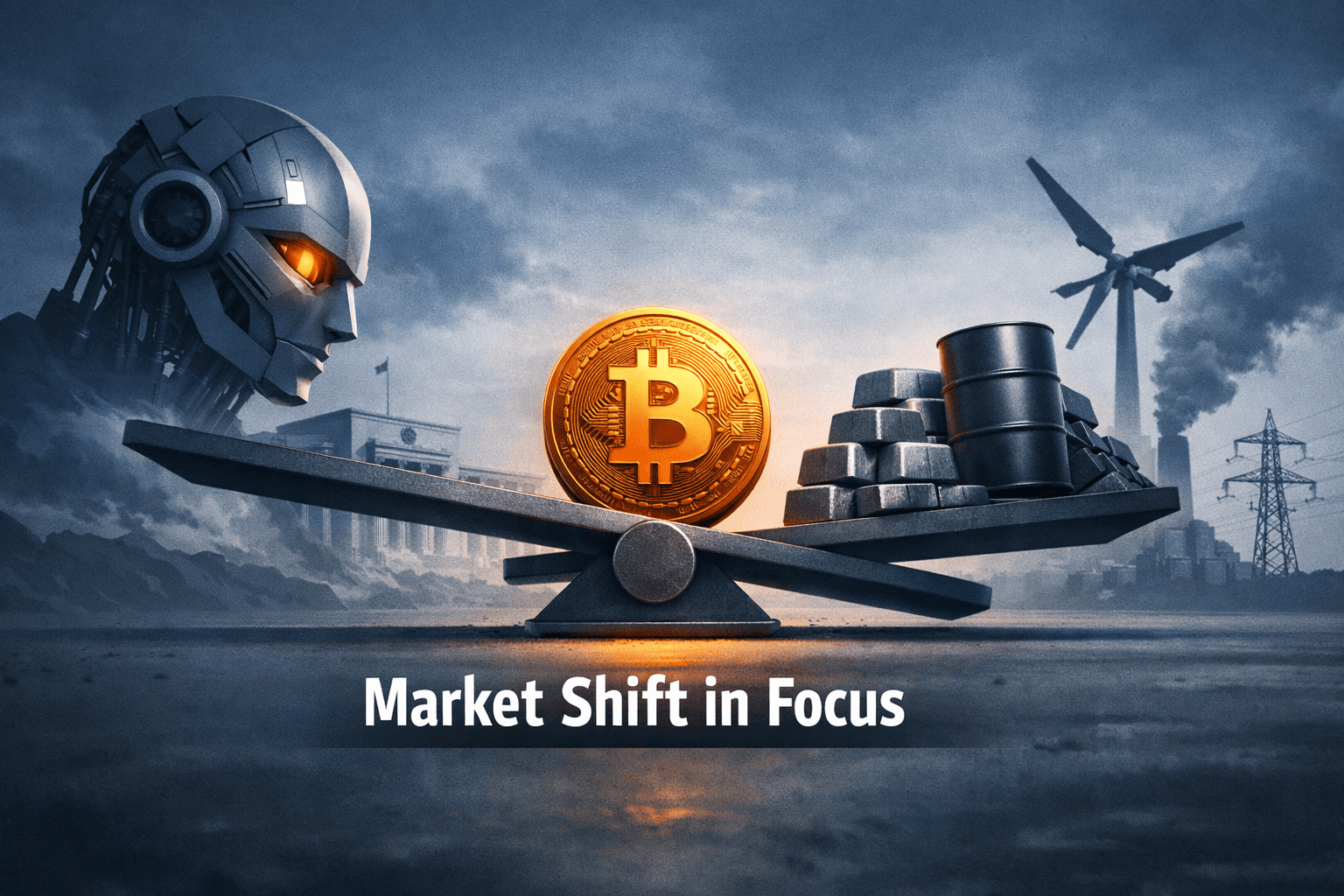
Markets moved on a mix of idiosyncratic sector headlines and macro cross-currents on Apr. 15. Two powerful theme engines—AI-driven technology flows and a renewed rally in crypto—were the clearest sources of upside, while materials and energy benefited from financing and supply-side shocks that pushed commodity-linked narratives higher. At the same time, recurring macro- and policy risks—Fed uncertainty in the Beige Book, antitrust and royalty disputes in media, and localized regulatory moves in real estate and healthcare—muted conviction and produced a risk-off undertone beneath pockets of momentum.
Key data points to watch from the session: Bitcoin topped $75,000 while spot-BTC ETFs recorded roughly $412 million of inflows; materials & mining deals included a $150 million financing and strategic REE (rare earth element) asset activity; community solar capacity crossed the 10 GW mark in the utilities narrative; Customs and Border Protection prepared a $127 billion tariff-refund portal; and a $100 million Blackstone filing signaled continued interest in data-center REIT structures.
The net effect: selective strength rather than broad risk-on. Sectors tied to AI, digital asset flows and base-materials outperformed intraday, while finance, healthcare and parts of communications absorbed policy and margin pressures.
Sector performance groupings
Below we group sectors into outperformers, underperformers and relatively stable performers based on the weight of headlines, capital flows and policy moves observed on Apr. 15.
Outperformers
- Crypto: Bitcoin’s move above $75,000 and $412M in spot-ETF inflows underpinned a clear bid. Institutional adoption signals—Legal & General reportedly putting $68 billion on-chain—plus stablecoin reserve builds reinforced momentum.
- Technology: Fresh AI product launches from Google and OpenAI, a startup hitting $100M ARR and late-stage funding flows kept sentiment tilted toward growth/AI exposures. A notable antitrust verdict also provoked re-pricing in platform and ad-related names, accelerating rotation into AI-focused software and services.
- Materials & Mining: Deal activity—strategic earn-ins, a $150M financing and a rare-earth acquisition—put capital back into cyclical supply stories. Copper smelter throughput is reportedly robust, supporting constructive pricing narratives.
Underperformers
- Finance & Banking: Macro and policy uncertainty dominated. The Fed’s Beige Book flagged a slowing US economy and political pressure on the Fed added to directional uncertainty. These headlines, plus sector-specific caution around leadership and crypto exposure at banks, constrained risk appetite.
- Healthcare: CMS proposals to roll back some device payment flexibilities, coverage and reimbursement uncertainties, and rural access pressures created mixed signals that are muddying near-term forecasts for medtech, payors and providers.
- Communications & Media: Distribution fights, royalty disputes and rising telecom distress weighed on the group even as new content rolls and indie streamer Emmy bids offered positive offsets.
Stable / Mixed performers
- Energy: Strong near-term price action in parts of the energy complex—driven by geopolitical tanker movements and supply shocks—lifted exporters, while renewables faced project cancellations and some rationing that offset part of the gains.
- Utilities: The sector showed bifurcation—policy and solar deployment momentum (community solar at ~10 GW, new storage projects) versus weak EV sales data that keep demand-side questions alive.
- Real Estate and Industrial: Active deal flow (data-center REIT filings, large industrial leasing pitches) combined with policy headwinds (local moratoriums and zoning debates) to keep returns choppy but not uniformly weak.
Cross-sector themes and correlations
Several cross-cutting narratives linked what otherwise looks like a scatter of headlines. Understanding these links helps interpret price action and where momentum may persist.
- AI adoption as a cross-sector amplifier
- What happened: Google and OpenAI product rolls plus a startup hitting $100M ARR dominated the tech story. Those developments pushed capex and software-ex spend expectations for corporates and reinforced investor appetite for companies positioned to monetize AI.
- Cross-sector effect: AI narratives are lifting software and services stocks and have downstream implications for industrials (automation and manufacturing AI programs), real estate (data-center demand, Blackstone’s $100M REIT filing), and even materials (increased demand for copper, rare-earths and specialized chips used in AI hardware).
- Risk repricing around policy and regulation
- What happened: The Fed’s Beige Book flagged loosening momentum; antitrust rulings hit platforms; CMS proposed device payment changes; local real-estate permitting debates surfaced.
- Cross-sector effect: Policy uncertainty reduced the breadth of rallies. Finance and healthcare were particularly sensitive. Communications faced royalty and distribution uncertainty that constrained upside even where content stories were favorable.
- Capital flows into digital assets and tokenization
- What happened: BTC > $75k, $412M in spot ETF inflows and high-profile filings (Goldman’s BTC-linked ETF filing) with Legal & General moving ~$68B on-chain.
- Cross-sector effect: Crypto flows are re-energizing trading, custody, and fintech narratives and providing liquidity that occasionally spills into equities (especially fintech and infrastructure plays). Tokenization stories are also intersecting with real estate and fixed-income markets.
- Supply-side shocks and commodity repricing
- What happened: Energy supply worries around tanker movements and output cuts from China pushed prices; materials financing and copper smelting activity suggested healthier commodity fundamentals in some spots.
- Cross-sector effect: Energy exporters saw revenue upside while renewables projects faced localized cancellations—creating dispersion inside the broader energy complex. Materials strength supports cyclicals and industrial capital spending narratives.
- Infra and logistics policy driving capex decisions
- What happened: CBP’s $127B tariff refund portal and a $226M semiconductor R&D center at Texas A&M underscore the ongoing policy-driven reallocations in supply chains and manufacturing.
- Cross-sector effect: This increases visibility for sectors dependent on supply-chain normalizations—industrial, semiconductor, and logistics names—and helps justify longer-term capex and margin improvement expectations in certain capital goods pockets.
Notable moves and why they mattered
Below are the most significant headlines from Apr. 15, with context on the drivers and cross-market implications.
- Bitcoin tops $75,000 and ETFs record $412M inflows
- Why it moved: Tightened derivatives positioning, geopolitical flows and institutional ETF demand pushed spot BTC higher. Legal & General putting substantial assets on-chain and reported moves in stablecoin reserves (Tether reporting reserve boosts) added credibility to institutional participation.
- Market impact: Enhanced liquidity and ETF flows have a multi-layered effect—improving price discovery in crypto, increasing trading revenues for custodians and broking platforms, and nudging some allocators to rethink digital-asset exposure frameworks. Providers of crypto custody and tokenization infrastructure are likely beneficiaries of accelerating flows.
- AI product rolls and a high-profile antitrust verdict reshape tech narratives
- Why it moved: Product announcements from Google and OpenAI reinforced monetization pathways for AI and pushed investor interest into software, cloud services, and enterprise AI adoption. Simultaneously, an antitrust verdict forced re-evaluation of platform power and ad market structures, creating both risk and opportunity pockets.
- Market impact: Short-term volatility in platform-adjacent names was accompanied by renewed appetite for pure-play AI vendors, chipmakers, and cloud infrastructure names. The verdict raises the prospect of regulatory-driven re-segmentation in ad markets, which could influence adtech and media revenue forecasts over the coming quarters.
- Materials & mining sees $150M financing and REE project acquisitions
- Why it moved: Financing and M&A activity signal investor confidence in commodity exposure—especially where strategic raw materials (copper, rare earths) align with electrification and AI hardware demand.
- Market impact: Strong copper smelter activity and automation investments suggest improving supply dynamics. For investors, these moves highlight where capex and resource control can matter for longer-term returns in cyclical sectors.
- Utilities and community solar cross 10 GW milestone amid grid tech wins
- Why it moved: Policy moves and deployment economics (plus new solar design tools and transmission policy items) are accelerating distributed and community solar rollouts.
- Market impact: Near-term headline benefits accrue to developers and grid-tech vendors, while utilities wrestle with capex timing and EV adoption variability. The 10 GW milestone is a signaling event for longer-term utility earnings over multi-year horizons, but a weak EV sales report tempers short-term demand expectations.
- Energy geopolitics produces exporter wins but renewable disruptions persist
- Why it moved: Tanker activity around the Strait of Hormuz and Chinese output cuts tightened near-term oil markets; these dynamics boosted exporter cashflows. Simultaneously, some renewable projects faced cancellations or rationing, increasing policy and execution risk.
- Market impact: Energy equities tied to commodity prices outperformed, while renewables contractors and project owners faced dispersion in returns depending on contract structure and permitting risk.
- Real estate deal activity balanced against local policy headwinds
- Why it moved: Blackstone’s data-center REIT filing (~$100M filing reference) and large industrial leasing pitches (1.3M SF in Buckeye) show continued demand for logistics and data infrastructure. At the same time, potential local moratoria on data centers (e.g., Maine) show how permit risk can swiftly change local economics.
- Market impact: Data-center exposure and industrial logistics flows remain central themes; however, near-term risk to development pipelines and local pushback requires close monitoring of permitting cadence and utility capacity constraints.
- Finance and the Fed: Beige Book and political pressure accentuate caution
- Why it moved: The Fed’s Beige Book noted slowing activity and rising political pressure on monetary policy. Banks and financial institutions reacted by flagging leadership uncertainty and caution on positioning.
- Market impact: Credit-sensitive names and rate-dependent business models moved cautiously. The combination of macro slowdown signals and political noise raises the premium for clarity on rate paths and credit trends.
Actionable insights for investors (informational only)
Below are practical themes and watchlists drawn from today's cross-market moves. These are not recommendations to buy, sell, or hold any security; they are observations to help investors frame questions and risk controls.
- Monitor crypto flow mechanics and custody risk
- Why: ETF inflows ($412M reported for spot ETFs) combined with institutional on-chain allocations create momentum but also increase sensitivity to derivatives positioning. Track ETF flows, futures open interest, and custody volumes to assess sustainability.
- Watch: ETF filings, custody-provider volume, stablecoin reserve disclosures, and regulatory statements that could change access or margin requirements.
- Focus on AI-capex winners and the regulatory aftermarket
- Why: AI productization is accelerating demand for cloud, chips, and specialized software, but antitrust rulings can quickly shift advertising and distribution economics.
- Watch: Cloud capex guidance, chip order books, enterprise software ARR growth, and regulatory filings or appeals related to platform cases.
- Reassess commodity-linked allocations with an eye on financing and supply risk
- Why: Materials got fresh capital (a $150M financing) and asset-level buys, improving medium-term supply-side fundamentals; energy exporters also benefited from near-term price shocks.
- Watch: Production and smelter throughput stats, announced financing rounds, and geopolitical developments that could alter tanker routes or shipping insurance costs.
- Distinguish between project demand and permitting risk in real estate and renewables
- Why: Data-center filings and industrial leasing remain robust, but local moratoria or utility constraints (and renewable project cancellations) can alter near-term returns.
- Watch: Local permitting decisions, utility interconnection timelines, and policy statements at state and municipal levels.
- Protect against macro policy shocks
- Why: The Beige Book’s slowing signals and political pressure on central banks raise the odds of sudden re-pricing in rates-sensitive sectors.
- Watch: Weekly economic indicators, Fed speak, and credit spreads. Consider hedging duration and monitoring bank loan-loss provisioning behavior.
The most significant intra-day trade narratives to track next
- Crypto: Whether ETF inflows broaden beyond the initial tranche and how futures positioning responds to $75k+ price levels.
- AI/Tech: Earnings-season commentary on AI monetization and capex cadence; antitrust appeals or regulatory clarifications will be high-impact.
- Materials: Follow follow-on financings, production reports (copper, REEs), and any government trade measures that could influence supply.
- Utilities & Renewables: Watch rate cases, grid investments, and EV adoption data that will determine demand trajectories for the sector.
- Finance: Monitor bank leadership disclosures, loan growth metrics, and any quick shifts in the credit cycle signaled by spreads.
Conclusion and forward-looking perspective
Apr. 15 offered a useful microcosm of today's broader market dynamic: theme-driven rallies (AI and crypto) producing concentrated leadership, while macro and policy uncertainty limit the breadth and conviction of any risk-on move. The cross-market correlations observed—AI lifting software, data-center real estate and chip demand; crypto ETF flows feeding fintech and custody narratives; materials financing reinforcing the commodity cycle—suggest that focused thematic allocations can outperform broad market exposure in the near term, but only if investors actively manage regulatory and permitting tail risks.
Looking ahead into the near term, investors should watch three things closely: central-bank messaging and macro data that will set rates and liquidity expectations; regulatory developments (antitrust, CMS, state-level land use) that can materially reprice revenue models; and capital-flow signals—ETF inflows, large financings and M&A activity—that indicate whether the current momentum is durable or tactical.
Investment Disclaimer (critical)
This analysis is for informational purposes only. It does not constitute personalized investment advice or an offer to buy or sell securities. Analysts note that market conditions and individual circumstances vary; data and commentary here are not a substitute for professional financial advice. Readers should consider their own objectives and consult a qualified professional before making investment decisions.
Quick reference: what to watch tomorrow
- Crypto ETF flows and bitcoin futures open interest updates.
- Fed speakers and economic data following the Beige Book signal.
- AI vendor earnings or guidance commentary that clarifies monetization timelines.
- Materials production and copper/smelter throughput releases.
- Local permitting news on data centers and renewable interconnection decisions.
Key data points from Apr. 15
- Bitcoin: topped $75,000 intraday
- Spot-BTC ETFs: ~$412 million inflows reported
- Materials: ~$150 million financing announced; REE project acquisition activity
- Community solar: ~10 GW milestone cited in utilities coverage
- CBP: preparing a $127 billion tariff-refund portal
- Texas A&M: breaking ground on a $226 million semiconductor R&D center
- Real estate: Blackstone data-center REIT filing (~$100 million referenced)
- Healthcare: Beeline launch with $300 million referenced; CMS device payment proposal
Investment tone (summary)
Market momentum is constructive for specific themes—crypto, AI/tech, materials—while macro and policy uncertainty argues for a cautious, selective approach across sectors. Analysts note that momentum indicators are mixed: concentrated strength exists, but breadth and conviction are limited.
Sources
+ 14 more sources
Use these insights — enter this week's contest.
Free practice contests — earn Alpha CoinsExplore More Content
Disclaimer: StockAlpha.ai content is for informational and educational purposes only. It is not personalized investment advice. Sentiment ratings and market analysis reflect data-driven observations, not buy, sell, or hold recommendations. Always consult a qualified financial advisor before making investment decisions. Past performance does not guarantee future results.