 Sector Insights
Listen to this Recap
12:17
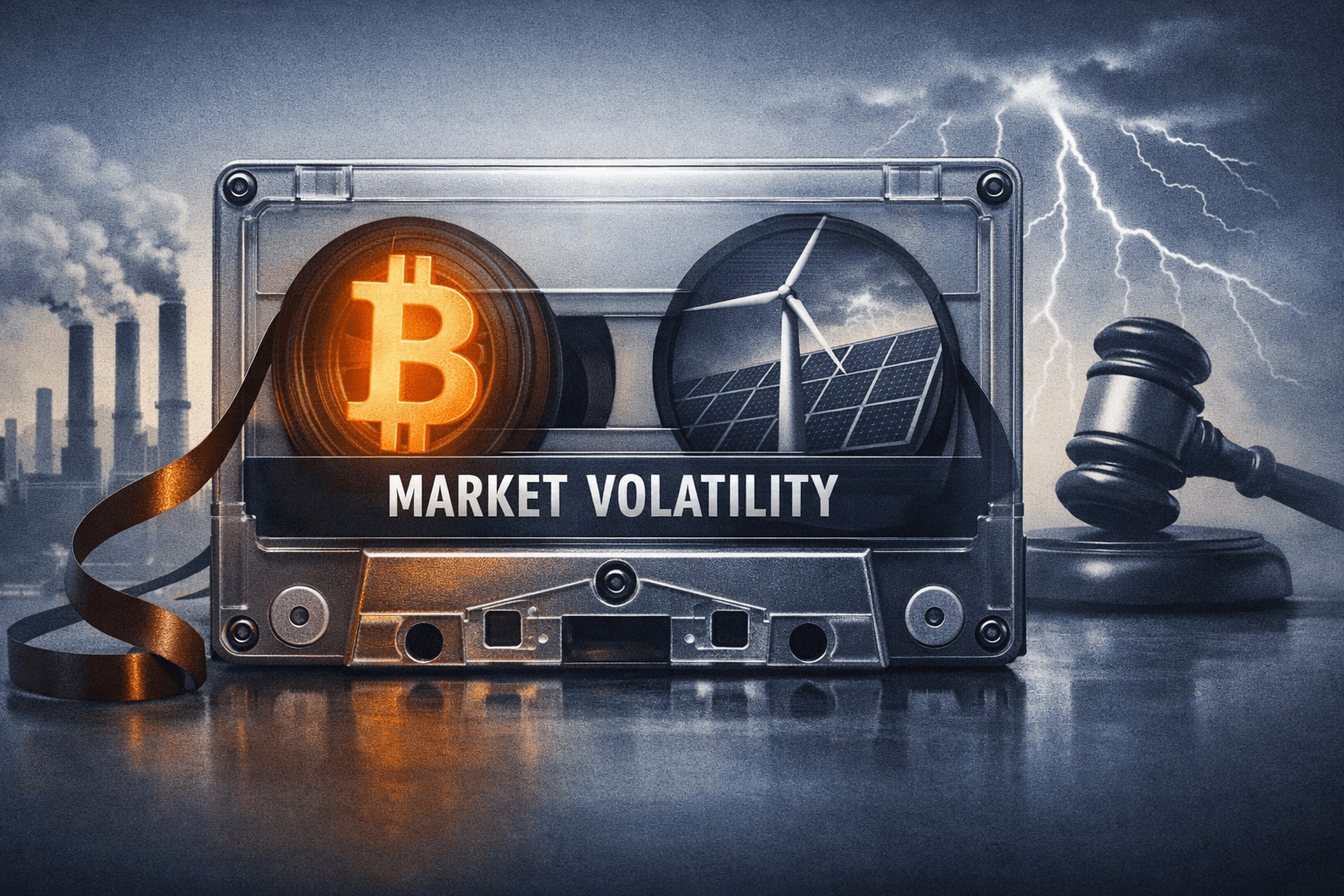
Energy transition, crypto flows and regulatory storms — a mixed tape across 24 sectors
Podcast • Loading audio...
Share this article
Spread the word on social media
Key Takeaways
- •Crypto flows remain a major market dynamic: bitcoin spot ETF inflows topped $358.1M and institutional products (e.g., MSBT) show strong early demand.
- •Renewables and related project pipelines (7-GW milestone, $14M campus solar-plus-storage) underpin cross-sector capex in utilities, industrials and materials.
- •TSMC’s ($TSM) Q1 beat keeps semiconductor and AI infrastructure demand — and associated names like $NVDA, $SMCI and $MSFT — central to market direction.
- •Geopolitical developments that push oil prices higher and regulatory/legal headlines across tech, finance and healthcare are key near-term downside risks.
- •Investors should monitor execution metrics (permitting, backlog, ETF flow persistence, legal outcomes) rather than themes alone when assessing opportunities.
Executive summary
Today’s market narrative was decidedly mixed. Momentum in renewable energy projects and mining/drilling activity provided growth signals in traditionally cyclical and infrastructure-focused sectors, while bitcoin spot ETFs and exchange flows injected fresh risk-on capital into crypto markets. At the same time, legal, regulatory and geopolitical news capped rallies in technology, finance and parts of healthcare — creating a market that looks “opportunistic but cautious.”
Key datapoints from the tape: bitcoin spot ETF inflows topped $358.1 million, a Morgan Stanley-backed product (MSBT) showed strong early demand, utilities and project headlines highlighted a 7-GW renewables pipeline and a $14 million solar-plus-storage campus project, materials and mining reported funded drill programs and recycling capacity expansions, and TSMC ($TSM) delivered a notable Q1 beat that kept chip demand and supplier names ($NVDA, $SMCI, $MSFT) in focus. Geopolitics and oil also flashed amber as spot prices spiked amid Horn of Hormuz flow developments.
This summary groups the 24-sector feed into outperformers, underperformers and stable groups, highlights the cross-sector themes driving the market, pinpoints the largest moves and why they mattered, and closes with investor-oriented takeaways and a forward-looking view.
Investment disclaimer: This article is for informational purposes only. It does not recommend buying, selling, or holding any security, nor does it constitute personalized investment advice. Analysts note trends and data; readers should consult their advisors for individual decisions.
Grouping by performance: outperformers, underperformers, stable
The sector summaries did not supply intraday return numbers, so the following groupings are qualitative, based on the strength of headlines, capital flows and structural catalysts reported across sectors.
Outperformers
- Crypto / Cryptocurrency: Strong ETF flows (spot inflows > $358.1M) and product demand (MSBT) indicate clear capital rotation into digital-asset exposure. Regulatory progress in Hong Kong (first stablecoin licences) and new product innovations (Bitget’s IPO-style token market) support momentum.
- Utilities & Renewables: Multiple project wins — including a $14M solar-plus-storage campus deal, a 7-GW project pipeline milestone and managed EV charging grid announcements — point to sustained activity and visible project pipelines.
- Materials & Mining: Funded drill programs, recycling capacity expansions and first-gold production reports create near-term catalysts and M&A momentum in critical minerals and recycling plays.
Underperformers
- Technology: A mix of crypto collateral drama, a Chapter 11 filing at a battery recycler, legal/subpoena risk (e.g., Reddit case) and other regulatory pressures created a cautious tone for software, infrastructure and platform names despite pockets of product-driven strength.
- Finance & Banking: Geopolitical risk (U.S.–Iran talks, oil elevation) and a major fintech lawsuit plus leadership exits weighed on risk appetite in the financials complex.
- Healthcare: While M&A and IT spending lifted parts of the sector, regulatory setbacks (an FDA rejection) and fresh GLP‑1 side-effect concerns introduced near-term headline risk.
Stable / Mixed
- Consumer & Retail: Activity was uneven — high-profile M&A and Levi Strauss’ double-digit revenue gains contrasted with seller unrest at Amazon and selective store/fulfillment closures.
- Real Estate: Redevelopments, big HUD loans ($56M) and financing activity balanced against tariffs and construction cost pressures, producing sector-specific winners and losers.
- Industrials & Manufacturing: Robotics expansion and port capacity news were offset by plant idlings and strike-related disruptions in specific subsectors.
- Communications & Media: Deal activity and network investment (e.g., fiber facility financing) were balanced by content risk and changing FCC policy.
These groupings reflect where headlines imply momentum (capital flows, funded projects, new licences) versus where headline risk and legal/regulatory issues suggest caution.
Cross-sector themes and correlations
- Energy transition continues to thread sectors together
- Renewables and electrification headlines show up in utilities (7-GW pipeline, solar-plus-storage), energy (solar installs, hydrogen advances) and industrials (EV supply chain, BYD expansion). Materials & Mining is linked through critical-minerals and recycling moves. Together, these items argue that policy support and project pipelines are translating into real-world CAPEX and M&A activity across multiple sectors.
- Capital rotation into digital assets and new product on-ramps
- Crypto spot ETF inflows (> $358.1M) and the early success of Morgan Stanley’s MSBT product underline a continued institutionalization of bitcoin exposure. Hong Kong’s first stablecoin licences and exchange innovations (Bitget’s offering) show capital is both seeking and being given new regulated on-ramps. This correlates with increased interest in custody, derivatives and bank-level involvement — a story touching finance, tech infrastructure providers and regulatory teams.
- AI and semiconductor capex remain central
- TSMC’s ($TSM) Q1 beat reiterated strong underlying chip demand, keeping attention on semiconductor supply chains. Mentions of $NVDA, $SMCI and $MSFT in technology briefings link AI training and server demand to data-center investments and enterprise software upgrades.
- Geopolitics and commodity volatility as cross-sector risk
- Oil price spikes and news about Gulf producer flows (Hormuz developments) feed through energy, finance and even industrials (transportation, logistics costs, supply chain). Higher energy prices complicate the near-term outlook for companies with energy-intense operations and can amplify inflationary pressures.
- Regulatory/legal themes cut across tech, healthcare and finance
- From subpoenas and Chapter 11 filings in tech to FDA setbacks and data leaks in healthcare to fintech lawsuits in finance, regulatory risk is a common drag. These stories are raising idiosyncratic volatility and influencing equity risk premia in affected names.
The day’s most significant moves — context and implications
- Crypto spot ETF inflows top $358.1 million; MSBT shows strong early demand
- Why it matters: Large, sustained ETF inflows indicate continued institutional allocation to bitcoin. The inflows have direct liquidity and price impact on crypto markets and draw in ancillary businesses (custody, exchanges, derivatives). Strong early demand for Morgan Stanley’s MSBT suggests appetite at wealth-manager and institutional levels for productized bitcoin exposure.
- Broader implication: Continued ETF success reduces the perceived friction for institutional allocation and increases the interconnection between traditional finance and crypto markets — amplifying volatility spillovers to equities during risk events.
- TSMC ($TSM) Q1 beat keeps chip demand story alive
- Why it matters: TSMC’s outperformance is a proxy for global chip demand and capex strength in AI and consumer electronics. Supplier and equipment names ($NVDA, $SMCI, $MSFT referenced for AI/servers) often move in tandem with foundry economics.
- Broader implication: If TSMC’s momentum persists, it supports semiconductor capital expenditure cycles, which can lift industrials (equipment makers), materials (advanced chemicals, wafers) and even real estate (data center markets).
- Renewables project milestones — 7-GW pipeline and $14M campus solar-plus-storage
- Why it matters: Concrete project pipelines and awarded contracts validate the transition story and provide visible revenue streams for utilities, engineering firms and equipment suppliers. The $14M solar-plus-storage campus project is a microcosm of how distributed renewables + storage are becoming financeable and scalable.
- Broader implication: Project visibility reduces execution uncertainty and improves financing terms for future deals; it also tightens demand for critical minerals and creates linkages with Materials & Mining for battery raw materials.
- Oil price spike and Hormuz flow updates
- Why it matters: Short-term supply concerns and geopolitical headlines move oil prices, which directly hit inflation expectations, shipping and energy-producer earnings. Elevated oil can mute consumer discretionary strength and raise input costs for industrials.
- Broader implication: Markets may re-price policy and risk assumptions, affecting financials through trading and credit channels and increasing dispersion between cyclical and defensive sectors.
- Healthcare regulation and GLP-1 headlines
- Why it matters: FDA rejections and reports of GLP-1 side effects create headline risk for biotechs and large-cap innovators. At the same time, M&A activity and institutional IT spending (e.g., $300M DHA IT investment) indicate pockets of structural growth.
- Broader implication: The short-term reaction to regulatory news often creates volatility in individual names; investors focused on healthcare should separate idiosyncratic product/regulatory risks from secular spending trends in biotech infrastructure and health IT.
- Finance: $1.5B SSR Mining cash infusion and fintech legal stress
- Why it matters: Big capital injections and corporate recapitalizations can stabilize individual credit and equity stories, but legal actions in fintech create sectoral headline risk and may slow product launches or revenue recognition.
- Broader implication: Watch liquidity and funding channels for mid-cap resource and fintech firms; legal exposures can transmit to banks via credit and merchant processing lines.
- Communications & Media deal flow and network financing ($425M fiber facility)
- Why it matters: Large-scale fibre financing and content deals show continued investment in distribution infrastructure and premium content — a long-duration revenue stream for network owners and studios.
- Broader implication: These investments support hardware capex and materials demand while constraining near-term free cash flow until monetization ramps are visible.
Actionable insights for investors (informational only)
Monitor the biggest cross-currents:
Watch crypto flows and product uptake closely: ETF flows (> $358.1M) are a leading indicator of institutional allocation. Increased institutional adoption tends to compress liquidity premia for crypto but also increases correlation with risk assets during stress events. Analysts note that custody and regulatory developments (e.g., Hong Kong stablecoin licences) will determine how persistent flows are.
Read TSMC and other capex reads as a proxy for AI-led demand: Semiconductor-foundry results and guidance are one of the clearest signals for prolonged AI/server investment. TSMC’s Q1 beat keeps $NVDA, $SMCI and server supplier names in focus. Track backlog, tool orders and wafer-start growth for a clearer view of downstream demand.
Treat renewables project pipelines as multi-quarter revenue signals: Projects like the 7-GW pipeline and campus storage deals require months to years to monetize, but they create predictable cash flow profiles for utilities and EPCs. Permitting, supply chain for inverters/batteries, and offtake agreements are key execution risk points.
Factor geopolitics into short-term risk budgeting: Oil price spikes tied to Hormuz flow news can re-rate cyclicals and drive rotation into energy and defensive sectors. Portfolio risk managers should consider scenario analysis for commodity price shocks and their effect on margins and consumer demand.
Separate idiosyncratic regulatory risk from secular spending trends: Healthcare and technology continue to face regulatory setbacks, but structural spending (health IT, AI infrastructure) can sustain a subset of names. Investors and allocators should evaluate company-level regulatory exposure versus exposure to long-term thematic growth.
Use volatility to evaluate balance-sheet strength: Across finance, industrials and materials, selective funding (e.g., $1.5B SSR Mining infusion, HUD loans) points to winners with better access to capital. In periods of headline-driven volatility, balance-sheet resilience remains a key differentiator.
Tactical watchlist items (informational):
- Short-term catalysts: Earnings and guidance from semiconductor suppliers and AI-cloud providers; further crypto ETF flows; renewables permitting and offtake announcements; upcoming policy or diplomatic developments affecting Gulf flows.
- Regulatory/legal triggers: FDA rulings, major subpoenas or legal judgments in tech and fintech, and Hong Kong/US stablecoin regulatory moves.
Sector-by-sector quick hits (selected highlights)
Crypto: Spot ETF inflows topped $358.1M and institutional products like Morgan Stanley’s MSBT saw strong demand. Hong Kong issued its first stablecoin licences and Bitget launched an IPO-style token market — signs of deepening institutional pathways.
Utilities: Renewables momentum with a $14M solar-plus-storage campus project and a 7-GW pipeline milestone. Grid flexibility, managed EV charging and geothermal turbine deals are notable operational and capital trends.
Materials & Mining: Funded drill programs, first-gold output and recycling expansions underline near-term production catalysts. M&A activity and capital raises provide optionality for commodity exposure tied to energy transition metals.
Technology: Mixed tape — TSMC ($TSM) beat underscores chip demand; but legal/subpoena risk, a Chapter 11 filing among battery recyclers and crypto collateral incidents weighed on sentiment. Names referenced in morning briefs included $NVDA, $SMCI and $MSFT.
Energy: Simultaneous drivers — oil spot prices spiked on geopolitical headlines while renewables and hydrogen advances continued. India’s nuclear/solar milestones were notable for long-term demand narratives.
Finance: Central banks held steady in the latest window, but geopolitical developments and a major fintech lawsuit increased risk. Corporate liquidity moves (e.g., $1.5B SSR Mining infusion) matter for credit-sensitive names.
Healthcare: M&A strength and IT spending ($300M by DHA) offset an FDA rejection and patient-data leak concerns. GLP‑1 side-effect headlines added episodic volatility.
Consumer & Retail: M&A and innovations (Amazon same-day delivery for Eli Lilly’s GLP‑1 pill) contrasted with seller unrest and fulfillment closures; Levi Strauss reported double-digit revenue growth.
Real Estate: Redevelopments, conversions and a $56M HUD loan supported financing activity, while construction tariffs and cost pressures remain a constraint.
Communications & Media: Content deals, a $425M fiber facility and FCC policy shifts drove sector headlines.
Conclusion and forward-looking perspective
Today’s headlines paint a market that is simultaneously adapting to new structural growth drivers and navigating legacy sources of volatility. On the growth side, the energy transition (renewables, battery supply chains, critical minerals), semiconductor and AI infrastructure demand, and the institutionalization of crypto (ETF flows and new product licences) continue to drive cross-sector investment and capital allocation. These are medium- to long-term themes likely to reshape returns and corporate strategies.
At the same time, regulatory and legal developments — from FDA decisions to subpoenas and fintech litigation — create episodic risk and can quickly re-price company valuations. Geopolitical events that influence energy markets add a second layer of macro uncertainty that can compress risk appetite across equities.
Near-term, expect headline-driven dispersion: individual names and sub-industries will continue to experience strong rallies or sharp pullbacks depending on permits, funding, regulatory outcomes and earnings. Over a multi-quarter horizon, investors tracking secular flows into AI infrastructure, large-scale renewables projects and institutional crypto products should watch execution metrics (project permits and offtake, semiconductor backlog, ETF flow persistence) as the best signals of durable performance.
Sentiment across sectors today is best described as neutral-to-cautious. There are clear pockets of outperformance (crypto flows, renewables and materials catalysts) but offsetting risks from geopolitics and regulation keep overall risk premia elevated.
Final note: use headline-driven volatility as an opportunity to re-evaluate fundamentals and risk exposure. The market is sorting winners by execution and financing capability more than by thematic promise alone.
Key takeaways are below.
Investment disclaimer (reiterated)
This analysis is informational only. It is not a recommendation to buy, sell, or hold any security, and it does not constitute personalized investment advice. Analysts note trends; readers should consult qualified advisors before making investment decisions.
Sources
+ 15 more sources
Use these insights — enter this week's contest.
Free practice contests — earn Alpha CoinsExplore More Content
Disclaimer: StockAlpha.ai content is for informational and educational purposes only. It is not personalized investment advice. Sentiment ratings and market analysis reflect data-driven observations, not buy, sell, or hold recommendations. Always consult a qualified financial advisor before making investment decisions. Past performance does not guarantee future results.