 Sector Insights
Listen to this Recap
11:27
AI, Energy and Materials Drive Today’s Market Narrative; Regulatory and Security Risks Cap Gains
Podcast • Loading audio...
Share this article
Spread the word on social media
Key Takeaways
- •AI, defense spending and energy geopolitics drove rotation into technology, energy and materials exposure.
- •Security incidents (a $285M Drift exploit) and regulatory probes (utilities, finance, cannabis) kept headline risk elevated.
- •Materials and industrials benefit from multi‑year capex narratives tied to data centers, DOD spending and EV supply chains.
- •Crypto showed renewed momentum (BTC > $69K) but remains vulnerable to governance and security shocks.
Executive summary
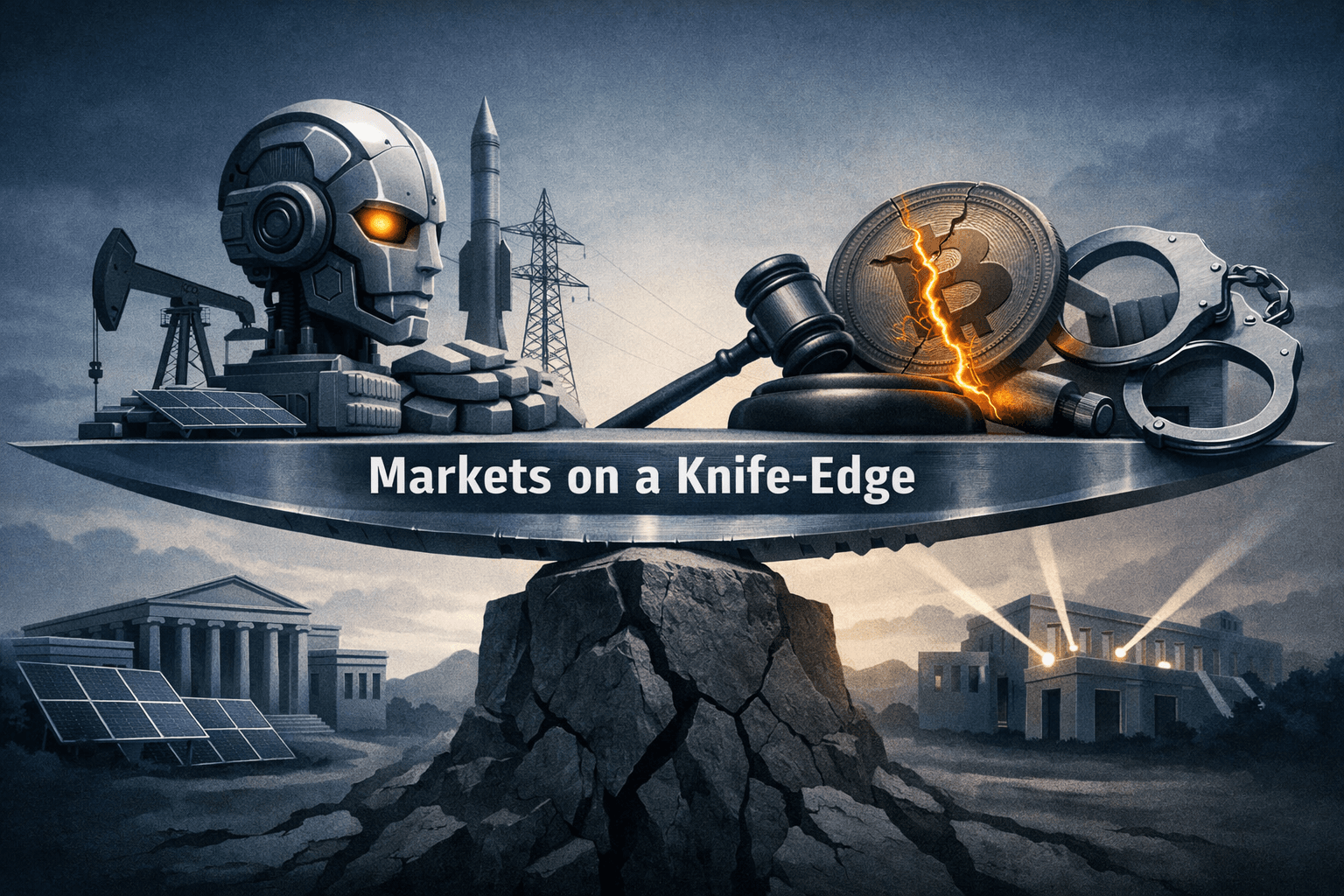
Markets traded on a mixture of structural demand drivers and headline risk on April 6. Momentum themes tied to AI, defense spending and energy geopolitics supported sectors tied to capital spending and raw materials, while cybersecurity incidents, regulatory scrutiny and localized policy shifts introduced cross‑market volatility.
Key, quantifiable developments that shaped the day:
- Defense and industrial demand: a reported $1.5 trillion U.S. Department of Defense plan kept industrial and manufacturing suppliers in focus.
- Energy geopolitics: OPEC+ moved to raise output while regional disruptions kept the energy complex on watch.
- Materials and mining: project restarts and financing activity — including a $520 million DRI financing and renewed mining at Stibnite Hill — highlighted supply‑security priorities.
- Crypto risk and momentum: Bitcoin traded back above $69,000, even as a major $285 million Drift exploit underscored security risks.
- Healthcare and regulation: the FDA floated trial reforms as Amgen (AMGN) reported progress on a subcutaneous formulation of Tepezza.
Taken together, the day’s tape suggests rotation into capacity‑and‑infrastructure exposed sectors (technology-related capex, materials, industrials) even as legacy cyclicals and regulated pockets (utilities, parts of finance and cannabis) faced headline-driven constraints.
Sectors grouped by performance
Note: intraday price move data was mixed across headlines; below groupings reflect directional leadership implied by company and policy newsflow rather than absolute index returns.
Outperformers
Technology
- Why: Product launches, AI/robotics adoption and corporate deal activity reinforced demand for software, chip, and automation suppliers. Firms mentioned in today’s flow included platform incumbents such as Google (GOOG/GOOGL), Apple (AAPL) and Netflix (NFLX) on product and content headlines, and robotics/cybersecurity plays benefiting from rising enterprise automation.
- What matters: Momentum for chipmakers and cloud infra firms tied to generative AI deployments is supporting capex narratives.
Energy
- Why: Geopolitical supply moves and continued EV manufacturing momentum provided a two‑pronged demand story. Chevron (CVX) restarting Israeli gas output and BYD order growth were among supportive headlines.
- What matters: OPEC+ output choreography produced price sensitivity across hydrocarbon names even as renewable module cost pressures and grid concerns raise medium‑term project economics questions.
Materials & Mining
- Why: Supply‑security actions — project restarts, tungsten plays and major financings such as a $520 million direct reduced iron (DRI) deal — brought mining and specialty materials firms into focus for industrial-scale buyers including AI data‑center builders.
- What matters: Investors are increasingly pricing in premium valuations for materials with constrained global supply chains or strategic metal exposure.
Stable / Mixed
Industrials & Manufacturing
- Why: A large-scale DOD plan and accelerating factory AI adoption created a constructive backdrop, but operational risks such as downtime monitoring disputes (ultrasound vs vibration) temper near-term earnings visibility.
- What matters: Execution on supply‑chain upgrades and capital projects will determine which names capture the upside.
Consumer & Retail
- Why: M&A and product initiatives — including Bed Bath & Beyond’s publicized acquisition of The Container Store — and inventory normalization stories fueled pockets of strength even as margin pressures and integration risk persist.
- What matters: Integration milestones, supply chain timing and promotional intensity are key variables for retail margins.
Communications & Media
- Why: Box-office strength and SpaceX IPO chatter lent a positive tone to studios and selective media names, although legal and platform quality issues (Netflix court setback) kept volatility elevated.
- What matters: Global content demand and streaming economics will determine winners; IPO activity in private-space companies could spill into broader risk appetite.
Underperformers
Utilities
- Why: The sector saw mixed signals: DOE approval for an Antares Mark‑0 nuclear project and hydrogen/electrification pilots were offset by a Texas regulatory probe into residential solar sales and lingering metal tariffs that raise project costs.
- What matters: Regulatory enforcement and distributed generation economics remain principal short‑term headwinds.
Finance & Banking
- Why: The sector experienced headwinds from regulatory friction (Jamie Dimon publicly criticizing new Basel proposals), payment-innovation headlines and idiosyncratic risk as banks were named in politically charged programs (BNY Mellon, BK; Robinhood, HOOD) and analysts flagged weaker fundamentals in select names.
- What matters: Regulatory changes and liquidity signals in municipals and structured products will influence bank risk premia.
Cannabis
- Why: Policy patchwork dominated the story: Massachusetts’ regulatory deal and Minnesota’s $50 million sales milestone signaled progress, but mixed March sales data and state‑level bans kept near‑term growth uneven.
- What matters: The sector remains highly sensitive to state policy dynamics and capital access; headline-driven volatility should be expected.
Cryptocurrency (mixed risk profile)
- Why: Bitcoin’s surge above $69,000 suggested renewed risk appetite, yet a $285 million exploit of Drift and governance fights at DeFi protocols such as Aave introduced material security and governance risk.
- What matters: Crypto continues to trade as a high‑beta, headline‑sensitive asset class where macro momentum and idiosyncratic security events compete to set price direction.
Cross‑sector themes and correlations
AI and capex rotaries: Technology, industrials and materials moved in tandem around the AI investment narrative. As enterprises and governments accelerate data‑center and AI infrastructure builds, demand for semiconductors, specialty metals (tungsten, rare earths), DRI steel inputs, and automation robots is cross‑cutting. This creates correlation between tech software/cloud names and materials/mining/industrial suppliers.
Defense and industrial linkage: The reported $1.5 trillion DOD plan lifted defense contractors, systems integrators and parts suppliers. That, in turn, benefits materials and semiconductors used in defense applications, reinforcing the capex-driven theme.
Energy geopolitics vs. renewables economics: Short‑term crude price sensitivity from OPEC+ and regional outages supported traditional energy names while renewables faced mixed signals — module cost increases in the U.S., regulatory pushes for large projects in places such as Moldova, and local probes into solar sales practices. This bifurcation creates dispersion within the energy/utility complex.
Regulatory and security crosswinds: Finance and utilities were hampered by regulatory scrutiny and policy changes, while crypto and certain media/content firms faced security and legal risks. Across sectors, regulatory headlines (FDA trial reforms, state cannabis bans, Basel proposals) amplified stock‑specific moves and increased cross‑asset volatility.
M&A and consolidation in consumer/retail: The Bed Bath & Beyond–Container Store development and a large condiments merger point toward consolidation-driven efficiency gains in selected consumer subsectors; cross‑sector linkages appear in logistics and real‑estate (warehousing and retail property shifts).
Most significant moves and context
- Bitcoin: Above $69,000; security event tempers rally
- What happened: Bitcoin rallied above $69,000 intraday, signaling momentum in crypto markets. At the same time, a major $285 million exploit at the Drift protocol reminded market participants that security remains a systemic risk within DeFi.
- Why it matters: The coexistence of price momentum and large hacks suggests crypto remains a high‑risk, high‑beta component of portfolios — strong upside when risk appetite returns but with outsized drawdown potential from security failures.
- $1.5T DOD plan lifts industrials
- What happened: Reporting around a potential $1.5 trillion Department of Defense plan supported shares of equipment makers, systems integrators and raw material suppliers tied to defense production.
- Why it matters: A multi‑year defense investment program has multiplier effects on steel, specialty metals, semiconductors, and high‑precision manufacturing — sectors where lead times and capacity constraints could underpin pricing power.
- Materials financing and restarts: $520M DRI and Stibnite Hill
- What happened: Financing activity such as a $520 million DRI financing and project restarts at Stibnite Hill highlighted investor appetite for supply‑security plays.
- Why it matters: Securing the upstream supply chain for steelmaking and specialty minerals is increasingly critical for AI data centers, EVs and defense — reinforcing a multi‑year narrative for select miners and processors.
- Utilities: Nuclear momentum vs. solar probes
- What happened: DOE approval for Antares’ Mark‑0 and renewed interest in nuclear recycling suggested upside for baseload technologies, while a Texas investigation into residential solar sales practices and continued metal tariffs injected regulatory uncertainty into distributed generation.
- Why it matters: The sector is balancing long‑term decarbonization investments with near‑term regulatory and cost pressures; this will make earnings outcomes variable across utility business models.
- Communications & media: SpaceX rumors, box office strength
- What happened: SpaceX IPO chatter and global box‑office strength for major releases supported media and entertainment names. Netflix faced a legal setback in Rome that highlighted regulatory and content risk.
- Why it matters: Private‑market IPO flows and blockbuster theatrical performance can shift investor appetite between growth‑oriented media platforms and legacy studios; legal and regulatory outcomes will shape streaming economics.
- Finance: Regulatory heat and program inclusion headlines
- What happened: Jamie Dimon’s public criticism of Basel proposals added to regulatory friction for banks, while BNY Mellon (BK) and Robinhood (HOOD) being named to politically sensitive programs added idiosyncratic headlines.
- Why it matters: Banks remain sensitive to regulatory change and reputational flows; liquidity in areas such as HMBS and structured products is a watch item for credit and regional bank exposures.
- Cannabis: Policy patchwork keeps volatility high
- What happened: State‑level progress — Massachusetts regulatory deal, Minnesota reporting $50 million in sales — contrasted with mixed March sales data and continuing state bans.
- Why it matters: Without a federal framework, cannabis remains a patchwork industry where state regulatory changes and access to capital are primary drivers of volatility.
Actionable insights for investors (informational only)
Reassess capex and supply‑chain exposure: Data‑center and AI capex narratives support a re‑weighting toward businesses that supply semiconductors, specialty metals, DRI/steel and automation equipment. Investors should track order books, backlog, and lead times in suppliers to differentiate durable demand from one‑off orders.
Monitor regulatory calendars: FDA trial reform signals, state cannabis ballot moves, Basel proposal timelines and utility commission probes can all spark idiosyncratic moves. Maintain a short list of regulatory events with potential to affect positions over the next 3–6 months.
Stress‑test crypto allocations for security risk: The $285 million Drift exploit shows that even large volumes of capital in DeFi can be vulnerable to technical exploits. Consider scenario analysis for tail‑risk events and monitor custody/security upgrades at centralized exchanges and protocol audits.
Watch energy project economics, not just output: OPEC+ output decisions matter for near‑term oil sentiment, but for longer horizons track module costs, grid upgrade timelines, and permitting pipelines for renewables. Renewables names face margin pressure if module costs rise; traditional energy names may get a near‑term lift from supply tightness.
Prioritize names with diversified regulatory exposure: Sectors such as finance, utilities and cannabis are particularly sensitive to policy shifts. Companies with diversified geographic footprints, strong compliance track records, or alternative revenue streams may offer lower headline risk.
Pay attention to M&A integration risk in retail: High‑profile retail deals can re‑rate peers but integration execution (store rationalization, inventory alignment, IT systems) often determines the ultimate outcome. Track management guidance and early integration milestones.
Readouts by sector (concise notes)
Technology: AI and robotics adoption, product launches from Google/Apple, and platform developments at Netflix kept attention on both growth and regulatory risk. Cybersecurity demand is rising alongside ransom/response needs.
Energy: OPEC+ supply shifts and regional disruptions kept crude prices sensitive. Chevron’s (CVX) operational news and BYD order trends matter for transitioning transport demand.
Materials & Mining: Financing and restarts (DRI financing, Stibnite Hill) emphasized supply security. Watch battery-related metals and rare materials used in defense and AI hardware.
Industrials: DOD spending and factory AI investments point to a multi‑year upgrade cycle. Monitor vendor order books and labor/parts availability for near‑term delivery risk.
Utilities: Nuclear approvals and hydrogen trials contrast with solar sales probes and tariff pressures. Regulatory outcomes will drive dispersion.
Finance: Regulatory commentary (Basel) and politically visible program inclusions elevated volatility. Liquidity in HMBS and structured credit is a near‑term focus.
Healthcare: FDA trial reform proposals and data initiatives mix with company news (Amgen, small biotech delays). Policy and reimbursement remain headline risks.
Consumer & Retail: M&A and product expansion provide pockets of upside; pay attention to integration milestones and promotional intensity.
Communications & Media: Global box‑office strength and SpaceX IPO chatter buoyed content and space‑related sentiment, while platform legal risks (NFIX) persist.
Crypto: BTC topping $69K signals risk appetite, but a $285M Drift exploit plus governance fights at protocols like Aave introduce material risks to speculative allocations.
Real-estate: New supply filings (nearly 530 Brooklyn units) and large transactions in multifamily/retail coexisted with rising delinquencies and HMBS liquidity stress.
Cannabis: State‑by‑state policy shifts led to a mixed day: Minnesota reported a $50 million sales milestone while other state bans and weak March sales data kept upside capped.
Forward‑looking perspective
As markets move into the second quarter, the interplay between structural capex (AI, defense, energy transition) and headline risk (regulation, cybersecurity, geopolitical supply moves) will determine sector leadership. Short‑term price action will likely be headline‑driven, but investors should differentiate between transitory shocks (security exploits, single‑state policy changes) and durable demand shifts (multi‑year AI and defense investment cycles, energy transition infrastructure).
Key upcoming catalysts to watch:
- Regulatory calendars: Basel proposal timelines, FDA and CMS guidance, state cannabis ballot windows.
- Security audits and protocol governance in crypto: outcomes of Aave governance disputes and exchange custody upgrades.
- Energy and commodity headlines: OPEC+ meetings, major project permit decisions and module cost reports for solar.
- Corporate Q1 earnings and management guidance: look for capex commentary from tech/platform, industrials and materials names.
Conclusion
April 6’s tape illustrated a market in which thematic, multi‑year demand drivers (AI, defense, materials and energy infrastructure) are competing with acute headline risk (security events in crypto, regulatory probes in utilities and finance, state‑level policy in cannabis). That dynamic is producing sector divergence: growth tied to physical capacity and materials is finding buyers, while highly regulated and headline‑sensitive sectors are trading with wider dispersion.
Analysts note the importance of event calendars and security/regulatory developments over the near term. Momentum indicates a continued focus on names that can demonstrate order visibility and execution on multi‑year projects, but investors should also prepare for sudden sectoral rotations when policy or security headlines land.
Investment disclaimer: This article is for informational purposes only. It does not constitute investment advice or a recommendation to buy, sell, or hold any security. Readers should consult a qualified professional for personalized advice.
Sources
+ 14 more sources
Use these insights — enter this week's contest.
Free practice contests — earn Alpha CoinsExplore More Content
Disclaimer: StockAlpha.ai content is for informational and educational purposes only. It is not personalized investment advice. Sentiment ratings and market analysis reflect data-driven observations, not buy, sell, or hold recommendations. Always consult a qualified financial advisor before making investment decisions. Past performance does not guarantee future results.