 Sector Insights
Listen to this Recap
10:05
AI, Batteries and Renewables Lead as Regulatory and Geopolitical Risks Temper Gains — Sector Recap (Mar 18, 2026)
Podcast • Loading audio...
Share this article
Spread the word on social media
Key Takeaways
- •AI, semiconductors and industrial capex (robotics and battery plants) drove constructive sector momentum, linking technology and industrials.
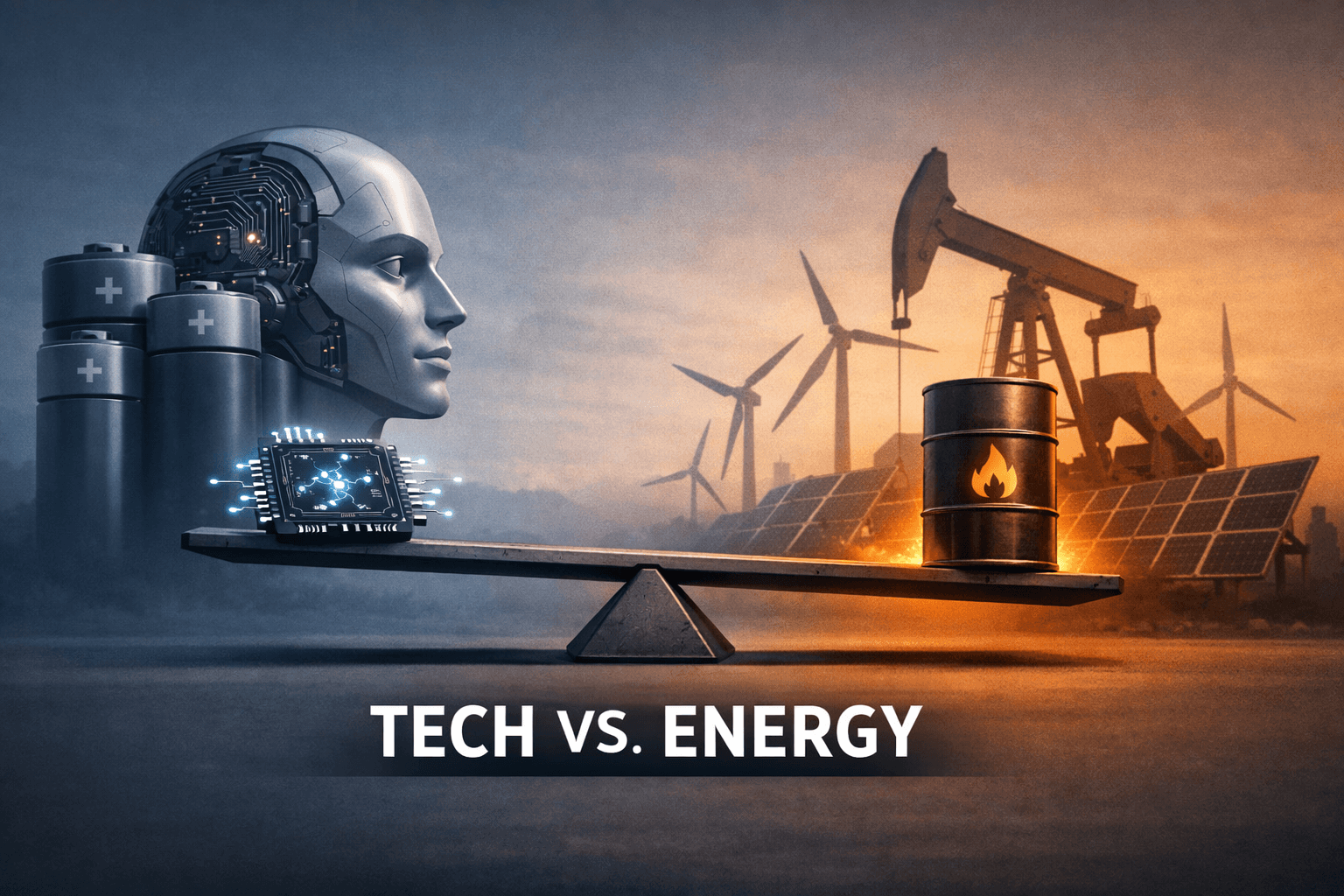
- •Energy shows a dual narrative: short‑term oil risk from geopolitical developments versus ongoing investment in renewables and grid storage.
- •Regulatory and legal events (crypto restructurings, FDA decisions, state cannabis rules) remain the primary source of short‑term volatility across several sectors.
- •Investors should prioritize event calendars (regulatory, earnings, project FIDs) and monitor supply‑chain signals (memory inventories, critical minerals) to navigate near‑term dispersion.
Executive summary
Markets on March 18 were defined by a contrast between powerful secular themes and episodic policy shocks. Momentum around AI, semiconductors and factory-scale battery builds sat alongside large renewable project wins and utility demonstrations of clean-combustion technology. Those constructive industry developments were offset by persistent geopolitical oil risks in the Middle East and a fresh round of regulatory and legal headlines across crypto, healthcare and cannabis that kept sentiment uneven.
Key hard data and corporate moves that shaped the day: NVIDIA-related robotics partnerships and renewed chip-cycle optimism; a $4.3 billion Tesla–LG battery plant deal that underscores ongoing industrial re-shoring; Samsung and AMD announcing a next‑gen memory tie-up; FTX’s planned $2.2 billion payout announcement for creditors; and Michigan cannabis retail figures showing a 3.0% year‑over‑year sales decline. Together these items created a market structure where technology, industrials and energy (largely renewables and storage) outperformed on newsflow, while sectors sensitive to regulatory outcomes—healthcare, cannabis and parts of communications/media—underperformed or showed elevated volatility.
This report groups the 24 sector briefs we received into performance buckets, extracts cross‑sector themes and correlations, highlights the most consequential moves, and offers practical, non‑prescriptive insights investors can use to prioritize research and risk management heading into the next catalyst calendar.
Grouping: outperformers, underperformers, and stable sectors
Below we classify sectors based on the day’s headlines and constructive vs. disruptive news flow. These are not absolute performance rankings but reflect directional momentum and the likelihood of follow‑through based on announced catalysts.
Outperformers (momentum-positive news flow)
- Technology: Multiple high‑profile AI and chip items — Tencent’s double‑digit quarter, an AMD–Samsung memory collaboration, and product cycles including lower‑cost Macs — gave the sector an innovation narrative with tangible revenue implications. Analysts note the supply chain and semiconductor demand signals are constructive for capex cycles.
- Industrial & Manufacturing: A cluster of factory investments and robotics tie‑ups (including NVIDIA‑related partnerships) plus a $4.3B Tesla‑LG battery plant point to rising industrial capex, reshoring momentum and secular demand for automation and batteries.
- Energy (Renewables & Storage): While oil risks linger, several large renewables and storage project wins and policy momentum for clean energy provided a positive structural backdrop for developers and grid‑scale storage players.
Underperformers (news introduced headwinds or regulatory risk)
- Healthcare & Biotech: A mixed day with a major FDA approval counterbalanced by an FDA rejection that sparked a steep biotech selloff. Clinical and regulatory uncertainty continues to drive headline volatility.
- Cannabis: State‑level policy divergence—Virginia cleared legal retail sales while Ohio enacted restrictive rules and Michigan posted a 3.0% YoY sales decline—keeps the sector bifurcated and sensitive to local regulatory changes.
- Communications & Media: Positive content headlines and 5G/AI carrier moves were offset by monetization and occupancy challenges (e.g., weak L.A. soundstage demand), reflecting margin and earnings uncertainty for parts of the sector.
More stable / mixed sectors
- Finance & Banking: The Fed’s steady stance and comments from Powell provided macro clarity, but sector‑specific legal news (Custodia court loss) and mixed flows into commodities and leveraged ETFs kept the group in a watchful‑neutral posture.
- Real Estate: Fed rate neutrality helped ease immediate financing pressure, and pockets of leasing and transaction activity were reported, yet regulatory zoning fights and permitting bottlenecks signal uneven fundamentals by property type.
- Consumer & Retail: Upgrades around social commerce and AI-led platform changes were balanced against selective M&A and legal rulings; growth is directional but execution risk remains.
- Utilities & Materials: Clean‑tech demonstrations, storage and project approvals offer a constructive multi‑year view, with near‑term policy uncertainty (e.g., offshore wind credits) adding noise.
- Crypto: Headlines mixed between recovery signals (FTX payout plan of $2.2B, mainnet launches) and regulatory/legal pressure (Custodia, UK donation bans, major hacks). Sentiment appears to be stabilizing but fragile.
Cross‑sector themes and correlations
- AI & semiconductors are cross‑cutting demand drivers
- The technology briefs point to continued top‑of‑funnel demand for compute: NVIDIA partnerships in robotics and AMD’s deal with Samsung on next‑gen memory are symptoms of a hardware upgrade cycle. Industrial use cases (robotics, smart factories) are already converting those technology investments into near‑term capital expenditure, creating a positive correlation between technology and industrials.
- Energy bifurcates into oil risk vs clean investment
- Geopolitical supply concerns in the Middle East and Libya keep crude risk premiums elevated, which benefits certain energy names and commodity hedges. Simultaneously, utility and energy sector items show major wins in renewables, storage and novel demonstrations (e.g., ammonia combustion). That creates a telescoped trading environment where oil prices can spike on headline risk, while longer‑term investment flows into renewables and storage remain intact.
- Industrial policy and reshoring amplify materials and manufacturing narratives
- Factory builds (battery plants) and federal funding for industrial capacity are increasing demand for critical minerals, advanced memory and specialty materials. Materials & mining briefs highlighting FIDs, drilling programs, and offtake MoUs feed directly into industrial supply chains and semiconductor memory initiatives.
- Regulatory risk is the dominant cross‑cutting hazard
- Crypto court rulings, FDA decisions in biotech, state cannabis rule changes, and telecom monetization challenges all demonstrate that regulatory outcomes can overwhelm secular narratives in the short term. This increases volatility and raises the value of regulatory‑event monitoring for portfolio managers.
- Consumer distribution is changing: social commerce, livestreaming and agentic payments
- The consumer briefs repeatedly reference new channels (social commerce, livestreams) and platform upgrades (Shopify, Visa integrations). These are adoption accelerants for brands but require investment in fulfillment and analytics, linking consumer trend strength back to industrial logistics and real‑estate demands (warehousing).
Most significant moves and why they matter
- Nvidia‑linked robotics partnerships (Technology / Industrial)
Why it matters: NVIDIA’s ecosystem momentum is not limited to data centers; it is expanding into robotics and industrial automation. That helps justify continued infrastructure spend by manufacturers and provides a practical revenue pathway for GPU and system‑integrator vendors.
Implication: If adoption scales, component suppliers, system integrators and industrial automation firms may see multi‑year tailwinds in capex and recurring software revenue.
- $4.3B Tesla–LG battery plant (Industrial / Energy)
Why it matters: A headline‑sized capital commitment like Tesla’s partnership with LG signals both confidence in EV and storage demand forecasts and the realignment of North American battery supply chains. It also accelerates local supply‑chain development for cell materials and assembly.
Implication: Materials demand (copper, nickel, lithium precursors) and downstream industrial services may experience higher order books; project financing and permitting will be near‑term watch items.
- AMD – Samsung memory tie‑up (Technology / Materials)
Why it matters: Memory partnerships influence cost curves and roadmaps for servers and edge devices. AMD and Samsung collaboration on next‑gen memory could alter component sourcing and performance tradeoffs in data centers, which directly ties to AI training and inference economics.
Implication: Memory supply dynamics will be a key pulse check for AI infrastructure margins; investors should monitor capex signals and inventory cycles.
- FTX $2.2B payout plan and crypto legal headlines (Crypto / Finance)
Why it matters: The planned $2.2B payout provides near‑term clarity on one of the largest crypto‑era bankruptcies, which helps stabilize creditor expectations and decompresses some legal overhang. At the same time, continued regulatory moves and hacks underline systemic custodial and governance issues.
Implication: The crypto market may continue to show asymmetric recoveries—platforms with strong governance and compliance are likely to regain trust faster than less regulated peers.
- FDA approval/rejection mix (Healthcare)
Why it matters: The juxtaposition of a major approval and a rejection that triggered a steep selloff highlights the binary risk structure in biotech: regulatory verdicts can swing market value dramatically and rapidly.
Implication: Pipeline‑led biotech names remain sensitive to single‑event outcomes; investors should treat clinical and regulatory calendars as primary drivers of near‑term return dispersion.
- Cannabis state policy divergence (Cannabis)
Why it matters: Virginia’s move to legal retail and Massachusetts’ social equity grants are growth catalysts for compliant market participants, while Ohio’s restrictive rules and Michigan’s 3.0% YoY sales decline show how local policy and consumer dynamics can blunt growth.
Implication: Cannabis exposure remains a patchwork allocation decision—state legislative calendars and licensing rules matter materially.
Actionable insights for investors (informational only)
Prioritize catalysts and calendars: With regulatory events shaping multiple sectors, maintain a rolling calendar of FDA decisions, state cannabis regulatory windows, major court rulings in crypto/fintech, earnings for major AI‑cloud suppliers, and geopolitical shipping/Strait‑of‑Hormuz updates. Analysts note that timing trumps thesis in many short‑term sector moves.
Watch supply‑chain chokepoints and inventory signals for the semiconductor cycle: AMD‑Samsung news and NVIDIA ecosystem announcements suggest a renaissance in demand for memory and compute. Inventory days and capex guidance from chipmakers and OEMs will be crucial in the next two quarters.
Stress‑test energy exposure for two vectors: short‑term oil spikes driven by geopolitical risk and long‑term structural flows into renewables and storage. Hedging strategies and diversified energy allocations may reduce headline‑driven volatility.
Treat industrial and materials exposure as linked to policy and project execution: Battery plants and FIDs (final investment decisions) are meaningful but require tracking permitting, offtake agreements and input costs. Materials names will be sensitive to project‑specific timelines.
Monitor governance and compliance in crypto and fintech plays: Legal clarity (e.g., FTX creditor plans) can stabilize sentiment, but systemic risk from hacks and regulatory rulings remains. Credibility—audits, custody, insurance—remains a differentiator.
Use consumer distribution changes to re‑examine retail supply chains: Adoption of social commerce and livestreaming affects conversion metrics, lifetime value, and inventory turnover. These in turn influence warehousing and logistics demand for real‑estate and industrial sectors.
For healthcare and biotech, decompose risk into binary regulatory outcomes vs. durable scientific advances: Clinical breakthroughs (e.g., early Alzheimer’s detection swabs) may be transformative but can take years to monetize; regulatory outcomes will drive short‑term valuation moves.
The most watchable short‑term catalysts
- Upcoming FDA and regulatory hearings that could trigger headline volatility in biotech and cannabis licensing auctions.
- Earnings and guidance from major AI‑cloud compute suppliers and chipmakers that will confirm whether enterprise AI spending is accelerating sustainably.
- Progress on large battery and renewable projects and any bottlenecks in permitting or materials supply (nickel, lithium, copper).
- Geopolitical developments in the Middle East and shipping lanes (Strait of Hormuz) that could instantaneously affect oil prices and commodity risk premia.
- Legal progress in major crypto restructurings and custody cases that will shape investor confidence in on‑chain capital markets.
What moved markets but may have been under‑reported
- Off‑grid data‑center risk highlighted in the utilities briefs: as more compute migrates to distributed edge facilities, grid resilience and small‑scale power economics may emerge as niche but important investment considerations.
- Social equity grants in cannabis (Massachusetts) and similar policy initiatives: these are slow‑burn value transfers that reshape competitive dynamics by advantaging certain licensees.
- Moody’s on‑chain moves and financial‑rating engagement in crypto: mainstream credit and ratings bodies entering the space materially change the risk pricing of certain digital assets and products.
Conclusion — forward‑looking perspective
The March 18 tape illustrated a market bifurcation: secular, infrastructure‑driven themes (AI, semiconductors, batteries, renewables) continue to attract capital and confirmed project announcements, while episodic, event‑driven risks stemming from regulatory, legal and geopolitical developments are injecting short‑term volatility. That combination creates an environment where selective, research‑driven exposure to innovation sectors can coexist with the need for active risk monitoring—particularly around regulatory calendars, supply‑chain execution and commodity price swings.
Over the next 3–6 months, the primary market drivers we will watch are: corporate guidance from AI and cloud suppliers, execution benchmarks on major battery and renewable projects, FDA and other regulatory outcomes in healthcare and cannabis, and any escalation or de‑escalation of Middle Eastern tensions that influence oil pricing. Data in these areas will determine whether the current constructive capital‑spending narrative converts into durable earnings growth or whether headline risk continues to dominate sector returns.
Investment disclaimer
This analysis is for informational purposes only. It does not constitute personalized investment advice or a recommendation to buy, sell, or hold any security. Readers should perform their own due diligence and consider consulting a licensed financial advisor before making investment decisions. Language in this report—such as "analysts note," "data suggests," and "momentum indicates"—is intended to describe market observations, not to provide investment advice.
Appendix: Quick sector snapshots (selected highlights)
- Technology: Tencent double‑digit quarter; AMD–Samsung memory tie‑up; lower‑cost MacBook product cycle noted. Watch server memory pricing and OEM inventory.
- Industrials: NVIDIA partnerships in robotics; Tesla–LG $4.3B battery plant; elevated NAM optimism.
- Energy: Renewables and storage project wins; ongoing oil risk from Middle East and Libya; track Hormuz traffic and China reserve moves.
- Utilities: Clean‑tech demo (ammonia combustion) and large storage moves, countered by policy uncertainty for offshore wind.
- Materials & Mining: FIDs, drilling campaigns and offtake MoUs; keep an eye on Strait‑of‑Hormuz risks that could disrupt flows.
- Finance & Banking: Fed steady; crypto court rulings continue to influence fintech; household 'shadow saving' in China noted.
- Crypto: FTX $2.2B payout plan stabilizes part of the narrative; regulatory scrutiny and hacks underscore custody risk.
- Healthcare: Major approval and a rejection in the same session; novel early‑detection tools and lab advances reported.
- Consumer & Retail: Acceleration in social commerce, livestreaming and payments partnerships; execution and fulfillment remain key constraints.
- Communications & Media: Content wins and 5G progress, offset by monetization and occupancy challenges in parts of the media ecosystem.
- Real Estate: Leasing pockets amid Fed neutrality; permitting and compliance frictions in select markets.
- Cannabis: State‑by‑state divergence—Virginia retail opens, Ohio restrictive rules, Massachusetts social equity grants, Michigan sales off 3.0% YoY.
Sources
+ 14 more sources
Use these insights — enter this week's contest.
Free practice contests — earn Alpha CoinsExplore More Content
Disclaimer: StockAlpha.ai content is for informational and educational purposes only. It is not personalized investment advice. Sentiment ratings and market analysis reflect data-driven observations, not buy, sell, or hold recommendations. Always consult a qualified financial advisor before making investment decisions. Past performance does not guarantee future results.
Spotted something wrong? Report an error.