 Sector Insights
Listen to this Recap
12:01
Crosswinds: Crypto and Materials Lead Momentum as Oil Spike Rewrites the Risk Map
Podcast • Loading audio...
Share this article
Spread the word on social media
Key Takeaways
- •Crypto, materials and real estate showed the strongest momentum on Mar 17, supported by regulatory clarifications, PDAC dealflow and large private capital raises.
- •A sudden oil-price spike (Brent > $100/bbl) injected near-term inflation and volatility risk, creating a bifurcation between short-term fossil-fuel winners and long-term energy-transition beneficiaries.
- •AI and cloud remain cross-sector growth drivers, visible in tech, healthcare and communications, but regulatory and product-cycle noise created selective pressure within the tech complex.
- •Investors are advised to monitor geopolitics, inflation prints and regulatory developments closely; sectors with contracted cashflows and secured offtakes show clearer near-term resilience.
- •Overall market sentiment is neutral: pockets of strength exist, but headline-driven risk argues for active risk management rather than broad directional exposure.
Executive summary — a split market with clear fault lines
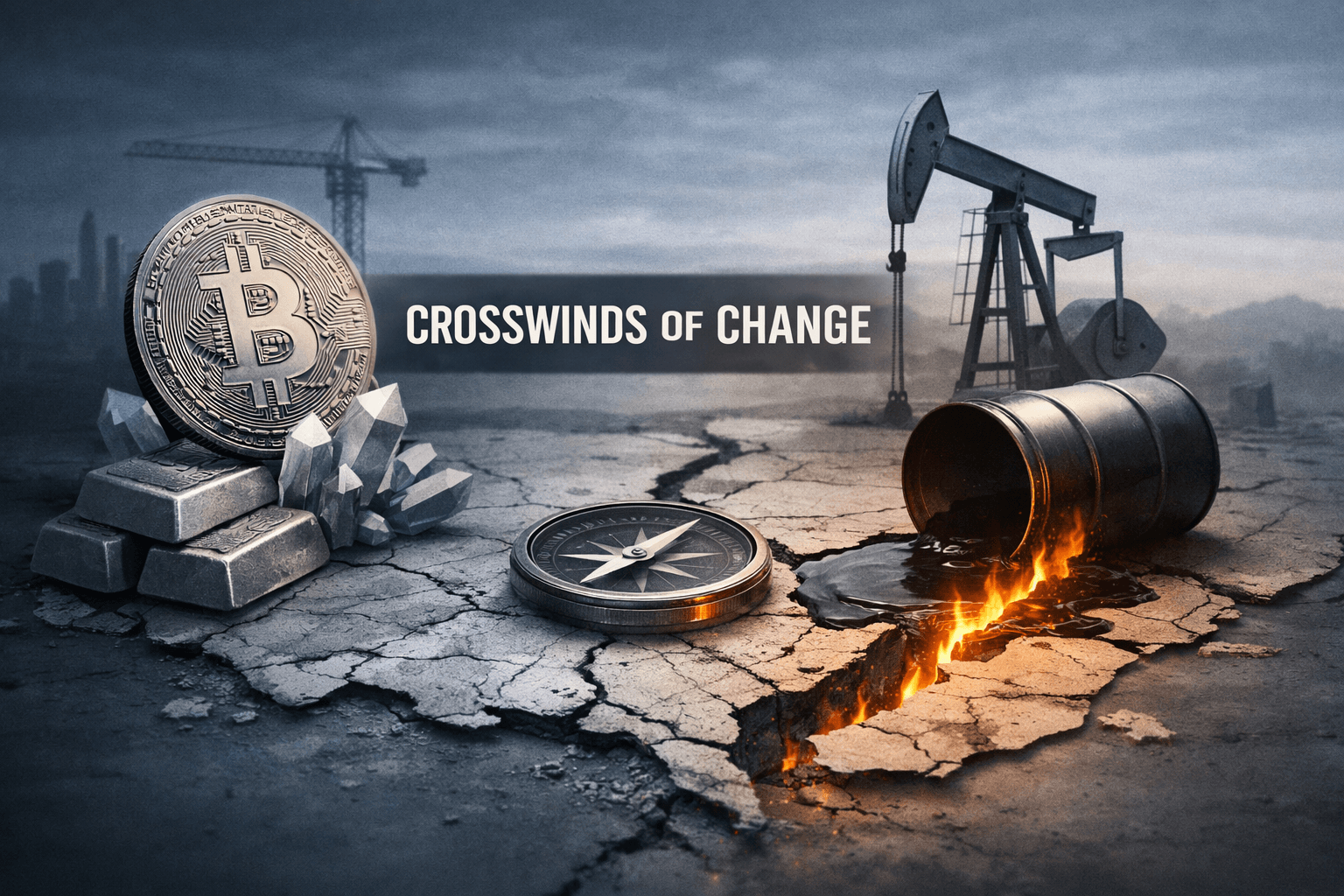
Markets on Mar 17 unfolded as a tale of two narratives. On one side, risk-on headlines — from Bitcoin hovering near $75,000 to dealflow at PDAC and large-scale private capital raises — pushed crypto, materials, real estate and parts of industrials into positive momentum. On the other, a sudden geopolitical-driven spike in oil (Brent topping $100/bbl), fresh regulatory noise across CBD/cannabis and segments of technology, and selective policy headwinds in offshore wind created outsized volatility and caution in energy, parts of tech and some communications assets.
The session featured multiple big-ticket capital announcements and policy pronouncements: Venture Global secured roughly $8.6 billion to expand LNG capacity, Tesla and LG signaled a $4.3 billion battery plant tie-up, the U.S. Energy Department unveiled a $500 million critical-minerals program, and CBRE Investment Management closed a $2.1 billion equity raise for Asia. Combined, these items reinforced both the near-term repricing drivers (commodity and oil risk) and longer-term structural themes (AI adoption, electrification and supply-chain reshoring).
Important cross-asset moves amplified the divergence. Bitcoin’s strength coexisted with FX and commodity moves that pressured energy-exposed credit and equities; real-estate leasing and fundraising activity suggested renewed appetite for income assets; and multiple technology and healthcare product launches highlighted the ongoing pivot to AI-enabled services. For investors the day underscored the need to balance sector-level growth narratives against macro risk from geopolitics and commodity shocks.
Investment disclaimer: This analysis is informational only. It is not a recommendation to buy, sell or hold any security, and it does not constitute personalized investment advice. Analysts note the market signals described below should be weighed against personal circumstances and professional counsel.
Grouping by performance: outperformers, underperformers, stable
Note: intraday percentage moves were not supplied in the sector briefs. Groupings below reflect directional momentum and headline intensity observed across sectors on Mar 17.
Outperformers
- Crypto: Strength after regulatory clarification and payments partnerships left the sector with clear momentum. Bitcoin trading near $75,000 and corporate engagements (Mastercard, Tether) supported risk appetite.
- Materials & Mining: Dealflow from PDAC, offtake agreements for nickel and tungsten, and commissioning of projects lifted the complex; copper and rare-earth headlines added to the constructive tone.
- Real Estate: Large capital moves — CBREIM’s $2.1B Asia raise, big industrial and Manhattan multifamily leases and closings — suggested renewed allocation to property markets.
- Industrial & Manufacturing: Positive domestic manufacturing headlines — Niron Magnetics advancing a potential $1.8B plant and brighter sentiment surveys — pointed to a pickup in activity and capex.
Underperformers
- Energy (traditional oil & gas): A geopolitical shock pushed Brent past $100/bbl and elevated short-term supply risk; gasoline and diesel price jumps pressured the sector despite headline investment in batteries and LNG.
- Technology (select subsegments): Mixed signals from cloud and device markets, regulatory headwinds in some jurisdictions and product cycle uncertainty (e.g., Samsung winding down TriFold) weighed on parts of the sector.
- Communications & Media: Mixed content wins and regulatory scrutiny (Live Nation, licensing issues) left the sector choppy and more sensitive to headline risk.
Stable / Neutral
- Utilities: Momentum around storage, solar and virtual power plants (VPPs) balanced policy risk in offshore wind and grid planning, producing a broadly neutral reading.
- Consumer & Retail: Omnichannel expansion and fulfillment initiatives supported the group, while strikes and traffic softness in some areas offset gains.
- Healthcare & Finance: Positive funding and policy news in healthcare sat alongside drug-pricing pressure; finance showed mixed signals as oil and macro data produced offsetting effects.
- Cannabis: Split signals — state-level policy wins in OK and CO and rising licensed-store purchases in Massachusetts versus federal regulatory pressure on CBD/hemp THC — created a neutral mixed picture.
Cross-sector themes and correlations
Several threads knitted the day’s sector action together. Below are the dominant cross-sector themes that help explain why some sectors outperformed while others lagged.
Geopolitics lifts commodities and re-rates risk The Iran conflict and related tensions were the proximate cause of Brent passing $100/bbl. That move had immediate cross-sector consequences: it boosted energy equities on fundamental revenue outlooks but increased volatility and policy risk for energy-intensive sectors (airlines, transportation). Commodities-linked materials names benefited from risk-on flows into hard assets and offtake certainty being priced into projects.
Energy transition vs. short-term fossil-fuel stress While oil spiked, the longer-term transition story remained present: Tesla-LG’s $4.3 billion battery plant, Venture Global’s $8.6 billion LNG expansion financing, and federal support (Energy Department’s $500 million for critical minerals) all point to continued capital deployment for decarbonization and resilience. That created an intra-energy bifurcation: short-term winners from higher hydrocarbon prices (some producers, logistics) and structural winners from storage, batteries and critical minerals.
AI and cloud remain structural pillars, but regulatory and product-cycle noise matters Broad AI demand supported parts of tech and communications (Comcast Edge AI trials, AWS product cadence), while product and device uncertainty (Samsung’s TriFold wind-down) and region-specific regulatory moves put selective pressure on valuations and near-term growth bets. Healthcare’s embrace of AI (Microsoft Copilot Health, VC interest in AI-bio) shows the technology’s cross-sector reach.
Capital redeployment into real assets and industrial capacity Large private-asset raises (CBREIM $2.1B), manufacturing plant announcements (Niron Magnetics $1.8B), and PDAC dealflow highlight a rotation of capital back into real assets and supply-chain capacity. That correlates with the materials and real-estate strength and indicates institutional investors are seeking income and tangible-asset exposure.
Regulatory uncertainty remains a drag for niche sectors Cannabis (federal CBD/hemp THC scrutiny) and parts of communications (Live Nation regulatory heat) illustrate how regulatory backdrops can create short-term dispersion in performance even where end-market demand is intact.
The most significant moves — what happened and why it matters
Below are the day’s largest and most consequential sector stories with context and potential market implications.
Oil: Brent breaks $100/bbl — a geopolitical shock to short-term supply What happened: Brent crude crossed the $100 mark after a spike in regional tensions tied to the Iran war, lifting gasoline and diesel prices and prompting renewed headlines around supply risk. Why it matters: An oil price breach above $100 increases inflationary pressure for energy-intensive industries, tightens margins for transport and industrial firms, and can alter central-bank calculations if sustained. Analysts note the move can be transitory if physical supply remains sufficient, but it raises the cost of capital for energy-exposed credits and may prompt strategic hedging in the near term.
Crypto: Regulatory clarity and industry partnerships underpin strength What happened: The SEC signaled most crypto assets are not securities (in the summary), Bitcoin hovered near $75,000, and partnerships/initiatives with Mastercard and Tether on payments and AI infrastructure were highlighted. Why it matters: Clearer regulatory delineation reduces legal overhang and helps institutional adoption. Payments and infrastructure partnerships broaden on‑ramps for usage, potentially increasing adoption metrics. Data suggests this combination supports risk appetite in crypto-related equities and trading volumes.
Materials & Mining: PDAC dealflow and offtakes accelerate project economics What happened: PDAC-generated deals, nickel and tungsten offtake agreements, commissioning headlines (e.g., Phase 1 completions) and gold project approvals drove sector momentum. Why it matters: Of particular note are long-term offtake contracts that de‑risk project revenue and allow juniors to secure financing. With rising electrification demand for copper and specialty metals, analysts note that offtake certainty can compress financing spreads and accelerate development timelines.
Tesla-LG battery plant and Energy Dept critical-minerals funding What happened: A $4.3 billion Tesla-LG battery investment and a $500 million Energy Department program for critical minerals were among major industrial-energy headlines. Why it matters: These investments reduce supply-chain bottlenecks for batteries and secure domestic processing capacity for minerals, a clear positive for the electrification supply chain. They also underpin continued capex flows to industrials and materials names tied to battery inputs.
Real estate: CBREIM $2.1B equity raise and large leasing wins What happened: CBRE Investment Management closed a $2.1 billion equity raise for Asian assets; BXP and other managers reported large new leases and closings. Why it matters: Large capital raises suggest institutional appetite for real estate allocations, particularly in markets showing rental growth or occupancy rebounds. Analysts note this supports pricing in income-producing real assets and may encourage further transactions in logistics and multifamily sectors.
Venture Global $8.6B LNG financing — energy-capacity vs. price volatility What happened: Venture Global secured roughly $8.6 billion to expand LNG capacity amid higher global gas demand. Why it matters: While oil spiked, LNG financing indicates continued global gas demand and the energy market’s complexity: higher short-run oil can boost gas price correlations and lead to reallocation of capital toward both fossil and transition energy projects.
Healthcare and AI: NIH spending assurance and increased private funding What happened: NIH vowed to spend its full budget; venture capital interest in AI-bio approaches $700 million; Microsoft launched Copilot Health. Why it matters: Steady public funding combined with private capital into AI-enabled life sciences underlines a two-tier funding environment where basic research and applied digital-health solutions both advance. That dynamic can create pockets of durable growth in diagnostics, biomarkers, and software-enabled care pathways.
Consumer & retail: Omnichannel investments meet cost pressure What happened: Amazon expanded one-hour delivery, Ulta moved more deeply into TikTok Shop, and retail funding and fulfillment expansion continued even as grocers faced cost pressure from a major meat strike. Why it matters: Omnichannel and fulfillment improvements are structural positives but raise operating costs and intensify competition. Volume gains may come at thinner margins in the near term for certain retailers, while real-estate and logistics owners benefit from increased demand for distribution space.
Actionable insights for investors (informational, non‑prescriptive)
These observations are intended to help frame risk-management and research priorities — not to recommend transactions.
Monitor commodity-linked inflation and 30–90 day oil price implications: Brent above $100 requires re‑examining exposure to energy-input intensity across portfolios. Analysts suggest stress-testing earnings sensitivity for transport, chemicals and industrial names under sustained $100+ oil scenarios.
Distinguish short-run hydrocarbon volatility from long-term transition winners: A dual-track approach helps. Data suggests that while oil volatility can boost some producer earnings, long-term capital commitments (batteries, critical minerals, lithium and copper supply) remain fundamental to the energy transition narrative.
Watch regulatory headlines for concentrated sector risk: Cannabis, certain communications subsegments and parts of fintech remain sensitive to rule-making. Portfolio managers are noting that regulatory clarity (positive or negative) often creates multi-day directional moves.
Use crypto market structure changes as a barometer for institutional adoption: Regulatory signals that delineate securities treatment, together with payment-layer partnerships, are early indicators of broader institutional flow frameworks. For risk budgets, consider how increased crypto adoption could alter correlations in a diversified portfolio.
Reassess duration and rate sensitivity in light of commodity-driven inflation risk: If higher energy prices persist, interest-rate expectations could reprice. Fixed-income allocations should be stress-tested for higher near-term inflation, while equity investors may favor sectors with pricing power (materials, select industrials, real estate with rental growth).
Prioritize names with secured offtakes or contracted cashflow: In commodities and real assets, entities with long-term contracts or institutional capital backing (offtake agreements, equity raises) have clearer near-term cashflow visibility and lower financing risk.
Track AI and cloud adoption across sectors, not just in headline tech names: The day’s news — AWS moves, Comcast Edge AI trials, Microsoft Copilot Health — reinforces that AI is a cross-sector productivity story. Analysts suggest sourcing exposure via software, select healthcare diagnostics, and industrial automation vendors that show recurring revenue models.
What to watch next — catalysts and data points
- Geopolitical developments in the Middle East and related shipping or sanction headlines — these will determine whether Brent’s move is sustained or transient.
- Central bank comments and inflation prints: higher energy prices could push core inflation, prompting central-bank commentary that affects risk assets.
- Company-specific earnings and guidance from major tech and industrial names tied to AI adoption and capex cycles.
- PDAC deal updates and materials offtake announcements: any additional long-term contracts or financing will have implications for junior/miner valuations.
- Regulatory rollouts on CBD/hemp THC and communications/media policy decisions; outcomes could produce rapid repricing in niche sectors.
Conclusion — balancing near-term risk with structural opportunity
Mar 17 showed markets responding to both cyclical shocks and structural investment themes. The oil-price spike injected immediate volatility and raised macro risk, disproportionately affecting energy‑intensive sectors and risk perceptions. At the same time, large capital allocations to real assets, battery manufacturing and critical minerals — plus clearer signals around crypto infrastructure and AI deployments — pointed to secular reallocation trends that may persist beyond the current bout of headline risk.
For market participants, the key challenge is balancing exposure to cyclical commodity risk with participation in longer-term secular drivers: electrification, AI, supply-chain reshoring and institutional interest in real assets. Analysts note that active risk management, a clear view on earnings sensitivity to energy inputs, and a focus on entities with contracted cashflows or secured offtakes will be important as the market digests both near-term geopolitics and durable structural change.
Sentiment heading into the next session is neutral: momentum pockets exist, but headline risk from energy and regulatory developments argues for measured positioning and a readiness to respond to rapidly evolving cross-sector correlations.
Investment disclaimer (repeated): This article is for informational purposes only. It does not constitute investment advice or a recommendation to buy, sell, or hold any security. Consult a licensed financial professional before making investment decisions.
Sources
+ 14 more sources
Use these insights — enter this week's contest.
Free practice contests — earn Alpha CoinsExplore More Content
Disclaimer: StockAlpha.ai content is for informational and educational purposes only. It is not personalized investment advice. Sentiment ratings and market analysis reflect data-driven observations, not buy, sell, or hold recommendations. Always consult a qualified financial advisor before making investment decisions. Past performance does not guarantee future results.
Spotted something wrong? Report an error.