 Quick Briefs
Listen to this Recap
9:34
Index Move and NVDA Spotlight as Microcap Volatility Erupts — Big Gaps to Watch After the Long Weekend
Podcast • Loading audio...
Share this article
Spread the word on social media
Key Takeaways
- •Bloom Energy’s S&P 500 inclusion is the day’s major technical catalyst — watch the effective date and passive flows.
- •Nvidia ($NVDA) remains a liquidity anchor for markets; its volume and analyst attention keep AI narratives in focus.
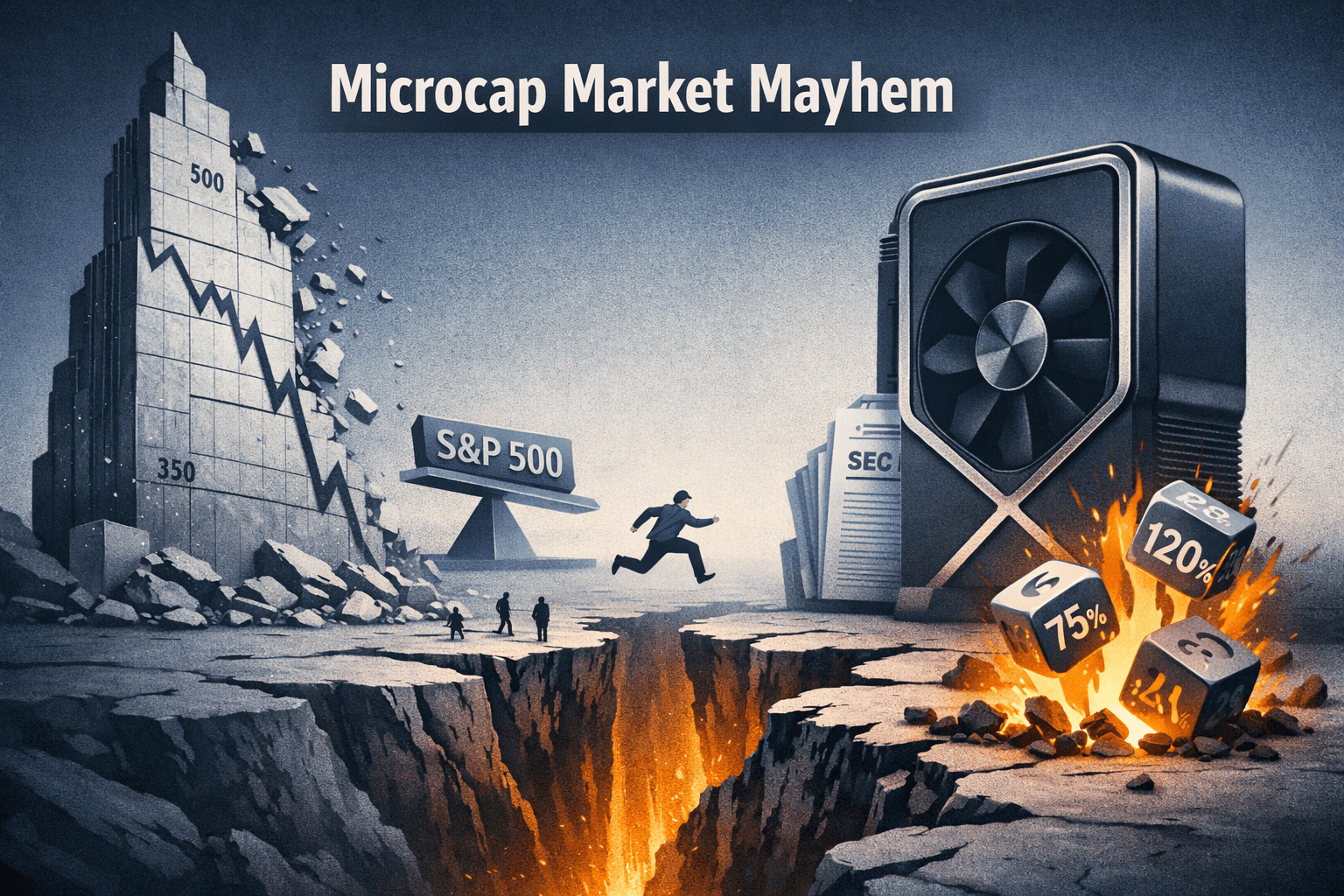
- •Microcaps registered extreme percentage moves — many without clear catalysts — increasing gap and execution risk after the long weekend.
- •Several names posted catastrophic collapses suggesting halts, delisting risk, or forced liquidations; monitor SEC filings and exchange notices.
- •Expect elevated opening volatility on Tuesday, Sep 8 — prioritize filings, pre-market prints and follow‑through volume to gauge sustainability.
Today's top takeaways — what mattered
- Index action: Bloom Energy (BE) was named to the S&P 500, a technical event that typically draws passive inflows and forces reweighting of several names.
- Big-market anchor: Nvidia (NVDA) logged heavy volume and modest gains, keeping AI-related attention elevated as analysts weigh the stock's reference levels and ecosystem impact.
- Microcap volatility: The session featured a torrent of extreme percentage moves — from stocks up 200% to names plunging >80% — often on very thin liquidity, raising gap and execution risk into the holiday break.
Theme 1 — Index rebalancing and market structure
Bloom Energy ($BE) to the S&P 500 was the clearest market-moving technical story today. Index inclusions routinely attract flows from passive funds and ETFs that track the S&P 500, and removals (Molson Coors Beverage ($TAP), Builders FirstSource ($BLDR), Trade Desk ($TTD)) can create transient selling pressure for outgoing names.
- Why it matters: index-driven flows can be mechanical but sizable, especially into a comparatively small free-float name. Volume spikes and short-term alpha opportunities often follow when the inclusion is announced and on the effective rebalance date.
- Watch: the S&P's effective date and trading volume in $BE. Analysts are already flagging reference levels and sensitivity figures (various percent signals and a $20 reference) to model potential reweighting impact.
Contextual link: index flows can amplify the same liquidity dynamics plaguing microcaps. When passive or index-driven bids allocate capital to a stock, it can crowd out retail momentum or create squeeze dynamics; conversely, forced selling from index removals can accelerate weak hands exiting smaller-cap names.
Theme 2 — Big-cap liquidity and sector focus (NVDA)
Nvidia ($NVDA) closed modestly higher (+0.84%) on heavy volume (131.78M), keeping it at the center of AI-infrastructure chatter. Market notes referenced round-number reference points ($300 and $99) and valuation inputs that traders and analysts are watching.
- Why it matters: heavy liquidity in $NVDA supports tighter option markets and continues to make it a focal point for both fundamental and flow-driven strategies. Raymond James and others continue to highlight Nvidia's role in AI infrastructure, which can sustain headline-driven momentum.
- Connection: with $NVDA drawing capital and attention, risk-on flows into tech/AI names could have contributed to high-volume rotations that show up in smaller, more speculative tickers as exaggerated moves.
Theme 3 — High-volume, high-impact movers (liquid names)
Several names posted large percentage moves on very large share counts. These moves are easier to interpret for traders because volume suggests broader participation:
- PATH (-16.55%, 104.31M shares) — a large single-session drop that can affect options and sector strategies.
- GPRO (-17.75%, 172.45M) and TSLL (+10.78%, 149.51M) — heavy turnover suggests institutional or broad retail engagement driving sizable moves.
- MIMI (+49.27%, 144.38M) and BTAI (+9.81%, 148.49M) — big percentage moves with very high volume, signaling strong attention and potential for follow-through or snapback.
Contextual link: high-volume moves in liquid names tend to have clearer catalysts or institutional footprints; they also increase market-wide volatility and can affect correlated strategies (ETFs, options desks, hedged funds).
Theme 4 — Microcaps and penny-stock turbulence
The day's most numerous stories were extreme moves in microcap and penny stocks. Characteristics common across these briefs:
- Massive percentage moves on tiny absolute prices (examples: EMISR +50.70% on volume of 10 shares; GFAIW +200% to $0.02 on 10.54K shares).
- Very low liquidity that magnifies slippage and bid/ask spreads (BNCWW 16 shares traded; QSEAR 206 shares).
- Frequent absence of a confirmed catalyst in the source copy, which suggests moves are driven by flow, rumors, or isolated trades rather than broadly disseminated company news.
Representative surges: SBXD+ (+56.33%), SCAGW (+57.69%), SMXWW (+59.85%), BTBDW (+52.82%), MIMI (+49.27%). Representative collapses: NCT (-89.66%, 22.83M shares), GIPRW (-84.71%), ADBT (-80.02%), RIV^ (-65.00% to reported $0.00), AD significant one‑day losses in many tiny names.
Why it matters: microcaps carry idiosyncratic risk and execution risk. Large percentage moves on thin prints can signal single-trade distortions, regulatory or corporate events, or concentrated liquidation. For portfolios with any exposure, these moves can materially alter position sizes and risk metrics overnight.
Pattern: the co-occurrence of heavy retail-oriented volume and extreme percentage moves suggests a market environment where momentum, short-term speculation, and mechanical flows (including options gamma and social media-driven interest) are amplifying volatility at the small-cap end.
Theme 5 — Extreme downside events and potential corporate actions
A set of names saw catastrophic declines that warrant extra scrutiny for possible trading halts, delisting risk, accounting or corporate developments:
- RIV^ plunged 65% to a reported $0.00 (1.39M shares) — such a print often indicates a halt, administrative reporting, or other exchange action.
- GIPRW (-84.71% to $0.00) and NCT (-89.66%) — large, near-total value erosions that often follow corporate notices, financing collapses, or forced liquidations.
Why it matters: these moves can trigger immediate operational issues (margin calls, halted trading), and they raise tail‑risk considerations for funds and brokers exposed to these securities.
What to do: watch for exchange notices, SEC filings (8-Ks), and company press releases over the holiday and into the next session. The source reports did not identify catalysts in many cases, so official filings will be the first reliable confirmation.
Patterns & emerging trends
- Retail/momentum-led activity remains concentrated in penny and small-cap names: frequent large percent moves on thin liquidity point to continued retail influence and speculative flows.
- Technical/index events drive predictable, concentrated flows: Bloom Energy's ($BE) S&P inclusion is likely to produce mechanical buying from index funds; counterparts removed from the index can face pressure.
- Liquidity bifurcation: large caps (NVDA and other liquid names) showed orderly heavy volume, while microcaps showed disorderly, binary moves; this bifurcation increases cross-market execution and hedging risks for desks carrying both exposures.
- Holiday/gap risk is elevated: these moves occurred on the last U.S. trading day before a long weekend — expect higher odds of gaps and early volatility when markets reopen on Tuesday, Sep 8.
Rapid-fire notable moves (selection)
- Bloom Energy named to S&P 500 (index inclusion).
- Nvidia ($NVDA) +0.84% on 131.78M shares — heavy liquidity, AI focus.
- NCT -89.66% to $0.51 on 22.83M shares — extreme liquidation.
- RIV^ -65.00% to $0.00 on 1.39M shares — possible halt or administrative print.
- MIMI +49.27% on 144.38M shares — large rally with heavy volume.
- PATH -16.55% on 104.31M shares — large liquid-name decline.
What to watch when markets reopen (Tuesday, Sep 8)
- Effective date and market reaction to Bloom Energy ($BE) S&P inclusion — monitor volume, spreads, and whether index flows show up in early trading.
- Follow-through volume and filings for microcaps that swung wildly (GIPRW, NCT, RIV^, ADBT, etc.). Official 8-Ks or exchange notices will determine whether moves are transient or structural.
- Pre-market prints and opening gaps for heavily traded names (PATH, NVDA, MIMI, GPRO). Expect elevated volatility in the first two hours of trading.
- Options and gamma flows: large moves in liquid names may have created asymmetries in options books — watch whether hedging flows amplify moves in the underlyings.
- Any analyst or corporate commentary tied to Nvidia ($NVDA) and AI-infrastructure ecosystem names — fresh research notes can be catalysts for further sector rotation.
Final context and risk reminder
Friday’s action combined a predictable technical shock (index rebalancing) with unpredictable microcap turbulence. That mix raises two operational risks: index-driven mechanical flows into/out of specific names, and execution/gap risks for thinly traded, speculative securities. Data suggests momentum and liquidity-seeking strategies were active, but many moves lack confirmed catalysts — making verification via official filings and exchange notices the priority heading into the next session.
This digest is for informational purposes only. Analysts note the raw price and volume data and highlight potential market-read risks; this is not personalized investment advice and does not constitute a recommendation to buy, sell, or hold any security.
Sources
+ 28 more sources
Use these insights — enter this week's contest.
Free practice contests — earn Alpha CoinsExplore More Content
Disclaimer: StockAlpha.ai content is for informational and educational purposes only. It is not personalized investment advice. Sentiment ratings and market analysis reflect data-driven observations, not buy, sell, or hold recommendations. Always consult a qualified financial advisor before making investment decisions. Past performance does not guarantee future results.