 Quick Briefs
Listen to this Recap
9:05
AI Buzz and Structural Shifts Steal the Spotlight as Microcaps Scream: Microsoft, Oracle, Cboe and a Weekend of Wild Volume
Podcast • Loading audio...
Share this article
Spread the word on social media
Key Takeaways
- •Renewed AI interest boosted Microsoft (MSFT) while Oracle (ORCL) suffered its worst weekly showing since 2001 amid negative free cash flow and heavy debt—creating intra‑tech dispersion.
- •Cboe’s (CBOE) launch of XSP binary options targets retail traders and may accelerate short‑duration flows that amplify microcap volatility.
- •The tape showed extreme microcap moves—both surges (ILLR, SDOT, NEXR, IVF) and collapses (PSIG, TBLAW, GDC)—often on heavy volume and without clear catalysts, increasing weekend event risk.
- •Retail momentum plus new derivatives plumbing is a recurring pattern: expect premarket gaps, exchange notices, and SEC filings to drive short‑term outcomes when markets reopen.
- •Key near‑term watchlist for Monday: filings/exchange notices for the biggest movers, premarket gaps in microcaps, Cboe adoption updates, and follow‑through on tech/AI headlines.
Big-picture movers: AI rotation, cash-flow stress and new derivatives
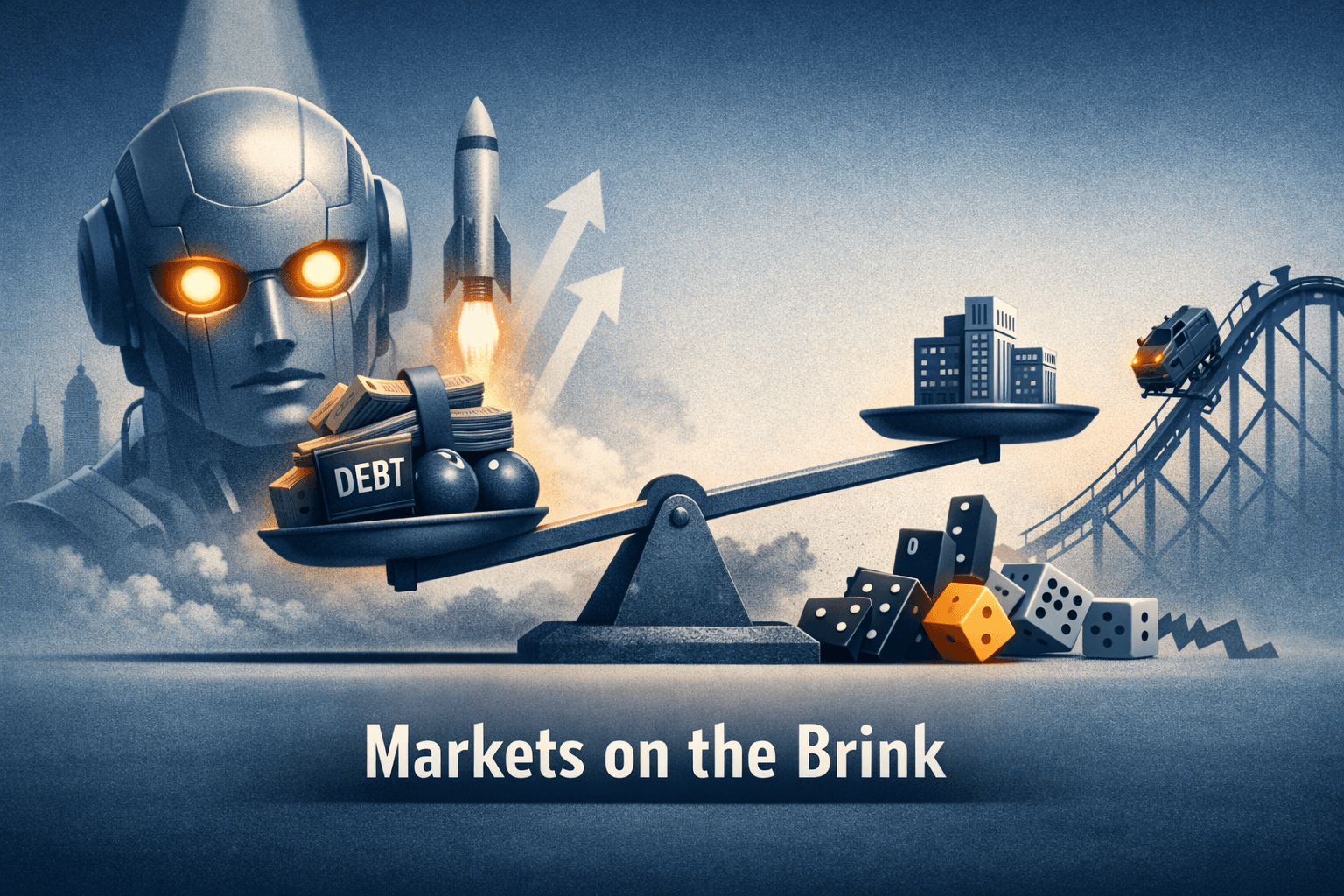
Today’s headlines split into two market-moving themes: a renewed AI narrative driving blue‑chip momentum and a parallel story about structural market innovation and risk. Microsoft (MSFT) climbed after fresh AI interest—analysts and press coverage repriced the name into the weekend—while Oracle (ORCL) finished a bruising week as investors focused on heavier AI spending, negative free cash flow and a roughly $130 billion debt burden. Both moves matter for tech sector positioning and for portfolios sensitive to valuation and cash‑flow dynamics.
At the same time, Cboe Global Markets (CBOE) rolled out its Cboe Predicts XSP binary options suite (XSPBW/XSPBX on IBKR), a product aimed at retail traders that could expand options flow and fee revenue while changing how retail engages with short‑duration event bets.
Why this trio matters together:
- Renewed AI momentum (MSFT) can re‑allocate flows back into tech, lifting related software and infrastructure names.
- Oracle’s cash flow and leverage story (ORCL) warns that AI spending can be a double‑edged sword—driving growth but compressing margins and balance‑sheet flexibility. That tension can increase dispersion within the tech complex.
- Cboe’s new retail‑friendly products (CBOE/XSP) lower friction for binary exposure and could turbocharge short‑duration retail activity—fuel for the microcap volatility we saw today.
Robotaxi spending and strategic bets: capital trumps car-building
MarketWatch reported Uber (UBER) is quietly committing roughly $500 million to secure robotaxi availability—underscoring that the robotaxi race is often about capital commitments and partnership control rather than who literally manufactures cars. That dynamic reshapes how investors should think about winners in autonomy: platform owners and fleet financiers may capture outsized value even if they don’t build vehicles.
Connections to the tech theme:
- Capital intensity in robotaxis heightens the valuation sensitivity of platform owners (UBER) and can affect free cash flow like the issues highlighted at Oracle (ORCL).
- Competitors such as Tesla (TSLA) and Waymo/Alphabet (GOOGL) are executing different go-to-market strategies; investors should monitor partnership announcements and pilot rollouts as scenario-driving catalysts.
Microcap mania and mass liquidations: a volatile weekend
The day’s infra‑session tape was dominated by extreme microcap moves—dozens of names printed triple‑digit percentage moves both ways, often on heavy volume and into the long weekend. Examples:
- Extreme surges: ILLR (+296.6%, ILLR), SDOT (+247.1%, SDOT), PCLA (+123.4%, PCLA), NEXR (+95.6%, NEXR), IVF (+97.6%, IVF), CMIIW (+118.3%, CMIIW). Several of these prints came on multi‑million or multi‑hundred‑million share prints (ILLR 212.2M, NEXR 315.1M, SDOT 43.9M).
- Deep collapses: PSIG (-87.7%, PSIG), TBLAW (-86.7%, TBLAW), GDC (-36.6%, GDC), multiple penny names printing near‑zero quote levels (GGROW, HUBCZ, KWMWW, GWH+).
Patterns to note:
- Heavy volume into a holiday weekend: Many names traded outsized volume immediately before market close. That raises the risk of illiquid opens or gap moves on Monday (June 29), and increases the chance of exchange halts or filings surfacing over the break.
- Retail and momentum signatures: Large percent moves at sub‑dollar prices with small absolute volume suggest retail‑driven rallies; conversely, very large share prints on collapses suggest forced liquidations or block selling.
- Information gap: For most names the published data show price/volume but no immediate corporate catalyst; absence of public filings increases uncertainty and the probability of headline‑driven whipsaw when trading resumes.
Rapid‑fire microcap highlights (sample):
- ILLR (ILLR) +296.6% on 212.2M shares
- NEXR (NEXR) +95.6% on 315.1M shares
- SDOT (SDOT) +247.1% on 43.9M shares
- IVF (IVF) +97.6% on 113.0M shares
- PSIG (PSIG) -87.7% on 17.9M shares
- TBLAW (TBLAW) -86.7% on 643.1K shares
Implications for portfolios:
- Liquidity and execution risk escalate around small‑cap moves—spreads widen and slippage rises.
- Margin and stop frameworks can be strained by one‑session shocks; risk managers should verify exposures rather than assume orderly exits.
Sector and ETF note: leveraged exposure and volatility
The leveraged semiconductor inverse ETF SOXS (SOXS) fell 11.27% on very heavy volume (767.3M shares), signalling sizable short‑term activity in leveraged theme exposure. When leveraged or inverse ETFs swing hard, portfolio margin and volatility expectations can change quickly—this is a risk management headline for traders holding thematic or leveraged bets.
What the flows and filings suggest: connecting the dots
- Retail‑friendly product launches (CBOE’s XSP binaries) + low‑friction trading apps = higher short‑duration flow. That flow often shows up first in microcaps and derivatives, and can produce the kind of weekend volume we observed.
- Renewed AI headlines (MSFT) are reallocating some macro and sector flows back into large tech, while capital intensity stories (ORCL’s debt and AI spending) create intra‑sector dispersion: some names rerate upward on growth expectations, others reprice lower on cash‑flow risk.
- Robotaxi capital commitments (UBER’s $500M) are a reminder that strategic winners may be financial rather than manufacturing—so watch partners, fleet financiers, and logistics contracts for indirect exposure.
Patterns and emerging trends
- Weekend concentration of liquidity: heavy trading into the close increases overnight event risk and the chance of Monday gaps.
- Retail momentum meets new product plumbing: expansion of binary/retail derivatives (CBOE) is likely to accelerate short‑term, high‑frequency retail bets that disproportionately affect small caps.
- Dispersion inside tech: AI excitement and spending diverge—software leverage and balance‑sheet strength are differentiators now, not just growth outlooks.
- Faster headline cycles: with heavy volume and many names lacking public catalysts, SEC filings, exchange notices or press releases become immediate price drivers.
Rapid‑fire follow‑ups and catalysts to expect
- Company filings and 8‑Ks for names that collapsed toward zero (e.g., TBLAW, GGROW, GWH+, HUBCZ). Look for delisting, share cancellations, or restructuring language.
- Press releases and SEC filings for microcap winners (ILLR, SDOT, NEXR, IVF) to confirm whether moves reflect underlying news or momentum/technical flows.
- CBOE rollout updates—platform adoption by Charles Schwab and others, and the launch of vertical spreads and education content.
- AI product updates or guidance from Microsoft (MSFT) and competitor commentary that will shape the tech narrative.
- Any disclosure from Oracle (ORCL) on cash‑flow, AI spending, or capital allocation priorities.
What to watch tomorrow (and early next week)
- Open gaps and premarket action in names with weekend volume spikes or collapses (ILLR, NEXR, SDOT, PSIG, TBLAW, GDC). Heavy premkt moves could trigger halts or accelerated filings.
- SEC filings and exchange notices for the largest movers—these will probably explain, constrain, or reverse today’s extreme prints.
- MSFT and ORCL headlines: watch for analyst notes, guidance commentary, and any conference or earnings‑season context that further moves the AI and cash‑flow narratives.
- Adoption signals for CBOE’s XSP suite: listings at Schwab and other brokers, volume ramps, or regulatory feedback.
- Levered/sector ETF flows (SOXS and related products): large moves in ETFs often presage broader rotation in underlying sectors.
Bottom line (informational, not advice)
Data suggests markets entered the long weekend with concentrated, high‑velocity flows: AI headlines buoyed large tech, capital commitments rewrote parts of the robotaxi playbook, and retail‑driven, derivative‑enabled flows produced extreme microcap swings. For traders and risk managers, liquidity and filings will be the clarifying signals early Monday. For longer‑term allocators, the day’s events underscore the importance of cash‑flow and balance‑sheet quality as differentiators within headline‑driven sectors.
Investment disclaimer: This digest is for informational purposes only. It does not constitute personalized investment advice or a recommendation to buy, sell, or hold any security.
Sources
+ 33 more sources
Use these insights — enter this week's contest.
Free practice contests — earn Alpha CoinsExplore More Content
Disclaimer: StockAlpha.ai content is for informational and educational purposes only. It is not personalized investment advice. Sentiment ratings and market analysis reflect data-driven observations, not buy, sell, or hold recommendations. Always consult a qualified financial advisor before making investment decisions. Past performance does not guarantee future results.
Spotted something wrong? Report an error.