 Quick Briefs
Listen to this Recap
10:18
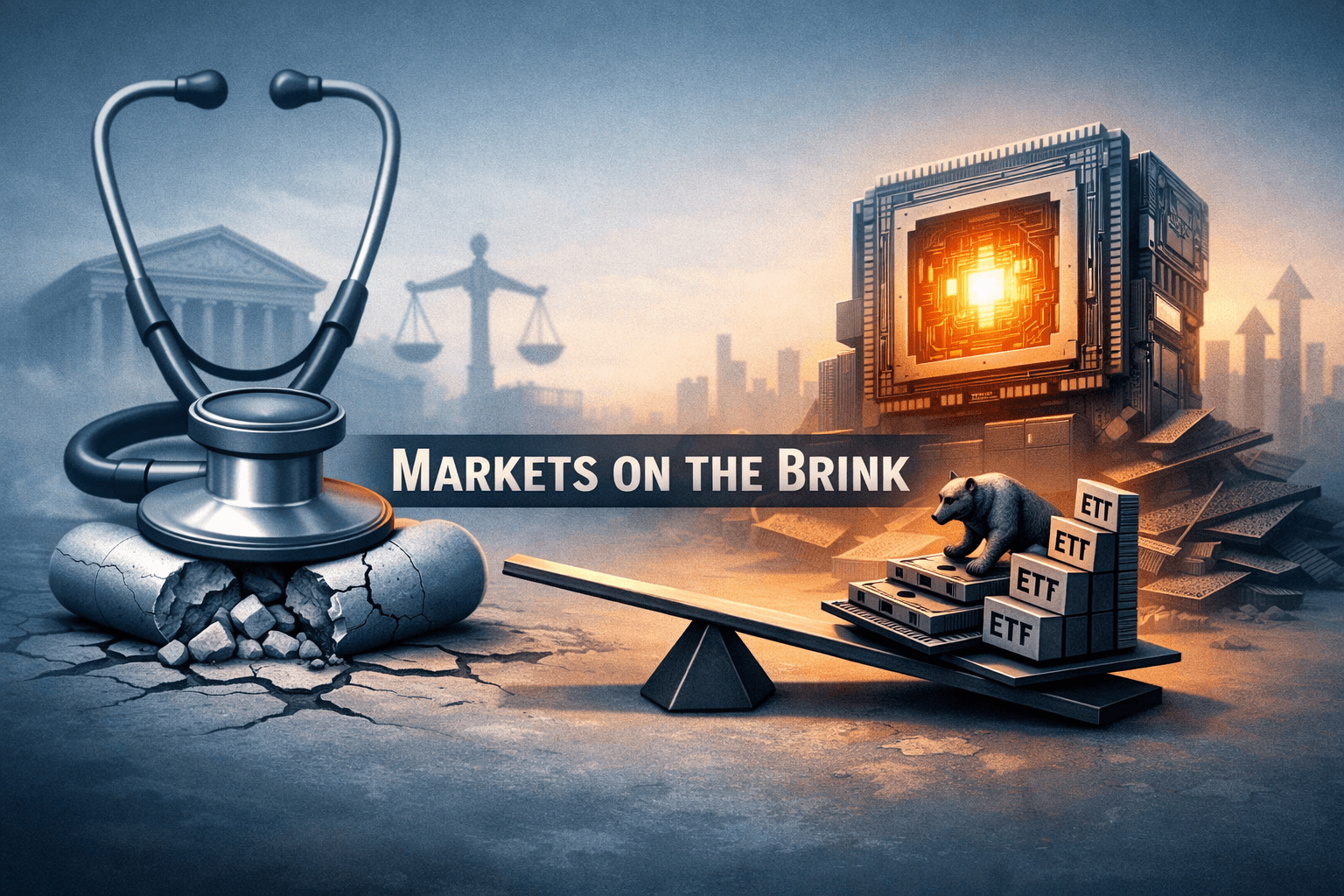
Regulatory Shock to Health Stocks, Nvidia’s AI Supply Boom and Market Highs: Key Moves From May 29
Podcast • Loading audio...
Share this article
Spread the word on social media
Key Takeaways
- •Massachusetts’ lawsuit against a UnitedHealth unit and CMS’s finalized IDR rule create immediate legal and operational dynamics for healthcare — both are market‑moving for payers, providers and vendor tech.
- •Computex spotlighted Nvidia (NVDA) and Taiwan suppliers, underlining an AI infrastructure cycle that is already influencing supplier order flows and large-cap tech re-rating (e.g., CSCO).
- •Morgan Stanley (MS) and Cisco (CSCO) hitting all‑time highs contrasts with heavy trading and a drop in the semiconductor‑bear ETF SOXS — the market is rotating into tech/AI while traders adjust hedges.
- •Large, active intraday volume across ETFs and low-priced names signals elevated short-term volatility and liquidity-driven moves — risk managers should re-check sizing and execution plans.
- •Regulatory, legal and geopolitical developments (UNH suit, CMS IDR rule, Bulgaria‑US tensions) are likely to be the primary near‑term catalysts across sectors.
Today's most impactful headlines
- Massachusetts files a Medicaid fraud suit against a Unitedhealth unit, raising immediate legal and earnings risk for UnitedHealth (UNH) and its Medicaid peers. Analysts say follow-up filings and company disclosures will drive near-term share volatility.
- CMS finalizes the independent dispute resolution (IDR) rule under the No Surprises Act. Providers and vendor specialists welcome clarity; congressional follow-through remains an open risk for the sector.
- Computex underscores Nvidia (NVDA) and Taiwan’s supply-chain role in a fresh AI infrastructure cycle — a theme that investors expect will reshape orders, supplier guidance and capital spending across chip and server suppliers.
Healthcare & regulatory: legal risk meets implementation clarity
What happened
- Massachusetts sued a UnitedHealth (UNH) unit alleging Medicaid fraud, creating a legal overhang that could affect results, guidance and near-term sentiment for the stock.
- Separately, CMS finalized IDR rule changes intended to streamline arbitration under the No Surprises Act; HaloMD applauded the move but urged Congress to pass enforcement legislation to close remaining loopholes.
Why it matters
- The UNH suit injects legal and earnings uncertainty into one of the largest managed‑care names, and analysts note this could ripple across Medicaid-heavy plans if regulatory scrutiny widens. Valuation sensitivity models now need fresh downside scenarios while legal proceedings unfold.
- The CMS IDR final rule provides operational clarity that could reduce administrative friction for vendors, billing platforms and some providers — a medium-term margin and workflow benefit for companies exposed to arbitration and claims processing revenue.
- Together these items point to a bifurcated regulatory landscape: enforcement risk (litigation) on one hand and administrative simplification (IDR rule) on the other. Participants across payers, provider-tech and insurtech should monitor follow-up guidance and congressional action.
Watch next
- UNH: subsequent legal filings, official company statements and any regulatory investigations.
- Provider-tech names and billing vendors for disclosures about implementation and revenue impact tied to the IDR rule.
AI infrastructure & semiconductors: Computex puts Nvidia centre stage
What happened
- Computex coverage emphasized Nvidia (NVDA) and Taiwan’s growing role in AI infrastructure — chip designs, server builds and supplier positioning were front and centre.
Why it matters
- Computex announcements can quickly translate into order-flow visibility and supplier guidance updates. Investors tracking AI exposure should watch Taiwan-listed board and component makers alongside Nvidia.
- A notable pattern today: big-cap tech strength (see Cisco (CSCO) hitting an all-time high) and Nvidia-led AI optimism are coinciding with heavy trading in semiconductor-related ETFs — but not uniformly. SOXS, a leveraged semiconductor bear ETF, fell sharply on high volume, signaling traders are taking off bearish hedges or that semis are being bought through other vehicles.
Connection to broader market moves
- The combination of Nvidia-led demand, record prices in some networking names and heavy volume in semicon ETFs suggests a widening thematic trade into AI infrastructure. That is likely to be felt in supplier margins and capacity planning over coming quarters.
Watch next
- Supplier deal announcements from Computex participants and supplier commentaries on order timing and backlog.
Financials & market leadership: banks and networking stocks at new highs
What happened
- Morgan Stanley (MS) hit an all-time high (reported at $208.01) and Cisco (CSCO) recorded a new peak ($120.81).
Why it matters
- New highs in major financial and networking names often reverberate through sector allocations. MS’s climb signals positive sentiment for financial stocks, while CSCO’s strength reinforces optimism for enterprise networking demand — a theme tied to AI-driven infrastructure upgrades.
- Record prices tend to tighten implied volatility and provoke analyst model updates; watch whether price target revisions follow these moves.
Connections and implications
- Tech and financial leadership can coexist in markets where growth and “real economy” earnings both look constructive: banks on net-interest and capital markets activity, tech on AI-driven hardware and software demand.
Watch next
- Earnings and guidance from big banks and upcoming analyst notes that could recalibrate sector exposure.
Energy, utilities and infrastructure: selective deal flow and capacity planning
What happened
- Hydro One (H) filed with the Ontario Energy Board to build the Orléans Area Reinforcement Project, signaling regulated asset growth potential.
- PBF Energy (PBF) executives will present at the Bank of America Energy and Power Credit Conference on June 3; presentation materials will be posted afterward.
- Municipal Data & Power launched a national RFP for a planned $4 billion “Harvest Grid Data & Power Site.”
Why it matters
- Hydro One’s filing could expand the regulated base if approved, affecting long-term revenue stability for the utility and muni credit considerations.
- PBF’s presence at a credit conference is relevant for fixed-income investors scrutinizing credit metrics, spreads and refinery fundamentals.
- The MDP national RFP signals private-public infrastructure activity at scale and ties to clean manufacturing and micro-grid solutions — a development for local suppliers, municipal officials and municipal-bond investors.
Watch next
- OEB responses and Hydro One filings; PBF’s conference materials; RFP responses and site selections from Municipal Data & Power.
Corporate actions, small-cap moves and heavy-volume names
Rapid-fire updates (today’s active or one-off items):
- Copper Intelligence (AFDG) announced a 1:100 reverse split and other corporate actions under FINRA review — expect low-liquidity repricing and compliance notices.
- Japan Post Holdings sold about $1.3m of Aflac (AFL) shares — a modest liquidity event, but worth watching for follow-up stake changes.
- bizZone launched Autrinity, an AI-embedded Association Management System — product launch, no financials disclosed yet.
- Avelo Airlines flew its one‑millionth ILG passenger — a regional travel demand datapoint.
- The University of Phoenix launched a veterans network (PVAN) — a strategic student-retention initiative with no immediate financial impact disclosed.
Why it matters
- Corporate restructurings and reverse splits (AFDG) typically change liquidity and can provoke volatile trading; monitor transfer-agent and exchange notices.
- Small-stake sales (AFL) or product launches (bizZone) provide incremental signals but require follow-up data to feed into valuations.
ETFs & active-trading signals: liquidity, volume and short-term risk
Notable intraday movers and what they imply:
- SOXS (leveraged semiconductor bear ETF) fell ~3.4% on outsized volume — traders should treat leveraged products as high-volatility instruments; this move can reflect reduced short exposure to semis or fresh bullishness in the underlying group.
- TZA fell 1.39% on heavy volume — notable for short-term momentum and volatility considerations in small-cap/leveraged spaces.
- BITO, IALT, IUSB and several low-priced names (BMNU, BMNU) saw high volume and price moves — these are liquidity-driven intraday signals that can amplify portfolio swings.
Why it matters
- Elevated volume in ETFs and low-price stocks magnifies intraday risk and execution costs. For portfolio managers this is a reminder to check liquidity, not a directional signal in isolation.
Geopolitical note
- Bulgaria will cut U.S. military aircraft stays over a visa dispute. While details and confirmations matter, the development introduces Eastern European diplomatic risk that could influence defense-contractor sentiment and regional supply-chain considerations.
Patterns, themes and takeaways
- Regulatory and legal headlines are concentrated in healthcare: the UNH suit increases downside risk while CMS’s IDR rule reduces operational friction — policy developments are now a dominant source of sector-level volatility.
- AI infrastructure remains the dominant thematic trade: Computex attention on Nvidia and Taiwan suppliers is pairing with record levels in selected networking and compute names (CSCO, NVDA narrative), reshaping supply-chain and capex expectations.
- Market leadership is bifurcated yet constructive: financials (MS) and large-cap tech are at highs while leveraged semicon-bear products see heavy flows — traders appear to be rotating into AI/tech exposure and reducing explicit bearish hedges.
- Volume and liquidity spikes across ETFs and small caps point to active trader participation and increased short-term volatility; risk managers should re-check sizing and liquidity assumptions.
What to watch tomorrow
- UnitedHealth (UNH): company commentary, legal filings or regulatory responses that could move shares materially.
- Computex follow-ups: supplier announcements and any published order or backlog guidance from board and server component makers tied to Nvidia’s ecosystem.
- PBF Energy (PBF) presentation materials after the Bank of America credit conference (June 3) — relevant for credit investors and refiners’ peer repricing.
- Hydro One (H): OEB filings or public comment windows related to the Orléans reinforcement project.
- Market internals: whether momentum in MS and CSCO extends and whether semiconductor flows (seen in SOXS) reverse or confirm a durable trade into semiconductors.
Investment disclaimer
This digest is for informational purposes only and does not constitute investment advice. Analysts note risks and catalysts above; readers should consult their own advisors and review company filings before making investment decisions.
Sources
+ 12 more sources
Use these insights — enter this week's contest.
Free practice contests — earn Alpha CoinsExplore More Content
Disclaimer: StockAlpha.ai content is for informational and educational purposes only. It is not personalized investment advice. Sentiment ratings and market analysis reflect data-driven observations, not buy, sell, or hold recommendations. Always consult a qualified financial advisor before making investment decisions. Past performance does not guarantee future results.