 Quick Briefs
Listen to this Recap
9:52
Regulatory Pressure and Flow-Driven Volatility Dominate Markets — Apple, Meta, JPMorgan Lead the Tape; Intel Tops Active Movers
Podcast • Loading audio...
Share this article
Spread the word on social media
Key Takeaways
- •Regulatory and legal headlines (Apple, Meta, JPMorgan) were the dominant market drivers today, increasing headline risk and potential volatility.
- •Flow-driven activity — heavy volume in ETFs and leveraged products (TZA, BMNU, BITO) — amplified price moves and execution risk.
- •Intel’s (INTC) volume-backed rally stands out as demand-driven, but sustainability depends on follow-through volume and catalysts.
- •Analyst and corporate actions (Danone downgrade, Truist on Costco, Viatris presentation) remain important secondary catalysts for sector moves.
Today's most impactful stories
- Apple (AAPL) told investors a proposed Canadian bill could force it to weaken device encryption — a development that raises regulatory and brand risk for the company and increases near-term volatility for the stock.
- Meta (META) reportedly filed a legal challenge to the UK regulator over fees tied to the Online Safety Act, adding fresh regulatory uncertainty to a much-watched advertising-and-policy-sensitive name.
- JPMorgan (JPM) circulated an internal warning on staff using prediction markets, calling out compliance and insider-trading risks — a signal that operational and conduct oversight is a live risk for large banks.
- Intel (INTC) rallied ~4.5% on heavy volume, emerging as one of the session’s top active names and suggesting renewed buyer interest in the chip space.
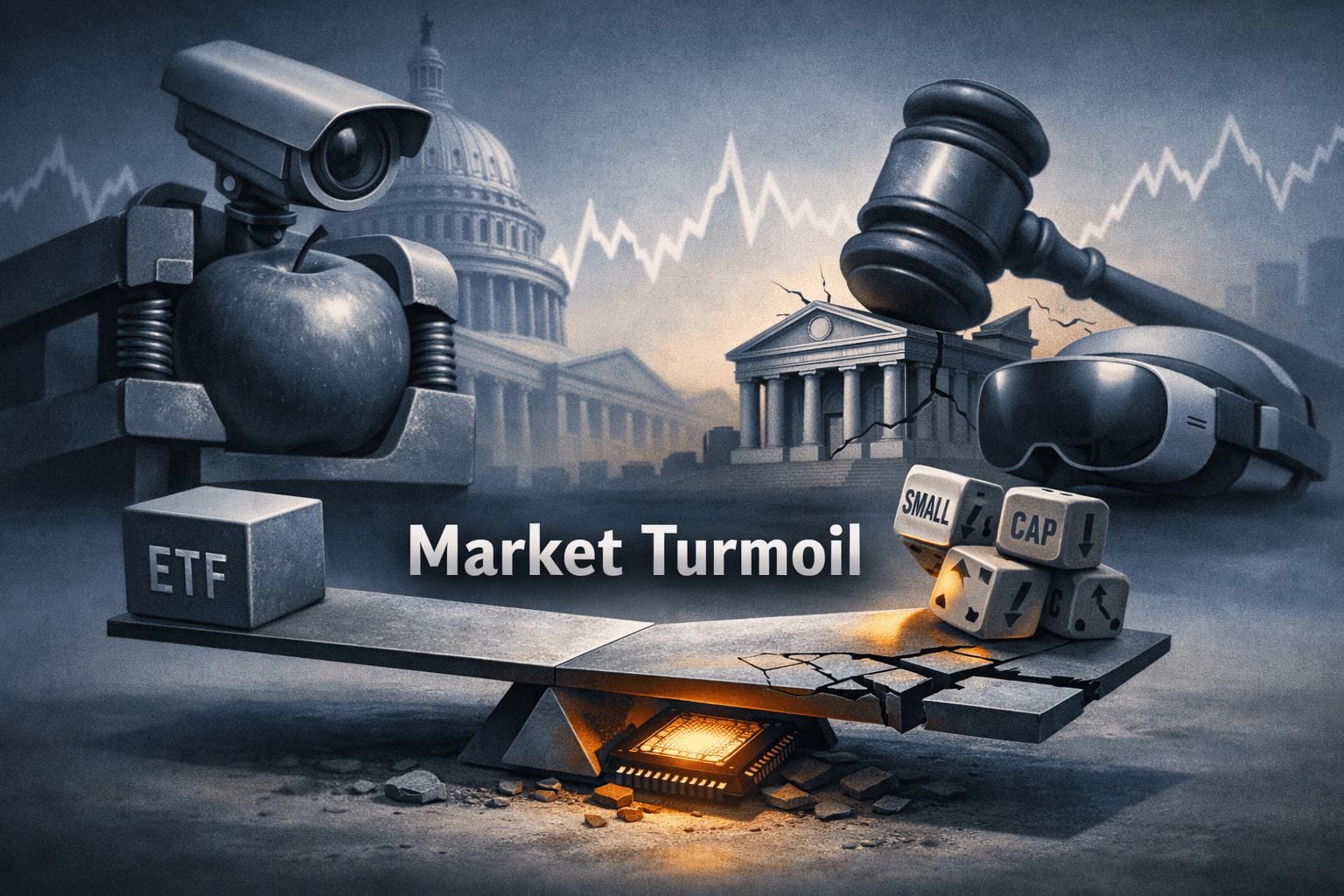
These items set the tone for the day: regulatory/legal headlines drove headline risk for large-cap tech and banks, while flow and liquidity patterns amplified moves in ETFs, leveraged vehicles and active small-cap names.
Regulatory and legal pressure: tech and finance under the microscope
Why this matters
- The Apple (AAPL) filing about the Canadian bill is more than a local policy squabble — it speaks to product-level implications (encryption) that touch user trust, potential demand, and legal precedent across jurisdictions. Analysts note that erosion of encryption requirements could pressure device differentiation and valuation assumptions over time.
- Meta (META) taking the regulator to court shows the company is willing to test fee structures and enforcement mechanics. The case could create churn in the company’s legal expense profile and add uncertainty to advertising and margin forecasts.
- JPMorgan’s (JPM) internal memo flags operational risk and compliance attention around new market structures (prediction markets). Increased oversight can translate into caution around employee trading, potential internal frictions, and short-term stock volatility.
How these threads connect
- Taken together, the Apple, Meta and JPMorgan headlines point to a broader theme: regulatory friction across sectors is increasing, and companies are responding with legal challenges or tighter internal controls. That combination tends to widen trading ranges and raise the chance of episodic volatility.
Watch for
- Formal filings from Meta and any public response from the UK regulator.
- Legislative movement or clarifying language from Canadian lawmakers and follow-up Apple disclosures.
- Any regulatory or enforcement statements tied to the JPMorgan memo, plus analyst commentary updating risk assumptions.
Flow-driven volatility: ETFs, leveraged vehicles and highly traded names
Active movers today (quick hits)
- Intel (INTC): +4.49% to $113.01 on ~154M shares — volume-backed buying that suggests conviction and eased access for options and equities traders.
- TZA (TZA): -4.35% to $4.50 on ~200M shares — a sharp one-day move in the leveraged small-cap bear ETF, signaling heavy directional flows.
- BITO (BITO): -0.31% to $11.14 on ~164M shares — modest decline amid heavy turnover, consistent with repositioning in crypto-linked ETF flows.
- BMNU (BMNU): -1.76% to $2.23 on ~142M shares — a large-volume decline in a leveraged or small-cap-linked product that raises liquidity and margin considerations.
- NOK (NOK): -1.75% to $13.19 on ~120M shares — heightened participation suggests near-term selling pressure.
Why volume matters
- Elevated turnover across ETFs and certain equities today signals active repositioning by traders and institutions. When heavy volume meets leveraged products (TZA, BMNU), price moves can be magnified and reversals may be abrupt as flows ebb.
- For managers and traders, the practical implication is twofold: execution costs and slippage increase, and risk-management guardrails (margin, position sizing) become more costly to breach.
Context and patterns
- Several of today’s big-volume names are either ETFs or vehicles tied to macro/sector bets; that supports the view that flow activity rather than idiosyncratic fundamentals is a dominant force in intraday moves.
- Intel’s rally, by contrast, looks like a more classic demand-driven move. Analysts will watch whether volume persists — confirming a regime shift — or whether it’s a short-lived rotation.
Analyst notes, corporate events and sector developments
Analyst/ratings action
- Deutsche Bank cut Danone’s price target after assessing a baby-formula recall; the downgrade underscores how operational incidents translate directly into valuation revisions in consumer staples.
- Truist reiterated a Hold on Costco (COST), highlighting valuation tension despite a sizable gap to the firm’s price target — a reminder that street coverage still weighs in on consumer exposure and multiple compression risk.
Corporate calendar and filings
- Viatris (VTRS) will present at the BofA Healthcare Conference on May 12 — a near-term event that could catalyze moves if management provides new color.
- Chatham Lodging Trust (CLDT) filed an 8-K with percentage figures that matter to ownership and valuation models — procedural but potentially volatility-inducing as investors digest the numbers.
- Syrtis Solutions marked its 16th anniversary — a private-sector milestone that signals persistence in healthcare IT but has no public market immediacy.
Why this grouping matters
- Analyst actions (Danone, Costco) and event-driven calendar items (Viatris presentation, Chatham Lodging filing) serve as secondary drivers that can amplify sector-specific volatility created by the larger regulatory and flow themes.
Sector-specific notes
- Healthcare: Viatris (VTRS) presentation is a near-term monitoring point; private players like Syrtis continue to push operational improvements that could eventually influence payer costs.
- Consumer staples: Danone’s recall and the Deutsche Bank reaction highlight headline sensitivity in food and beverage names. Pay attention to follow-on guidance and sales cadence.
- Financials: OSFI-related reporting about sidelining a climate scenario (RCP 8.5) may change stress-testing assumptions for Canadian banks and insurers; investors in Canadian financials should await official OSFI clarification.
Emerging patterns and themes from today’s briefs
- Regulatory/legal risk is front-and-center and cross-sectoral — tech (AAPL, META), finance (JPM), and public policy bodies (OSFI) are driving headline risk.
- Flow and liquidity are amplifying price action — heavy volume across ETFs and small/leveraged names suggests the market is flow-sensitive, not just fundamentally driven.
- Analysts are quick to repricing operational shocks — from product recalls (Danone) to reiterated coverage calls (COST) — signaling that headline events continue to be a primary channel for revaluation.
- Event calendars matter — even routine presentations (VTRS) can be catalysts in the current environment where regulators and flows dominate headlines.
Quick checklist for market participants
- Monitor official regulatory filings and court notices for Apple (AAPL) and Meta (META).
- Track next-day volume and open interest for TZA (TZA), BMNU (BMNU) and BITO (BITO) to gauge whether selling pressure is persistent.
- Watch whether Intel (INTC) holds the $113 area on follow-through volume — sustaining that support would matter for sector momentum.
- Look for OSFI responses or Canadian bank commentary tied to the RCP 8.5 sidelining claim.
- Note upcoming event: Viatris (VTRS) presentation on May 12 — treat as a potential short-term catalyst.
What to watch tomorrow
- Any formal responses or clarifying statements from Canadian lawmakers or Apple (AAPL) on the encryption bill.
- Filings or public comment from Meta (META) and the UK regulator as the legal challenge evolves — these will set the near-term legal and cost backdrop.
- Follow-up from JPMorgan (JPM) on compliance measures or related restrictions that could influence staff trading or disclosures.
- Volume and price action in the leveraged ETFs/ETNs that moved today (TZA, BMNU, BITO) — persistent heavy flows would raise systemic liquidity considerations.
- Earnings, guidance, or further analyst notes on Danone (BN.PA) and Costco (COST) as the street digests recall and valuation narratives.
Bottom line
Today’s tape was dominated by regulatory and legal headlines for large-cap tech and banks, while heavy liquidity and ETF flows amplified moves in leveraged and actively traded names. The interplay of policy risk and flow-driven trading is an environment that tends to widen trading ranges and increase the frequency of headline-led repricings. Market participants should prioritize official filings and follow-through volume as the clearest signals for durability.
Investment disclaimer: This digest is for informational purposes only. It does not constitute investment advice, an offer, or a solicitation to buy or sell any security. Analysts note risks and data trends; readers should consult licensed professionals before making investment decisions.
Sources
+ 4 more sources
Use these insights — enter this week's contest.
Free practice contests — earn Alpha CoinsExplore More Content
Disclaimer: StockAlpha.ai content is for informational and educational purposes only. It is not personalized investment advice. Sentiment ratings and market analysis reflect data-driven observations, not buy, sell, or hold recommendations. Always consult a qualified financial advisor before making investment decisions. Past performance does not guarantee future results.