 Quick Briefs
Listen to this Recap
8:39
Supply Constraints Lift Chip Lead Times; Energy Upgrades and AI Push Into Vertical Health — Market Digest for Apr 9, 2026
Podcast • Loading audio...
Share this article
Spread the word on social media
Key Takeaways
- •Semiconductor lead times are rising broadly (Baird), a demand/supply signal that could support pricing and backlogs for chip suppliers (e.g., NVDA, AMD) but lacks granular numbers.
- •Jefferies raised its ExxonMobil (XOM) price target — a positive sentiment signal — though the new dollar target was not published in secondary coverage.
- •AI is being productized vertically: PointClickCare’s Study Buddy and Medical Knowledge Group’s new Chief AI Officer illustrate a shift toward domain-specific AI solutions in healthcare and commercialization.
- •Retail attention spikes (Dow futures, Social Security) and heavy microcap volume (GPUS) indicate attention-driven volatility remains a market force.
- •Watch for follow-up data (lead-time metrics, Jefferies’ full note, adoption metrics and partnership announcements) as the next concrete catalysts.
Today's top movers and why they matter
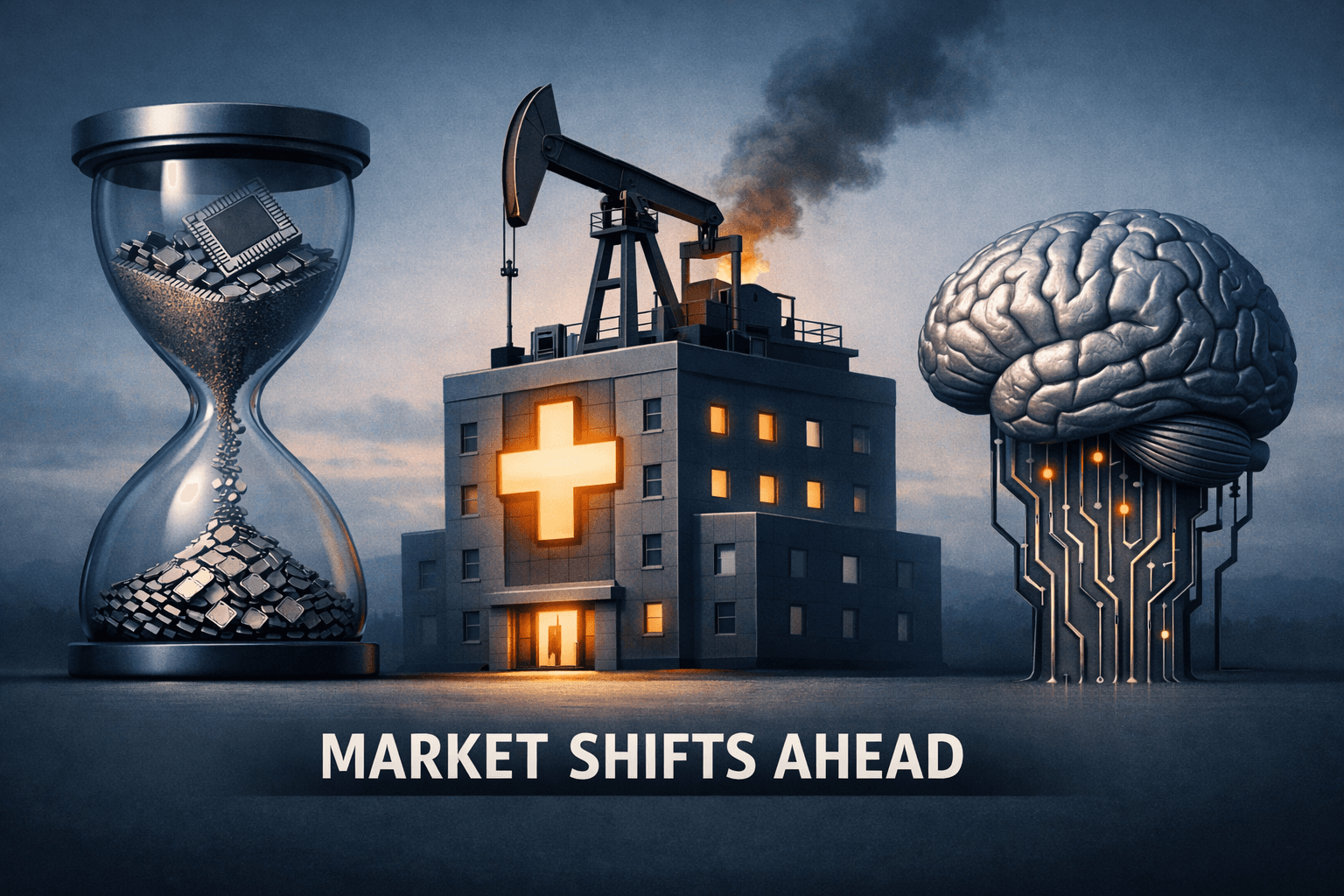
- Semiconductor lead times are surging, according to Baird's industry check — a signal of tighter supply/demand dynamics that could support pricing and backlogs across chip suppliers (names such as NVIDIA (NVDA) and AMD (AMD) are most exposed). Analysts note Baird did not publish specific week or percentage figures, so the scale and duration remain uncertain.
- Jefferies raised its price target on ExxonMobil (XOM), citing timing effects in its note. The brokerage did not publish the new dollar target in the secondary report, but the move is a sentiment-positive datapoint for energy names.
- PointClickCare announced Study Buddy, an AI-powered research platform that promises grant-ready real-world evidence from long-term care datasets — another example of sector-specific AI tools targeting faster time-to-insight and potential monetization opportunities.
These items lead the day because they intersect directly with revenue/performance drivers: component availability for hardware makers, analyst sentiment shifts in a large-cap energy name, and rapid productization of AI in regulated, data-rich industries.
The semiconductor supply story: lead times and market implications
Briefs: Baird on lead times; speculative flow into penny stocks (GPUS)
What happened
- Baird reports a broad-based surge in semiconductor lead times across multiple segments. The firm flagged rising wait times without disclosing numeric lead-time metrics.
Why it matters
- Lead-time increases typically reflect demand outpacing supply or capacity constraints. That dynamic can translate into stronger pricing power and improved revenue visibility for chip suppliers, particularly those with differentiated, in-demand product lines (analysts point to NVIDIA (NVDA) and AMD (AMD) as names to watch for exposure differences).
- Longer lead times can generate larger order backlogs and become a key input to company guidance and earnings revisions. Management commentary in upcoming quarterly reports will be an important next signal.
- For OEMs and device makers, extended waits raise execution risk: inventory carrying costs, production delays and potential sales timing shifts.
Context and the next data to watch
- We lack hard figures from Baird today; follow-ups that publish weeks-of-lead-time or segment-level trends will convert a directional signal into actionable data for modeling revenue and margins.
- Related market behavior: volatile retail/speculative interest showed up elsewhere today — $GPUS posted a +3.56% move on heavy turnover (238.32M shares). While unrelated to Baird’s check, heavy volume in small-caps signals persistent momentum-chasing activity that can amplify intraday swings in chip-adjacent microcaps and suppliers.
Implication
- Analysts note this is a cautionary-to-constructive signal for chip supply-side participants: constructive for pricing and revenue if demand persists, cautionary for customers whose production cycles are supply-constrained.
Energy and the commodity cycle: analyst upgrades and strategic timing
Briefs: Jefferies raises ExxonMobil (XOM) target; Turbo Energy secures a patent
What happened
- Jefferies raised its price target on ExxonMobil (XOM), pointing to timing effects; the full numeric target was not in the syndicated report.
- Separately, Turbo Energy secured a strategic patent for an AI-driven solar, battery and EV home energy platform aimed at the $12.5bn U.S. residential EV charging market.
Why it matters
- An analyst upgrade on a major integrated energy name like ExxonMobil (XOM) can shift sector sentiment, particularly for yield- and value-focused portfolios. "Timing effects" suggests the upgrade may relate to near-term cash flow or earnings recognition shifts rather than a structural change.
- Turbo Energy’s patent highlights the long tail of energy transition commercialization; intellectual property protection for integrated home charging + storage + software (AI) can be a prelude to licensing or partner deals that influence adoption curves in residential EV charging.
Connecting the dots
- Energy is bifurcating in markets: legacy upstream cash flow dynamics (XOM) driving analyst attention and new-technology pathways (Turbo Energy) racing to define addressable markets. Capital allocation and M&A chatter may increasingly bridge these areas — large incumbents could look to partner with or acquire IP-rich startups to accelerate distributed energy and EV charging scale.
Next catalysts
- Full Jefferies publication, earnings commentary from ExxonMobil (XOM), and any Turbo Energy rollout or partnership announcements.
Healthcare and AI: verticalization accelerates
Briefs: PointClickCare launches Study Buddy; Medical Knowledge Group appoints Christie Mealo as Chief AI Officer
What happened
- PointClickCare launched Study Buddy, an AI platform that claims to deliver instant, grant-submission-ready evidence from long-term care data.
- Medical Knowledge Group (MKG) named Christie Mealo Chief AI Officer, underscoring a strategic bet on AI within pharma/biotech commercialization services.
Why it matters
- These moves illustrate a trend analysts are calling vertical AI: tailored, domain-specific AI products aiming to speed workflows and monetize previously underutilized data pools (long-term care EHRs in the case of PointClickCare).
- The hires and product launches are operational signals rather than immediate revenue events — concrete adoption metrics, pricing and partnership disclosures are the clearest next indicators of commercial impact.
Cross-sector pattern
- AI is migrating from horizontal tooling to embedded, regulated workflows where speed-to-insight and data provenance are competitive advantages. Health-tech firms that control unique datasets may unlock new, defensible revenue lines if they can demonstrate clinical validity and compliance.
Watch for
- Pilot results, grant or contract wins, partner disclosures with pharma names (analysts mention potential linkages to firms like Pfizer (PFE) or Merck (MRK)), and any regulatory or privacy-compliance announcements that could affect adoption.
Market attention, retail flows and sentiment signals
Briefs: Dow futures trending on Google Trends; Social Security searches spike; MoneyGram recognized as a top workplace
What happened
- Searches for "dow jones stock markets futures" jumped 600% to 10k queries; "social security april 8" interest doubled to 10k searches.
- MoneyGram announced a fifth consecutive USA TODAY Top Workplaces award.
Why it matters
- Google Trends spikes are not market catalysts per se, but they reveal retail and media attention that can presage elevated intraday volatility and volume, especially in ETFs tied to the Dow Industrial Average (DIA) or in income/retirement-focused assets if Social Security becomes a top headline.
- Workplace recognition (MoneyGram) is a qualitative signal that can reduce operational risk via lower turnover; material financial effects are usually indirect and long-term.
Trading implications
- Short-term traders should monitor options-implied volatility and intraday liquidity in affected products if retail attention persists.
Luxury snapshot
Briefs: Morgan Stanley notes Chanel outpacing Dior
What happened
- Morgan Stanley’s research cited by Investing.com suggests Chanel has outpaced Dior, signaling share and momentum shifts within high-end luxury.
Why it matters
- Brand-level leadership changes can reweight relative performance among parent companies and suppliers. Analysts and channel checks will be needed to see if Chanel’s momentum represents a durable structural advantage or a tactical sales cycle.
Patterns and emerging trends from today’s briefs
- Vertical AI adoption is broadening: across health tech (PointClickCare), commercialization services (MKG), and even energy management (Turbo Energy’s AI-driven platform). The pattern suggests a movement from generic AI tooling toward bundled hardware-software-data solutions.
- Supply constraints are not dead: semiconductor lead-time increases hint that chip cycles remain relevant for hardware makers and cloud infrastructure spend. The signal dovetails with persistent demand in AI compute, even as specifics are still forthcoming.
- Retail and search-data-driven volatility persists: Google Trends spikes and heavy volume in microcaps (GPUS) underscore that attention-driven trading remains a market force that can amplify moves unrelated to fundamentals.
- Mixed analyst tone in energy: Jefferies’ upgrade on ExxonMobil (XOM) sits alongside nascent cleantech patenting activity, illustrating capital flows into both legacy energy cash engines and distributed energy technology.
Rapid-fire updates
- GPUS: +3.56% to $0.15 on 238.32M shares — heightened speculative interest.
- Jefferies: raised ExxonMobil (XOM) target; full price target pending publication.
- Turbo Energy: secured patent for SUNBOX® AI-driven home energy + EV charging platform targeting a $12.5bn U.S. market.
- PointClickCare: launched Study Buddy to accelerate grant-ready real-world evidence from long-term care EHRs.
- Medical Knowledge Group (MKG): appointed Christie Mealo as Chief AI Officer.
- Morgan Stanley (MS) research: Chanel outpacing Dior in luxury momentum.
- Google Trends: Dow futures and Social Security queries spiked to 10k searches each, signaling heightened retail and public attention.
What to watch tomorrow
- Any follow-up from Baird with numeric lead-time data (weeks or percentage changes) and segment breakdowns — this will determine how materially models should be adjusted for chip suppliers (NVDA, AMD).
- Jefferies’ full note and the disclosed new price target for ExxonMobil (XOM); monitor XOM price action and any related sector revisions.
- Early adoption signals or pilot results for PointClickCare’s Study Buddy and any immediate customer or partner announcements from Medical Knowledge Group (MKG).
- Turbo Energy commercialization updates: partner deals, deployment timelines and pricing terms for SUNBOX®.
- Macro and market-sentiment inputs: major economic releases, central bank/ Fed-speaker comments, and overnight futures that could amplify the retail attention signaled by Google Trends.
- Continued volume patterns in microcaps (GPUS or similar) and any regulatory filings or disclosures that could explain spikes in speculative flow.
Final note — investment information only
This digest presents market-moving headlines, context and patterns observed across today’s briefs for informational purposes only. Analysts note these items are signals to monitor — not buy/sell/hold advice. Investors should rely on their own due diligence and, where appropriate, consult a licensed financial professional before taking action.
Sources
Use these insights — enter this week's contest.
Free practice contests — earn Alpha CoinsExplore More Content
Disclaimer: StockAlpha.ai content is for informational and educational purposes only. It is not personalized investment advice. Sentiment ratings and market analysis reflect data-driven observations, not buy, sell, or hold recommendations. Always consult a qualified financial advisor before making investment decisions. Past performance does not guarantee future results.