 Market Recap
Listen to this Recap
11:47
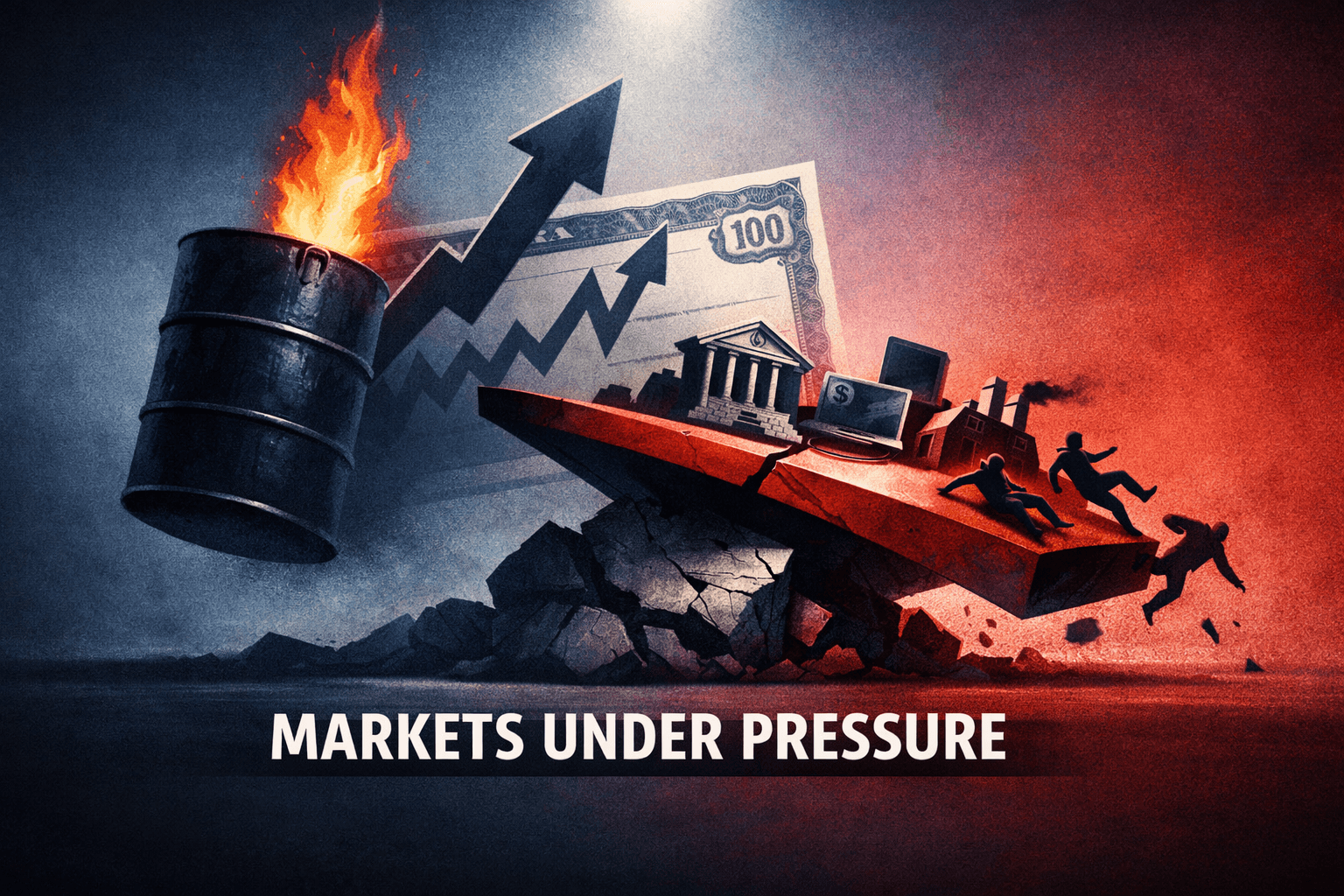
Oil Spike and Rising Yields Tip Risk Off: Tech, Small Caps Slide as Energy and Materials Hold Ground
Podcast • Loading audio...
Share this article
Spread the word on social media
Key Takeaways
- •SPY fell 1.20%, QQQ dropped 1.51%, and IWM plunged 2.41% as oil and yield moves sparked a risk-off session.
- •Energy and materials outperformed amid an oil-price jump and commodity-driven flows; utilities and real estate were mixed given policy and grid concerns.
- •Rising Treasury yields tightened financial conditions and hit growth and small-cap names hardest; corporate-specific headlines (Starboard, PNC) amplified sector dispersion.
- •Watch oil, Treasury yields, China demand signals, and Fed commentary for direction into the next session.
Today's decisive narrative
Markets turned risk-averse on Friday as a sudden jump in oil prices combined with a repricing in the bond market to wipe out earlier gains and push broad indices into the red. The S&P 500 (SPY) closed down 1.20% while the tech-heavy Nasdaq-100 (QQQ) slid 1.51%. Small caps suffered most: the Russell 2000 ETF (IWM) plunged 2.41%, underscoring the day's flight from higher-beta, more rate-sensitive names.
That trio of moves set the tone: cyclical natural-resources groups and energy-related names absorbed buying interest, while high-valuation growth and many small-cap names bore the brunt of the selloff. The cross-asset unwind — higher oil, higher yields, weaker equities breadth — was the market’s key story.
How it played out across sectors
Energy and materials: Clear outperformers. Headlines and sector wraps pointed to momentum in energy — pipeline activity, renewed interest in nuclear and renewables, and reports that China will buy more U.S. oil. Those dynamics, coupled with the intraday oil spike, supported energy names and mining/materials stocks. Analysts note the move resembles tactical rotation into commodity-exposed equities when geopolitical or supply worries push oil higher.
Financials and banks: Mixed. Finance & banking news was a patchwork of idiosyncratic items. PNC has been flagged as down roughly 3% since its last earnings report, which suggests lingering skepticism around regional-bank earnings and credit outlooks. Overall, banks felt the pain of higher yields but also of wider credit fear, producing a choppy group performance.
Technology and communications: Weak on the day. The Nasdaq-100 underperformed as hyper-growth and AI-exposed names gave back gains; commentary about “hyperscalers” dealing with a 'photon' problem and increased scrutiny around capital spending fed into caution. Starboard Value's exit from Salesforce and reallocation into CarMax added another headline that animated individual tech/enterprise software names.
Real estate: Mixed to cautious. Real estate wraps highlighted active deals but also rising risk factors tied to higher rates and liquidity. REITs and property-related equities showed a nuanced performance — some deal-driven names held up but broader sentiment leaned negative on rate sensitivity.
Utilities: Spotlighted for grid strain and policy shifts. Utilities underperformed in some cases as market participants weighed near-term operational risks and longer-term regulatory change — factors that complicate the defensive trade when rates are rising.
Consumer/retail: Mixed. Retail and consumer discretionary faced divergence: AI-related M&A chatter and select buyout interest buoyed a few names while broader discretionary spending questions and the marketwide risk-off clipped others.
Crypto: Mixed signals continued. Cryptocurrency markets sent contradictory cues, reinforcing the broader risk-off backdrop but not producing a uniform directional shock to equities.
Why markets reacted — the 'why' behind the moves
Oil jump erased gains. A meaningful uptick in crude prices was the immediate catalyst for sector rotation. Higher oil raises concerns about input costs for a wide range of companies and can dampen growth expectations, particularly for consumer-facing sectors. It also pushed energy names higher, but the net effect was a risk-off tilt.
Bond-market repricing. Commentary and data today signaled firmer Treasury yields. Key headlines referenced a bond-market tightening and commentary from market watchers like Kevin Warsh, and traders interpreted the move as a fresh sweep toward tighter financial conditions. Rising yields increase discount rates on future earnings and hit growth and small-cap stocks hardest.
Idiosyncratic corporate headlines. Activist moves and earnings-related skepticism added to intra-sector dispersion: Starboard’s exit from Salesforce and reallocation to CarMax, PNC’s post-earnings price pressure, and discrete M&A/business updates in consumer & retail created headlines that amplified sector-specific flows.
China and commodity flows. Reports that China will buy more U.S. oil injected a demand-driven rationale to higher crude prices — a structural data point that can sustain tighter oil balances longer than a short-lived supply blip.
Together, these forces produced a classic risk-off session where economically sensitive, rate-sensitive, and higher-volatility names underperformed while commodity-related sectors absorbed buying pressure.
Notable individual movers and headlines
Salesforce (CRM): Starboard Value’s exit from Salesforce and redeployment into CarMax was a headline that mattered. The activist’s move is read as part of a broader reassessment of enterprise software exposures and capital allocation choices among large tech incumbents. That dynamic likely pressured CRM and other legacy enterprise software names.
CarMax (KMX): The addition by Starboard provided a lift to KMX relative to its peers, illustrating how activist flows can create one-off support even inside a broader risk-off day.
PNC Financial (PNC): Called out by recent coverage as down about 3% since its last earnings report, PNC illustrates how regional bank narratives remain fragile in the face of mixed macro flows and uncertainty over credit conditions.
Energy majors and commodity names (e.g., XOM, CVX, OXY): Energy sector momentum and the oil price move benefitted larger oil & gas names, which acted as a defensive-ish place to park capital amid equity weakness.
Materials & mining stocks: Momentum headlines and wrap coverage indicated strength in base metals and commodity miners, consistent with the broader rotation into cyclicals tied to higher commodity prices.
(Note: this roundup synthesizes sector-level headlines and firm-level coverage mentioned in the day's wrap notes. These items explain relative moves rather than serve as investment recommendations.)
Technical and market-breadth context
Market internals confirmed the narrative: weakness was broadening by the close, with small caps underperforming notably. The IWM decline of 2.41% signals that traders were not merely rotating within large-cap leadership; they were reducing exposure to higher-beta areas. The Nasdaq-100’s larger drop versus the S&P indicates valuation-sensitive tech names took greater hits as yields backed up.
From a technical perspective, the S&P’s drop below recent intraday support levels suggests near-term momentum has shifted toward sellers. That said, the move came on a confluence of macro and commodity-driven headlines rather than a singular blowout economic print, implying path-dependent risk ahead: a reversal in oil or yields could quickly flip the tape.
Fed implications and what policymakers may be watching
Rising yields and a stronger commodity-price profile complicate the Fed’s calculus. Higher yields tighten financial conditions, which can be contractionary for growth — a fact that may temper the Fed’s future communications if the bond-market move persists. Conversely, sustained inflationary pressure from oil could bolster the case for a higher-for-longer stance.
Analysts note that Fed officials will be watching the breadth and persistence of this repricing closely. If commodity-driven inflation expectations rise meaningfully, or if tightening financial conditions materially slow activity, policymakers may be more cautious in signaling further hikes — but they will also be wary of letting inflation reaccelerate. In short, the day’s moves reinforce the balance-of-risks framing the Fed has used in recent months.
Historical framing
The pattern — oil spike, rising yields, growth underperformance — has precedent. Past episodes (e.g., 2014–2015 supply shocks; 2022’s inflation-driven selloffs) show that sustained commodity-price strength can be a durable headwind for risk assets until either supply/demand dynamics shift or policy reassurances arrive. Today’s move echoes that dynamic in micro form: commodities and cyclicals up, growth and small caps down.
What to watch into the next session
Oil and commodity flows: Continued follow-through in crude will materially influence sector rotations. Traders should watch front-month crude benchmarks and inventory reports.
Treasury yields and Fed speak: Additional moves in benchmark yields or new commentary from Fed officials could either exacerbate or alleviate the broad-market repricing.
China demand signals: Any confirmation that Chinese crude purchases are lifting demand sustainably will support resource and energy names and could keep pressure on growth equities.
Earnings and idiosyncratic headlines: With activist repositioning and company-specific updates driving dispersion, individual names remain vulnerable to headline risk.
Market breadth and small-cap resilience: Watch whether small caps find support or whether the IWM decline expands — a durable small-cap breakdown would suggest deeper risk-off positioning.
Bottom line / Outlook
Today’s session was a reminder of the cross-asset linkages that can quickly change the market’s complexion: a jump in oil and a bond-market repricing compelled a broad unwind of risk assets, with small caps and tech bearing the worst of the pain while energy and materials outperformed. Near-term sentiment is cautious-to-bearish until either yields stabilize, oil eases, or clearer Fed signaling reduces uncertainty.
Traders and portfolio managers will likely watch the next 24–48 hours for confirmation: if oil cools and yields retrace, relief rallies could restore leadership to growth sectors; if the commodity- and yield-driven flows persist, expect continued rotation toward cyclicals and defensive repositioning.
Investment disclaimer: This report is for informational purposes only. It does not constitute investment advice or a recommendation to buy, sell, or hold any security. Analysts and commentators cited reflect market observations and should not be interpreted as personalized financial advice.
Sources
+ 10 more sources
Use these insights — enter this week's contest.
Free practice contests — earn Alpha CoinsExplore More Content
Disclaimer: StockAlpha.ai content is for informational and educational purposes only. It is not personalized investment advice. Sentiment ratings and market analysis reflect data-driven observations, not buy, sell, or hold recommendations. Always consult a qualified financial advisor before making investment decisions. Past performance does not guarantee future results.