 Market Recap
Listen to this Recap
8:24
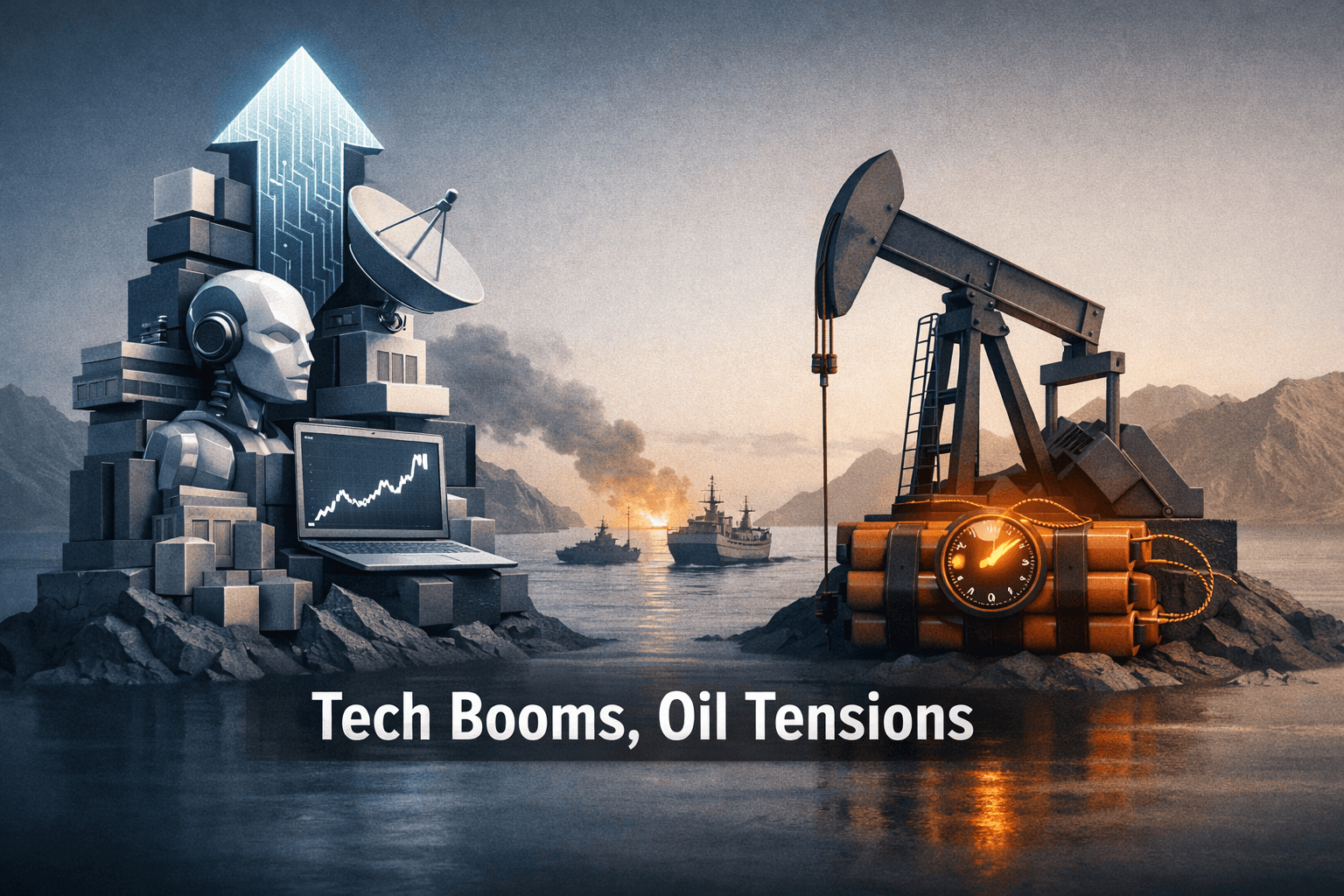
Tech and Media Drive Tape While Small Caps Lag: QQQ Outperforms as Energy Tightens After Hormuz Shock
Podcast • Loading audio...
Share this article
Spread the word on social media
Key Takeaways
- •QQQ led the market higher (+0.61%) while SPY was flat (-0.02%) and IWM lagged (-0.67%), signalling concentrated large-cap strength.
- •Communications/media and AI-linked names drove QQQ’s outperformance; energy tightened after a Hormuz shock, supporting oil-related equities.
- •Breadth remained narrow — selective accumulation in quality/growth stocks rather than broad risk-on — leaving markets vulnerable to macro surprises.
- •Watch upcoming inflation data, Fed commentary, and energy-supply developments; small-cap performance (IWM) will be a key tell for broader risk appetite.
Today's decisive narrative
Markets closed the session with a clear bifurcation: large-cap, growth- and tech-oriented benchmarks outperformed while small caps lagged and cyclical segments showed mixed results. The S&P 500 (SPY) closed down 0.02%, the tech-heavy Nasdaq-100 (QQQ) climbed 0.61%, and the Russell 2000 (IWM) retreated 0.67%. That split captured the tone of the day — selective risk-taking concentrated in growth and communications names, with breadth constrained by weakness in small-cap and certain financial and real-estate exposures.
Why the market moved: headlines and mechanics
Several cross-cutting themes drove the tape. A fresh round of sector-specific news — from communications and media strength tied to YouTube ad demand to a cannabis sector reaction after rescheduling headlines — fueled pockets of buying. At the same time, a geopolitical blip that tightened energy markets after a Hormuz-related shock pushed energy prices higher, lifting related names but stoking inflation-watch anxiety.
The net result was a market that favored large-cap, market-leading technology and media franchises (captured in QQQ's outperformance) while smaller, more domestically sensitive companies underperformed (IWM lagged). Investors appeared to prefer companies with clearer cash-flow trajectories and secular growth stories as the day closed.
Sector rotation and standout performers
Communications & Media: One of the cleanest winners of the session. Reports of stronger YouTube ad demand and renewed advertiser confidence helped lift platform and ad-tech stocks. That rotation explains a meaningful portion of the QQQ outperformance and suggests advertising-led cyclical strength is resurfacing.
Technology / AI-linked: AI-related momentum surfaced again, exemplified by gains in names tied to enterprise AI deployments and infrastructure. Bloom Energy, which highlighted an expanding AI pipeline, was a notable mover within the broader tech-energy cross-section.
Energy: Tightening physical markets after the Hormuz shock supported oil and gas equities. Higher crude and freight risk flow through to E&P and oil services names, which offset some of the market's defensive flows.
Utilities: The space saw constructive flows into storage, solar and grid-related plays — a combination of defensive positioning and long-term structural demand tied to electrification and grid modernization.
Materials & Mining: Deal activity and shifting supply dynamics provided lift to select miners and materials producers, as markets parsed the implications for pricing and input costs.
Real Estate: Mixed. Deal announcements helped pockets of REITs, but policy headwinds and financing considerations damped the broader group's advance.
Financials: A complicated picture — M&A chatter, fundraising dynamics (highlighted by KKR’s weakness after a disappointing report and fundraising update), and Fed-related political noise weighed. Some lenders reported operational records but still traded lower as credit sensitivity and yield expectations remained in focus.
Economic data and Fed implications
Today’s macro backdrop was light on headline releases, but the market reaction reflected renewed attention to inflation optics and the path of Fed policy. The energy-driven risk to near-term inflation raised the market’s sensitivity to incoming CPI/PCE prints and any Fed speak that might hint at a shift in stance.
Analysts note that a tightening in energy markets could be transitory or persistent depending on duration and countervailing supply responses. If elevated energy costs continue, real-time inflation measures could tick higher, complicating the narrative for policy normalization. For now, Fed expectations remain mixed: traders are pricing a modest probability of a more hawkish tilt should data prove stronger than forecast, but the market is still balancing that against slowing wage and services momentum.
Expectations for the next round of labor and inflation data will be central to the market’s directional conviction. Any commentary from Fed officials over the next 24–48 hours will be scanned for nuance on rate-path sensitivity to energy-driven inflation dynamics.
Notable individual stock moves and stories
Bloom Energy (BE): The company rallied after management emphasized a deepening AI-related pipeline for its clean-energy solutions. Momentum in distributed power and storage, coupled with AI workloads’ demand for reliable power, fueled the move.
KKR (KKR): The private-equity firm fell after an earnings miss and questions about fundraising momentum. The update underscored investor sensitivity to fee-related disclosures and the cadence of deal activity in a higher-rate world.
Carvana (CVNA): The online used-car platform popped on a record first-quarter report. Strong unit sales and improving operational metrics helped sentiment, though the stock remains sensitive to macro credit and used-vehicle price trends.
Coca-Cola (KO): The consumer giant reported ~10% organic growth and raised its EPS outlook, which supported shares and highlighted the resilience of pricing and volume mix in consumer staples.
CoStar Group (CSGP): The property-data and listings company came under pressure after a mixed quarter. Investors honed in on leasing and subscription growth metrics that fell short of elevated expectations.
SoFi (SOFI): Despite posting lending records, SoFi’s stock sold off, illustrating the market’s focus on margins, funding costs, and the timing of credit normalization.
Yum Brands (YUM): The restaurant operator beat estimates, but its reaction was muted as markets weighed input-cost trajectories and the broader traffic environment.
Ford Motor (F): Ford’s upcoming report drew attention, with investors focused on electrification cadence and margin outlook against a backdrop of cyclical demand uncertainty.
Cannabis names: The sector reacted sharply to rescheduling news — some names rallied on the prospect of regulatory relief, while others retraced after profit-taking. The episode highlighted the outsized impact of policy headlines on a sector still trading on a binary regulatory outcome.
Technical and breadth context
Technically, the tape suggested selective accumulation rather than broad-based risk-on. QQQ’s advance with SPY flat and IWM down indicates a market where concentration in mega-cap tech continues to drive headline indexes. Breadth measures were subdued, and the market’s internals did not confirm a broad-based breakout.
Momentum indicators for large-cap tech remain constructive in the near term, but fixed-income sensitivity and rotation signals warrant caution. Historically, sessions where Nasdaq outperforms while small caps lag have preceded periods of concentrated leadership — and those episodes can leave markets vulnerable to abrupt reversals should sentiment shift or macro surprises emerge.
Historical comparisons and framing
The current pattern — strong performance in a segment (here, tech/media and AI/advertising beneficiaries) alongside small-cap weakness — has parallels with prior mid-cycle markets where growth reasserts versus cyclicals. What differs today is the overlay of geopolitical energy risk and policy-driven headlines in niche sectors (cannabis, crypto adoption) that amplify short-term volatility.
Outlook — what to watch in the next session
Macro prints and Fed speak: Any unexpected strength in upcoming inflation or jobs data would be a market mover. Fed officials’ remarks about tolerance for energy-driven inflation will be parsed for any hint of policy recalibration.
Energy prices and supply updates: Further developments around the Hormuz situation or supply disruptions would keep energy and inflation narratives front and center.
Earnings and corporate guidance: Continued earnings season cadence — especially updates from large-cap tech names and financials — will influence whether QQQ’s leadership broadens or remains narrow.
Sector flows: Watch whether communications and media strength broadens into ad-tech and consumer discretionary, or whether profit-taking compresses gains.
Small-cap breadth: IWM’s direction is a key tell. Continued underperformance would suggest a persistent risk-off stance among domestic cyclicals; a rebound could signal rotation back into economically sensitive areas.
Market participants should also monitor implied volatility and equity risk premium signals. A sustained rise in realized or implied volatility alongside narrowing breadth would argue for a more cautious posture, while improving breadth and falling volatility would support a steadying rally.
Final read
Today’s session was emblematic of a market still searching for a consistent macro narrative. QQQ’s outperformance shows investors are willing to pay for predictable growth and AI/advertising exposure, while small-cap weakness signals caution on cyclical recovery. Energy’s tightening after the Hormuz shock introduced a macro risk that could complicate the inflation and Fed calculus.
Analysts note that the market’s next directional move will likely be guided by a combination of hard data (inflation, jobs), Fed commentary, and whether today’s pockets of strength broaden into a wider advance. For now, the tape favors selective, quality-oriented exposure rather than broad-based risk-taking.
Investment disclaimer: This report is for informational purposes only. It does not constitute investment advice, an offer to buy or sell, or a recommendation to hold any security. Analysts’ commentary reflects market data and research, not personalized guidance. Readers should conduct their own due diligence or consult a licensed professional before making investment decisions.
Sources
+ 10 more sources
Use these insights — enter this week's contest.
Free practice contests — earn Alpha CoinsExplore More Content
Disclaimer: StockAlpha.ai content is for informational and educational purposes only. It is not personalized investment advice. Sentiment ratings and market analysis reflect data-driven observations, not buy, sell, or hold recommendations. Always consult a qualified financial advisor before making investment decisions. Past performance does not guarantee future results.