 Breaking Analysis
Listen to this Recap
9:35
AI Triumph Meets Policy Risk: Oracle’s Blowout Quarter Collides with a Fed on a Hawkish Path
Podcast • Loading audio...
Share this article
Spread the word on social media
Key Takeaways
- •Oracle’s 30% revenue growth—driven by 121% cloud infrastructure growth—recasts AI cloud demand as a material revenue driver but is counterbalanced by a $125B debt load.
- •Market economists see a significant chance of up to three Fed rate hikes; higher rates raise discount rates and disproportionately pressure long-duration growth stocks.
- •Falling oil provided short-term relief to equities by easing headline inflation, but it also pressures energy-sector returns and may not offset policy-driven tightening.
- •Watch upcoming Fed guidance, Oracle’s cash-flow and debt-maturity disclosures, inflation prints (CPI/PCE), and oil/futures data for direction-setting signals.
Today’s Top Developments
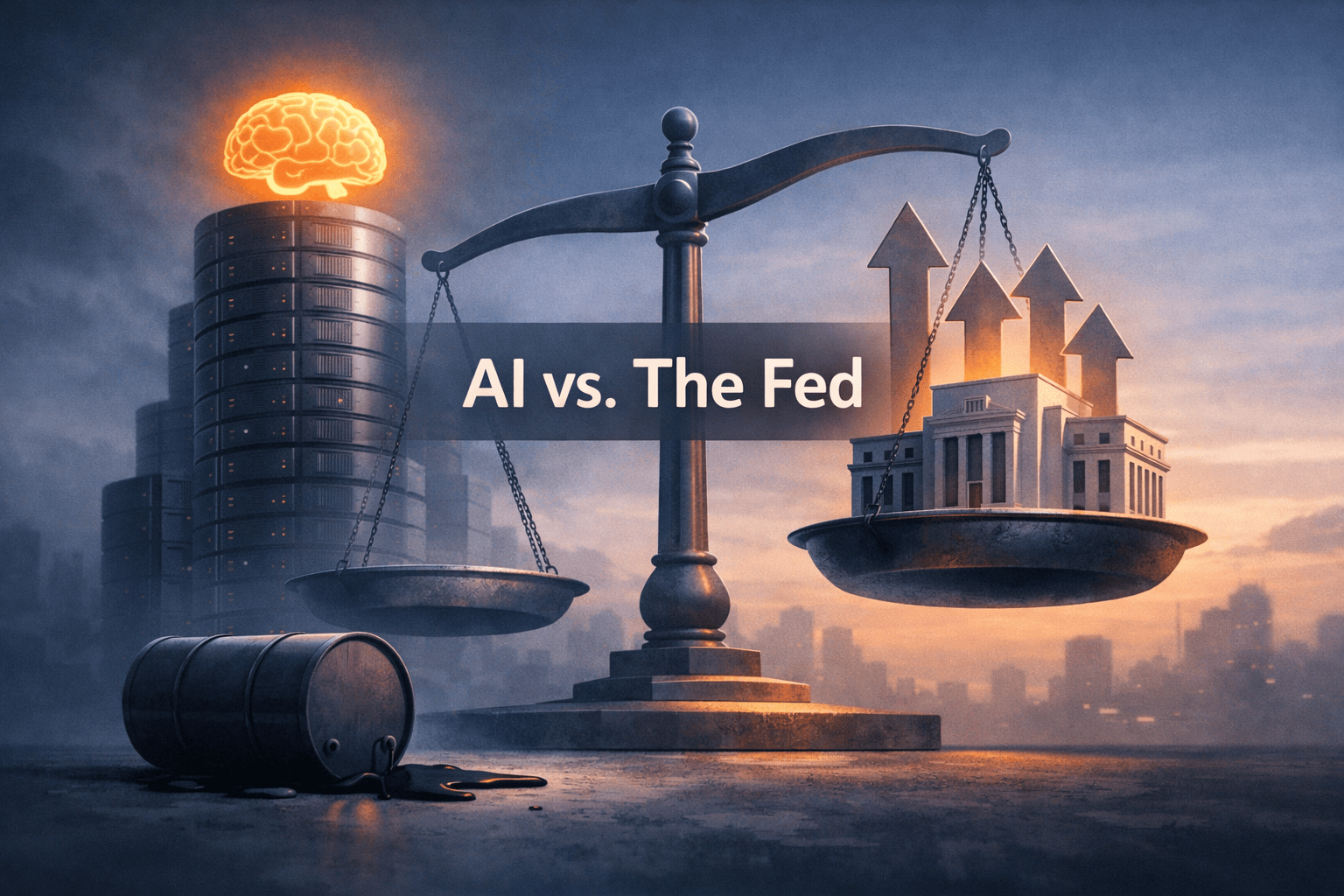
Two headline narratives set the market tone over the past 24 hours: first, Oracle reported a surprise 30% revenue gain, led by a 121% increase in cloud infrastructure revenue, and second, economists are placing meaningful odds on the Federal Reserve lifting rates up to three times in coming months. A third, shorter-term force — falling oil prices — helped equities rally into the weekend, a point highlighted by market commentator Jim Cramer.
Analysts note the tension in these headlines. On one hand, Oracle’s AI-driven top-line momentum suggests durable secular demand for cloud compute and AI services; on the other, a potentially more restrictive Fed and the company’s substantial $125 billion debt load inject caution into valuation and risk assessments. Meanwhile, the oil decline offers transient easing to inflation and corporate cost pressures, but it also shifts sectoral leadership and introduces mixed signals for growth versus cyclicals.
Markets were closed Saturday, Sep 12, and most participants are watching how positioning evolves when trading resumes on Monday, Sep 14.
Synthesis: Themes Across Analyses
- AI-led revenue acceleration vs leverage and valuation risk
- Oracle’s report — 30% overall revenue growth and a striking 121% rise in cloud infrastructure revenue — reinforces the narrative that AI workloads are driving outsized cloud demand. Several analyses point to this as a structural revenue inflection rather than a one-off licensing bump.
- However, Oracle’s $125 billion in debt forces a countervailing lens. Analysts emphasize that heavy leverage magnifies sensitivity to rising interest costs and could constrain capital allocation choices (M&A, buybacks, capex) if rates climb.
- Macro tightening is back on the table
- MarketWatch-cited economists now see a meaningful chance the Fed could raise rates three times. The prospect of additional tightening raises the discount rate applied to future cash flows — a headwind for long-duration growth names (software, cloud) even as those same names benefit from secular AI tailwinds.
- Commodities can provide short-term relief but not eliminate policy risk
- Cramer and market commentary attribute Friday’s rebound to falling oil. Lower energy prices can ease headline inflation pressure and provide near-term support for consumer discretionary sectors. But analysts repeatedly flag that such commodity moves are often temporary and can be outweighed by policy-driven rate moves.
Where Experts Agree and Where They Diverge
Agree:
- Oracle’s AI-related cloud demand is real and material to near-term revenue trajectories (consensus on magnitude: +30% revenue, +121% cloud infra).
- Rate policy is the dominant market risk heading into the next week; Fed decisions will likely have larger market impact than a single earnings print.
- Falling oil is a positive near-term input into inflation readings and equity sentiment.
Disagree / Open debate:
- Durability of Oracle’s growth vs margin pressure: some analysts treat the 121% cloud infrastructure gain as a sustainable structural shift, while others caution that margins and free cash flow must be examined closely given high leverage and potential for increased interest expense.
- How punitive a set of three rate hikes would be: some market economists view three hikes as manageable if inflation momentum cools, while others see that path leading to meaningful valuation compression across growth sectors.
- The net market impact of lower oil: while many view it as short-term bullish for consumer-facing stocks, energy-focused investors and regions dependent on commodity revenues see tangible downside.
Deeper Context on Major Moves
Oracle’s numbers
- The headline metrics — 30% revenue growth and 121% cloud infrastructure growth — are consistent with a larger AI cloud adoption cycle. For capital markets, that type of top-line acceleration often leads to re-rating events as investors price in longer-term Cash Flow growth.
- But Oracle’s $125 billion debt load is non-trivial. Rising short-term rates or a series of Fed hikes can increase interest expense, compress net income and free cash flow, and complicate any strategic uses of cash. Analysts advise watching leverage-adjusted metrics (net-debt-to-EBITDA), interest coverage ratios, and the maturity schedule for major debt tranches.
Fed hikes and valuation mechanics
- When the Fed raises rates, the market’s required discount rate increases. For companies with earnings concentrated further in the future — typical of high-growth tech names — the present value of expected cash flows falls more than for near-term cash generators. This is the core reason why growth stocks are more rate-sensitive.
- Fiscal and corporate leverage are second-order amplifiers: firms funding growth with debt are more exposed to rate moves than those funding with retained earnings or equity.
Oil’s dual role
- Falling oil eases input cost pressures for broad swathes of the economy, supporting margins and reducing headline inflation. That dynamic can create a short-term tailwind for cyclicals and retail discretionary names.
- A counterpoint is sector rotation: energy names tend to underperform during oil slumps, which can weigh on certain indices and pockets of earnings. Also, if oil weakness signals global demand slowing, that could be a leading indicator of broader economic softness rather than pure disinflation.
What to Monitor Next (Key Catalysts & Metrics)
- Fed communications and the dot plot: look for language on the terminal rate and the timing of further hikes.
- Oracle guidance and cash-flow metrics: billings, deferred revenue, free cash flow, capex, and the debt maturity schedule.
- Interest expense and margin trends across tech/cloud peers — if Oracle’s margins hold while peers show compression, that could signal genuine competitive advantage.
- Inflation prints (CPI, PCE) and oil inventories/futures: these will frame the Fed’s view and market sentiment.
- Positioning data: flows into ETFs (SPY, QQQ), leverage metrics in futures/options markets, and corporate credit spreads to gauge stress in debt markets.
Implications by Investor Type
Growth-oriented investors
- Data suggests that AI-cloud demand could sustain outsized revenue growth for select names. However, growth portfolios are most vulnerable to a higher-for-longer rate environment because their valuations assume prolonged rapid growth.
Value and income investors
- Rising rates tend to benefit financials and certain value sectors; however, energy’s reaction to oil moves can complicate outcomes. Durable income strategies should watch credit spreads and corporate leverage.
Fixed-income investors
- The prospect of multiple Fed hikes implies upward pressure on yields and potential mark-to-market losses for long-duration bonds (and ETFs such as TLT). Credit investors must monitor corporate interest coverage and refinancing risk, especially for highly leveraged issuers like Oracle.
Short-term traders and event-driven funds
- Elevated macro risk (Fed) combined with company-specific volatility (earnings/guidance) increases opportunity but also execution risk. Oil-driven moves can produce quick rotations; traders should manage gamma and liquidity risk around Fed windows.
Long-term, diversified investors
- Secular trends — AI adoption and cloud migration — remain meaningful, but the path to capture that growth likely includes episodic volatility tied to policy and macro data. Maintaining diversification, focusing on balance-sheet strength, and monitoring valuation discipline are commonly advised by analysts as risk-management priorities.
Strategic Considerations (Non-prescriptive)
- Rate sensitivity and duration management: investors may revisit portfolio duration exposure given the renewed possibility of multiple Fed hikes. For equity allocations, this often translates into reassessing the weight of long-duration names relative to cash-generating, lower-duration businesses.
- Balance-sheet quality as a defensive filter: heavy leverage increases susceptibility to rate moves. Analysts suggest prioritizing companies with manageable net-debt-to-EBITDA ratios and healthy interest-coverage metrics when policy risk is elevated.
- Monitor catalysts and maintain flexibility: the Fed meeting, Oracle’s upcoming guidance updates, and near-term inflation data represent clear inflection points. Having a framework for how positions will be adjusted around those events (without blanket prescriptions) is prudent.
- Short-term vs long-term horizons: falling oil can provide tactical relief, but it does not negate the potential structural impact of higher policy rates. Positioning that conflates a commodity-driven bounce with a durable macro easing can be exposed to reversal if the Fed tightens further.
Bottom Line
The past 24 hours juxtaposed a potent secular story — Oracle’s AI-driven revenue surge — with a reassertion of macro policy risk and a transient commodity-driven sentiment boost. Analysts underscore that these forces are not mutually exclusive: strong secular growth can coexist with meaningful interest-rate and leverage headwinds. For markets, the near-term balance will likely be decided by upcoming Fed communications, company-level disclosures (notably Oracle’s guidance and cash-flow details), and incoming inflation and commodity data. Investors and market participants should treat the headlines as inputs to a broader risk-and-reward assessment rather than as single-point signals.
Investment disclaimer: This analysis is for informational purposes only. It does not constitute a recommendation to buy, sell, or hold any security, nor is it personalized investment advice. Analysts note risks and opportunities; individuals should consult their own advisors before making investment decisions.
Sources
Use these insights — enter this week's contest.
Free practice contests — earn Alpha CoinsExplore More Content
Disclaimer: StockAlpha.ai content is for informational and educational purposes only. It is not personalized investment advice. Sentiment ratings and market analysis reflect data-driven observations, not buy, sell, or hold recommendations. Always consult a qualified financial advisor before making investment decisions. Past performance does not guarantee future results.