 Breaking Analysis
Listen to this Recap
8:51
Oil Rebounds, Treasuries Tweaked and Tech Faces Divergent Signals — Markets Brace for Inflation Clarity
Podcast • Loading audio...
Share this article
Spread the word on social media
Key Takeaways
- •Brent surpassing $100 and mixed inflation data have elevated the probability of renewed Fed tightening, amplifying rate and equity volatility.
- •The Treasury’s $6B long‑end buyback was insufficient to materially move markets, leaving duration risk intact.
- •Energy names (e.g., CHRD) are outperforming and offer cash‑flow income/differentiation, but broader inflationary effects can dent equity multiples.
- •Tech is bifurcated: big, structural AI investments (GOOGL €13B) coexist with near‑term ARR/monetization concerns (ADBE).
- •Mortgage behavior is shifting toward ARMs (8.5% share) as mortgage rates hover near 6.8%, altering MBS and housing exposures.
Today's top developments
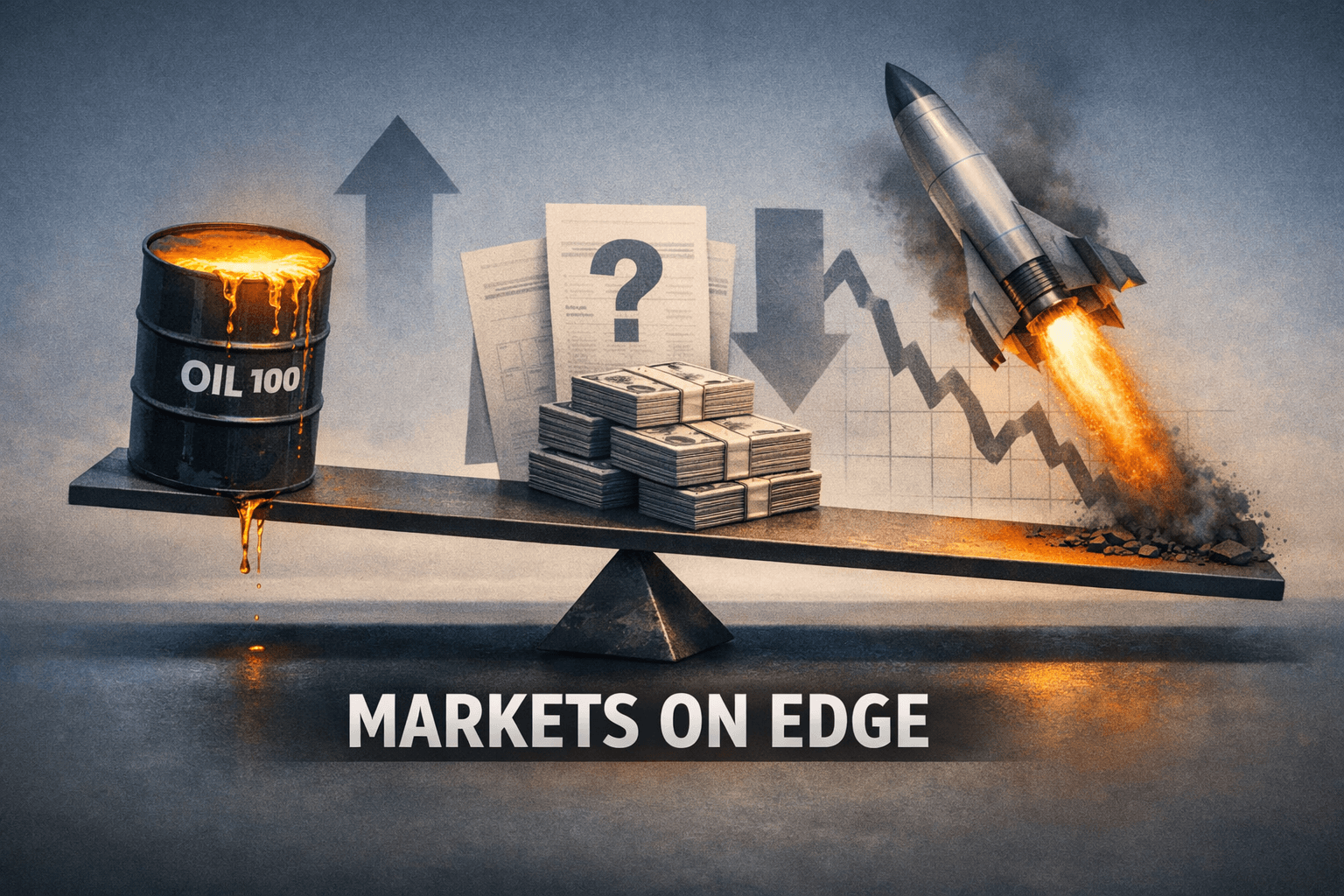
Three interlocking headlines dominated market action today: Brent crude retested the $100-per-barrel level, the U.S. Treasury announced a $6 billion buyback of longer-dated debt (roughly triple typical levels) and two imminent inflation reports are poised to decide the Fed’s next move. Those macro dynamics arrived against a backdrop of active sector and company news — from Chord Energy’s outsized six‑month run to Rocket Lab’s post‑earnings slide and Google’s headline €13 billion AI investment in Finland.
Analysts note that the convergence of commodity strength, tepid Treasury market response to official intervention, and ambiguous inflation signals is increasing cross‑asset volatility and raising the bar for conviction in both equity and fixed‑income positioning.
Synthesis of the day’s key themes
- Inflation and policy risk are center stage
- Two inflation releases due imminently will likely determine whether the Federal Reserve leans toward another hike or pauses, and recent mixed data points (referenced readings include 0.2%, 0.4%, 0.20% and 2% in various monthly/annual frames) have left the picture murky. Analysts emphasize that the market is reacting not just to headline levels but to momentum and breadth across CPI/PCE and wholesale indicators.
- With oil back above $100, commodity pass‑through to consumer prices is a renewed channel for upside inflation risk. Higher energy costs compress corporate margins and can lift CPI, complicating the Fed outlook.
- Energy is bifurcating risk and return
- Chord Energy (CHRD) exemplifies the sector dynamic: shares are trading at $149.09, up roughly 21% over six months and outperforming the S&P 500 by about 7.4% in that window. That relative strength is driving renewed interest in energy allocations for both income and tactical exposure.
- At the same time, commodity-driven inflation acts as a macro headwind for broader equity multiples. Market commentators point out the paradox: energy as a source of portfolio insulation (through cash flow and dividends) while simultaneously contributing to the macroshock that can depress cyclicals and growth names.
- Treasury market interventions face an uphill test
- The Treasury’s decision to buy back up to $6 billion in longer-dated securities — triple a normal program — was intended to tighten supply at the long end and alleviate upward pressure on yields. Market reaction was muted, which suggests expectations for a large structural tapering of long-end yields are limited.
- The muted response matters because duration‑sensitive assets (growth stocks, long-dated bonds) remain exposed if yields resume upside momentum, especially with oil and inflation printing higher.
- Corporate and idiosyncratic headlines are creating pockets of concentrated risk
- Google’s plan to invest roughly €13 billion in AI infrastructure in Finland is being parsed as a major long-term capex/strategic move with supply‑chain and cloud demand implications for chips, datacenter equipment and European cloud adoption.
- Adobe (ADBE) faces ARR (annual recurring revenue) scrutiny amid a freemium push; conversion and margin signals are critical near-term metrics that could influence tech allocations.
- Rocket Lab (RKLB) is down about 17.7% since its last earnings report and has experienced a broader ~40%+ pullback context, illustrating how growth/space names remain volatile around earnings and revision cycles.
- UnitedHealth (UNH) slid roughly 3% after reports TPG invested in Florida WellMed clinics; with management poised to reaffirm guidance imminently, the name highlights how private‑equity activity and clinic exposure feed into near‑term sentiment.
Where experts agree — and where they don’t
Consensus areas
- Analysts broadly agree that oil above $100 increases the probability of upside surprises to inflation and, therefore, raises the risk of tighter policy than markets have assumed.
- There is common recognition that the Treasury buyback is a tactical move unlikely, on its own, to materially change long‑term yield trends — particularly if inflation momentum persists.
- Several contributors concur that energy equities can serve as defensive/portfolio diversifiers in an inflationary regime due to cash flow and dividend characteristics.
Debates and frictions
- Effectiveness of the Treasury buyback: some strategists argue a $6 billion program targeted at the long end could materially affect technicals in a thin market; others counter that the scale is too small relative to gross issuance and global flows to shift real yields.
- Tech growth trajectory: Google’s massive AI commitment is read as long‑term positive for structural revenue pools (cloud, chips, networking), while contemporaneous concerns at Adobe over ARR and freemium conversion raise questions about the near‑term quality of software growth — creating a divergence in sentiment within the tech cohort.
- Energy vs. inflation tradeoff: proponents of owning energy argue sector cash flows justify allocations even with oil high; macro‑focused analysts warn that sustained oil strength could push the Fed to act, tightening financial conditions and potentially undercutting equity multiples across the board.
Deeper context on major moves
Oil and inflation transmission
- Brent crossing $100 is not only psychological; it implies higher transportation and production costs that feed into core and headline inflation. Historically, multi‑month oil rallies have presaged upward pressure on CPI components like gasoline and transportation services. Traders and strategists are watching how quickly those pass‑through effects show up in the upcoming prints.
Treasury buybacks and yield dynamics
- The Treasury’s $6 billion buyback triples routine volumes and is focused on longer maturities. Buybacks reduce net supply temporarily and can relieve technical stress in illiquid segments. However, with investor flows favoring shorter/intermediate maturities and with global demand for duration sensitive to rate expectations, the program may only blunt, not reverse, yield pressure.
Freemium ARR mechanics at Adobe
- ARR (annual recurring revenue) is a forward‑looking monetization metric that smooths subscription revenue into a single growth indicator. Freemium strategies lower the initial friction to adoption but hinge on conversion rates from free to paid tiers and upsell efficacy. Slower ARR growth or lower conversion can compress visibility and margins for enterprise SaaS names, even when headline user engagement is rising.
Corporate idiosyncrasies
- Chord Energy’s 21% six‑month gain reflects sectoral tailwinds and company‑specific results; for energy‑oriented portfolios, that relative performance changes risk budgeting and sector exposure decisions.
- Rocket Lab’s 17.7% post‑earnings decline (and larger multi‑month pullback) is a reminder of how event risk and estimate revisions can create fast de‑rating cycles for speculative growth names.
Implications for different investor types
Tactical traders
- Expect heightened intraday and cross‑market volatility as oil, inflation prints, and any Fed signaling intra‑day collide. Short‑term setups may arise in rate‑sensitive sectors and post‑earnings gap trades (e.g., RKLB, TBPH).
Long‑term allocators
- Structural themes (AI capex, energy cash flows) remain intact, but long‑term allocations should be viewed through the lens of potential policy tightening if incoming inflation surprises persist. Portfolio duration and sector tilt are the principal levers.
Income and dividend investors
- Energy stocks and select commodity‑sensitive names may look attractive as yield producers in an inflationary backdrop, but rising yields can pressure equity valuations — income seekers should weigh yield quality and cash‑flow sustainability.
Fixed‑income investors
- With the Treasury buyback underwhelming the market, duration risk remains material. The path of short‑term rates depends on those next two inflation reports; consider how exposures to long‑dated bond risk could be hedged if inflation surprises to the upside.
Mortgage and housing investors
- Mortgage demand is shifting toward adjustable‑rate products: ARM share climbed to 8.5% of applications (from 8% the prior week) while average mortgage rates hovered near 6.8%. That mix change affects lender credit profiles and MBS cash flows; housing‑sensitive equities could see differentiated impacts depending on geographic and product exposure.
Event‑driven and special‑situations players
- Private equity activity (e.g., TPG’s stake in WellMed clinics) and corporate capital allocation moves (Google’s €13B plan) provide catalysts for M&A or supply‑chain re‑rating trades; these names tend to be sensitive to news flow rather than macro alone.
Strategic considerations (not investment advice)
- Monitor the next two inflation prints closely: these will likely be the proximate drivers of Fed expectations and the direction of both rates and equity multiples.
- Watch oil price momentum and supply‑side narratives; sustained strength increases the odds of sticky inflation and forces reassessment of duration and risk premia.
- Treat the Treasury buyback as a tactical fix rather than a structural solution; plan for scenarios where long yields continue to drift higher despite technical interventions.
- In tech, separate long‑run structural bets (large AI infrastructure investments like Google’s) from near‑term execution and monetization risk (ARR and freemium conversion at companies like Adobe).
- For housing, track the share of ARMs and the evolution of mortgage rates around 6.8% — shifts here alter lender economics and MBS flow dynamics.
Investment disclaimer: This analysis is for informational purposes only. It does not constitute investment advice or a recommendation to buy, sell, or hold any security. Analysts note market conditions and data points to help inform decision‑making, but individual circumstances were not considered.
Quick reference data points (selected)
- Brent crude: retested $100/barrel
- Treasury buyback: up to $6 billion in longer‑dated debt (triple typical size)
- Chord Energy (CHRD): $149.09, ~21% total return over six months, +7.4% vs S&P 500
- Marriott (MAR): $329.77, flat over six months
- Theravance Bio (TBPH): +0.8% since earnings (~30 days)
- Rocket Lab (RKLB): down ~17.7% since last earnings; part of a 40%+ pullback context
- UnitedHealth (UNH): down ~3% after TPG WellMed disclosure
- Adobe (ADBE): ARR concerns; EPS signal reference ~$1.75 mentioned in previews
- Mortgage trends: ARM share 8.5% (up from 8%); average mortgage rates ~6.8%
- Google (GOOGL): €13 billion planned AI investment in Finland
- Optical Cable: GAAP EPS $0.21; revenue $24.3M
Closing
Today’s tape reinforced a simple but uncomfortable truth for markets: macro drivers (inflation, oil, Treasury technicals) can quickly re‑weight sector fortunes even as company‑level news creates concentrated winners and losers. With pivotal prints pending, investors should prioritize scenario planning, clarify duration sensitivity across portfolios, and distinguish between structural secular themes and near‑term execution risks.
Sources
+ 7 more sources
Use these insights — enter this week's contest.
Free practice contests — earn Alpha CoinsExplore More Content
Disclaimer: StockAlpha.ai content is for informational and educational purposes only. It is not personalized investment advice. Sentiment ratings and market analysis reflect data-driven observations, not buy, sell, or hold recommendations. Always consult a qualified financial advisor before making investment decisions. Past performance does not guarantee future results.