 Breaking Analysis
Listen to this Recap
10:36
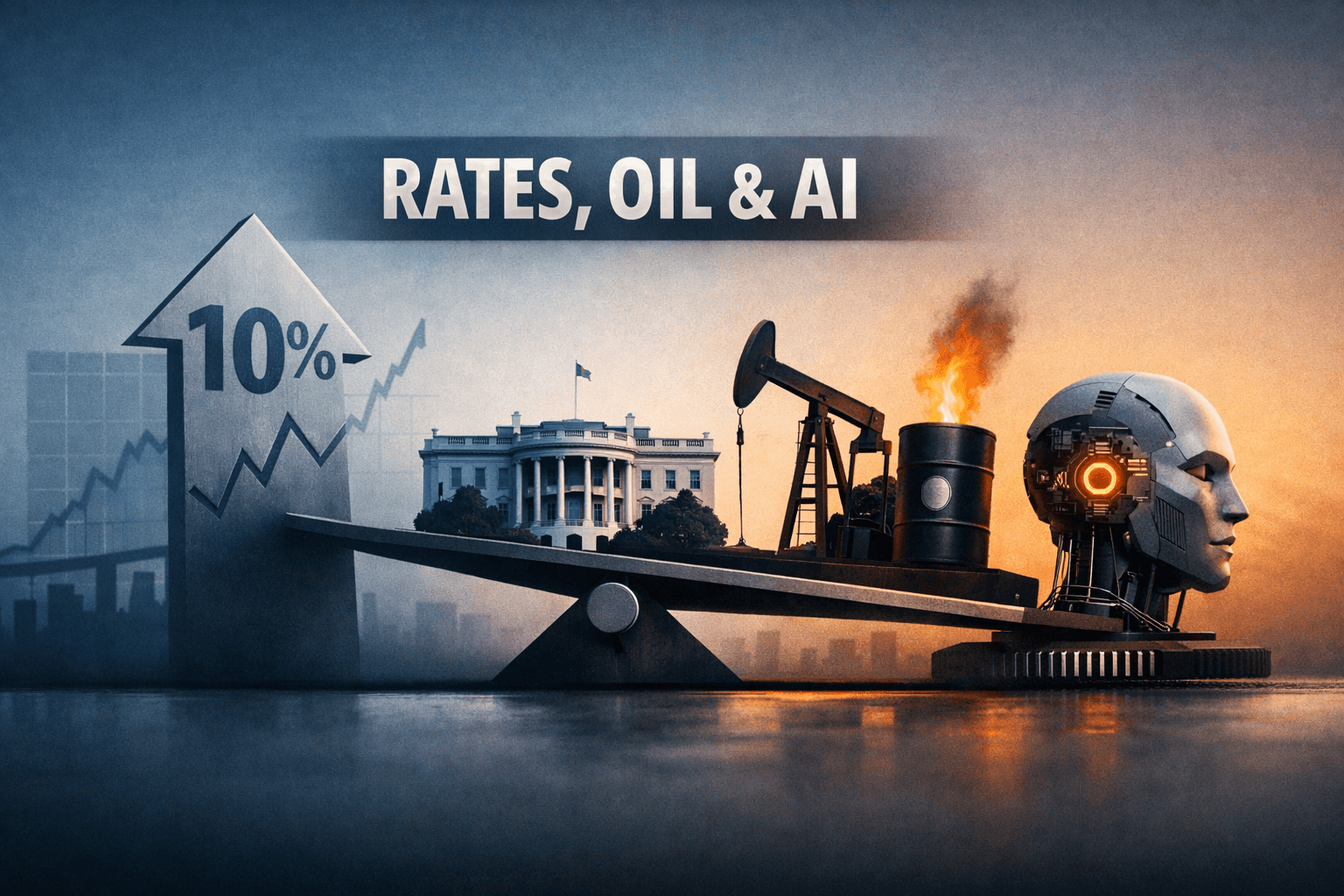
Rates, Oil and AI: Warsh’s Hawkish Turn Meets Energy Policy and a Tech Earnings Pulse
Podcast • Loading audio...
Share this article
Spread the word on social media
Key Takeaways
- •A hawkish Jackson Hole tone pushed the 10‑year past 4.75%, increasing rate sensitivity across equities and fixed income.
- •Oil near $90 and a White House meeting with refiners propelled energy names (e.g., CVX ~ $206.36, +2.3%) but practical capacity constraints limit immediate relief at the pump.
- •AI and semiconductors show durable demand (MD Sass highlights ADI, Micron momentum), yet corporate-level timing mismatches (Oracle's upfront AI build costs vs bookings) create near‑term margin and cash‑flow risk.
- •Market structure is amplifying dispersion—leveraged ETFs and options trades create bigger short‑term moves; volatility favors active risk management and careful position sizing.
Today's most significant market developments
Markets woke to a trio of cross‑cutting impulses on Aug. 31: a hawkish tilt from Fed‑adjacent commentary at Jackson Hole pushed long yields materially higher; crude oil rallied back toward roughly $90 a barrel while the White House convened U.S. refiners; and technology and AI narratives produced both bullish momentum and cautionary microstructure — record Oracle AI bookings came with upfront build costs and major semiconductor names (Analog Devices, Micron, Broadcom) sat front‑and‑center ahead of earnings and options plays.
Key datapoints from the day's coverage frame the backdrop: the 10‑year Treasury yield moved past 4.75%, intra‑report references cited yields in the 3.7%–4.1% range as market anchors, crude hovered near $90, Chevron (CVX) traded around $206.36 and jumped ~2.3% on energy headlines, and sector performance dispersion remained wide (Russell 1000 Value up ~16.3% in H1 2026 versus some cyclicals and industrials lagging, e.g., industrials down 3% over six months while the S&P 500 rose 12.3%).
Below I synthesize the key themes across the Alpha Breaking analyses, highlight disagreements and contextual drivers, and outline implications for different investor profiles.
Synthesis: four cross‑cutting themes
Policy and rates are the dominant macro shock. Analysts broadly attribute the move in long rates to a hawkish Jackson Hole tone—Kevin Warsh's remarks were cited repeatedly—and markets quickly repriced the odds of tighter policy. The 10‑year moving above 4.75% increases discount rates used across equity valuations and lifts the relative appeal of cash and short‑duration income, creating headwinds for long‑duration growth names.
Energy has reasserted itself as a market fulcrum. Oil near $90, active White House engagement with refiners and energy earnings momentum combined to produce tangible market moves: Chevron rose ~2.3% after news of a White House meeting aimed at near‑term measures to boost refining capacity. Analysts frame the policy outreach as potentially relevant to refining margins and gasoline prices (near ~$4 per gallon), but the mechanics and timing are uncertain.
AI and semiconductors are bifurcated between durable demand and near‑term cost dynamics. MD Sass and other commentators point to an AI‑driven recovery in semiconductor demand: Analog Devices was singled out for an earnings inflection (revenues cited at $3.16B and $3.11B), Micron benefitted from earnings upgrades and momentum, and Broadcom sits as an options‑trading focal point heading into EPS. At the same time, Oracle's record AI bookings are flagged as forward demand that is generating upfront build costs and margin/cash‑flow pressure until revenue recognition catches up.
Market structure and sentiment are amplifying moves. Leveraged ETFs posted notable gains and losses last week—driven more by idiosyncratic earnings than a broad market move—and the return profile of August winners was concentrated (MarketWatch flagged a top monthly performer up ~90%, Moderna). Meanwhile, contrarian narratives around bitcoin surface amid weak sentiment, arguing that extreme pessimism can signal opportunity but also heightened risk.
Where analysts converge — and where they diverge
Agreement
- Most sources agree that Warsh's Jackson Hole tone materially changed the short‑term policy narrative, lifting hike odds for September and increasing rate‑sensitivity across asset classes.
- Energy's renewed prominence is broadly acknowledged: higher oil prices plus government pressure on refiners is a live story that can affect refining margins and gasoline prices.
- The semiconductor/AI complex is central to market positioning: several analyses cite durable AI demand that underpins multiple names, even as recognition and margin timing differs across companies.
Disagreement and debate
- The efficacy and timeline of the White House's push to boost refining capacity are debated. Some coverage treats the meeting with refiners as potentially market‑moving (CVX price reaction), while the practical constraints on adding refining throughput in the near term suggest limited immediate supply relief. Analysts differ on how quickly refining margins and pump prices could respond.
- Oracle’s signal quality: record AI bookings are widely read as a strong demand indicator, but analysts disagree about near‑term implications. One view treats bookings as forward revenue that justifies exposure; another emphasizes the upfront cost hit (margins and cash flow) while revenue recognition lags, prompting a more cautious near‑term stance.
- Crypto positioning features a classic split: contrarian headline coverage argues for buying when bitcoin is out of favor, but most market participants still emphasize the extreme volatility and the need for strict risk controls.
Deeper context on the day's major moves
Why a move in the 10‑year matters Longer yields feed directly into equity valuations via the discount rate: higher yields raise the required return, reducing the present value of future cash flows — a particularly acute effect for high multiple growth names whose value depends on distant earnings. The move above 4.75% is not just a headline; it compresses price/earnings outcomes, increases financing costs for corporates and consumers, and tightens liquidity conditions for levered strategies.
The oil/refining axis: policy vs physical constraints A White House meeting with refiners signals political urgency to tamp gasoline inflation, but refiners operate with constrained spare capacity in many regions. Adding throughput often requires maintenance windows, regulatory approvals or shifts in crude slates—none of which are instantaneous. The market reaction (Chevron +2.3% on the headline) reflects both the perceived potential for policy support and the sensitivity of integrated oil names to refining spreads. If crude remains near $90, the interplay between refining margins and fuel prices will be central to energy earnings durability.
AI bookings vs cash flow timing Oracle's record AI bookings are a leading indicator of enterprise demand for cloud AI services. However, bookings are contractual commitments or pipeline measures that do not map one‑for‑one into immediate GAAP revenue; supply‑side costs — notably capital and operating expenditures to scale AI infrastructure — are often incurred up front. Analysts highlight metrics (various percentages cited in coverage) as checkpoints: bookings strength suggests multi‑period upside, but near‑term margin and cash‑flow compression can press risk premia and valuation multiples until the revenue catch‑up occurs.
Earnings season mechanics and options‑driven setups Broadcom's earnings week spotlight and Mike Khouw's options trade idea exemplify how derivatives markets can create concentrated trading opportunities around events. Options strategies can monetize elevated implied volatility but require active risk management; the analyses note this is a trade‑oriented view, not a fundamental upgrade, signaling the need for position sizing discipline.
Implications for different investor types
Income investors and bond holders
- Rising long yields expand reinvestment opportunities but create principal risk for long‑duration holders. Analysts flag that a hawkish Fed tone increases the odds of further yield volatility; bond investors should reassess duration exposure and monitor real yields versus inflation expectations.
Growth investors
- Higher discount rates weigh on long‑duration growth stocks and stretch the case for elevated multiples. Expect greater earnings scrutiny and heightened sensitivity to guidance slips. AI demand remains supportive for select names, but the margin timing mismatch in cloud/AI suppliers (Oracle example) introduces execution risk.
Value and cyclical investors
- Energy and select value names have shown strength (Russell 1000 Value +16.3% in H1 2026), and policy attention on refiners can amplify sector narratives. Yet commodity price durability (oil ~ $90) and refining constraints are crucial to monitor for earnings persistence.
Active traders and options strategies
- Earnings events (Broadcom, other semiconductors) and elevated implied volatility create transient trading setups. Leveraged ETFs and single‑stock derivatives can amplify both gains and losses; the recent week showed how earnings and stock‑specific weakness (e.g., AXT, D‑Wave) bolster inverse plays as well.
Risk‑conscious and defensive investors
- Fund letters highlighting utilities and durable cash‑flow names (Hennessy spotlighting Dominion Energy) suggest defensive, income‑oriented positioning may be attractive for those prioritizing cash returns amid rate uncertainty. Dominion was singled out for portfolio‑level returns; the Hennessy note cites 23.0% pre‑tax return on invested capital for portfolio businesses versus 16.1% for a referenced comparator.
Crypto investors
- Contrarian arguments for bitcoin rest on sentiment extremes, but analysts repeatedly warn that volatility necessitates strict sizing and guardrails. This is a timing and risk‑management play, not a one‑size‑fits‑all thesis.
Strategic considerations and next steps for portfolio construction
- Treat the Fed narrative as the primary macro risk: monitor incoming data and Fed communications closely, as they will continue to drive yield volatility and reprice risk premia.
- Watch oil and refining developments for both inflation and sector earnings implications. A policy push can change sentiment quickly, but real supply adjustments are often slower.
- Differentiate between demand signals (bookings) and realized revenue/margin timing, especially in AI/cloud exposures. For companies reporting strong bookings, examine cash‑flow timing and capex cadence to understand near‑term valuation sensitivity.
- Expect elevated dispersion: earnings beats and misses will likely produce stock‑specific moves, creating opportunities for active managers and traders but increasing tracking error for passive allocations.
- Emphasize position sizing, stop/loss discipline and duration management across fixed income holdings given the changed rate backdrop.
Closing note and disclaimer
Analysts across today's coverage agree on one practical point: volatility has risen, and that changes how investors should think about timing, sizing and risk controls. This summary is intended to synthesize multiple market reads and provide context — it does not constitute investment advice. Analysts note momentum indicators, booking‑to‑revenue timing, and policy signals as the key inputs to watch in the coming days.
Investment disclaimer: This analysis is for informational purposes only and does not recommend buying, selling or holding any securities. Investors should consult their own advisors to align decisions with individual circumstances and risk tolerances.
Sources
+ 7 more sources
Use these insights — enter this week's contest.
Free practice contests — earn Alpha CoinsExplore More Content
Disclaimer: StockAlpha.ai content is for informational and educational purposes only. It is not personalized investment advice. Sentiment ratings and market analysis reflect data-driven observations, not buy, sell, or hold recommendations. Always consult a qualified financial advisor before making investment decisions. Past performance does not guarantee future results.