 Breaking Analysis
Listen to this Recap
9:52
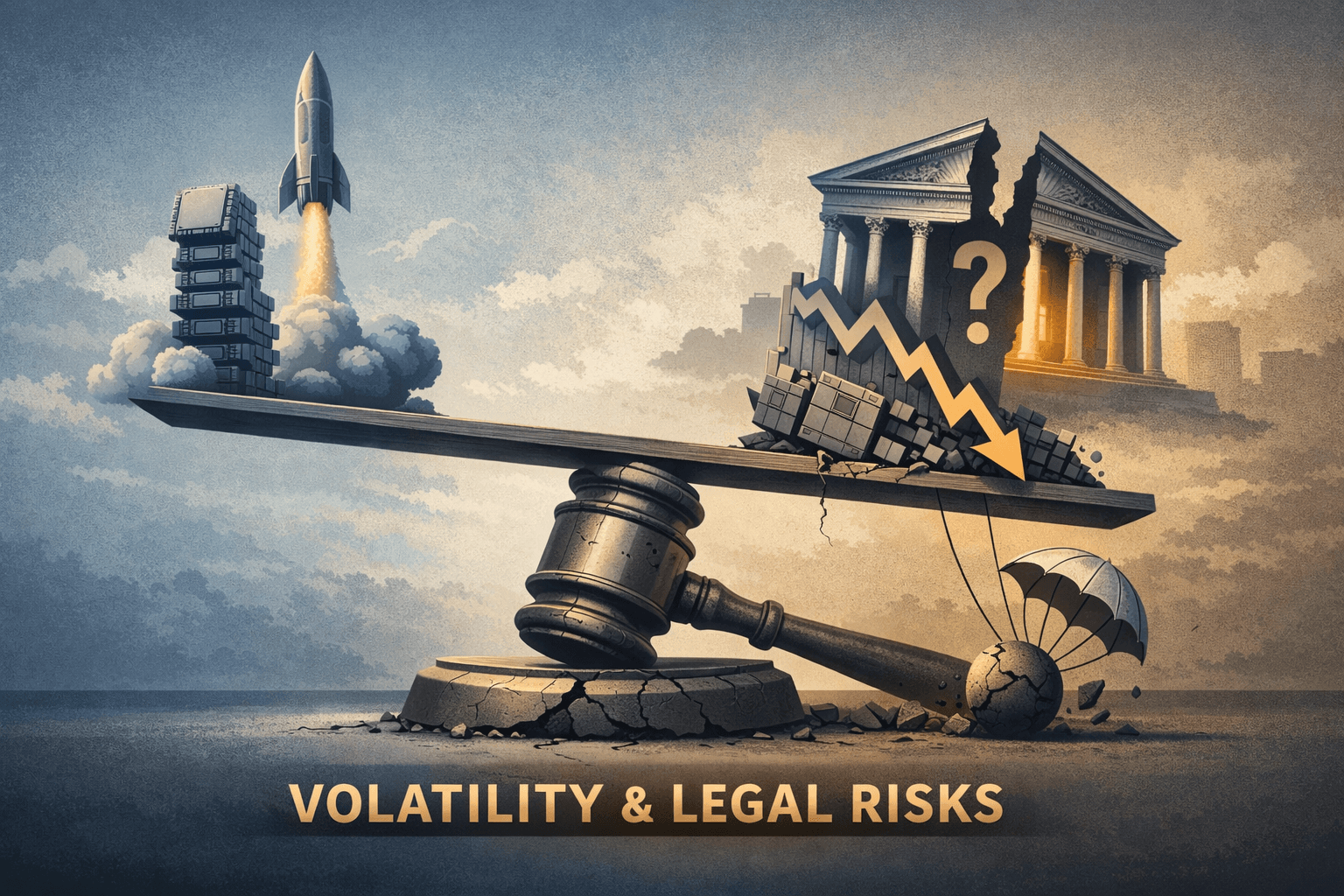
Volatility and Legal Risk Take Center Stage: NVDA Spike, Marvell Guidance Fumble, WETO Freefall, and a Court Split on Prediction Markets
Podcast • Loading audio...
Share this article
Spread the word on social media
Key Takeaways
- •NVDA surged 8.74% to $227.98 on heavy volume, signaling strong short-term momentum but raising weekend gap risk.
- •Marvell slid ~10% despite a Q2 beat after fiscal 2028 guidance and partner-timing uncertainty (notably around Google) weakened near-term visibility.
- •WETO plunged 50.26% to $5.72 on 1.53M shares, highlighting liquidity-driven outsized moves in smaller names.
- •A federal circuit split on prediction markets (9th Circuit vs. 3rd Circuit) increases legal/regulatory tail risk and the likelihood of Supreme Court review.
- •Two banks paused sales of Delaware Life products amid probes, emphasizing distribution and regulatory exposure for insurers and annuity providers.
Today's headline moves — what stood out
Three price shocks and one legal ruling dominated the newsflow as US markets wrapped the week. Semiconductor heavyweight NVIDIA (NVDA) produced a sharp upside session, jumping 8.74% to $227.98 on heavy volume. By contrast, Marvell Technology (MRVL) slid roughly 10% after fiscal 2028 guidance that left investors questioning near-term monetization and partner timing. Small-cap WETO posted a dramatic one-day collapse, falling 50.26% to $5.72 on 1.53 million shares traded. Off the tape, a federal appeals split — the 9th Circuit ruled sports-related event contracts are not swaps, directly contradicting a 3rd Circuit decision from April — catapulted legal risk into the spotlight for prediction-market platforms. Separately, two regional banks paused sales of Delaware Life insurance products amid probes, underscoring distribution and regulatory exposure in the annuity market.
These items are not isolated: collectively they emphasize how concentrated news events, forward guidance, and judicial outcomes can create fast, asymmetric price moves across market caps and sectors.
Key themes running through multiple analyses
- Event-driven volatility and liquidity sensitivity
- NVDA’s 8.74% gain on heavy volume illustrates how momentum can feed on itself in large-cap, high-liquidity names; yet the report explicitly flagged the risk that the move could be a breakout or a short-lived intraday spike. Heavy volume raises the odds that the move reflects new information or a conviction rotation, but it also increases gap risk over a long weekend.
- WETO’s 50.26% plunge on outsized turnover is the mirror image for a smaller, less liquid name: large intraday flows can meaningfully alter price discovery, and concentrated selling can force rapid repricing.
- Guidance sensitivity in growth/semiconductor names
- Marvell’s ~10% drop despite a Q2 beat highlights a common market dynamic: beats on reported metrics can be overshadowed by conservative forward guidance or partner-timing uncertainty. When a company’s revenue path depends on large OEM/cloud partnerships (the analysis referenced uncertainty around Google timing), markets often price in the risk that near-term monetization will be delayed.
- For portfolio managers this means headline EPS or revenue beats are necessary but not sufficient; guidance cadence and the visibility of future contract timing can dominate sentiment.
- Legal and regulatory risk as binary catalysts
- The 9th Circuit’s ruling against classifying sports-event contracts as swaps — which conflicts with the 3rd Circuit — creates a jurisdictional split that materially raises the probability of Supreme Court review. Legal outcomes like this are binary: a ruling for industry participants can clear a major regulatory overhang, whereas an adverse ruling can constrict business models and force de-risking.
- The pause in sales of Delaware Life products by two banks amid probes is a more mundane, but consequential, regulatory/distribution event. Distribution channels are central to annuity inflows; pauses can cut top-line momentum and increase compliance costs while investigations proceed.
- Divergence between market tiers and investor reactions
- Large, liquid leaders (NVDA) can move decisively on sentiment flows and macro narratives (AI momentum), while mid-cap or niche names (Marvell, WETO, Delaware Life exposure) react disproportionately to idiosyncratic guidance or distribution news. This divergence increases correlation risk for concentrated growth portfolios and raises the premium on active risk management.
Where analysts and markets disagree
NVDA: Several analyses frame the move as bullish momentum; others caution it could be a transient spike. The disagreement centers on horizon and interpretation of heavy volume. Momentum signals indicate conviction, but cautionary voices point to long-weekend gap risk and the historical tendency for rapid mean reversion after outsized one-day gains.
Prediction markets: The legal split creates directly opposing expectations about regulatory classification. One circuit treats these contracts as outside the swap regime, while another treats them as swaps. Analysts differ on timing and likelihood of Supreme Court review and on near-term exposure for public companies with prediction-market ties.
Marvell: The company beat Q2 but guidance caused a selloff — some analysts prioritize the beat as evidence of underlying demand, while others emphasize that guidance leaves a material risk premium. The disagreement is about how soon partner-timing issues (e.g., Google) will resolve and how much that timing should be priced into risk-adjusted valuations today.
Deeper context on the major moves
NVDA (8.74% to $227.98):
- Why it matters: NVIDIA remains the bellwether for AI hardware and related semiconductors. A large-volume rally can attract momentum flows, ETF rebalances, and option-market positioning — each can amplify moves.
- What to watch: follow-through volume in the next full session, implied volatility in options markets (to gauge if buyers are positioning for further upside), and any company-level news (guidance, product cadence) that could justify a structural re-rating.
Marvell (~10% decline):
- Why it matters: guidance is forward-looking and incorporates management’s view on partner rollouts, supply chain timing, and contract monetization. When a company signals slower monetization than the quarter’s results implied, the market re-prices expected growth.
- Concept explained: forward guidance is an explicit forecast from management about expected future revenue/profit; it carries outsized weight because it shapes models used by sell-side and buy-side analysts.
- What to watch: upcoming disclosures on partner timelines (e.g., Google), cadence in backlog/visibility metrics, and any revisions to fiscal 2028 targets.
WETO (-50.26% to $5.72 on 1.53M shares):
- Why it matters: a one-day 50% move is a volatility event that can trigger margin calls, forced selling, or block-trade re-pricing. For holders, liquidity and intraday price discovery are now central risks.
- What to watch: regulatory filings, company press releases, short interest and borrow availability, and whether the volume spike reflects news-driven selling or technical dynamics (e.g., concentrated block sale).
Prediction markets legal split (9th Circuit ruling):
- Why it matters: the classification of sports-event contracts as swaps or non-swaps determines which federal rules apply, who can offer such contracts, and which counterparties can participate. A circuit split raises the chance of a definitive Supreme Court resolution, which could take months to years.
- Concept explained: a circuit split occurs when two federal appeals courts issue conflicting rulings on the same legal question; historically, this increases the likelihood that the Supreme Court will take the case to resolve the inconsistency.
- What to watch: appeals filings, certiorari petitions, and interim regulatory guidance or enforcement actions that may reshape market participants’ risk calculations.
Delaware Life distribution pause:
- Why it matters: third-party distribution (regional banks, broker-dealers) accounts for a sizable share of annuity sales. A pause in these channels compresses new business and can materially affect near-term revenue recognition.
- What to watch: the scope of the pause (how many banks), statements from regulators, and any disclosures from Delaware Life’s holding company or auditors. The holding company’s public claim that "there has been no fraud" provides some reassurance but does not eliminate the risk of prolonged distribution disruption.
Implications by investor type
Active traders and options players: NVDA’s heavy-volume spike and WETO’s collapse create short-term trading opportunities but also higher realized and implied volatility. Options spreads, gamma exposure, and skew should be monitored. Risk of weekend news gaps is elevated.
Growth-oriented long-term investors: Marvell’s guidance-driven pullback is a reminder that long-term thesis timing matters. Analysts note that if partner monetization is merely delayed, the long-term narrative may remain intact; if guidance signals structural slowdown, valuations warrant reassessment.
Income and insurance investors: the Delaware Life distribution pause is directly relevant — distribution channels influence product sales and persistency. These investors should track regulatory developments and bank statements for scope and duration.
Institutional managers and allocators: the legal split on prediction markets and the correlated policy risk highlight the need to stress-test portfolios for regulatory/binary legal outcomes. Positions in fintech, exchanges, and platforms with exposure to event contracts should be re-evaluated for downside tail risk.
Strategic considerations going into next week
Treat this as an elevated event-risk environment. When large-cap leaders and small-cap names both show outsized intraday moves, cross-asset correlations can change quickly.
Monitor liquidity and volume, not just price. Heavy-volume moves (NVDA) carry different implications than heavy moves in low-liquidity names (WETO). Volume confirms conviction; in thin markets, price moves can overstate conviction.
Watch guidance language and partner timing closely. As Marvell demonstrates, guidance and the clarity of partner rollouts can swing sentiment more than a single quarter’s results.
Track legal filings and regulatory statements. The circuit split on prediction markets and the distribution pause for Delaware Life are binary events with long timelines; investors should calendar potential milestones (appeals, cert petitions, regulatory reviews).
Reassess position sizing and hedging rather than reflexively reallocating. Analysts note that volatility spikes are frequently followed by mean reversion; prudent risk management reduces the chance of forced decisions after price shocks.
Conclusion
Friday’s tape was a concentrated lesson in how news — earnings guidance, trading flows, distribution pauses, and judicial rulings — can reshuffle risk across market tiers quickly. NVDA’s heavy-volume pop, Marvell’s guidance-led selloff, WETO’s dramatic decline, and the 9th Circuit’s legal ruling together underscore that volatility is not just macro-driven today; it is also highly idiosyncratic and legal-regulatory in nature. Investors and managers should prioritize clarity on forward guidance and partner timing, monitor volume and liquidity, and track legal/regulatory milestones that can create binary outcomes. The coming days’ follow-through (or lack of it) and any weekend headlines will determine whether these moves are the start of new trends or sharp, short-lived repricings.
Investment disclaimer: This analysis presents market observations and metrics for informational purposes only. It does not constitute buy, sell, or hold recommendations or personalized investment advice.
Sources
Use these insights — enter this week's contest.
Free practice contests — earn Alpha CoinsExplore More Content
Disclaimer: StockAlpha.ai content is for informational and educational purposes only. It is not personalized investment advice. Sentiment ratings and market analysis reflect data-driven observations, not buy, sell, or hold recommendations. Always consult a qualified financial advisor before making investment decisions. Past performance does not guarantee future results.