 Breaking Analysis
Listen to this Recap
AI-led rotation meets macro relief — CPI eases as neocloud winners surge, but market reactions expose growing expectation gaps
Podcast • Loading audio...
Share this article
Spread the word on social media
Key Takeaways
- •AI/neocloud earnings and demand signals are driving leadership in cloud and hardware, but momentum is concentrated and expectation-sensitive.
- •July’s CPI (0.1% month; annual ~3.4–3.5%) contained a disinflation signal that is supportive for rate-sensitive growth, yet the path remains fragile.
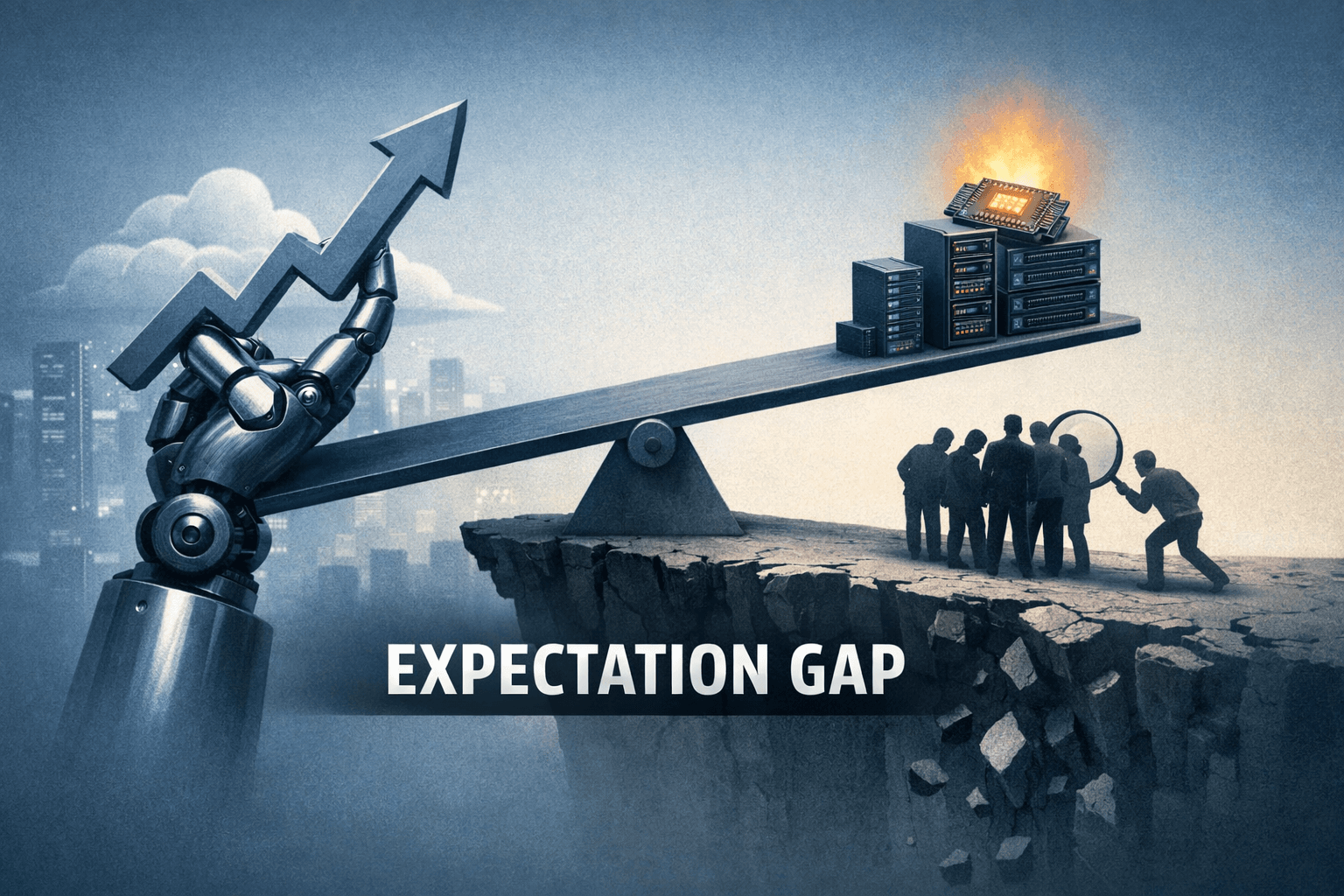
- •Several companies that beat estimates (Cisco, Cerebras) fell sharply, underscoring how market expectations, guidance and margin detail can outweigh headline beats.
- •Institutional disclosures and private-market positioning (Baron, Norway sovereign fund, SpaceX) are amplifying narrative shifts and changing valuation dynamics.
Top-line: what moved markets today
Equity futures climbed into the July CPI release as U.S. headline inflation showed further cooling (CPI +0.1% month-over-month; annual near 3.4–3.5%), a development markets parsed as easing rate pressure for rate-sensitive growth names. That macro backdrop coincided with an AI/neocloud mini-cycle: strong earnings from several neocloud and AI-supply vendors (Nebius, CoreWeave signals, Lumentum, Super Micro, and two unnamed neoclouds cited alongside Oracle’s move) sent a wave of rerating through enterprise cloud and AI infrastructure equities.
Yet the session also highlighted a recurring market paradox: a number of companies that beat top-line and EPS expectations — notably Cisco and Cerebras — saw their shares move sharply lower. Meanwhile, institutional activity and private-market signals added another layer of complexity: Baron Opportunity Fund’s Q2 letter both trimmed Datadog (profit-taking after outsized gains) and signaled conviction in Cerebras; Norway’s sovereign wealth fund posted a record $184 billion profit and disclosed a SpaceX stake, amplifying private-market attention on SpaceX’s emerging AI narrative.
Before we unpack themes and implications, a mandatory note: this piece synthesizes multiple market analyses and is for informational purposes only. It does not recommend buying, selling, or holding any security, nor provide personalized investment advice.
Cross-cutting themes from today’s analyses
AI and neocloud earnings are driving leadership but concentrating risk. Earnings and demand signals from Nebius, CoreWeave and others produced outsized percentage moves in growth metrics (examples cited include 1,070% and 242% figure calls in coverage), while hardware suppliers such as Super Micro and Lumentum outperformed after beats. That momentum extends to enterprise beneficiaries like Oracle, which rallied after two neoclouds reported blowout results — a classic positive feedback loop where vendor and consumer results reinforce a sector narrative.
Disinflationary dynamics provide tactical tailwinds for growth. July’s CPI +0.1% monthly print and annual readings around 3.4–3.5% were interpreted as continued easing, supporting the view that the path of interest rates may be less aggressive than feared. For growth stocks, lower expected terminal rates raise discounted present values of future earnings and can lift multiples — one reason some AI and cloud names rallied into the print.
Market expectations have risen — and the bar is getting dangerous. The same day that Cisco and Cerebras produced beats, both stocks moved sharply lower (Cerebras down ~14%). The contrast between results and price action underlines how forward guidance, margin nuance, unit economics, or simply elevated expectations can turn a beat into a disappointment. Analysts and traders increasingly price in not just consensus numbers but “beat-plus” outcomes from high-growth names.
Institutional flows and private-market positioning matter. Baron Capital’s Q2 letter was notable: the Baron Opportunity Fund rose 27.07% in Q2 and disclosed a $194-per-share reference for Cerebras while trimming Datadog. Norway’s sovereign wealth fund reported record profits ($184B) and disclosed a SpaceX stake — public acknowledgment of private exposure that can change how market participants value companies without public tickers. These institutional actions interact with retail flows and informational access risks highlighted in separate coverage.
Where market views diverge
Growth narrative vs. valuation nerves: Analysts praising neocloud demand (Nebius, CoreWeave) and AI-capable hardware (Cerebras, Super Micro) sit opposite traders who sold on the news around Cerebras and Cisco. The split indicates disagreement over whether today’s demand signals justify current multiples or merely represent short-term cyclical strength.
Macro interpretation: some market participants frame July’s CPI as a structural step toward disinflation that supports multiple expansion for growth stocks; others caution that the pace of easing is modest (0.1% monthly) and pockets of persistent inflation — or a more hawkish Fed reaction to services inflation — could reassert pressure on rates and multiples.
Retail access vs. institutional advantage: coverage flagged a risk that small investors may face reduced access to data and tools, thereby shrinking their market influence. That runs counter to recent months in which retail flows materially impacted certain names; if access narrows, the balance of supply/demand pressures on some momentum stocks could shift toward institutions.
Deeper context on the largest moves
CPI and what it means for rates-sensitive equities
- Why it matters: CPI is a proximate driver of interest-rate expectations. A slower pace of inflation lowers expected terminal rates and shortens the tightening cycle, which inflates present values for long-duration cash flows (typical in growth/AI stories).
- Today’s numbers: CPI +0.1% month-over-month; annual readings ~3.4–3.5%. Market reaction: equity futures ticked higher and sector rotation into semiconductors, AI suppliers and cloud infrastructure gathered pace.
Why beats became selloffs: Cisco and Cerebras
- The mechanics: a headline beat only addresses one dimension of company performance. Markets immediately parse guidance, bookings, gross-margin trajectory, backlog, geographic mix, and channel health. If management commentary understates future growth or if expenses are rising faster than revenue, the market may treat a beat as “less than priced in.”
- Cerebras specifics: shares plunged ~14% despite a revenue beat and raised full-year guidance; yet investors focused on other signals (unit economics or margin commentary). Notably, Baron Capital highlighted Cerebras’ advantage in low-latency inference workloads and listed the company at $194 per share in its letter — illustrating divergent private/institutional interpretations of the same facts.
Neocloud winners and the AI supply chain
- What “neocloud” means here: a group of cloud providers and infrastructure vendors optimized for AI workloads — often with custom hardware, dense GPU/accelerator footprints, and pricing models tailored to AI inference/training.
- Market action: upbeat results from Nebius and CoreWeave-like demand signals lifted suppliers (Lumentum, Super Micro) and enterprise beneficiaries (Oracle) as investors re-assess TAMs for AI compute, storage, and software.
SpaceX, Grok and private-market re-rating
- Institutional disclosure matters: Norway’s sovereign fund reported a record $184B profit and publicly acknowledged a SpaceX stake — an action that brings private-market moves into public-market valuation conversations. Concurrent coverage highlighted SpaceX’s push to scale AI revenue via Grok; while SpaceX has no public ticker, the narrative alone can lift valuations in funds and related public suppliers.
Apple and the memory bill: margin risk amid strong demand
- The framing: analysis argues Apple’s larger near-term risk is component-cost inflation (memory bill) rather than demand. Even with robust unit sales, rising input costs compress gross margins and can pressure EPS and multiples if the company cannot offset costs or passthrough to customers.
- Data point: shares were referenced near $263.66 in coverage; the core point is a margin-squeeze risk that could undercut large-cap hardware valuation assumptions.
Implications for different investor types
Growth / AI-focused investors: data suggests continued upside potential from neocloud and AI-hardware exposures, but the path will be choppier. Today’s divergence between operational beats and price action argues for rigorous scenario analysis around guidance sensitivity, margin durability and expectation creep.
Value / income investors: cooler CPI may reduce near-term recession risk and lift cyclicals, but selectivity is key — some companies with structural margin pressures (e.g., rising component costs) warrant closer scrutiny.
Active managers and institutional allocators: the Norway fund disclosure and Baron letters underscore how private- and active-manager positioning influence both public-market sentiment and relative performance. Large funds are both creating and unwinding concentration; watch position-change disclosures for clues on flow-driven leadership.
Retail traders: heightened momentum in AI names offers trading opportunities but also raises execution and information risks. Coverage highlighting potential limits on retail data/tools is a reminder to manage execution risk and position sizing carefully.
Strategic considerations and next catalysts to watch
Earnings cadence in AI and neocloud names. Additional beats or misses from CoreWeave peers, Super Micro follow-through on margins, and commentary on enterprise adoption will determine whether today’s rotation sustains.
Guidance vs. headline beats. Watch the tone of management calls and the evolution of forward guidance; beats that coincide with cautious guidance have triggered outsized price declines today.
Macro prints and Fed signaling. July CPI’s cooling is a supportive backdrop for growth; subsequent CPI or PCE data and Fed commentary remain high-impact for rate-sensitive multiples.
Institutional disclosures and private-market signals. Fund letters, sovereign-fund disclosures and private stakes (e.g., SpaceX) will continue to shape investor expectations around long-duration, high-growth private assets and their spillover effects into public markets.
Cost inputs for hardware makers and device OEMs. Memory and other component trajectories will directly affect margins for large-cap hardware names; watch supplier pricing cycles and inventories.
Bottom line
Today’s session illustrated two coexisting market truths: a rejuvenated AI/neocloud narrative buoyed by demand signals and easier inflation data, and a market increasingly intolerant of anything short of superlative forward guidance. Momentum can create fast leadership changes — but it also raises the risk that even fundamentally positive prints are punished when expectations are elevated. Investors should treat current moves as part tactical (short-term rotation and event-driven noise) and part structural (reassessment of AI TAMs and private-market spillovers), applying scenario-based valuation work and monitoring guidance tone, macro updates, and institutional flow clues.
Investment disclaimer: analysts note this synthesis is informational only. It is not a recommendation to buy, sell, or hold any security and does not constitute personalized investment advice. Data and quotes are drawn from the cited market analyses of Aug 12, 2026.
Sources
+ 13 more sources
Use these insights — enter this week's contest.
Free practice contests — earn Alpha CoinsExplore More Content
Disclaimer: StockAlpha.ai content is for informational and educational purposes only. It is not personalized investment advice. Sentiment ratings and market analysis reflect data-driven observations, not buy, sell, or hold recommendations. Always consult a qualified financial advisor before making investment decisions. Past performance does not guarantee future results.