 Breaking Analysis
Listen to this Recap
10:03
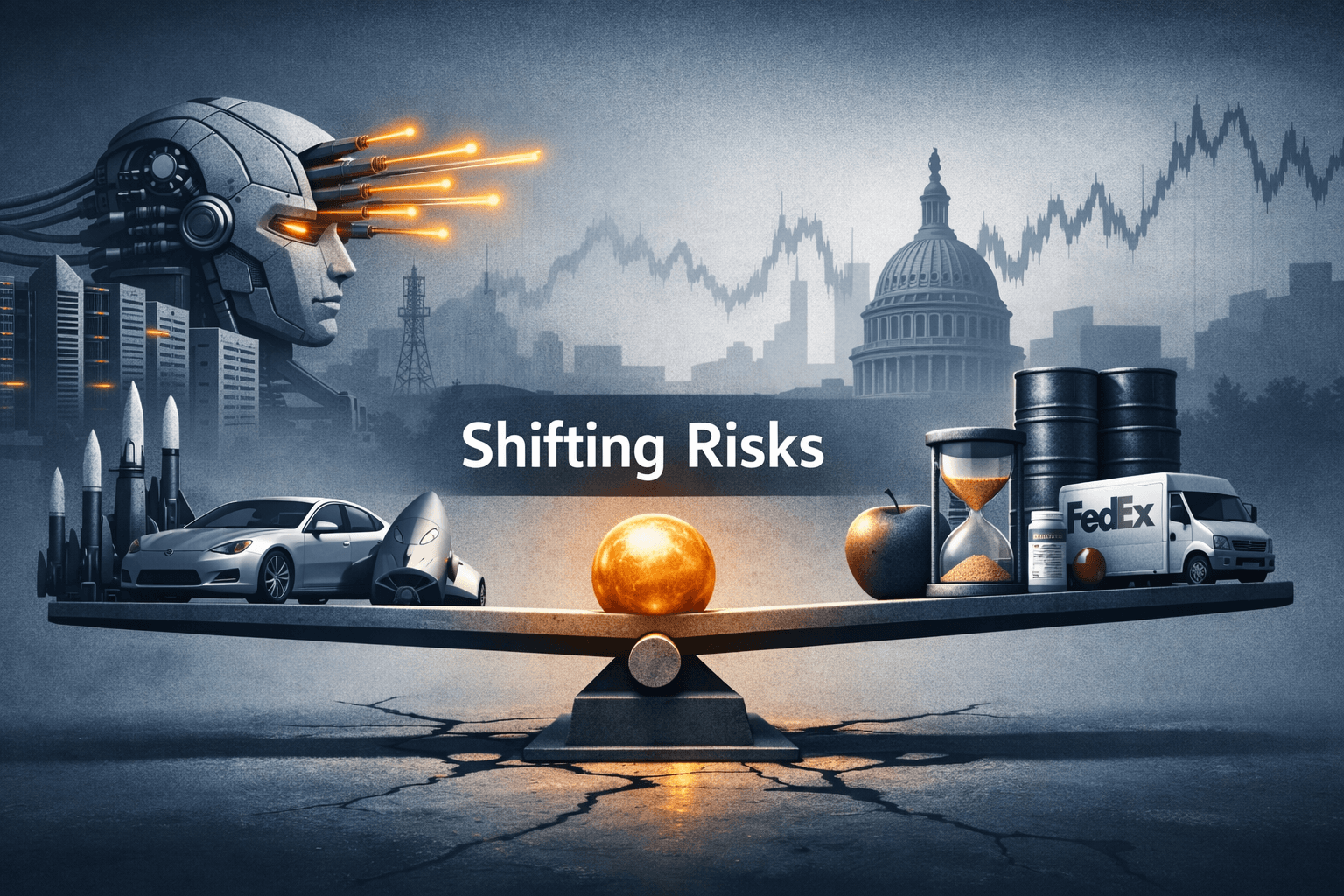
AI Drives a Structural Shift, While Earnings, Geopolitics and Liquidity Re-Price Risk
Podcast • Loading audio...
Share this article
Spread the word on social media
Key Takeaways
- •AI data‑center scaling is accelerating a structural shift from copper to optical interconnects; the buildout is being discussed at multi‑hundred‑billion dollar scale.
- •Liquidity and market mechanics (private secondary markets, insider selling) are driving price action in names like SpaceX, sometimes independent of operational milestones.
- •Corporate results and guidance (Tesla, Abbott) remain primary drivers of idiosyncratic volatility even as macro headlines (U.S.–Iran pause) push risk assets.
- •New energy technologies and business pivots (sand battery, FedEx’s GLP‑1 logistics) create longer‑term thematic opportunities that require different risk and deployment timelines.
Today's most significant developments
Markets opened with a relief bid after reports that a temporary pause between the U.S. and Iran held, sending Brent crude back below $90 and equity futures roughly 1.5% higher. That short-term risk relief sat alongside a much larger, structural headline: the widening realization that optical networking—not copper—has become the critical path inside the accelerating AI data‑center buildout. Reuters-cited discussions that Nvidia may guarantee roughly $250 billion in financing for an OpenAI campus underscore the scale: analysts referenced in our coverage frame the AI buildout as a multi-hundred‑billion-dollar program (a $500 billion figure and a 10‑gigawatt power profile used as working estimates in contemporary market analysis).
At the same time, several high‑profile corporate stories created opposing forces: Tesla suffered a sharp selloff after Q2 results that left operating profit around $400 million and wiped out roughly a year of gains; private SpaceX shares hit fresh lows despite a near‑flawless Starship flight, raising questions about liquidity and insider selling ahead of an imminent earnings disclosure; Abbott shares slid about 3.6% to near $139 on guidance and litigation worries. These stock‑specific moves amplified short‑term volatility even as macro headlines nudged risk assets higher.
Synthesizing the themes: infrastructure, liquidity, and event risk
Four cross-cutting themes emerge from today’s set of analyses:
AI infrastructure is catalyzing a structural technology shift. Several pieces highlight a physics limit—copper interconnects running out of headroom at ~1.6 terabit speeds—forcing a switch to optical engines. The immediate beneficiaries are companies in optical engines, photonics and high‑bandwidth interconnects (one analysis calls out POET Technologies in that context). The industry backdrop: very large data‑center campuses (multi‑gigawatt scale) and financing packages on the order of hundreds of billions are being discussed publicly, which suggests capex trajectories that will matter to suppliers and energy markets.
Liquidity and investor mechanics are as important as operational milestones. SpaceX’s share price behavior—reported variously near $115 and near $90 in different writeups, but consistently described as a fresh low—illustrates a broader point: operational success (a largely successful Starship flight) no longer automatically translates into market repricing if liquidity, insider selling and private market sentiment are misaligned. For private and pre‑IPO markets, pricing can be dominated by liquidity expectations and distribution mechanics rather than near‑term technical success.
Corporate earnings, guidance, and litigation continue to drive idiosyncratic volatility. Tesla’s Q2 miss and muted operating profit ($400m) produced a rapid recalibration in risk premia for the stock; Abbott’s guidance and litigation concerns pushed the shares down ~3.58% to $139.06. Meanwhile, other company‑level developments—IDEXX’s endorsement by Jensen Investment Management (IDXX ~ $722.94), Ford’s aftermarket strategy (shares referenced near $85.69) and FedEx’s pivot into GLP‑1 logistics ($304 reference)—show managers rotating both for growth themes and margin expansion opportunities.
Macro narrative and Fed signaling remain active and market‑moving. Kalshi contract prices show traders assigning material odds to specific Fed messaging—figures like 42%, 28% and 80% were cited as indicative probabilities in coverage—and those market‑implied odds are already shaping positioning across rate‑sensitive and commodity‑exposed pockets of the market.
Where market views diverge
SpaceX: Reports unanimously describe a new low in private valuation despite the Starship success, but data points diverge on the absolute price (some notes cite ~ $115, others ~ $90). The analytical consensus is unanimous on the broader lesson—liquidity and potential insider selling can outweigh operational milestones—but contributors disagree on the magnitude of near‑term downside risk and how much an upcoming earnings report will catalyze forced selling.
AI capex outlook: Most analysts agree AI campuses imply multi‑hundred‑billion dollar incremental investment and multi‑gigawatt power draws, but debate exists around timing, concentration (how many campus projects will actually reach financing close) and the winners in the optical supply chain. POET and photonics suppliers are repeatedly identified, but some strategists caution that system integration and incumbent networking vendors could capture the bulk of margin unless silicon photonics scale faster.
Oil and macro: The temporary pause with Iran produced an immediate, modest decline in Brent crude (< $90) and a risk‑on move in futures (+ ~1.5%), yet some market participants argue the shock has merely deferred, not eliminated, structural supply risks. That keeps a wide range of outcomes live for energy equities and commodity‑inflation signaling into the Fed.
Deeper context on today’s major moves
AI optics: Copper’s practical ceiling at ~1.6 terabit speeds matters because electrical signaling losses and thermal constraints make rack‑scale copper interconnects increasingly impractical as compute density and speed scale. Optical engines and photonic interconnects transmit data as light, reducing attenuation and enabling longer distances with lower power per bit—important when data‑center power budgets are measured in gigawatts and when analysts estimate that ~60% of power consumption in an AI campus does not even touch a chip (cooling, power distribution, interconnects). This pushes capex into new hardware categories, favors companies that can deliver optical engines and increases data‑center power demand—so utilities, chipmakers and photonics suppliers are all in scope.
SpaceX private valuation: The disconnect between operational execution and price highlights a liquidity premium embedded in private shares. Private secondary trades can trade at large discounts to implied public valuations when investor exit pathways narrow. The upcoming earnings or shareholder‑liquidity events matter because they can prompt insiders or large holders to realize gains (or realize losses), creating abrupt supply that private markets have limited depth to absorb.
Sand battery & energy infrastructure: The Pornainen sand battery uses ~2,000 tons of sand and reported about 70% thermal round‑trip efficiency. Unlike electrochemical batteries that store electricity directly, thermal storage stores heat for later use—particularly useful for heating and industrial thermal loads. At scale, the technology can mitigate renewable intermittency and shift demand for electrical heating or CHP systems. For investors, the implication is not a single stock call but a broader re‑assessment of where value accrues in energy services, installation, and industrial heat management.
Options dynamics into Apple earnings: Apple has rallied ~20% since late June and is trading less than $2 from an all‑time high. Unusual options flows ahead of earnings can signal hedging by institutional holders, directional speculative positions, or structured trades where dealers take risk. Increased activity typically raises implied volatility, which can magnify post‑earnings moves and affect correlated names in the supply chain and index derivatives.
Implications by investor type
Long-term growth investors: The AI infrastructure shift elevates photonics, data‑center energy planning, and firms with durable, recurring revenues (IDEXX is cited as a recurring‑revenue quality name). These investors should model capex cadence, integration risk, and the eventual competitive landscape for optical engines.
Event‑driven and activist traders: SpaceX private liquidity risk, Apple options into earnings, and upcoming card‑network earnings (Mastercard/Visa) present near‑term catalysts. Traders will need to price in higher event volatility and potential for rapid repricing around earnings and liquidity events.
Income and value investors: Short‑term commodity moves matter for energy income names if the ceasefire does not hold. Meanwhile, Ford’s effort (~$53bn U.S. aftermarket opportunity) and FedEx’s healthcare logistics pivot are industrial examples of margin re‑levering opportunities that value investors may want to monitor.
Private market allocators: SpaceX’s secondary market volatility is a reminder that private valuations can be highly path‑dependent and sensitive to windows for liquidity. Allocate with explicit assumptions about exit timing and the potential for markdowns if insiders sell.
Clean‑energy infrastructure allocators: Sand batteries introduce a potentially disruptive thermal storage solution with ~70% round‑trip efficiency. If commercialization scales, infrastructure investors could find opportunities in deployment, EPC contractors and industrial heat management services.
Conflicts and open questions to watch
- How quickly will optical engines scale vs. incumbent copper/SiP solutions? The pace determines which suppliers capture value.
- Will SpaceX insiders sell into the earnings window, and if so, how large will the supply shock be for private share pricing? Different analyses offered diverging price references but agreed on the directional risk.
- Is the reported U.S.–Iran pause durable? A re‑escalation would reverse the crude and risk‑asset relief and re‑elevate energy premiums.
- How will Apple’s earnings interact with the unusual options flow? Elevated implied volatility can produce outsized moves even after a ‘beat’ or ‘miss.’
Strategic considerations
Analysts note the market is simultaneously digesting structural shifts (AI infrastructure and energy storage) and short‑term event risk (earnings, liquidity, Fed messaging). That duality favors a disciplined approach: (a) maintain explicit scenario analyses for structural capex paths and energy price regimes; (b) recognize liquidity as a return driver in private and thinly traded assets; (c) treat near‑term earnings and Fed events as volatility drivers rather than directional confirmations; and (d) separate duration and execution risk across portfolios—long‑duration exposure to AI themes can be considered independently from short-term event and liquidity risk.
Investment disclaimer: This synthesis presents market analysis and data for informational purposes only. It is not a recommendation to buy, sell, or hold any security, nor is it personalized investment advice. Analysts’ sentiment labels reflect observed market positioning and reported metrics, not investment advice.
What to watch next (near term)
- Nvidia/OpenAI financing headlines and any confirmation of large‑scale campus leases or financings.
- SpaceX shareholder liquidity signals and the upcoming earnings window cited as a potential catalyst for insider selling.
- Mastercard and Visa quarterly reports for real‑time consumer spending signals; merchant and cross‑border volumes can shift retail and travel equities.
- Apple earnings and unusual options flows; monitor implied volatility and dealer positioning.
- Energy headlines on U.S.–Iran developments and Brent’s ability to sustain < $90.
By linking structural, liquidity, and event narratives, today’s tape demonstrates how long‑run technological shifts (optical engines, thermal storage) can coexist with immediate re‑pricing driven by earnings, guidance and market mechanics. Market participants will be watching which of these forces dominates in the coming weeks.
Sources
+ 9 more sources
Use these insights — enter this week's contest.
Free practice contests — earn Alpha CoinsExplore More Content
Disclaimer: StockAlpha.ai content is for informational and educational purposes only. It is not personalized investment advice. Sentiment ratings and market analysis reflect data-driven observations, not buy, sell, or hold recommendations. Always consult a qualified financial advisor before making investment decisions. Past performance does not guarantee future results.