 Breaking Analysis
Listen to this Recap
9:38
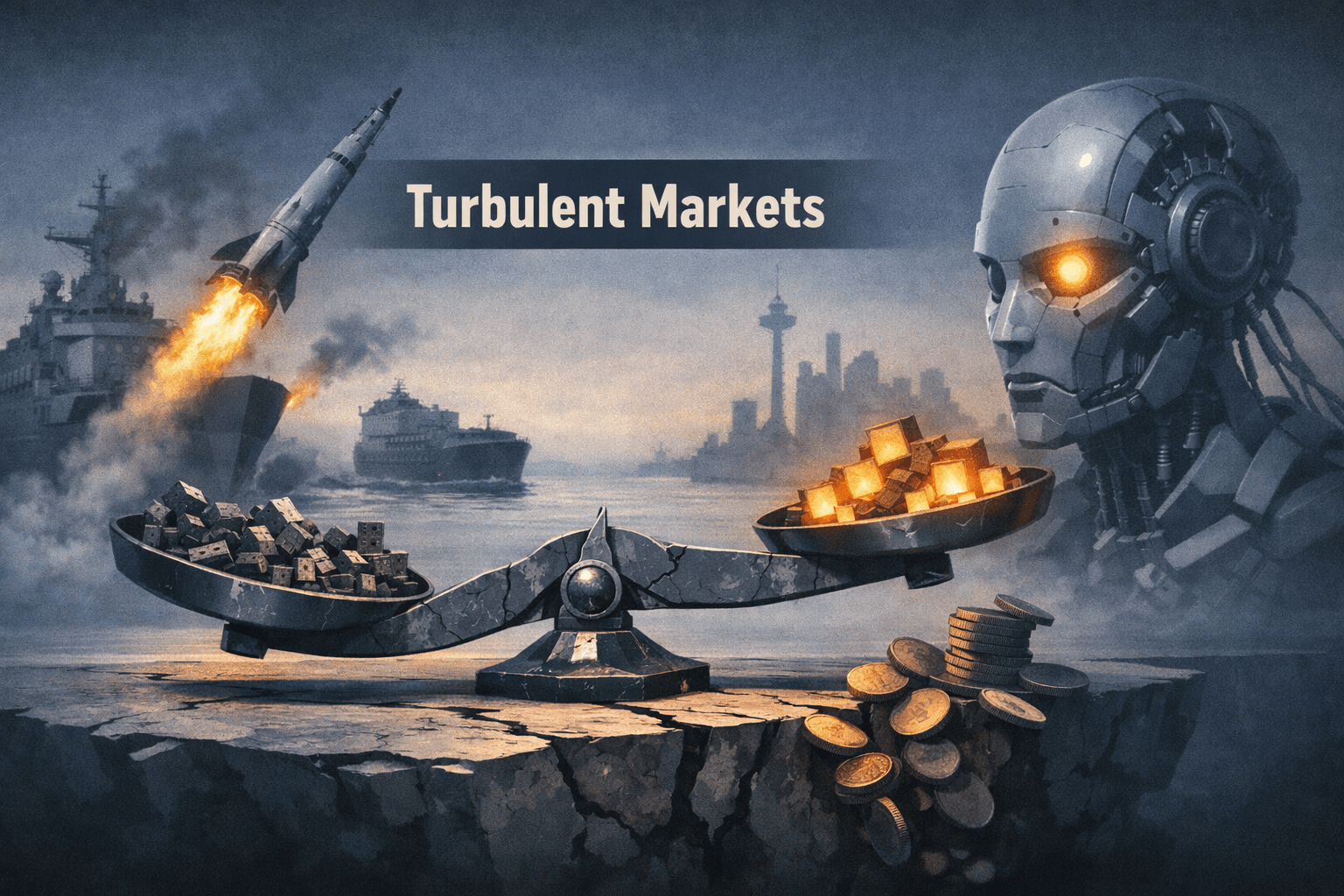
Geopolitics and Tech Shocks Drive Volatility: Iran Strikes, SpaceX Slip, Chinese AI Gains, and Deep Small‑Cap Drawdowns
Podcast • Loading audio...
Share this article
Spread the word on social media
Key Takeaways
- •Geopolitical escalation tied to Strait shipping amplified near‑term volatility risk for energy, shipping, ports and insurers.
- •Operational setbacks and post‑IPO momentum fragility were highlighted by SpaceX closing below IPO price for a second day after an aborted launch (~4% premarket decline).
- •Several small caps experienced acute liquidity‑sensitive crashes (QMLS -33.36% to $14.28 on 238.58K; ACHR+ -33.91% to $0.03 on 91.27K; BURU -39.38% to $0.07; VIVK -46.95% to $2.26 on 2.37M), underscoring position‑sizing risk.
- •Chinese AI advances and the open‑weight movement introduce a structural theme that could alter cloud and platform economics, though experts debate the pace and depth of that impact.
Today's lead: geopolitics sets the risk backdrop as market internals wobble
Friday’s session left markets with a mixed but cautionary read: geopolitical escalation between the U.S. and Iran—targeting infrastructure tied to Strait shipping—ratcheted up headline risk, while technology and microcap segments trended sharply lower. Operational news hit SpaceX, whose stock closed below its IPO price for a second consecutive day after an aborted mission drove a roughly 4% premarket decline. At the same time, several thinly traded names plunged between ~33% and ~47% on heavy volume ($QMLS -33.36% to $14.28 on 238.58K shares; $ACHR+ -33.91% to $0.03 on 91.27K; $BURU -39.38% to $0.07; $VIVK -46.95% to $2.26 on 2.37M shares). Finally, advances in Chinese AI models and renewed attention to the “open weights” shift add a structural technology theme against this volatile backdrop.
These developments converge on a single practical point for investors: headline uncertainty and liquidity dynamics are re‑pricing risk differentially across sectors and market capitalizations, increasing the value of clarity on exposure, hedging, and position sizing heading into the long weekend.
Cross‑cutting themes from today’s analyses
- Heightened geopolitical tail‑risk: The US–Iran escalation centered on attacks aimed at infrastructure tied to Strait shipping increases short‑term volatility risk for energy, shipping, ports and insurers. Analysts highlight the Strait of Hormuz’s outsized role in seaborne oil flows; disruption or even route‑avoidance behavior raises freight and insurance costs and transmits to energy price volatility.
- Execution risk hitting newly public and event‑driven names: SpaceX’s aborted launch translated quickly into selling pressure, knocking the stock below IPO price for the second day. The market is treating operational setbacks as catalysts for re‑testing post‑IPO valuation thresholds and momentum bands.
- Liquidity and forced re‑pricing among small caps: Several quoted names suffered abrupt, double‑digit declines (33%–47%) on elevated volume. Those moves underscore how limited liquidity, concentrated flows, and headline‑driven exits can produce outsized single‑day losses and reshape risk budgets for small‑cap sleeves.
- Technology competition re‑accelerates: The rollout of stronger Chinese AI models and the shift toward open‑weight models are creating fresh debate about platform moats, cloud demand for training and inference, and potential margin pressure for incumbents relying on proprietary model advantages.
Where analysts agree — and where they differ
Agreement
- Analysts consistently note an uptick in headline and volatility risk tied to the Strait shipping attacks. Most call out immediate exposures: energy producers, shipping equities, ports, freight indexes and marine insurers.
- There is broad consensus that operational setbacks (like SpaceX’s aborted mission) can rapidly erode post‑IPO momentum, even if fundamentals remain unchanged in the medium term.
- Observers also agree the small‑cap plunges are liquidity‑sensitive: high percentage moves with elevated volume indicate flow‑driven re‑pricing rather than gradual valuation discovery.
Debates and open questions
- Duration and economic impact of the US–Iran escalation: Some analysts frame the recent strikes as episodic—likely to spike volatility and risk premia but not cause sustained energy price shocks—while others caution that targeting infrastructure raises the prospect of prolonged shipping disruptions that could increase insurance premia and freight rates materially.
- How disruptive Chinese AI advances will be to U.S. incumbents: One camp views the new Chinese models and the open‑weight movement as an acceleration that narrows the performance gap and pressures licensing/pricing power; another sees it as incremental—improving parity on some benchmarks but not yet eroding deep product moats or top‑line cloud service growth.
- Interpreting SpaceX’s slide: Is the stock’s fall a technical, momentum‑driven correction following the aborted launch, or an early signal that the market will apply a higher execution discount to newly public space/launch platforms? Analysts are split, with timing of the next launch and subsequent operational transparency the likely arbiter.
Deeper context on the major moves
Geopolitics and seaborn energy flows
- The Strait of Hormuz remains one of the world’s most critical chokepoints, conducting a large percentage of global seaborne oil exports. Attacks targeting infrastructure or vessel traffic can produce immediate spikes in tanker freight rates and insurance (war risk) premiums, which feed through to end‑user energy price volatility.
- For energy and shipping: forward freight agreements, tanker spot rates and marine insurance spreads are metrics to watch; traders typically price higher risk premia into those instruments when route insecurity increases.
SpaceX and post‑IPO fragility
- SpaceX’s two‑day close below IPO price, following a ~4% premarket drop after an aborted mission, reflects how operational reliability is being treated as a near‑term valuation driver for firms with event‑dependent cash flows. For newly public names, technical setbacks compress investor patience, enlarge implied volatility and can produce outsized options activity.
Chinese AI’s open‑weight shift
- Open weights means trained model parameters are published, enabling outside parties to fine‑tune, audit, and deploy models without licensing black‑box APIs. This lowers barriers for competitors and changes the capture of downstream value: more on‑prem and third‑party deployment could reduce platform capture of inference spend but increase cloud training demand.
- Practically, a narrowing gap in model quality means enterprise buyers may diversify vendors, increasing churn risk for incumbent cloud‑AI suppliers or forcing differentiated service offerings (security, integration, fine‑tuning support).
Small‑cap liquidity dynamics
- Sudden, large percentage declines in low‑priced or low‑float names commonly arise from a mix of concentrated selling, stop‑loss cascades, or withdrawal of market‑making interest. Elevated volumes alongside steep price declines signal genuine balance shifts rather than low‑volume noise. The consequence is higher tail risk and the potential for lockups or temporary trading suspensions in extreme cases.
Implications by investor type
- Short‑term traders / momentum funds: Elevated headline risk and stretched liquidity create both opportunities and hazards. Volatility can produce mean‑reversion setups but also widen stop‑loss drawdowns. Active monitoring of news flow (military developments, launch updates, AI benchmark releases) is essential.
- Long‑term institutional investors: The geopolitical shock argues for a measured review of tactical exposure to energy supply chains and insurance underwriters. For technology holdings, the structural implications of open‑weight models warrant a reassessment of competitive moat durability and potential shifts in cloud service revenue composition.
- Hedge funds / macro traders: The confluence of energy risk and liquidity dislocations supports monitoring of freight indices, oil term structures (contango/backwardation), implied vols and CDS spreads on insurers with shipping exposure. Options and futures can be used to express non‑directional volatility views.
- Retail and small investors: The small‑cap collapses are a reminder to review position sizing and liquidity risk—stocks that can fall 30%–50% in a day can trap capital if the secondary market becomes illiquid. Exercise caution around event‑driven, low‑float names.
Metrics and indicators to watch in the near term
- Shipping/freight indices and tanker spot rates for early signs of route disruption repricing.
- War‑risk insurance premium movements and marine insurer CDS or equity spreads.
- VIX and short‑term implied volatility across affected equities, especially SpaceX and AI supplier names.
- Volume and open interest in options on the names that plunged (QMLS, ACHR+, BURU, VIVK) to detect flow‑driven pressure or options gamma squeezes.
- Chinese AI benchmark releases, licensing announcements and changes in cloud provider guidance on training/inference demand.
Strategic considerations and watchlist for the coming days
- Treat geopolitical headlines as high‑impact, asymmetric events: focus on direct exposure lines (energy/shipping, ports, insurers) and on hedging tail risk where appropriate for portfolios with concentrated exposure.
- For post‑IPO and operationally sensitive names, prioritize clarity on execution timelines and updated operating data before revising medium‑term valuations.
- In small‑cap sleeves, revisit position size rules and liquidity buffers; consider stress testing scenarios where individual positions can lose a material portion of market value in a single session.
- For technology investors, monitor not only headline model performance but also licensing, hosting and deployment models. Open‑weight shifts can change where value accrues across the stack (model creators vs. integrators vs. cloud hosts).
- Across all investor types, track implied volatility and volume flows to detect whether moves are transient liquidity events or the start of broader repricing.
Final note (disclaimer)
This synthesis presents analysis and data for informational purposes only. It does not constitute personalized investment advice or a recommendation to buy, sell, or hold any security. Analysts note increased volatility and cross‑market risks; market participants should evaluate positions in the context of their own risk tolerances, time horizons and compliance constraints.
Sources
Use these insights — enter this week's contest.
Free practice contests — earn Alpha CoinsExplore More Content
Disclaimer: StockAlpha.ai content is for informational and educational purposes only. It is not personalized investment advice. Sentiment ratings and market analysis reflect data-driven observations, not buy, sell, or hold recommendations. Always consult a qualified financial advisor before making investment decisions. Past performance does not guarantee future results.