 Breaking Analysis
Listen to this Recap
8:53
Fed Uncertainty and a Record SpaceX IPO Roil Markets as Stock-Specific Moves Drive Volatility
Podcast • Loading audio...
Share this article
Spread the word on social media
Key Takeaways
- •Fed policy risk is the dominant cross-market theme: Morgan Stanley flags a shift toward firmer inflation while Goldman says trader pricing of hikes was correct — markets must reconcile these views.
- •SpaceX’s IPO and the creation of new liquid private-wealth pools are reshaping liquidity and service demand, with implications for wealth managers and fintechs.
- •Idiosyncratic moves remain large: CVS rallied to $100.39 post-quarter (a roughly 26.4% cited post-quarter increase), PAVS plunged 42% to $0.29 on 31.00M shares, and FedEx enters a test phase where operational results must validate strategy.
- •Sector re-ratings are in motion (e.g., AMD on potential higher Meta AI spend). Traders and allocators should emphasize scenario planning and monitor market-implied rates and volatility metrics.
Today's biggest market developments
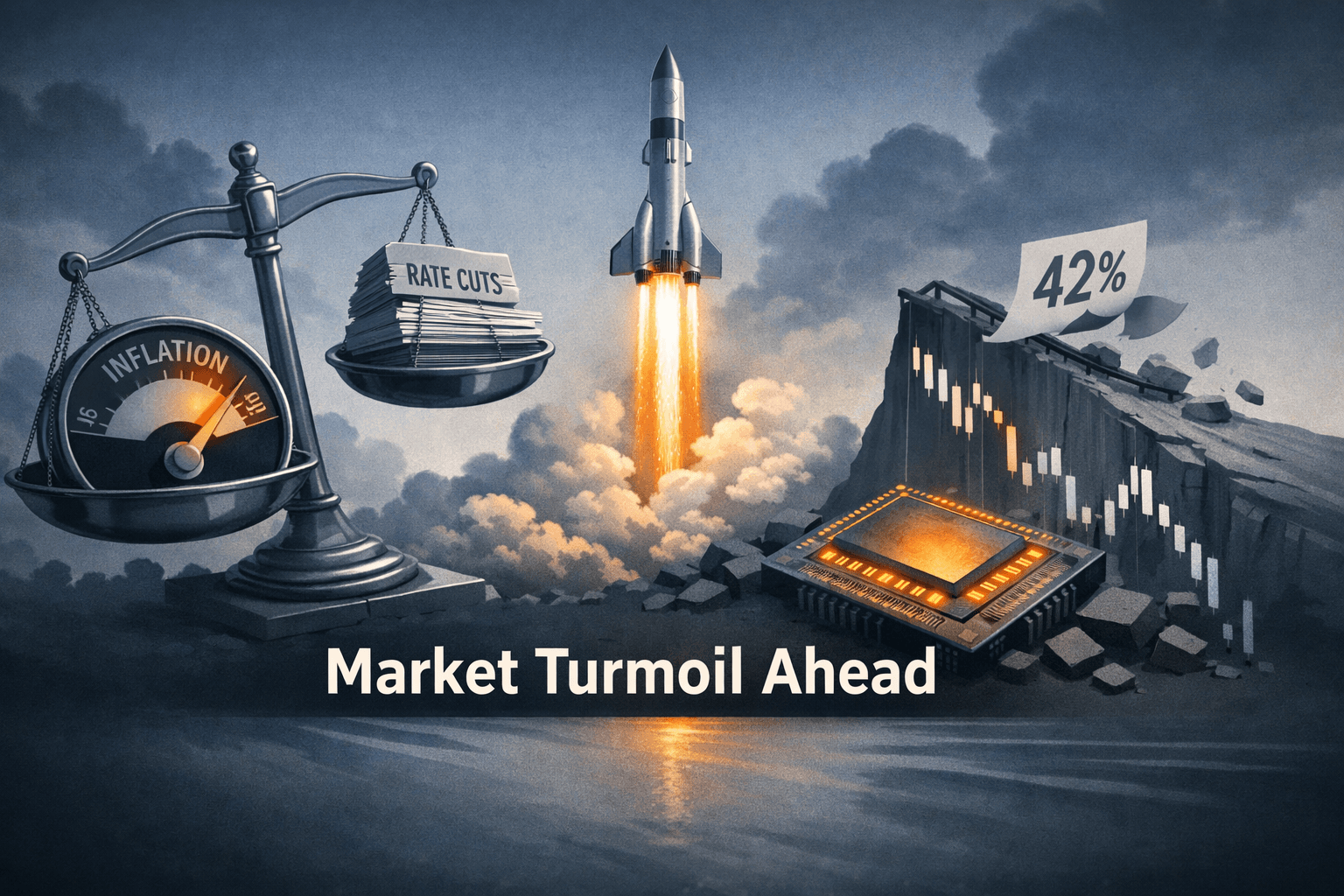
The market narrative on June 12 split along three vectors: macro policy uncertainty around the Federal Reserve, an attention-grabbing SpaceX IPO and headline-driven, idiosyncratic swings across individual equities. Analysts and reporters highlighted a potentially meaningful shift in the policy-risk balance — Morgan Stanley warns that risks are moving toward firmer inflation — while major institutions (Goldman Sachs) publicly validated trader pricing that already baked potential Fed hikes into markets. At the same time the SpaceX listing and related wealth flows dominated headlines, and single-stock volatility was pronounced: CVS traded up to $100.39 after a strong quarter, PAVS plunged 42.00% to $0.29 on heavy volume (31.00M shares), and AMD drew fresh interest on Citi's view that Meta may spend more on AMD AI chips than consensus expects (shares trading in a roughly $458–$490 intraday range).
This note synthesizes the day’s Alpha breaking analyses, highlights where experts agree and disagree, explains the context behind major moves, and outlines implications for different investor types.
Synthesizing the key themes
- Fed policy and communications dominate risk pricing
- Morgan Stanley's note that "the balance of Fed policy risks is shifting to firmer inflation" is the thread that markets digested across trading desks. That characterization suggests inflation upside risk has risen relative to the Fed's prior base-case, which would tighten conditions for rate-sensitive assets.
- Complementing that, a senior Goldman Sachs executive said traders were right to price the risk of Fed hikes — an explicit endorsement of market-implied probabilities. Traders’ positioning therefore reflects a non-trivial chance of further tightening even as the Fed’s next moves remain uncertain.
- Leadership change at the Fed has become a focal point: Kevin Warsh's stylistic choice to be called "chairman," and commentary that “silence may be the point,” feed a debate about forward guidance. If the new chair chooses a quieter communication style, markets could see either reduced volatility (fewer interpretive flashes) or heightened uncertainty (less textual guidance to anchor expectations).
- Liquidity and new-issue dynamics — SpaceX at center stage
- The SpaceX IPO (widely reported as record-setting in scale and market attention) is reshaping liquidity and sentiment. Coverage on Jun 12 emphasized both the sheer size of the event and the downstream effects: new SpaceX millionaires are already altering wealth management demand, and leadership comments (Gwynne Shotwell) that previously expressed IPO doubts now aim to reassure investors.
- The run-up to a major IPO introduces two effects: (a) sentiment and liquidity can skew toward growth/tech and related suppliers, and (b) concentrated private-wealth creation re-routes fee pools and asset flows to wealth managers and fintechs.
- Idiosyncratic stock swings and the rotation question
- Large single-stock moves punctuated the day. CVS rose to $100.39 after solid Q1 results and an apparent post-quarter re-rating (a cited 26.4% increase in coverage following the quarter), while PAVS collapsed 42% on extremely elevated volume (31.00M shares). FedEx is positioned at a turning point after executing a major catalyst in its turnaround — markets will watch whether operational changes translate into recurring financial improvement. Oracle slid on AI-spending concerns, reflecting how growth-technology narratives remain fragile.
- Citi’s note on AMD — arguing that Meta may allocate more to AMD AI chips than consensus — underscores sector-level reappraisals. AMD’s range on the day (~$458–$490) and an earnings date flagged for Aug 4, 2026, create a near-term catalyst for investors parsing the datacenter AI story.
Conflicting views and market debates
- Policy-risk direction: Morgan Stanley’s caution about firmer inflation contrasts with public comments from Goldman that traders’ positioning (which prices hikes) is accurate. In other words, some sell-side voices are signaling a rising inflation tail risk while others are saying the market has already internalized that risk correctly.
- Fed communication style: Some analysts argue Warsh’s quieter approach will lower calibration noise and stabilize expectations; others worry less communication increases ambiguity and could amplify market moves when data surprises occur. The practical consequence is that forward guidance uncertainty will feature more prominently in risk management models.
- IPO optimism vs. governance caution: SpaceX’s impending listing excites liquidity and retail attention, but Gwynne Shotwell’s previously stated IPO doubts — and her recent messaging aimed at investors — reveal an internal debate about timing and governance that could influence market reception.
Deeper context on major moves
Why Fed signals matter: Markets rely on both rate decisions and central bank communication to form discount-rate expectations. If the policy-risk balance shifts toward firmer inflation, discount rates rise, compressing valuation multiples for long-duration assets (e.g., AI and high-growth tech) and favoring cyclicals or value sectors that reprice less on long-duration cash flows.
Market-implied probabilities vs. fundamentals: Goldman’s point that "traders were right" highlights a growing acceptance that option-implied and futures-derived probabilities carry predictive power. That validation matters for quant desks and risk committees that use market signals to stress-test scenarios.
IPO and wealth effects: Large IPOs shift both liquidity and client behavior. The SpaceX event isn’t just a supply of new public shares; it creates concentrated wealth events that drive demand for bespoke advisory services, tax planning, and liquidity-management products. Reports noting advisers are using figures like 24.43% and 11.55% in modelling (multiple Alpha pieces) reflect how advisors are quantifying concentrated-equity risk and potential liquidity needs.
Stock-specific catalysts: CVS’s post-quarter move to $100.39 and a reported 26.4% bump post-quarter illustrate how earnings-driven re-ratings remain powerful. By contrast, the PAVS drop (−42% to $0.29 on 31.00M shares) is a reminder that microcap liquidity and news flow can produce rapid wealth evaporation. FedEx’s strategic execution is entering a phase where execution must show through in margins and free cash flow; that transition often creates temporary volatility as expectations reset.
Implications for different investor types
Passive/long-term investors: The macro mix argues for discipline in allocation rather than tactical overreaction. Analysts note that a regime shift toward firmer inflation would favor a modest rebalancing away from very long-duration growth exposures, but longer-term investors should consider horizon and risk tolerance rather than headline chopping.
Active managers and traders: The market-implied pricing of Fed moves and the pronounced single-stock volatility create opportunity and risk for relative-value and event-driven strategies. Traders will watch Fed communications, SpaceX order book developments, and earnings catalysts (e.g., AMD on Aug 4) for directional and volatility trades.
Fixed-income and income-focused investors: If inflation risks rise, rate-sensitive instruments and duration exposures come under pressure. Analysts emphasize re-evaluating duration and credit assumptions when market pricing points to upside inflation risk. Market-validated trader bets on hikes reinforce the need to run scenario-based stress tests on bond holdings.
Wealth managers and private-wealth advisors: The emergence of new SpaceX millionaires is already changing demand for bespoke planning — advisers are using AI modelling, whiteboarding, and scenario analysis to manage concentrated positions, tax timing, and liquidity events.
Watch list and metrics to monitor
- Fed communication and meeting outcomes: tone, forward guidance and any shift in dot-plot expectations.
- Market-implied probabilities: futures/options-based pricing for Fed funds and front-end rates that Goldman cited as informative.
- SpaceX IPO progress: allocation, lockup and distribution details, and Shotwell’s public comments on governance and timing.
- Earnings catalysts: CVS post-quarter momentum, AMD’s August earnings date and Meta capital spending cadence, and quarterly readouts from transportation names like FedEx that are transitioning from strategy to results.
- Volatility and microcap liquidity: PAVS-style moves highlight the need to monitor volume spikes and bid-offer dislocations in thin names.
Strategic considerations (non-personal, informational)
- Scenario plan for policy-shift outcomes: Investors and allocators should model both a restrained-communication Fed and a Fed forced into tighter policy by inflation surprises. Each scenario implies different discount-rate paths and sector impacts.
- Revisit duration and rate exposure: Data suggests the market is more willing to price hikes — use market-implied yields to re-test fixed-income allocations and equity valuation models.
- Monitor liquidity and concentration risk: The SpaceX IPO will create high-profile wealth events; advisors and portfolio managers should stress-test for concentrated-equity sales and potential fee-revenue shifts to wealthtech and boutique managers.
- Maintain event-driven vigilance: Earnings beats or misses (CVS, AMD), operational proof points (FedEx), and extreme microcap moves (PAVS) can generate material repricing; position sizing and stop discipline remain important.
Conclusion
June 12’s tape reinforced a simple but consequential dynamic: macro policy uncertainty and a handful of large corporate events are jointly dictating market behavior. The balance between market-implied pricing (which, per Goldman, has already internalized rate-hike risk) and changing fundamental signals (Morgan Stanley's call that inflation risk has shifted firmer) is the day’s central tension. Meanwhile, the SpaceX IPO and associated wealth flows add a structural liquidity and service-demand story that will play out across wealth management and public-market investor composition. For investors, the near-term game is scenario planning and disciplined risk management rather than reactionary repositioning — the timeline for whether today's signals crystalize into a regime shift remains the core unknown.
Investment disclaimer: This analysis is for informational purposes only. It does not constitute a recommendation to buy, sell or hold any security, nor is it personalized investment advice. Analysts note data and market signals; readers should consult a licensed professional for advice tailored to individual circumstances.
Sources
+ 6 more sources
Use these insights — enter this week's contest.
Free practice contests — earn Alpha CoinsExplore More Content
Disclaimer: StockAlpha.ai content is for informational and educational purposes only. It is not personalized investment advice. Sentiment ratings and market analysis reflect data-driven observations, not buy, sell, or hold recommendations. Always consult a qualified financial advisor before making investment decisions. Past performance does not guarantee future results.