 Breaking Analysis
Listen to this Recap
9:50
AI Bets, Energy Tightness and Earnings Frictions: Market Crosswinds Drive Active Positioning
Podcast • Loading audio...
Share this article
Spread the word on social media
Key Takeaways
- •Nvidia’s ~$40B in 2026 AI commitments (including ~ $30B tied to OpenAI) and OpenAI’s ‘tipping point’ comment are central signals that AI commercialization is accelerating, but monetization timing and regulatory risk remain key uncertainties.
- •JPMorgan’s view of Brent >$100 and diesel nearing record highs creates simultaneous upside for energy producers and input-cost pressure across transportation, agriculture and consumer sectors.
- •Vendor-reported AI gains in healthcare (20%–40% reductions in denials; >50% coding-time cuts in pilots) indicate productivity opportunities, but independent validation and safety/regulatory guardrails will shape deployment speed.
- •Markets show concentrated leadership (select tech and biotech moves) amid broad dispersion; corporate-specific catalysts (earnings beats/misses, political/regulatory headlines) are likely to drive near-term relative performance.
- •Investors should prioritize monitoring commercialization KPIs, commodity price paths, Fed communications and corporate guidance — and apply scenario planning rather than one-sided convictions.
Today's biggest market developments
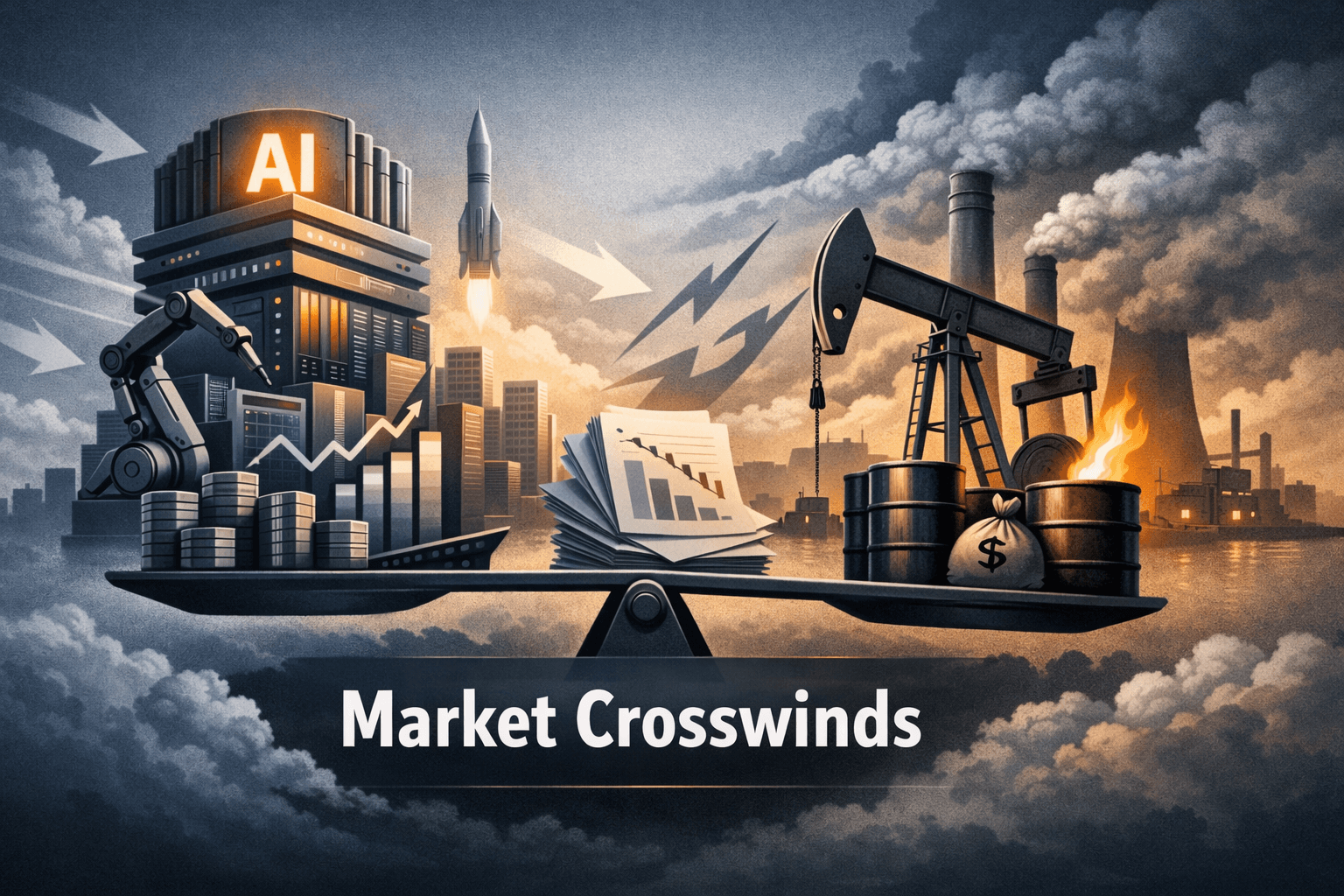
Two interlinked narratives set the tone for markets on May 11: (1) an acceleration in AI commercialization, highlighted by Nvidia’s roughly $40 billion in 2026 AI commitments (including a reported ~$30 billion allocation tied to OpenAI) and OpenAI’s revenue chief declaring enterprise AI at a “tipping point,” and (2) persistent commodity tightness, with JPMorgan flagging Brent crude remaining above $100 into 2026 and diesel approaching record highs. Both forces are reframing sector flows — concentrating gains in a handful of tech leaders while feeding through input-cost pressure across transportation, agriculture and consumer goods.
Those macro headlines arrived alongside a raft of idiosyncratic corporate moves: United Parks & Resorts (PRKS) missed both EPS (GAAP EPS -$0.69, a $0.38 miss) and revenue ($278.3M, $1.3M miss); Procter & Gamble has slid ~9.37% in three months amid margin pressure despite broad-based sales growth; and live-market snapshots showed concentrated strength in names like Intel (reported 260% gain in coverage) and Moderna on early-stage hantavirus work. Regulatory and political noise — from FCC commissioner comments about Disney to reputational stakes for CEOs traveling with a presidential trade delegation — added another layer of volatility.
Synthesis of key themes across analyses
- AI: structural bets and a commercialization inflection
- Nvidia’s public commitments (~$40B, with an estimated $30B to OpenAI) are being read as a signal that the company is funding not just capacity but the architecture of the AI stack: chips, model development, cloud partnerships and optical fabric. Analysts note the investments are being made layer-by-layer, with photonic integration platforms (e.g., POET Technologies) flagged as undercapitalized segments in the stack. Corning (GLW) also figures among disclosed recipients of Nvidia’s capital.
- OpenAI’s revenue chief framing enterprise AI as a “tipping point” provides a narrative bridge from large-scale R&D to faster commercial monetization. The company supplied partnership structures and metrics that can feed early valuation modeling, giving analysts concrete inputs even though OpenAI itself is not publicly traded.
- In healthcare, AI is already delivering measurable operational wins in diagnostics, workflow and billing. Vendor and pilot data cited reductions in claim denials (vendor case studies reporting 20%–40% declines) and coding-time reductions >50% in select sites. Analysts stress these are site- and workflow-dependent and qualify as vendor-reported outcomes, but they still indicate tangible near-term productivity gains.
- Commodity tightness and pass-through risk
- JPMorgan’s view that Brent could remain above $100 into 2026 (Brent trading around $107 in the snapshot) and diesel near-records creates two distinct market implications: it sustains upside for energy producers and oilfield services, and it raises input-cost risk for transportation, food, and retail. Diesel’s role as the primary fuel for trucks, trains and farm equipment means price pressure tends to be more inflationary and broader-based than gasoline spikes alone.
- Concentration of market leadership vs. dispersion of risk
- Market action was described as “headline calm” with concentrated strength in a few large caps. That concentration — technology and select biotech headline movers — sits alongside wide dispersion elsewhere: staples like P&G face margin pressure, retailers and home-improvement names are being viewed through structural cycles (UBS flagging a mid-2000s housing-repair wave potentially lifting HD and LOW), while cyclical misses (PRKS) show momentum can evaporate quickly.
- Politics and regulation as amplifiers of market volatility
- Comments from regulators (FCC commissioner Gomez accusing actions against Disney of political motivation) and high-profile CEO travel tied to political delegations create short-term headline risk that can alter volatility and re-price regulatory uncertainty even if fundamentals don't change immediately. At the center of policy risk is the Federal Reserve: analysts emphasize that Powell’s legacy will be affected by both the inflation fight and political pressure — an unresolved combination that complicates rate expectations.
Areas of disagreement and market debate
Optimism vs. guardrails on AI: Analysts broadly agree AI is moving from research to deployment, but they diverge on pace and risk. Optimists point to vendor-reported productivity gains and deep-pocketed strategic capital (Nvidia’s deals) as accelerants of adoption. Skeptics caution that returns are uneven, vendor case studies are self-reported, and safety/regulatory scrutiny — particularly in clinical settings — could delay or raise the cost of deployment.
Strategic vs. opportunistic interpretation of Nvidia’s capital moves: Some analysts interpret Nvidia’s $40B as a structural bet to shape the AI ecosystem and secure long-term demand for compute and fabrics. Others view parts of the program as tactically opportunistic — large headline dollars that may concentrate risk if partnerships don’t scale commercial revenue as projected.
Energy’s macro signal: JPMorgan’s tight-market view and Brent above $100 signals sustained producer strength and inflationary pressure for consumers. Counterpoints note that high prices invite supply response, demand destruction or substitution, and geopolitical or macro shocks could alter the path — making the timing and magnitude of pass-through to corporate earnings uncertain.
Deeper context on major moves
Nvidia/OpenAI: When a dominant infrastructure player deploys tens of billions across partners and startups, it attempts to lock-in demand for its compute stack while shaping standards and integrations. That creates optionality for Nvidia and upstream suppliers (chips, optical fabrics, specialty glass) while also concentrating technological lock-in with a handful of partners. For public-market investors, the relevant channels are: chip revenue growth, cloud compute spending (which could lift AWS/GCP/Azure-linked names), and secondary beneficiaries in photonics and specialized materials (e.g., POET Technologies, Corning).
Healthcare AI in practice: Administrative overhead in U.S. healthcare — estimated at 25%–30% of spending — makes billing a natural automation candidate. But clinical deployments carry a different set of risks: model explainability, liability, and regulatory approval. Thus, near-term gains may come fastest from back-office automation (billing, coding) where the safety bar is lower; clinical diagnostic support will likely face longer validation cycles.
Energy and diesel pricing: Diesel is a supply-chain lever. Higher diesel affects trucking margins, increases freight rates, and feeds through to grocery and durable goods pricing. For corporates, the timing of pass-through depends on pricing power: firms with strong brands or limited competition can more readily shift costs to consumers; others will see margin compression.
Corporate micro events: A beat-and-raise requirement (Qnity) or an earnings miss (United Parks & Resorts) matters because headline-driven sentiment can rapidly re-rate small- to mid-cap names. For large caps, idiosyncratic news (Moderna’s early-stage science, Intel’s reported gains) can produce concentrated index effects without necessarily indicating broad market trends.
What this means for different investor types
Long-term growth investors: The AI stack development trend is structurally positive for companies exposed to compute, cloud services, and select materials. Analysts note valuation inputs tied to monetization milestones (partnership terms, enterprise adoption rates) will be key to re-rating. Long-term investors should monitor concrete commercialization KPIs rather than headline investment totals alone.
Income and fixed-income investors: JPMorgan’s oil view and Powell’s political pressure complicate rate and inflation outlooks. Fixed-income allocations should account for the elevated inflation risk from energy and diesel; tactical ETF flow data (e.g., institutional additions to actively managed bond ETFs like FIXD) suggest demand for manager discretion is rising.
Event-driven and active traders: Concentrated leadership (NVDA, Intel, Moderna headlines) and regulatory/political news (Disney, FCC comments; CEOs on a political trip) create short-term volatility and trade opportunities. Earnings misses (PRKS) and beat-and-raise scenarios (Qnity) are catalysts to watch.
Sector/commodity-focused allocators: Energy producers and oilfield services may benefit from sustained Brent >$100; conversely, transportation and consumer discretionary exposures face margin squeezes from diesel. Home-improvement and resilient retail models (Costco’s membership and fuel business) warrant monitoring for defensive allocation benefits.
Strategic considerations and watchlist
Monitor concrete AI commercialization metrics: partnership revenue shares, enterprise contract lengths, compute utilization and cloud billings attributable to large models. OpenAI’s disclosed partnership structures create early valuation inputs analysts can model.
Track healthcare AI outcomes beyond vendor case studies: independent validation, reduction in denials/coding time reported across multiple, comparable systems, and regulatory guidance on clinical AI use.
Watch energy and diesel price trajectories and margin disclosures from transportation and retail. A sustained Brent >$100 is a macro input that should be stress-tested across cash-flow models.
Keep an eye on Fed-related political risk and central-bank communications. Powell’s twin legacy pressures (inflation control and political independence) may amplify market reactions to inflation or employment surprises.
For event-driven plays, prioritize liquidity and explicit scenario planning: a beat-and-raise can re-rate smaller names but also raises expectations; misses can compound into rapid downgrades.
Conclusion
Today’s tape underscores a market in which structural thematic forces (AI commercialization, energy tightness) are colliding with idiosyncratic earnings and regulatory headlines. Analysts generally agree AI is moving from experimentation toward commercial deployments, but they disagree on pace, risk and the distribution of returns. Energy price pressure is an indisputable immediate risk to corporate margins and household budgets, even as it creates winners in the energy complex. For investors, the current environment rewards active monitoring of discrete data points — commercialization KPIs, guidance and margin disclosures, commodity price paths, and regulatory signals — and disciplined scenario planning rather than blanket sector convictions.
Disclaimer: This analysis presents market observations and synthesizes recent expert commentary for informational purposes only. It is not investment advice and does not recommend buying, selling or holding any security.
Sources
+ 9 more sources
Use these insights — enter this week's contest.
Free practice contests — earn Alpha CoinsExplore More Content
Disclaimer: StockAlpha.ai content is for informational and educational purposes only. It is not personalized investment advice. Sentiment ratings and market analysis reflect data-driven observations, not buy, sell, or hold recommendations. Always consult a qualified financial advisor before making investment decisions. Past performance does not guarantee future results.