 Breaking Analysis
Listen to this Recap
9:02
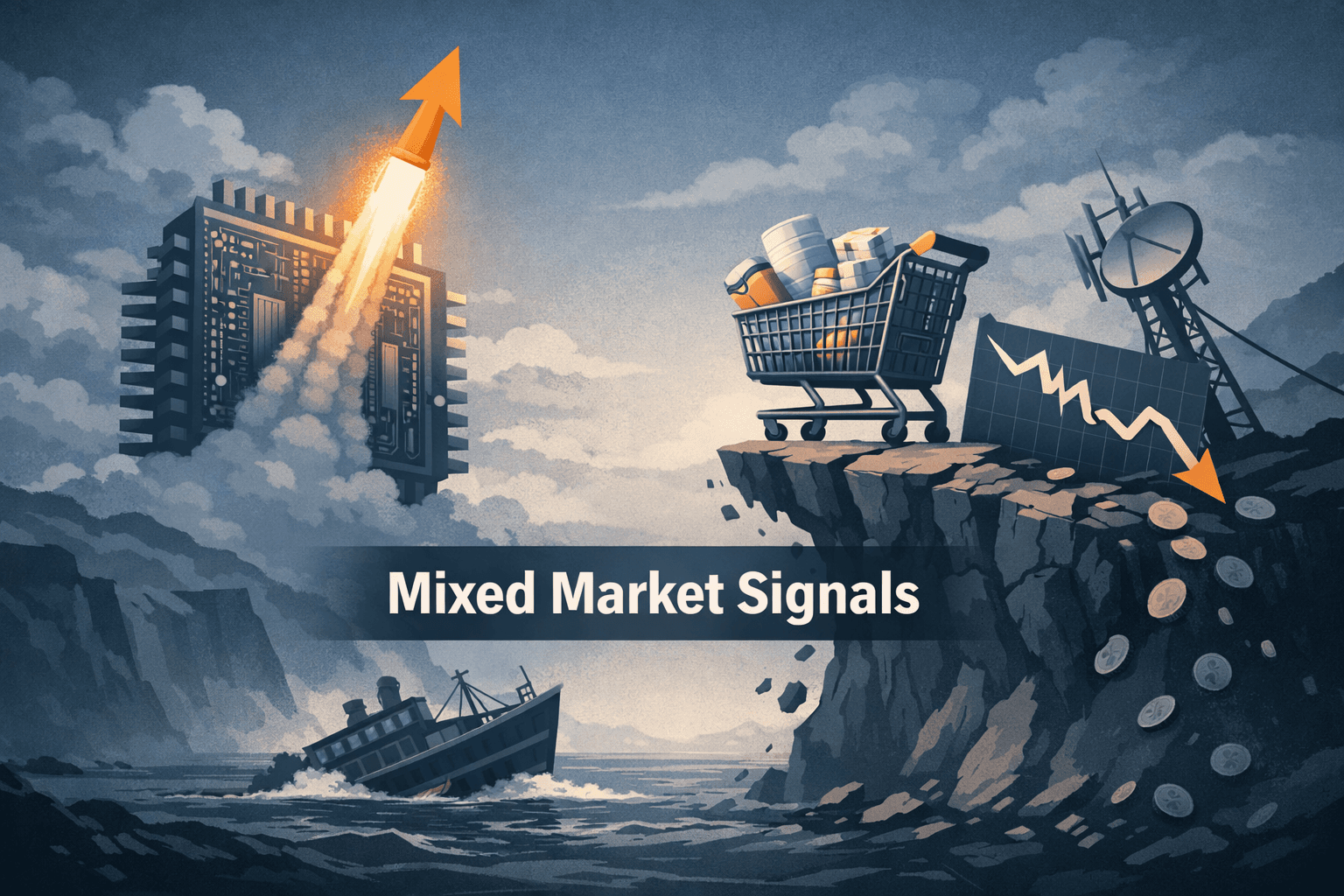
Tech Upgrades, a Volatility Shock in Intel, and Resilient Retail: Mixed Signals Define Market Positioning Heading into May 11
Podcast • Loading audio...
Share this article
Spread the word on social media
Key Takeaways
- •Intel’s 13.93% one‑day surge to $124.89 on 222.32M shares highlights a sharp divergence between market action and a cited analyst target (~$75.64).
- •Multiple upward analyst revisions (Cisco to $110, Alphabet to $460, Qualcomm to $220, Linde to $560) point to renewed conviction in cloud, networking silicon, and diversification beyond handset cycles.
- •Not all target raises equal bullish stances: Morgan Stanley raised ADM’s target to $58 but kept Underweight; Erste downgraded Verizon to Hold over earnings‑growth concerns.
- •Costco’s April results (net sales $23.92B, ~13% YoY; digital sales +~19%) reinforce membership and digital resilience; microcap volatility (ENGNW -47.83% to $0.12) underscores liquidity risk.
Today's biggest market developments
The most attention-grabbing move was Intel’s dramatic one‑day jump — shares climbed 13.93% to $124.89 on May 8, trading 222.32 million shares. That spike created an unusually wide gap between the market price and published analyst valuation: the analysis notes an analyst price target of $75.64, underscoring a tension between market momentum and sell‑side consensus. At the same time, a cluster of analyst upgrades and target raises hit large-cap tech and industrials: Evercore lifting Cisco’s target to $110, Mizuho boosting Alphabet to $460, Argus raising Qualcomm to $220, and BMO reiterating an Outperform on Linde with a $560 target. On the other end of the spectrum, Erste Group downgraded Verizon to Hold on earnings-growth concerns, Morgan Stanley kept Archer‑Daniels‑Midland at Underweight despite raising its target to $58, and a microcap (ENGNW) plunged 47.83% to $0.12 on thin volume. Costco reported stronger‑than‑expected April sales, with net sales of $23.92 billion for the four‑week month ended May 3 — up roughly 13.0% — and digital sales rising nearly 19%.
Synthesizing the themes across analyst notes
Re‑rating in semiconductors and cloud exposure: Multiple upward target revisions point to renewed conviction in select technology exposure. Argus raised Qualcomm’s target to $220 (from $180), explicitly saying momentum extends beyond handset cycles. Mizuho boosted Alphabet to $460 (from $420), citing a stronger Google Cloud outlook. Evercore’s Cisco note highlights Silicon One as underappreciated upside and raised the target to $110. Collectively, these moves suggest analysts see durable revenue mix improvements (cloud, networking silicon, diversification) that justify higher multiples.
Momentum vs. valuation tension: Intel’s 13.93% surge on heavy volume is the clearest example of market action moving faster than consensus valuation. A trade at $124.89 versus an analyst target around $75.64 is a concrete data point showing either market participants are pricing in new information (or sentiment) ahead of coverage, or analysts are conservative relative to short‑term flows. Analysts’ target changes elsewhere also reflect re‑rating narratives, but the Intel case highlights how single‑day volume and directional conviction can disconnect price from published targets.
Selective caution amid upside: Not all analyst responses are uniformly bullish. Morgan Stanley raised ADM’s target to $58 from $54 but stayed Underweight, a split signal that underscores rising price vs. residual operational or macro risks. Erste’s downgrade of Verizon to Hold points to concerns about earnings growth lagging peers even for established income‑oriented names. These notes are reminders that price‑target increases do not always equate to constructive ratings — firms can tighten or widen targets while retaining cautious stances.
Resilient consumer demand and the membership model: Costco’s April sales beat — $23.92B net sales for the four‑week month, up c.13.0%, and digital sales up nearly 19% — reinforce the narrative of membership durability and e‑commerce expansion. For investors, that combination supports the premium valuation usually afforded to Costco and bolsters expectations for recurring income models.
Liquidity and microcap volatility: ENGNW’s 47.83% collapse to $0.12 on modest volume (95.55K shares) is a textbook reminder that small‑cap moves can be extreme and often reflect low depth rather than fundamental shifts. Analysts note these episodes amplify tail risk in speculative holdings.
Conflicting views and where analysts diverge
Intel: Market action vs. analyst targets. The surge implies fresh optimism or short‑covering dynamics, but the wide gap to the cited $75.64 target signals disagreement between intraday traders and longer‑horizon sell‑side analysts. The divergence raises the question of whether the rally reflects durable fundamentals (new product wins, contract announcements, or margin inflection) or transient flows (rebalancing, options expiration, or news mispricing).
ADM and Linde: price‑target raises with divergent stances. Morgan Stanley raised ADM’s PT to $58 but kept Underweight; BMO raised Linde’s PT to $560 and reiterated Outperform, with RBC flagging potential guidance upside. The contrast demonstrates that analysts can see earnings and guidance upside yet differ on broader industry, capital allocation, or relative value judgments.
Telecom vs. tech income plays: Erste’s downgrade of Verizon to Hold — citing earnings growth that trails peers — contrasts with bullish pushes in tech and industrials. For income‑oriented investors, the debate centers on whether yield plus modest growth is sufficient relative to higher‑growth, potentially higher‑volatility alternatives.
Deeper context on major moves
Intel’s volume‑backed rally: A one‑day, 13.93% gain on 222.32M shares is notable both for magnitude and liquidity. Heavy volume suggests active participation beyond a handful of trades; that can mean repositioning by larger funds, the presence of catalyst headlines, or technical momentum (short squeezes, options‑driven delta). However, the presence of a large discrepancy with the analyst target suggests either (a) analysts have not yet incorporated new information, (b) the market is overpricing short‑term sentiment, or (c) sell‑side valuation models differ materially in their assumptions on margins, TAM, or capital intensity. Investors should be mindful that episodic large moves often attract follow‑through trading but can also reverse if not underpinned by confirmed fundamental updates.
Upgrades in networking and cloud: Cisco’s Silicon One and Alphabet’s Google Cloud upgrades reflect two related themes: higher‑performance networking silicon and cloud monetization are being priced as drivers of multi‑year revenue mix improvement. For Cisco, Silicon One could expand addressable market in service provider routing and hyperscale interconnects; for Alphabet, improving cloud margin trajectories and mix can justify higher multiples. These upgrades frequently precede incremental investor attention and can shift relative sector valuation leadership.
Qualcomm’s broadened thesis: Argus cites strength beyond handset chips, indicating diversification into automotive, RF front‑end, and infrastructure can decouple QCOM’s performance from cyclical handset swings. If revenue streams diversify and margins stabilize, analysts will likely continue to lift PTs — but execution and competitive dynamics (e.g., from MediaTek, Nvidia, Broadcom) remain watchpoints.
Costco’s sales read: Membership renewal economics make top‑line strength particularly levered into durable cash flows. A 13% month‑over‑year sales gain and ~19% digital uplift support a thesis of resilient discretionary spending among Costco’s customer base, which can underwrite continued premium valuation for investors focused on secular, recurring revenue.
Microcap risk exemplified: ENGNW’s near‑halving in a single day on low volume underscores liquidity risk. For portfolios with microcaps or speculative exposure, stop‑loss discipline, position sizing, and depth analysis are critical risk controls.
Implications for different investor types
Long‑term growth investors: Analyst upgrades on Alphabet, Qualcomm, and Cisco indicate areas where durable secular growth (cloud, diversified semiconductor end markets, networking silicon) is being priced in. However, these investors should reconcile higher targets with underlying revenue and margin assumptions and be mindful of cyclicality in semiconductors.
Value and income investors: The Eerste downgrade of Verizon and Morgan Stanley's cautious stance on ADM despite a higher PT illustrate that traditional yield names can face growth limitations. Income investors may need to weigh yield stability against potential earnings stagnation and look at cash flow trajectories rather than headline yields alone.
Momentum/short‑term traders: Intel’s volume‑backed surge creates near‑term trading opportunities but also elevated risk if the move lacks fundamental confirmation. Likewise, microcap spikes and collapses (ENGNW) are fertile ground for volatility‑based strategies but require strict liquidity consideration.
Defensive/quality investors: Costco’s resilient sales reinforce the appeal of membership models and companies with recurring revenue and pricing power. Linde’s reiterated Outperform and potential guidance upside (per RBC) highlight industrials with pricing pass‑through ability.
Strategic considerations and watchlist items heading into the next session
Validate catalysts behind Intel’s move: Watch SEC filings, company statements, and earnings/corporate‑event calendars. If the rally is driven by confirmed contract wins, margin outlook improvement, or guidance changes, pricing may be durable. If not, mean reversion is possible.
Track cloud and networking earnings flow: Alphabet and Cisco upgrades put the spotlight on cloud ingestion and routing demand; upcoming quarterly disclosures and guidance commentary will be key to cementing re‑ratings.
Monitor guidance vs. headline PTs: Where firms raise price targets but maintain cautious ratings (ADM) or downgrade names despite yield (VZ), look for the underlying assumptions that drive the divergence — commodity exposure, margin pressure, or structural demand shifts.
Maintain liquidity and position‑size discipline in small caps: ENGNW’s large single‑day move is a reminder that low float and shallow order books magnify downside.
Watch consumer patterns beyond April: Costco’s strong read may presage solid consumer spending into summer, but investors should monitor wage data, gasoline prices, and discretionary categories for signs of strain or further resilience.
Conclusion
The last 24 hours painted a market picture of selective re‑rating — particularly within semiconductors, cloud, and networking — coinciding with episodic volatility that separates short‑term price action from longer‑term analyst consensus. Analysts are raising targets where they see durable structural improvement, but pockets of caution persist, especially among income and commodity‑exposed names. For investors, the prevailing message is layered: identify whether price moves reflect confirmed fundamental change or sentiment‑driven flows, reconcile upgraded targets with modeled assumptions, and adapt risk management to the liquidity profile of holdings.
This synthesis is informational and does not constitute investment advice. Analysts note that sentiment and price‑target moves reflect forward expectations and assumptions that merit independent review before any portfolio action.
Sources
Use these insights — enter this week's contest.
Free practice contests — earn Alpha CoinsExplore More Content
Disclaimer: StockAlpha.ai content is for informational and educational purposes only. It is not personalized investment advice. Sentiment ratings and market analysis reflect data-driven observations, not buy, sell, or hold recommendations. Always consult a qualified financial advisor before making investment decisions. Past performance does not guarantee future results.