 Breaking Analysis
Listen to this Recap
9:43
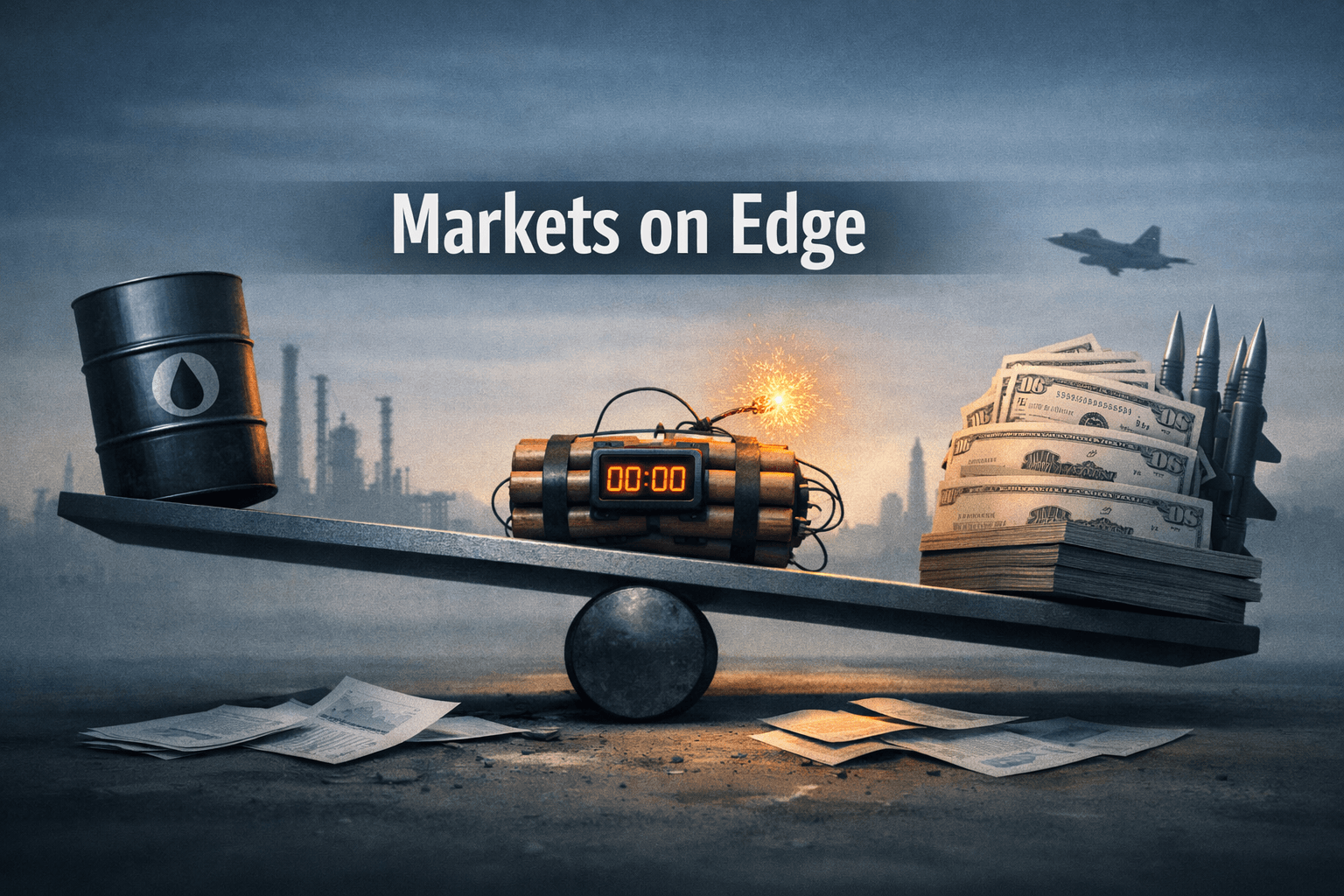
Markets Reprice Risk as Pause on Iranian Strikes Collides With Broader Threats — Oil, Treasuries and Corporate Filings Drive Volatility
Podcast • Loading audio...
Share this article
Spread the word on social media
Key Takeaways
- •A five‑day pause on strikes reduced immediate geopolitical risk, sending Brent down as much as 14% (intraday low around $96/barrel, later near $101) and helping equities and Treasury yields retrace earlier stress.
- •Conflicting signals persist: Iran’s reported threats to Treasury buyers and a 48‑hour political ultimatum increase the risk of episodic fixed‑income stress despite the de‑escalation headline.
- •Multiple corporate filings (8‑Ks) and a Pfizer/Valneva regulatory move in vaccines kept micro‑level catalysts active; investors should review exhibits and disclosures for dilution or operational changes.
- •Short‑term crypto and small‑cap liquidity events (e.g., Bybit listing AOA with a 7,000 USDT prize pool) can produce localized volatility and should be treated as tactical, not structural, market signals.
Today's top development: a pause that didn't settle the market
The single most consequential development for markets on Mar 23 was the White House announcement that President Trump ordered a five‑day pause on military strikes targeting Iranian energy infrastructure to allow diplomacy and an economic-impact review. That pause triggered an immediate unwind in earlier risk premia: Brent crude retreated sharply — at one point down as much as 14% — falling to a low near $96/barrel before later settling closer to $101. Equities trimmed earlier risk aversion and climbed, while the recent surge in Treasury yields paused.
But the market's sigh of relief was qualified. Separate reporting the same day noted Iranian rhetoric broadened to explicitly threaten buyers of U.S. Treasuries, and a 48‑hour political ultimatum tied to the conflict remained in play. That dynamic — a de‑escalation window on one hand, explicit threats aimed at the global safe‑haven market on the other — created the mixed signals that dominated today's tape.
Synthesis: four cross‑cutting themes
- Geopolitics remains the dominant macro driver, but the narrative is fractured.
- The five‑day operational pause (Analysis: "Trump Pauses Strikes On Iranian Energy Sites") was interpreted by traders as reducing the immediate risk of a wider Middle East conflagration, prompting the sharp oil move and a near‑term shift back toward risk assets (Analysis: "Stocks Rise, Oil Falls: Markets Wrap - Mar 23").
- Contradicting that relief, reporting that Iran is threatening buyers of U.S. Treasuries (Analysis: "Iran Threatens US.S. Treasury Buyers - Mar 23") injects a direct challenge into the global fixed‑income plumbing and raises the prospect of demand disruptions if foreign holders step back.
- Oil volatility is transmitting to inflation and rates expectations.
- A ~14% intraday swing in Brent — from highs before the pause to a $96 intraday low and a later ~$101 settle — matters because oil is a proximate input to headline inflation and to real‑time inflation expectations that can influence Fed policy pricing. Analysts note the drop trimmed a key near‑term inflation input and helped relieve upward pressure on yields.
- Fixed income is now a geopolitical front.
- Threats aimed at Treasury buyers are not simply rhetorical; they could affect auction demand, dealer positioning and foreign official flows — all of which underpin liquidity and yield curves. The market reaction today — a pause in the yield surge — reflects traders pricing a lower near‑term risk of escalation, but the explicit targeting of Treasuries increases the probability of episodic volatility and illiquidity in the weeks ahead.
- Corporate and sector micro‑events remain active amid macro noise.
- Defense contractors (Lockheed Martin $LMT and Raytheon Technologies $RTX were called out in coverage) showed volatility as the military‑action storyline shifted. Energy producers and related cyclicals also felt the swing in oil.
- At the same time, discrete corporate news continued: Pfizer and Valneva said they will seek regulatory approval for a Lyme vaccine (moving from R&D to potential revenue recognition), and multiple small‑cap and mid‑cap companies filed Form 8‑Ks (Tempest Therapeutics, Avalo Therapeutics, Pyxis Oncology, Victory Capital, News Corp) with items ranging from material agreements and unregistered equity sales to Regulation FD disclosures.
Where analysts agree — and where they don't
Agreement:
- Most analyses concur that the pause announcement was the proximate cause of the oil plunge and that lower oil reduces near‑term inflation pressure and eases some upward pressure on Treasury yields (Analyses: "Trump Pauses...", "Stocks Rise, Oil Falls...").
- There is consensus that corporate 8‑Ks and regulatory filings warrant careful review; they are informational catalysts that can drive idiosyncratic moves (Analyses: Tempest, Avalo, Pyxis, Victory, News Corp).
Divergence / debate:
- Magnitude and persistence of the de‑risking: Some market observers treat the five‑day pause as a meaningful cooling period that allows diplomacy to take hold and risk premia to retrench; others emphasize the compressed political timeline (the 48‑hour ultimatum) and Iran's expanded targeting of Treasury buyers to argue the de‑escalation may be fragile and episodic (Analyses: "Trump Pauses..." vs "Iran Threatens U.S. Treasury Buyers").
- Fixed‑income outlook: One camp views the pause and falling oil as a near‑term relief for yields (i.e., lower inflation inputs and a lighter near‑term path for Fed tightening), while another stresses that threats to Treasury demand could produce higher yields and volatility regardless of oil (Analyses: "Stocks Rise, Oil Falls..." vs "Iran Threatens...").
Deeper context on the major moves
Why a five‑day pause moves markets
- Markets are forward‑looking and sensitive to abrupt changes in geopolitical risk. A pause reduces the immediate probability of air strikes and a wider regional escalation that could disrupt oil exports, shipping lanes or spark retaliatory attacks. That lowers risk premia priced into oil and into yields, which explains brisk short‑covering in both markets.
Why threats to Treasury buyers matter
- U.S. Treasury securities are the bedrock of global finance: they serve as collateral in financial markets, underpin money‑market liquidity and are a reference instrument for governments, corporates and banks. If rhetoric or actions impair the willingness of major foreign holders (sovereign wealth funds, central banks, large asset managers) to buy Treasuries, auction stop‑out yields could rise, term premia could spike and liquidity could ebb in stressed conditions. That is why the Iranian statements flagged by reporters were read as particularly consequential by fixed‑income analysts.
Why biotech and corporate filings still move the tape
- Form 8‑Ks (filed by Tempest, Avalo, Pyxis, Victory, News Corp) are legal disclosures that bring new information into the market quickly. Items such as "material definitive agreement," "unregistered equity sales," or "results of operations and financial condition" can signal dilution risk, changes in corporate strategy, or updated performance metrics. Regulation FD disclosures (as with Pyxis) are intended to ensure fair disclosure to investors; when combined with operational updates they can alter near‑term sentiment for smaller capitalizations.
Specific data points to track (from today's coverage)
- Brent crude intraday swing: down as much as 14%; low near $96/barrel; later settling near $101/barrel.
- U.S. policy action: five‑day pause on strikes announced by the White House.
- Political timeline: press reports referenced a 48‑hour ultimatum/decision window that remains in force.
- Crypto P2P event: Bybit listed the Angolan kwanza (AOA) and launched a 7,000 USDT trading kickoff — a micro‑liquidity and volatility event for AOA pairs (Analysis: "Aoa Breaking News Update - Mar 23").
- Filings: Pyxis Oncology 8‑K accession no. 0001193125‑26‑118525, file size 22 MB (flagging substantive exhibits); Avalo CIK 0001534120, accession 0001534120‑26‑000010; Tempest 8‑K noted material definitive agreement and unregistered equity sales (filed Mar 23).
Implications for different investor types
Fixed‑income and macro allocators
- Analysts note the dual forces at work: lower oil reduces near‑term inflation upside, but explicit threats to Treasury buyers increase the odds of episodic demand shocks. Portfolio managers should monitor Treasury auction results, dealer balance sheet capacity, bid/cover ratios and cross‑market liquidity indicators. Elevated headline risk suggests higher tail‑risk insurance premia for short‑dated options and potential value in liquidity buffers.
Equity investors (institutional and active traders)
- Sector rotation is the immediate effect: energy and certain commodity‑linked names retraced gains as oil fell; defense contractors showed heightened intraday volatility as the strike narrative evolved. Tech and broad risk assets lifted on the risk‑on impulse (Analyses: "Stocks Rise..."). Active traders should expect continued headline‑driven intraday swings, while investors with longer horizons may incrementally reassess sector exposure in light of potential, not guaranteed, shifts in inflation and rates.
Biotech and small‑cap holders
- Multiple 8‑Ks and regulatory notices increase information flow; some filings (Tempest) hint at potential dilution (unregistered equity sales) or new contractual obligations (material definitive agreement). Investors should read the exhibits and disclosures rather than relying on headlines: 8‑Ks are often the first hint of material change but require detail to assess impact.
Crypto and emerging‑market currency traders
- The Bybit AOA listing with a 7,000 USDT prize pool is a short‑term liquidity and volume catalyst for the Angolan kwanza in P2P markets. Such exchange‑led campaigns can produce transient spreads and traded volume; disciplined risk controls are advisable.
Strategic considerations and monitoring checklist
- Monitor the geopolitical timeline: the five‑day pause vs the 48‑hour ultimatum — both can abruptly change market pricing.
- Watch crude levels closely: $96–$101 was the intra‑day range; a renewed move above prior highs would reintroduce inflation and rates pressure.
- Track Treasury auction demand and foreign flows: weak bid/cover ratios or outflows from major holders would be an early warning of structural stress.
- Read 8‑K exhibits and regulatory filings: especially for small caps and biotech, where the devil is in the attachment pages.
- Be alert to heightened intraday volatility in defense, energy, trending tech names (Tesla, Alphabet, Synopsys, Endeavour Mining) and newly listed crypto pairs (AOA on Bybit).
Conclusion
Today’s tape illustrates how markets can simultaneously price relief and elevated risk: a presidential pause on strikes pushed oil sharply lower and gave stocks a lift, but explicit threats aimed at Treasury buyers and a compressed political timeline kept the core safe‑asset plumbing at risk of episodic disruption. That duality argues for active monitoring of geopolitical headlines, oil and Treasury market microstructure, and detailed review of company filings that can move idiosyncratic positions. Analysts note that the next 48 hours will likely determine whether the pause develops into meaningful de‑escalation or whether renewed threats force a repricing of both inflation and term premia.
(For informational purposes only: this synthesis presents market analysis and key data points from multiple Alpha Breaking articles dated Mar 23, 2026. It is not personalized investment advice.)
Sources
+ 1 more sources
Use these insights — enter this week's contest.
Free practice contests — earn Alpha CoinsExplore More Content
Disclaimer: StockAlpha.ai content is for informational and educational purposes only. It is not personalized investment advice. Sentiment ratings and market analysis reflect data-driven observations, not buy, sell, or hold recommendations. Always consult a qualified financial advisor before making investment decisions. Past performance does not guarantee future results.
Spotted something wrong? Report an error.