 Breaking Analysis
Listen to this Recap
9:49
Photonics and Geopolitics Lead a Choppy Market: POET's AI Moment, Oil's Surge, and a Fed-Driven Risk Pause
Podcast • Loading audio...
Share this article
Spread the word on social media
Key Takeaways
- •POET’s photonic packaging and the announced 1.6T 2×DR4 transceiver advance the case for optics inside AI data centers, but manufacturing scale and systems integration remain critical hurdles.
- •Oil’s roughly 4% rally on March 17 reprices a near-term supply-risk premium tied to the Strait of Hormuz and increases sector-specific volatility.
- •Pre-Fed positioning left ETFs modestly higher ($SPY +0.2% pre-market) while futures were mixed, underscoring macro caution that could amplify idiosyncratic moves.
- •Multiple routine and amended 8-K filings across small- and mid-cap names add informational noise but can presage idiosyncratic volatility; track Item-level disclosures for specifics.
- •A quantum error-correction integration (Qblox + Riverlane) is a notable technical milestone, but lacks immediate commercial metrics — monitor for translation into product revenue.
Today's most significant market developments
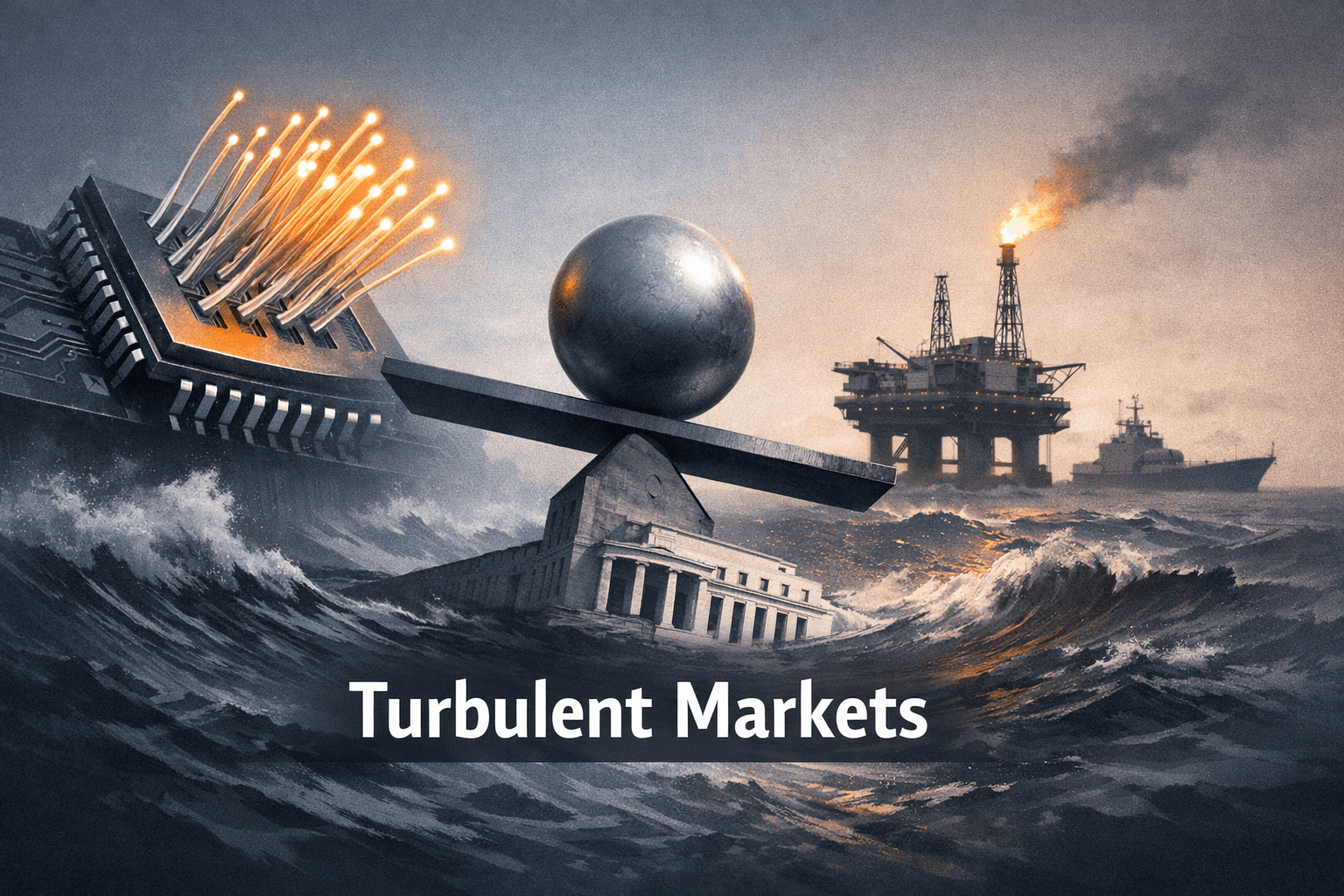
Two items dominated market attention on March 17: technological progress in AI infrastructure led by POET Technologies and a sharp geopolitical-driven move in oil prices. POET and partner Lessengers announced joint work on a 1.6T 2×DR4 optical transceiver targeted at hyperscale AI clusters, and broader coverage of POET highlighted its wafer-level photonic packaging and Optical Interposer™ platform as a potential bridge for data-center optics. At the same time, crude jumped roughly 4% as doubts surfaced about a U.S.-backed plan to secure shipping through the Strait of Hormuz, introducing a near-term supply-risk premium. All of this unfolded against a muted-but-cautious market backdrop: the SPDR S&P 500 ETF Trust ($SPY) was up about 0.2% in pre-market trade as investors squared positions ahead of a Federal Reserve policy meeting.
Synthesis: key themes across today's coverage
- Structural technology upgrades vs. manufacturing and systems hurdles
- Analysts note a clear bifurcation: the technical case for moving more server and rack-level links from electrical to optical is growing as AI model sizes and cluster throughput demands escalate. Reporting on POET emphasizes practical photonic packaging approaches — wafer-level bonding of optical components to silicon and fiber substrates — that aim to lower power per bit and increase interconnect density. The Lessengers collaboration advances that narrative with a 1.6T 2×DR4 transceiver prototype, a concrete data point for higher-density optical modules.
- At the same time, multiple analyses stress scaling concerns: manufacturing yield, volume economics, thermal and systems integration remain material obstacles. In plain terms, a promising photonic engine needs reliable, cost-effective packaging and a clear path to plug-into existing server and switch ecosystems before it meaningfully displaces electrical links.
- Geopolitical shocks reintroduce commodity-driven volatility
- The roughly 4% intraday jump in oil reflects market pricing of increased disruption risk for a critical chokepoint (the Strait of Hormuz). Analysts point out that even without an immediate stoppage, the risk premium raises short-term volatility for commodity-sensitive exposures and can cause rapid sectoral re-rating for energy names.
- Macro caution: Fed uncertainty tempers market action
- ETF flows and futures behavior show a cautious tilt: modest inflows into broad-market ETFs and a mixed futures tape suggest institutional positioning is being rechecked ahead of the Fed. That backdrop makes it likelier that high-conviction thematic moves (like energy on geopolitical news or niche tech re-ratings) will dominate relative performance in the near term.
- Non-price signals matter: corporate filings and technical milestones
- A tranche of Form 8-Ks and amended filings (Infinity Natural Resources 8-K/A AccNo 0001193125-26-109459 and 0001193125-26-109468; Victory Capital AccNo 0001104659-26-028975; Core Laboratories amended 8-K; Bicycle Therapeutics officer departures; Picard Medical Reg FD) created informational noise but also signals to monitor for governance, accounting, or operational changes. Separately, quantum tech players Qblox and Riverlane publicized an integration of Riverlane’s Deltaflow® real-time quantum error correction with Qblox control electronics — a technical milestone with longer-term implications for quantum computing fidelity.
Conflicting views and market debates
Photonics optimism vs. manufacturing realism: Market commentators and company disclosures converge on the idea that optics are necessary to scale AI compute efficiently, but they diverge on timing. Optimists point to demonstrable modules and partnerships (POET + Lessengers’ 1.6T transceiver) as evidence that the industry is moving from lab to datacenter. Skeptics emphasize yield, packaging cost curves, connectorization and systems-integration timelines — any of which could delay broad adoption by multiple quarters or years.
Macro calm vs. episodic risk: The modest pre-Fed moves in ETFs suggest a market that's not yet pricing a sharp policy surprise. Yet geopolitically driven energy moves (oil +4%) show how idiosyncratic shocks can quickly override macro complacency and produce concentrated volatility. Traders and allocators therefore face a tension: position for a measured macro outcome or hedge against episodic shocks that impact only parts of a portfolio.
Technical milestones vs. near-term market impact: The Qblox–Riverlane demonstration is important for quantum roadmaps, but analysts caution it lacks near-term commercial metrics; the absence of revenue or price moves means the market response may be muted until these technologies translate into scalable product revenue.
Deeper context on major moves
POET and optical interconnects
- What the technology does: Wafer-level photonic packaging bonds optical components onto silicon and fiber substrates at scale, enabling denser, lower-power optical channels inside racks and between servers. Optical interconnects reduce heat and power draw for high-bandwidth links compared with electrical copper lanes, a growing constraint as AI training clusters expand.
- The 1.6T 2×DR4 concept: As described by POET and Lessengers, a 1.6T transceiver aims to provide multi-terabit aggregate bandwidth in compact form factors. In practice, that means enabling higher port densities on switches and closer integration between compute blades without the power and thermal penalties of equivalent electrical links.
- Scaling constraints: Manufacturing yield, testability at wafer scale, thermal management under dense packaging, and the cost of retrofitting systems architecture are cited as the core challenges. Analysts note that the technical lead must be matched by supply-chain scale and standards acceptance (form factors, pluggability) to drive durable adoption.
Oil move and Strait of Hormuz risk
- Why it matters: The Strait of Hormuz is a critical artery for global oil shipments; doubts about the effectiveness of security arrangements translate into immediate risk premia. A 4% move in crude in a single session materially adjusts short-term breakeven calculations for energy producers and can affect cash flows for commodity-linked firms.
- Portfolio effects: Energy sector correlation to the broader market can decouple in these events — energy may rally while growth or risk-sensitive sectors lag — prompting short-term allocation frictions.
Fed positioning and ETF flows
- Market mechanics: With $SPY up ~0.2% pre-market, traders are not dramatically repositioning but are modestly leaning into broad exposure while remaining cautious. ETF flow dynamics can amplify intraday moves because large passive vehicles concentrate liquidity.
Quantum error correction milestone
- Why real-time QEC matters: Quantum error correction seeks to suppress logical error rates by detecting and correcting qubit errors faster than they accumulate. Deltaflow® integration with control electronics points to lower-level systems maturity, a prerequisite for pushing from few-qubit testbeds toward fault-tolerant architectures. The commercial timeline remains uncertain, but the engineering step is notable.
Implications for different investor types
Long-term technology allocators: Analysts note the POET developments reinforce the structural bull case for AI infrastructure upgrades but also urge monitoring of commercialization metrics (volume shipments, yields, ADI and OEM partnerships). Long-term investors should watch adoption signals in hyperscalers and networking OEMs rather than early product demos alone.
Active sector/short-term traders: Today’s oil spike illustrates how geopolitics can create quick, sector-specific opportunities and risks. Traders should expect higher intraday volatility in commodity-related equities and closely related credit spreads.
Event-driven and corporate-governance watchers: The cluster of 8-K and 8-K/A filings across small-cap and mid-cap issuers highlights the importance of digesting regulatory filings for governance or accounting developments that can drive idiosyncratic moves. Item-level detail (e.g., Item 2.02 operational results, Item 5.02 officer departures, Item 7.01 Regulation FD) matters.
Portfolio risk managers and allocators: The combination of macro uncertainty (Fed) and idiosyncratic shocks (oil) suggests maintaining liquidity buffers and recalibrating stress tests to include both policy-shock scenarios and concentrated supply disruptions.
Strategic considerations and what to monitor next
For AI-infrastructure watchers: Track POET and partners for shipment volumes, yield improvements, and OEM/system integrator announcements. Industry acceptance will hinge on plug-and-play compatibility and cost-per-bit parity with electrical links.
For macro and commodity risk monitoring: Watch diplomatic and military developments in the Gulf, shipping-insurance pricing, and front-month crude term structure for signs the oil move is persistent (backwardation) or a transitory repricing (contango normalization).
For short-term market positioning: The Fed meeting is the immediate catalyst; watch Fed communications for forward guidance on rate-path expectations — a surprise can reaccelerate volatility across equities and fixed income.
For corporate disclosure tracking: Scan Item-level 8-K updates for material governance, accounting, or operational revisions. Accession numbers and CIKs in SEC filings provide direct links to primary documents (examples from today include Infinity Natural Resources 8-K/A filings and several amended 8-Ks), and these can preface price reactions for under-followed issuers.
Closing note (Important — investment disclaimer)
This synthesis presents market analysis and summaries of public filings and corporate disclosures for informational purposes only. It does not constitute personalized investment advice and does not recommend buying, selling or holding any specific security. Analysts note market momentum and technical progress in several areas, but also emphasize remaining execution and macro risks that could materially affect outcomes.
Sources
+ 2 more sources
Use these insights — enter this week's contest.
Free practice contests — earn Alpha CoinsExplore More Content
Compensation Disclosure: Jefferson Equity Derivatives & Intelligence LLC has been compensated for the promotion of POET Technologies Inc. (NASDAQ: POET). POET Technologies Inc. paid five hundred five thousand dollars ($505,000) USD Cash for a marketing program (March 1, 2026 through December 31, 2026). As a result, our opinion is neither unbiased nor independent. The publishers hold no securities of the Company. This marketing may increase investor awareness, trading volume, and share price, which may be temporary. Full disclaimers.
Disclaimer: StockAlpha.ai content is for informational and educational purposes only. It is not personalized investment advice. Sentiment ratings and market analysis reflect data-driven observations, not buy, sell, or hold recommendations. Always consult a qualified financial advisor before making investment decisions. Past performance does not guarantee future results.
Spotted something wrong? Report an error.