
 Alpha Breaking
This Could Be the 10-Year Treasury’s Tipping Point - Sep 1
Share this article
Spread the word on social media
The Big Picture
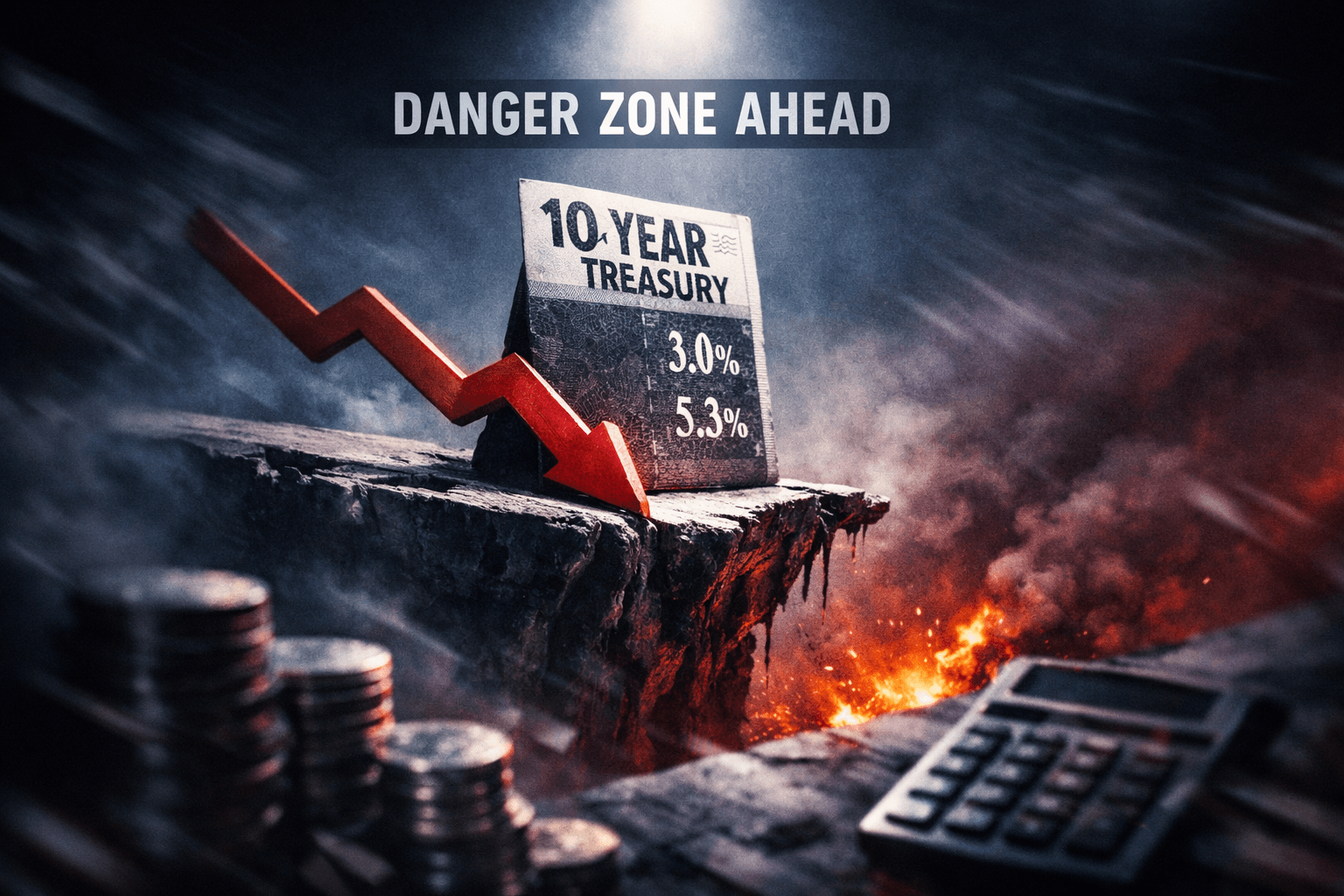
The 10-year Treasury yield sitting near 3% has pushed bond markets toward levels not seen since 2008, and that shift matters for every investor’s cost of capital and risk exposure.
Higher yields increase borrowing costs for households, businesses and governments, and they can pressure equity valuations by lifting discount rates. For portfolio managers and retail investors alike, this is a moment to reassess duration risk and valuation assumptions.
What's Happening
Bonds have entered a sustained sell-off that lifted global yields sharply. Market commentary points to an "unrelenting rout" that has driven benchmark yields to decade-plus highs, with direct consequences for borrowing and asset prices.
- 10-year Treasury yield: near 3%, a level flagged by analysts as a turning point for duration-sensitive assets.
- Highest yield comparison: yields are at levels not seen since 2008, underscoring the scale of the move.
- Policy floor reminder: 0% remains the historical low reference for global rate cycles and helps frame the magnitude of the current rise.
- Bond pricing context: many benchmarks still quote par at $100, so rising yields correspond with falling bond prices, which matters for total returns.
Those data points are important because they let investors translate yield moves into valuation shifts. A 10-year yield creeping around 3% raises discount rates used for equity valuations and increases financing costs for leveraged companies and consumers.
Multiple data points are available for valuation analysis, from current yield levels to long-term floor comparisons. That lets you model scenarios where yields keep rising versus stabilizing, and estimate impacts on equity multiples and fixed-income total returns.
Why It Matters For Your Portfolio
Rising 10-year yields affect almost every asset class. Higher benchmark yields typically lower present values for future cash flows, which compresses price/earnings multiples for growth stocks and pressures interest-sensitive sectors like utilities and real estate.
Who should care: growth investors because discount-rate pressure can dent long-duration gains; value investors because rising yields can re-rate cyclicals differently; income investors because higher yields may offer better entry yields but also risk principal if yields climb further; traders because volatility often increases around regime shifts. Analysts note that yields near 3% are a meaningful reference point for repricing.
Risks To Consider
- Rate Shock Risk: If yields continue rising from roughly 3%, bond prices will fall further and could trigger losses for long-duration bond funds and ETF holders.
- Economic Feedback: Higher borrowing costs can slow growth, hurt corporate earnings, and increase default risk for financially stretched borrowers, creating a bear case for equities.
- Volatility And Liquidity: Sharp shifts in yields can tighten market liquidity and widen bid-ask spreads, making tactical trades more costly and riskier.
What To Watch Next
Investors should track policy signals, macro prints and technical yield levels to gauge whether the 10-year’s move is transitory or the start of a new regime. Watch how markets react at the roughly 3% yield level and whether that leads to broader repricing.
- Fed and central-bank communications for guidance on rate paths and balance-sheet plans.
- Inflation indicators and CPI readings, which can push yields higher if inflation remains elevated.
- Key technical levels around 3% for the 10-year yield, which act as psychological and valuation reference points.
- Credit spreads and corporate bond issuance, which reveal stress in borrowing markets as yields rise.
The Bottom Line
- Yields near 3% mark a potential tipping point that raises borrowing costs and valuation pressure across portfolios.
- Use multiple data points to stress-test portfolios, including scenario analyses that move yields higher or lower from current levels.
- Duration is a key risk factor now; shorter-duration allocations reduce sensitivity to further yield rises.
- Watch economic signals and technical yield levels before making large allocation shifts; analysts note the situation remains fluid.
- Remember that $100 par pricing means rising yields translate directly into price declines for fixed-rate bonds, so manage position sizing accordingly.
FAQ
Q: How does a 3% 10-year yield affect stock valuations?
A: Higher 10-year yields raise discount rates used in valuation models, which tends to lower present values of future earnings and can compress price/earnings multiples, especially for long-duration growth stocks.
Q: Should I sell bonds if yields are rising?
A: Rising yields reduce bond prices, but decisions depend on your time horizon, income needs and duration exposure. Many investors consider shortening duration or using laddered maturities to manage reinvestment risk.
Q: What indicators signal the move is over?
A: A persistent drop in inflation readings, clear dovish central-bank guidance, or a sustained move below the 3% level for the 10-year would suggest pressure on yields has eased. Monitor CPI, Fed commentary and auction demand closely.