
 Alpha Breaking
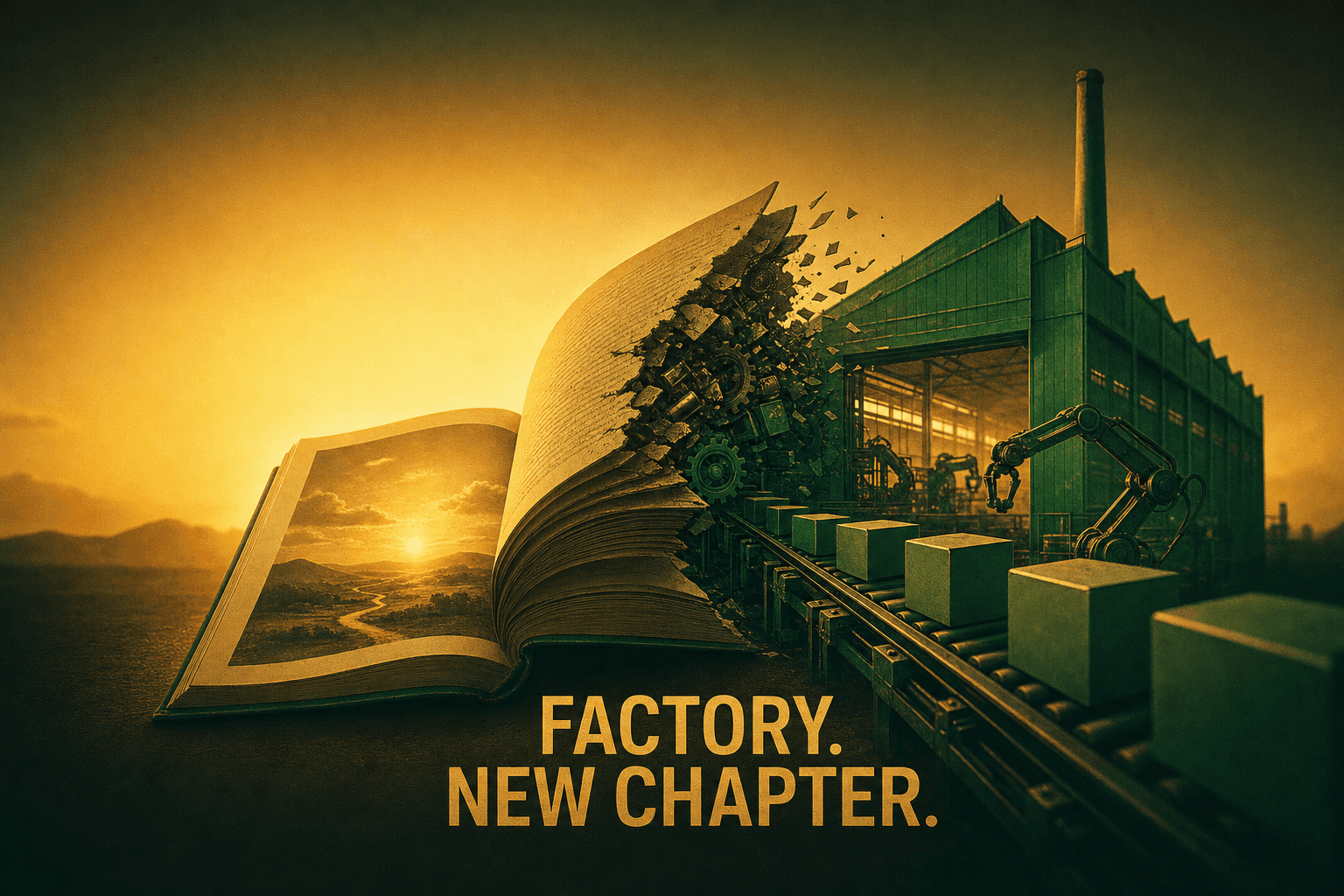
The Factory Changes the Story: Cizzle’s Manufacturing Pivot
Share this article
Spread the word on social media
Most early-stage consumer brands are asset-light by necessity. They design a product, outsource production to a co-manufacturer, and hand a slice of every dollar to someone else’s factory. It works, but it caps margin and leaves the brand dependent on third parties for supply. Cizzle Brands just stepped off that path.
What Cizzle Bought (The Moat)
Cizzle acquired Flow Water’s co-manufacturing business and rebranded it the CWENCH Hydration Factory. The asset did not come empty. According to the company’s investor materials, it carries roughly $183.9 million of contracted production revenue over the next five years, supported by approximately $157.6 million in take-or-pay penalties — meaning customers are contractually committed to a baseline of production whether or not they use the full capacity. The largest of those contracts are with BeatBox (about $111.9 million), Flow Water (about $26.4 million), and Joyburst (about $19.3 million). On a take-or-pay basis, the plant’s contracted revenue is described as roughly $25 million over seven months in fiscal 2026 and about $53 million in fiscal 2027.
The scarcity is the part most investors miss. The company describes the facility as the largest 500ml Tetra Pak co-packer in North America — a 110,000-square-foot plant running five production lines, with a sixth being commissioned. Specialized 500ml Tetra capacity is genuinely limited on the continent, which makes the asset hard to replicate and gives Cizzle pricing leverage with the brands that need that format. The acquisition also reportedly carries roughly $130 million in tax-loss carryforwards, which can shield future profits as the business scales.
Why It Changes the Investment Case
Three things shift the moment a brand controls its own manufacturing. First, margin: production done in-house keeps the margin that would otherwise leak to a third-party co-packer. Second, supply control: the brand is no longer at the mercy of someone else’s capacity, scheduling, or priorities — a real risk when a product is scaling from 1,000 to more than 6,000 doors. Third, revenue diversification: a manufacturing asset generates non-brand revenue by producing for other companies, a stream that is independent of how any single CWENCH flavor performs.
In plain terms, this is the difference between a brand story and an infrastructure-backed platform story. A brand can be copied. A brand that owns contracted manufacturing capacity, with a take-or-pay floor underneath it, is a meaningfully harder thing to compete with.
What Monster and Celsius Rent
It is worth contrasting this with how the category’s biggest winners actually got big. Monster and Celsius are two of the most successful beverage stories of the past two decades, and both are deliberately asset-light: they outsource production and lean on someone else’s distribution muscle. Monster plugged into Coca-Cola’s global system after a 2015 strategic partnership; Celsius transitioned its U.S. distribution to PepsiCo’s network through a 2022 agreement. That model works, and it made both companies enormous. But it also means the single most important piece of infrastructure is rented, not owned — and a rented advantage can be repriced or redirected by the partner who controls it. Cizzle is making the opposite bet at a far earlier stage: it owns the plant that makes the product. That is the structural point this whole series has been building toward — Cizzle owns what Monster and Celsius rent.
The Risk Worth Naming
Honesty matters more than hype, so name the trade-off: acquiring and integrating a manufacturing operation is a large undertaking for a company of this size, and it carries real execution risk — plant efficiency, customer retention on those contracts, the cost of bringing deferred maintenance and a sixth line online, and the capital structure used to fund the deal all matter. The company itself notes the plant was previously underinvested in under its prior owner, so the upside case depends on Cizzle actually lifting efficiency and utilization. Those operating details are exactly the kind of figures a serious investor should seek in the full filings rather than take on faith. The point is not that the factory is risk-free. The point is that it converts Cizzle from a brand that hopes to scale into a platform that controls how it scales.
How to Hold It in Your Head
The first article in this series said Cizzle is a platform. The second proved the platform is selling. This is the durability beat: the factory is the part of the story that makes the distribution growth defensible rather than borrowed. It is also why the one-sentence thesis includes the words “manufacturing control” — that phrase is doing real work.
Selling product and making product are now both proven. The remaining question is the hardest one for any consumer brand: does the market actually pull the product, or is it just being pushed onto shelves? That is next.