
 Alpha Breaking
Powell: AI Buildout Could Keep Rates Higher
Share this article
Spread the word on social media
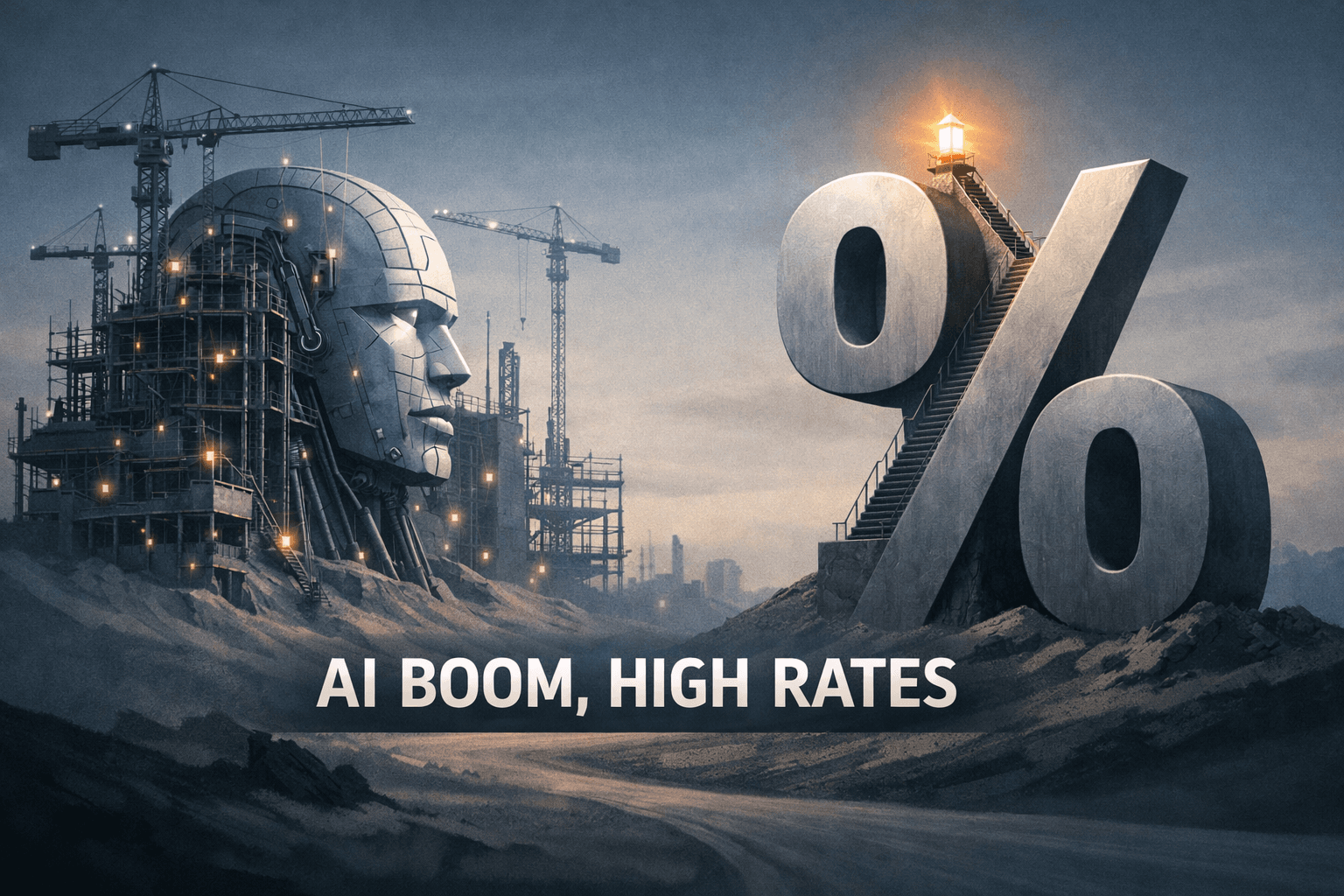
Powell Says AI Isn’t Automatically Disinflationary
Federal Reserve Chair Jerome Powell told reporters at the FOMC press conference that artificial intelligence is not automatically disinflationary, at least not yet. He warned the near-term buildout of data centers and related investment could add to inflationary pressures and keep monetary policy tighter for longer.
AI isn’t automatically disinflationary, at least not yet.
Why The Fed Is Watching Data-Center Investment
Powell noted that heavy spending on servers, networking equipment and power infrastructure raises demand for materials, construction and skilled labor, all of which can push up prices. The Fed’s target range for the federal funds rate remains 5.25% to 5.50%, and core PCE inflation is running near 3% year over year.
Industry estimates put hyperscaler capital expenditure in the low hundreds of billions of dollars annually, concentrated among a handful of cloud providers. That scale of investment, Powell said, could raise the neutral rate, meaning policymakers might need higher policy rates to maintain stable inflation.
Market And Economic Implications
In the near term, higher investment demand can transmit into broader price pressure. That suggests the Fed may keep policy restrictive longer, delaying rate cuts markets had hoped for.
Short-term outlook: stronger investment and materials demand could sustain inflation above the Fed’s target for longer.
Long-term outlook: some economists expect AI-driven productivity gains to be disinflationary once adoption matures.
Equities tied to data-center growth, including $NVDA, $MSFT and $AMZN, face a mixed signal: higher demand for chips and services, but potential headwinds from elevated borrowing costs. Data-center REITs such as $DLR and $EQIX are also caught between rising lease demand and a higher-rate environment.
Two Views, One Risk
Supporters of the bullish, long-run view argue AI will boost productivity, compressing costs over time and easing inflation. Critics say the transition will be capital- and labor-intensive, which can be inflationary at first and shift the Fed’s path.
Investors should watch capex trends from hyperscalers, incoming inflation data and Fed communications. For now, Powell’s message is clear: AI’s disinflationary promise is prospective, not guaranteed, and may complicate the Fed’s roadmap back to 2% inflation.