
 Alpha Breaking
Odds of a Fed Hike This Year Jump on Prediction... - Jun 5
Share this article
Spread the word on social media
The Big Picture
Prediction markets are now pricing a roughly 52% chance of a Federal Reserve interest-rate increase this year, a notable jump that raises the prospect of tighter policy for investors. That shift follows an unexpectedly hot jobs report and increases the likelihood that interest-rate sensitive valuations will come under pressure.
If you hold stocks, bonds, or rate-sensitive sectors, you should be alert to how an elevated odds profile for hikes changes discount rates and risk premia.
What's Happening
Markets reacted to fresh labor-market data by repricing the probability of a Federal Reserve rate increase later this year. Prediction-market tools now show a higher-than-even chance of a hike, shifting short- and mid-term expectations for monetary policy.
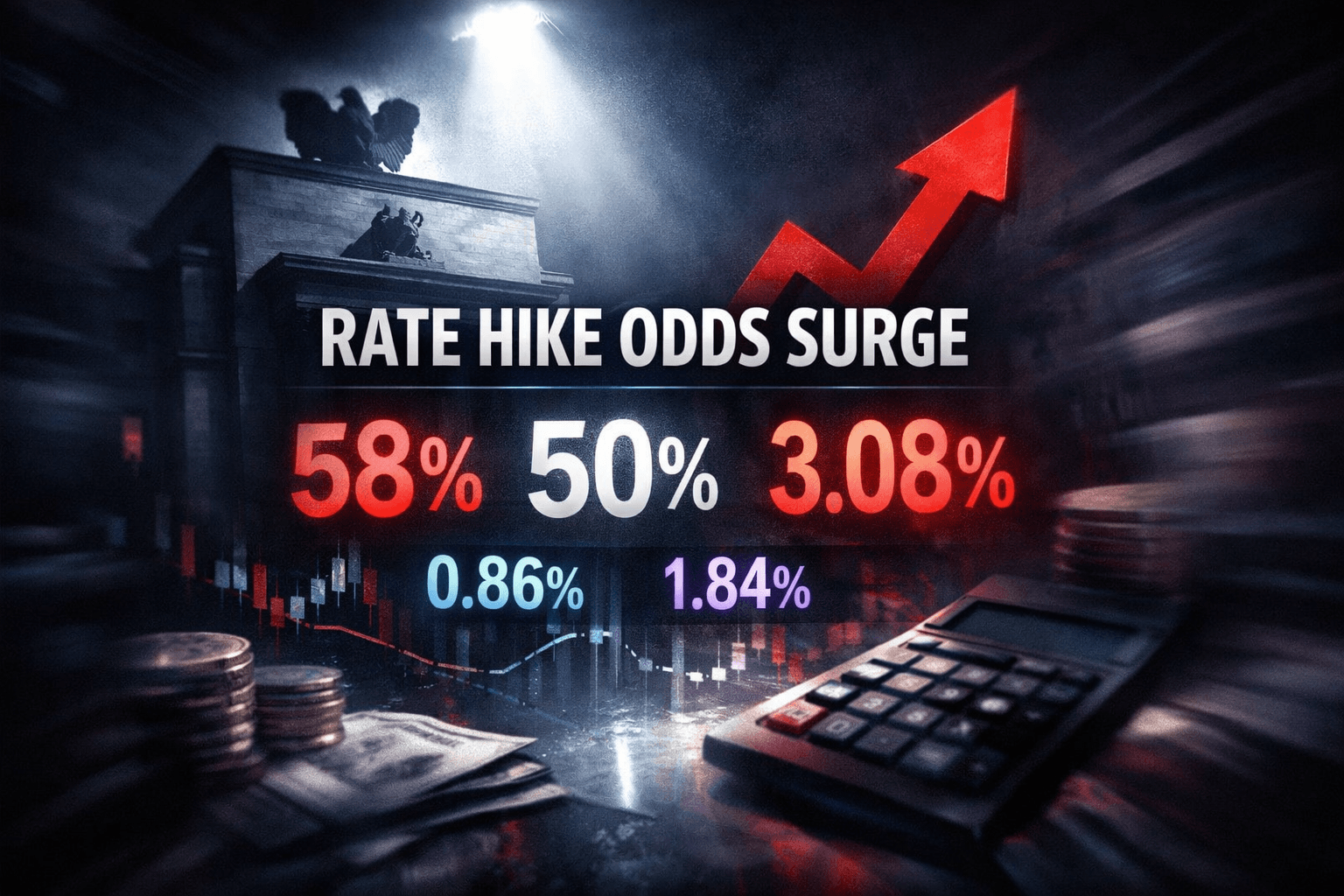
- 52% — prediction-market probability of a Fed rate hike this year, according to CNBC.
- 58% — one of several high-probability readings investors are watching in probability markets and contracts.
- 50% — a round-number comparator investors use to mark a 50/50 likelihood for policy action.
- 0.86% — a short-duration rate or spread level cited among key inputs for valuation and sensitivity analysis.
- 1.84% — an intermediate datapoint investors use when stress-testing discount rates and cost-of-capital scenarios.
- 3.08% — a longer-term rate benchmark that influences equity valuations and income-asset pricing.
Each of these numbers matters to portfolio math. The probability readings feed market expectations for the timing and frequency of Fed tightening, while the percentage-rate datapoints feed discount-rate assumptions that drive valuations for growth and dividend-paying stocks.
Why It Matters For Your Portfolio
An elevated chance of a Fed hike tightens financial conditions. Higher odds increase the chance bond yields rise and equity multiples compress, especially for long-duration growth names. Traders and allocators will reassess risk exposure and valuation models as a result.
Who should care: growth investors need to revisit discounted-cash-flow assumptions, value investors should monitor yield curves for buying opportunities, income investors must watch bond and dividend yields, and traders will respond to volatility in rate-sensitive names such as $AAPL and $NVDA.
Risks To Consider
- Policy Surprise Risk: If labor or inflation prints remain hot, the Fed could follow through with hikes, pushing yields higher and equity multiples lower.
- Overreaction Risk: Markets sometimes overshoot on probability moves. A reversal in labor data or Fed commentary could unwind the elevated pricing and create sharp volatility.
- Valuation Squeeze: Rising discount rates, reflected in the 0.86%, 1.84% and 3.08% datapoints, could hit high-multiple growth stocks hardest and expose stretched balance sheets.
What To Watch Next
Investors should track incoming economic data and Fed communications closely. Key triggers could shift prediction-market odds again and change the path for yields and equities.
- Upcoming labor and inflation reports that could validate or reverse the hot jobs signal.
- Fed speakers and meeting minutes for guidance on tightening timelines and the balance-sheet stance.
- Movements in short-, intermediate- and long-term rates around the 0.86%, 1.84% and 3.08% levels used in valuation scenarios.
- Prediction-market probability readings, including shifts around the 50% to 58% range that signal changing market conviction.
The Bottom Line
- Prediction markets show roughly a 52% chance of a Fed hike this year, raising the odds of tighter policy and higher rates.
- Use the 0.86%, 1.84% and 3.08% datapoints to stress-test discount rates and valuation models for growth and income assets.
- Be prepared for volatility in rate-sensitive sectors; reassess duration exposure and earnings sensitivity.
- Monitor new economic prints and Fed commentary for confirmation before making major allocation shifts.
FAQ
Q: How reliable are prediction markets for forecasting Fed moves?
A: Prediction markets aggregate trader expectations and can signal shifts in probability quickly, but they are not guarantees. Use them as one input alongside economic data and Fed communications.
Q: What do the percentages 0.86%, 1.84% and 3.08% mean for my portfolio?
A: These percentages are representative rate inputs investors use in valuation models. Higher rate levels raise discount rates and can compress equity multiples, especially for long-duration or growth-oriented stocks.
Q: Should I adjust positions now that odds have risen to about 52%?
A: Analysts note that a higher hike probability increases downside risk for rate-sensitive assets. Consider revisiting duration exposure and stress-testing positions, but confirm moves with upcoming data and Fed signals before acting.